A factory may be busy, orders may be coming in, and production may be on schedule, yet profit margins can still fall. The reason may be hidden in rising material costs, excess labor hours, machine expenses, or stock that isn’t tracked well. This is why factory accounting plays an important role in helping manufacturers understand the true cost of production.
A well-planned accounting system connects production costs with inventory, payroll, and financial records. It helps you see what each product costs to make, where money is being spent, and which areas need attention. In this guide, we’ll explain how to build a factory accounting system that keeps your records accurate and gives you better control over costs and profits.
What You Will Learn From This Blog
- What factory accounting means and why it matters.
- Which costs and stock records your system must track.
- Eight steps to set up a sound accounting system.
- How to choose a costing method for your plant.
- Which reports help you track costs and profit.
- When factory accounting services for manufacturers may be worth using.
What Is Factory Accounting and Why Does It Matter for Manufacturers?
Factory accounting is the process of tracking and reporting the costs of making goods. It records the cost of raw materials, direct labor, and factory overhead. It also tracks stock as it moves from raw goods to work in progress and then to finished goods.
Unlike general business books, factory accounting must link costs to the goods a plant makes. For example, a food plant needs to track the cost of its raw goods, staff time, power, packing, and storage. These costs help show the true cost of each batch.
This matters for a few key reasons:
- Better cost control: You can see which costs rise and where you may need to cut waste.
- Sound pricing: You can set prices based on the true cost of each item.
- Stock control: You can track what you buy, use, make, and sell.
- Clear profit data: You can see which goods and jobs bring in the best returns.
- Better plans: Cost and stock data help you plan orders, staff, and cash needs.
Without clear factory accounting, a plant may set prices too low, miss stock loss, or report more profit than it has earned.
optional anymore
on running the business
What Should a Factory Accounting System Track?
Before you build a system, list the key costs and stock records it must cover.
- Raw Materials and Inventory Purchases
Track each item bought for use in production. Keep records of the amount, unit cost, supplier, date, and stock on hand. This helps you match what you buy with what the plant uses.
- Direct Labor and Production Wages
Record the hours staff spend on each job, batch, or line. Link pay costs to the goods they help make. This gives you a clear view of the labor cost per unit.
- Factory Overhead Costs
These are costs needed to run the plant but not tied to one item. They may include rent, power, machine repairs, insurance, and plant staff who don’t make goods.
- Work-in-Progress (WIP) Inventory
WIP means goods that have begun the production process but aren’t yet ready for sale. Track the cost of raw goods, labor, and overhead added to each job or batch.
- Finished Goods and Cost of Goods Sold (COGS)
Track the cost of goods that are ready to sell. When goods are sold, move their cost from stock to COGS. This helps match sales with the cost of the goods sold.
How to Build an Effective Factory Accounting System: 8 Essential Steps
A good system starts with clear rules and clean records. Follow these eight steps to build one that fits your plant.
Step 1: Set Up a Factory-Specific Chart of Accounts
A chart of accounts is a list of all the accounts used to record money in your books. Set it up to show the main parts of your plant’s work.
Create clear accounts for raw goods, WIP, finished goods, direct labor, factory overhead, sales, and COGS. You may also need separate accounts for scrap, repairs, and machine costs.
Use the same account names and rules across all teams. This makes it easier to review costs and compare results from one month to the next.
Step 2: Set Rules for Stock Tracking
Set a clear process for each stock move, from the time goods arrive to the time they leave the plant.
Record each purchase, stock issue, return, transfer, and sale. Use item codes and set units for each type of stock. Also, plan regular stock counts to check that book records match the goods on hand.
This step is key to sound factory accounting. If stock data is wrong, your cost and profit reports may also be wrong.
Step 3: Record All Production Costs
Set a process to record costs as they arise. Link raw goods and labor to the job or batch that uses them.
For example, if a plant makes 500 units, record the raw goods used, the staff hours spent, and the share of plant costs. This helps you work out the cost of each unit.
Don’t wait until month-end to collect these records. Daily or weekly updates can help you spot cost changes early.
Step 4: Split Direct and Indirect Costs
Direct costs can be linked to a product or job. These include raw goods and the wages of staff who make the goods.
Indirect costs support the plant as a whole. These may include rent, power, plant repairs, and the pay of support staff.
Keep these costs in the right groups. This makes it easier to work out the full cost of each item and avoid poor cost reports.
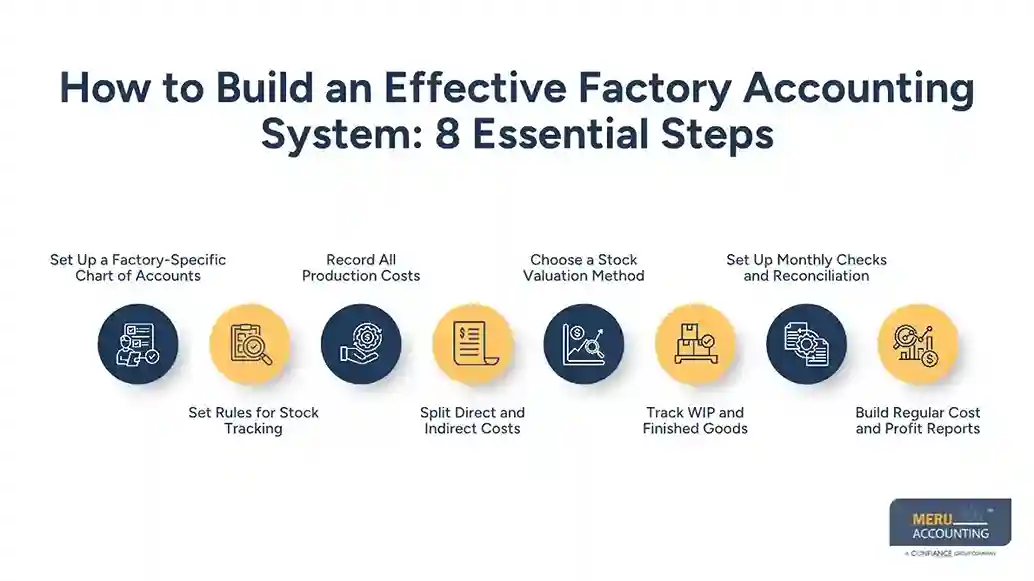
Step 5: Choose a Stock Valuation Method
Your stock method affects the value of goods in your books and the cost of goods sold. Common methods include:
- FIFO: The first goods bought are treated as the first goods sold.
- Weighted average cost: Stock cost is based on the average cost of units on hand.
- Specific identification: The exact cost of each item or batch is tracked.
The right method depends on the type of goods you make, how stock moves, and the rules that apply to your business. Keep the method in line with your accounting policy and use it in a steady way. Ask a qualified accountant to review the choice before you set it up.
Step 6: Track WIP and Finished Goods
Set rules for when goods move from raw stock to WIP and then to finished goods. Each move should have a record.
For WIP, track the raw goods, labor, and overhead added to each job or batch. Once goods are ready, move the full cost to finished goods.
Clear records help prevent stock from being counted twice or left out of the books. They also give you a better view of the cost of goods made but not yet sold.
Step 7: Set Up Monthly Checks and Reconciliation
A monthly close helps you find errors before they affect key reports. Match stock records with the general ledger. Check supplier bills, payroll costs, bank records, and open customer bills.
Review any gaps between the book value and the stock count. Look into old WIP, odd cost changes, and costs posted to the wrong account.
Set a close date and give each task to a staff member. A set process helps the team finish on time and keep records clean.
Step 8: Build Regular Cost and Profit Reports
Create reports that show the costs of making and selling goods. Review them each month and compare actual costs with your budget or set cost.
Look at raw goods use, labor hours, overhead, scrap, and profit by product or job. Set a clear plan for what to do when costs rise or results fall below target.
Which Costing Method Should Your Factory Accounting System Use?
The right method depends on how your plant makes goods.
- Job order costing: Best for plants that make custom goods or work on set jobs. Costs are tracked for each job.
- Process costing: Best for plants that make large volumes of the same or like goods. Costs are grouped by stage or process.
- Standard costing: Uses set costs for goods and compares them with the costs the plant has paid. It helps find cost gaps.
- Activity-based costing (ABC): Links overhead to the tasks that use plant time and resources. It can give a more detailed view of costs.
For example, a plant that makes custom metal parts may use job order costing. A plant that makes the same type of drink in large batches may use process costing.
You don’t need to use every method. Pick one that fits your work and gives managers useful cost data.
How to Connect Production Data With Your Accounting Records
Your accounting system should match what takes place on the plant floor. If production data sits in a separate file and no one checks it against the books, cost reports may not show the full picture.
Start by linking these records:
- Material use: Match stock issues with job sheets or batch records.
- Labor hours: Match staff time with payroll and job costs.
- Machine use: Track machine hours where they affect the cost of a job.
- Production output: Match units made with WIP and finished goods records.
- Waste and scrap: Record lost or damaged goods so they don’t stay in stock.
Set one source of truth for each type of data. Give staff clear rules for when to enter and review each record. This helps keep factory accounting data in line with real work.
Key Financial Reports to Monitor in a Factory Accounting System
Reports turn raw data into facts that owners can use. Review these on a set plan:
Report | What It Shows |
Cost of Goods Manufactured (COGM) | The full cost of goods made during a set time. |
Cost of Goods Sold (COGS) | The cost of goods sold to customers. |
Stock Valuation Report | The value of raw goods, WIP, and finished goods. |
Cost Variance Report | The gap between set costs and actual costs. |
Profit and Loss Statement | Sales, costs, and net profit for the period. |
Don’t just review the totals. Look for changes in cost per unit, stock levels, scrap, and profit by product. These details can help you find issues that a basic profit and loss report may not show.
How Meru Accounting Supports Factory Accounting Services for Manufacturers
Setting up a factory accounting system is one thing; making sure it works as your production grows is another. You need accounting professionals who can understand your cost structure, organize financial records, and help establish processes that fit your business.
At Meru Accounting, we bring multi-industry experience to outsourced accounting, helping manufacturers get the financial support they need without the cost of building a large in-house team. Our team can help you put the right accounting practices in place and keep them running as your operations change.
How We Support Your Factory’s Accounting Needs:
- Accounting System Setup: Organize your chart of accounts and financial records around your manufacturing operations.
- Production Cost Records: Help classify and record material, labor, and factory overhead expenses.
- Inventory and WIP Records: Support the tracking and reconciliation of raw materials, work in progress, and finished goods.
- Ongoing Accounting: Manage monthly books, account reconciliations, payables, receivables, and payroll accounting support.
- Financial Reporting: Prepare monthly reports that help you review expenses, business performance, and financial trends.
- Bookkeeping Cleanup: Bring old or disorganized records up to date before moving to a consistent accounting process.
With Meru Accounting’s factory accounting services for manufacturers, you get access to skilled accounting professionals who can support your financial processes at a fraction of the cost of a U.S. in-house team. Whether you’re setting up a new system or improving an existing one, we help build an accounting process that can keep pace with your manufacturing business.
Our Expert Insight
One issue we often see in factory cost reviews is that the cost of making goods and the cost of running the plant get mixed up. This can lead to poor pricing and weak profit reports.
For example, a plant may know how much it paid for raw goods but fail to include machine repairs, power, or staff costs in its product cost. The sale may look profitable, but the true margin may be much lower.
We suggest reviewing cost per unit each month, not just total plant costs. If the cost per unit rises, check whether raw goods prices, labor hours, machine use, or scrap rates have changed. Also, review old WIP before closing the books. Goods that stay in WIP for too long may point to delays, missing records, or a gap in the production process.
A good factory accounting system should help you ask better questions, not just create more reports.
Key Takeaways
- Factory accounting tracks the cost of making goods, from raw stock to finished items.
- A clear chart of accounts helps sort costs and keep reports easy to read.
- Track raw goods, labor, overhead, WIP, and finished goods with care.
- Pick a costing method that fits how your plant makes goods.
- Link production data with your books to keep cost records in line.
- Review stock, cost, and profit reports each month.
FAQs
Keep purchase invoices, supplier bills, payroll records, inventory counts, production cost sheets, bank statements, and financial reports. These records help support reported costs, stock values, and business transactions.
Manufacturers should track downtime hours, repair costs, and idle labor separately. This helps identify lost production time and assess whether machine costs are affecting product margins.
Record the quantity and cost of scrap or defective goods, then classify the loss based on its cause. Normal production waste and unusual losses may need different accounting treatment.
Common causes include unrecorded material use, delayed stock entries, incorrect units, damaged goods, and errors during stock counts. Regular cycle counts and timely transaction entries help resolve these gaps.
Outsourcing may make sense when month-end closing takes too long, production costs aren’t tracked well, financial records fall behind, or hiring a full-time accounting team isn’t cost-effective.
optional anymore
on running the business