Your startup has more customers than last month, sales are rising, and the team is ready to grow. Yet, when you check the bank balance, one question remains: Will there be enough cash to cover the next few months? This is where a fractional CFO for business startups can make a real difference. Growth can look good on paper while late payments, rising costs, and poor cash planning put the business at risk.
Hiring a full-time CFO may be too costly for a young business, but making financial choices without clear data can cost even more. A fractional CFO for business startups brings expert financial planning, cash flow reviews, budgets, forecasts, and investor reports to the table without the cost of a full-time executive.
But what should you expect from these services, which KPIs deserve your attention, and how can you tell whether the fees are worth paying? This blog breaks down the key deliverables, pricing models, and ROI measures so you can choose a service that fits your startup’s needs and growth plans.
What You Will Learn From This Blog
- What a fractional CFO does and which tasks the service covers.
- Which financial reports, cash plans, and forecasts a fractional CFO for business startups prepares.
- Which KPIs reveal sales trends, costs, and cash risks.
- How outsourced CFO solutions for startups fit different growth stages.
- How to assess service fees, business value, and expected ROI.
- How Meru Accounting provides financial services for growing businesses.
Introduction to Fractional CFO Services for Startups
Imagine a startup with ₹20 lakh in the bank, monthly cash costs of ₹5 lakh, and a large customer payment due in 60 days. The bank balance may look healthy, but salaries, rent, and supplier bills still need to be paid. A basic cash report may miss this gap.
A fractional CFO for business startups reviews the timing of income and expenses, builds cash forecasts, and sets spending limits based on the firm’s needs. The CFO may also review pricing, hiring plans, and funding needs before the founder makes a major choice.
The work changes with the business. An early-stage firm may need better cash records, while a startup seeking funds may need investor reports and detailed forecasts. The service scope should reflect these needs.
Key Deliverables Included in Fractional CFO Services
Financial Planning, Budgeting, and Forecasting
A budget sets out expected income and costs, while a forecast changes as new facts come in. A fractional CFO for business startups can prepare best-case, base-case, and worst-case plans to show what may happen if sales fall, costs rise, or a deal is delayed.
Cash Flow Management and Runway Analysis
Cash flow tracks money coming in and going out, while runway estimates how long the available cash may last. A CFO reviews these figures and flags cash gaps before they become urgent.
Financial Reporting and Performance Analysis
Monthly reports should answer real questions: Why did costs rise? Which service earns the best margin? Are customers paying late? A CFO compares actual results with the budget and sets clear actions for the next review.
Fundraising Preparation and Investor Reporting
Investors may ask for past results, cash forecasts, profit margins, and a plan for using new funds. A fractional CFO for business startups can prepare these records and check that the figures match the pitch deck. Forecasts must use fair assumptions, as no report can promise a successful funding round.
Financial Risk Assessment and Internal Controls
One wrong payment or missed tax date can create costs a young firm can ill afford. Risk checks cover late bills, weak approval rules, account access, and poor records. Clear payment steps and regular account reviews reduce errors and make unusual activity easier to spot.
How to Choose a Fractional CFO for Business Startups
Industry Experience and Startup Growth Expertise
A software firm and a business that sells physical goods face different cash needs. When assessing a fractional CFO for business startups, ask about work with firms at a similar stage and the results achieved. Look for sound judgment, not just a long list of clients.
Scope of Services and Expected Deliverables
A low fee may cover a few reports, while your firm may need cash reviews and investor updates. List the tasks, due dates, meeting schedule, and extra charges in writing. Clear terms make it easier to judge whether the fractional CFO for business startups service meets your needs.
Technology, Reporting Tools, and Financial Systems
Good advice depends on sound data. Check whether the CFO can work with your accounting tools and reporting needs, and ask how records will be kept secure. Bank access, user rights, and file sharing should follow clear rules.
Communication Frequency and Strategic Involvement
A monthly meeting may suit a stable firm, but a startup with a short cash runway may need weekly reviews. Agree on report dates, who answers questions, and which decisions need the CFO’s input. Clear contact rules keep urgent issues from being missed.
optional anymore
on running the business
Essential KPIs a Fractional CFO Tracks for Startups
Monthly Recurring Revenue (MRR) and Annual Recurring Revenue (ARR)
MRR tracks the value of active monthly subscriptions, while ARR shows their annual value at a given point. A fractional CFO for business startups checks whether these figures rise, fall, or stay flat. They do not show cash collected or profit, so founders must read them with other measures.
Customer Acquisition Cost (CAC) and Customer Lifetime Value (LTV)
CAC is the average cost of gaining a new customer. LTV estimates the value a customer may bring over the full time they buy from the firm. If it costs ₹8,000 to gain a customer who brings ₹20,000 in gross profit over time, the gap may look good, but service costs and the time needed to earn that value still matter.
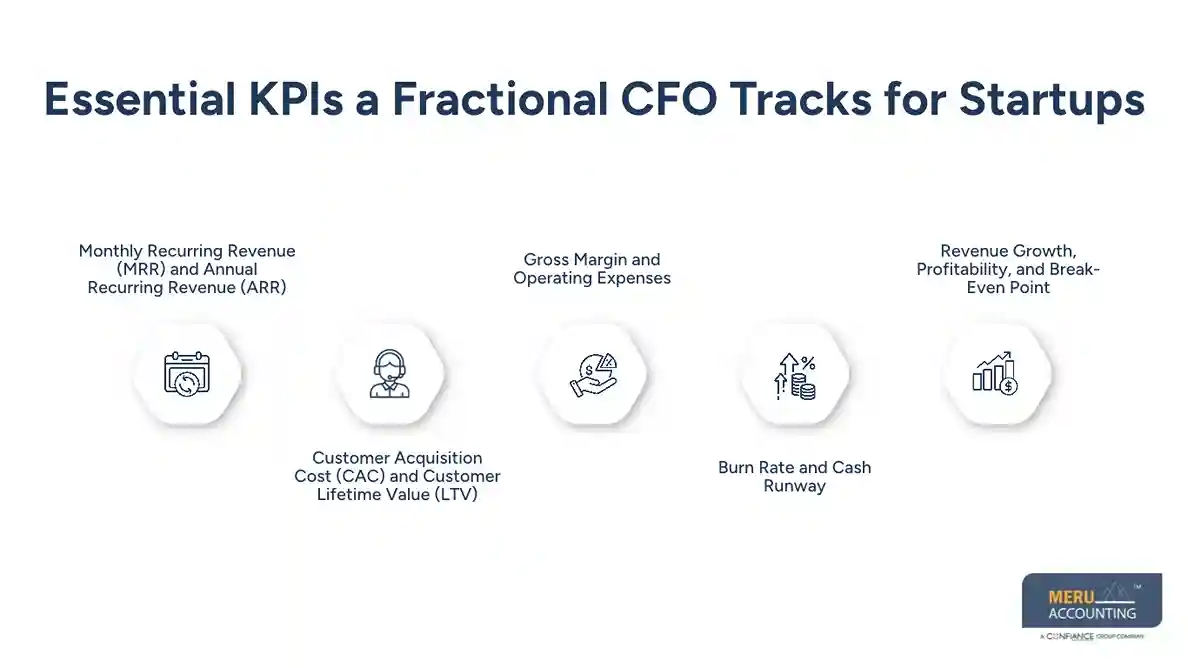
Gross Margin and Operating Expenses
Gross margin shows the share of sales left after direct costs. Operating expenses include staff pay, rent, ads, and software. These figures show whether the firm earns enough from each sale to cover its wider costs.
Burn Rate and Cash Runway
Burn rate tracks the net cash used over a set period, while runway estimates how long current cash may last at that rate. A fractional CFO for business startups updates both after major changes in sales, hiring, or funding. A forecast is a guide, not a fixed promise.
Revenue Growth, Profitability, and Break-Even Point
Revenue growth shows whether sales are rising, while profit shows what remains after costs. The break-even point is where income covers expenses. Founders should track all three because fast growth can still drain cash if the cost of each sale is too high.
How Outsourced CFO Solutions for Startups Support Business Growth
Financial Strategy Without the Cost of a Full-Time Executive
Outsourced CFO solutions for startups give founders access to senior financial skills without the full cost of a permanent executive. The fee may be lower, but the value depends on the hours, skills, and tasks covered by the agreement.
Scalable Financial Services Across Funding and Growth Stages
A firm may first need basic cash reports, then detailed forecasts as it hires staff or seeks funds. Outsourced CFO solutions for startups can change with these needs when the service terms allow it. Review the scope as the business grows.
Data-Driven Decisions for Hiring, Pricing, and Expansion
Before hiring five new staff, a founder needs to know the likely cost, the sales needed to cover it, and the cash left after payroll. A fractional CFO for business startups tests these figures and compares different options before a choice is made.
Investor Readiness and Fundraising Strategy
Investors may ask for revenue trends, cash forecasts, costs, and plans for using new funds. Outsourced CFO solutions for startups can prepare these records and explain the main figures. The final decision still rests with the investor.
How to Measure the ROI of Fractional CFO Services
Cost Savings Compared With Hiring a Full-Time CFO
Compare the service fee with the likely total cost of a full-time CFO, including pay and benefits. Also compare the work received. A part-time service may cost less but may not cover every task a full-time executive would handle.
Improvements in Cash Flow and Working Capital
Check whether customer bills are paid sooner, stock costs are lower, or cash is used more wisely. A fractional CFO for business startups can set targets for these measures, but results also depend on sales, customer conduct, and supplier terms.
Forecast Accuracy and Budget Control
Compare each forecast with actual sales, costs, and cash balances. Record the size of the gap and why it happened. A useful forecast gives the founder time to act, rather than just presenting neat figures after the month ends.
Revenue Growth and Profitability Improvements
Review sales, gross margin, operating costs, and net profit before and after the work begins. Do not credit every gain to the CFO alone, as market demand, pricing, and team decisions also affect results.
Financial Risk Reduction and Fundraising Outcomes
Track account errors, late filings, weak payment checks, and gaps in investor reports. A fractional CFO for business startups can set better checks, but tax, legal, and funding outcomes may also depend on other advisers and outside decisions.
A simple ROI formula is:
ROI (%) = (Measured Financial Benefit − Service Cost) ÷ Service Cost × 100
For example, if a startup pays ₹2 lakh in fees and verifies ₹5 lakh in savings, the estimated ROI is 150%. Count only real gains, avoid counting the same saving twice, and include relevant costs before using this figure to judge the service.
Fractional CFO Pricing Models and Engagement Costs
Monthly Retainers, Hourly Rates, and Project-Based Fees
A monthly retainer covers agreed tasks for a set fee. Hourly billing suits work that changes from month to month, while a project fee may cover a cash review, forecast, or funding plan. Ask for a clear list of included work and extra charges.
Factors That Influence Fractional CFO Pricing
Pricing for a fractional CFO for business startups depends on business size, record quality, reporting needs, funding plans, and the CFO’s experience. A firm with poor records or a tight investor deadline may need more work than one with clean accounts and regular reports.
Evaluating Service Costs Against Expected Business Value
Set a budget and choose the results that matter most. Outsourced CFO solutions for startups should be judged by useful findings, sound plans, and measured results, not price alone. Review the value after an agreed period and change the scope if needed.
Common Mistakes to Avoid When Hiring a Fractional CFO
Choosing Based on Price Alone
The lowest fee may not cover the reports or advice your firm needs. Compare the work scope, experience, meeting time, and extra charges before making a choice.
Overlooking Startup-Specific Financial Experience
A fractional CFO for business startups must understand the cash limits, changing sales, and funding needs of a young business. Ask about past work with short runways, changing sales, tight budgets, and investor requests.
Setting Unclear Deliverables and Performance Expectations
Vague goals can lead to missed reports and disputes over the work. List each task, due date, meeting plan, data access rule, and review point in the service agreement.
Tracking Financial Data Without Actionable KPIs
Collecting figures has little value if no one acts on them. Pick KPIs tied to business goals, set fair targets, and assign someone to review each result and decide what to do next.
Meru Accounting's Financial Services for Growing Startups
Meru Accounting provides accounting and bookkeeping, financial reporting, payroll, accounts payable and receivable, tax-related services, and virtual CFO services. For startups weighing outsourced CFO solutions for startups, our service scope can be matched to their records, reporting needs, and stage of growth.
Clear Financial Reports
Our fractional CFO for business startups service includes financial reports covering income, costs, cash movement, and key balances. Founders can use these figures to check results, spot gaps, and plan upcoming expenses.
Cash Flow and Budget Review
Our financial services cover cash tracking, budget reviews, and reports on gaps between planned and actual results. These records give founders a clearer view of near-term cash needs.
Accounting Systems and Record Quality
We work with platforms such as QuickBooks, Xero, Zoho Books, NetSuite, and Odoo. Sound records and clear account rules make it easier to review results and prepare reports.
Financial Services That Match Business Needs
A fractional CFO for business startups may focus on cash forecasts and financial reviews as the company grows beyond basic bookkeeping and monthly reporting. Meru Accounting can discuss the required tasks, report schedule, and service scope before an engagement begins.
Our Expert Perspective
The value of a fractional CFO for business startups lies in what the founder does with the numbers. A report should lead to a choice, such as cutting waste, changing a price, delaying a hire, or setting aside cash for bills.
Start with three needs: clear cash figures, sound reports, and a forecast that matches the business plan. Add more KPIs as the firm grows, and review the service against agreed goals. This keeps the work focused on better choices, not reports alone.
Key Takeaways
- A fractional CFO for business startups brings senior financial skills without a full-time hire.
- Key work includes budgets, cash forecasts, reports, risk checks, and investor records.
- MRR, ARR, CAC, LTV, gross margin, burn rate, and runway show different parts of financial health.
- Outsourced CFO solutions for startups can change as the firm grows, subject to the service terms.
- Startups can measure the ROI of a fractional CFO for business startups through verified savings, better cash control, forecast accuracy, and business results.
- Compare fees, experience, work scope, and report quality before choosing a CFO.
FAQs
A fractional CFO for business startups manages financial plans, cash flow, budgets, reports, KPIs, and funding plans for an agreed number of hours or days.
A startup should consider a fractional CFO for business startups when cash is hard to manage, forecasts are unclear, or investors ask for detailed financial reports.
Fees for a fractional CFO for business startups vary with experience, work hours, business size, and service scope, so startups should compare written quotes before choosing a plan.
Key measures include MRR, ARR, CAC, LTV, gross margin, burn rate, cash runway, revenue growth, and the break-even point.
Outsourced CFO solutions for startups can be worth the cost when better cash plans, clear reports, and sound business choices create measured gains that exceed the fees.
optional anymore
on running the business