A business can have strong sales and still run into cash flow problems. An owner may know how much the company earned last month but still have questions about where the money is going, which costs are eating into profit, or whether the business can afford its next big move. A fractional CFO for small business can help make those numbers easier to understand and use.
Instead of hiring a full-time CFO, a business can get ongoing support with cash flow, budgets, forecasts, financial reports, and key decisions on a part-time basis. When this work is paired with accurate monthly accounting, the owner gets a clearer picture of both day-to-day finances and the bigger financial direction of the business.
What You Will Learn From This Blog
- What a fractional CFO does for a small business
- What monthly CFO and accounting services may include
- When a business may need CFO-level support
- How an outsourced fractional CFO works with an existing accounting team
- What to look for when choosing fractional CFO services
What Is a Fractional CFO for Small Business?
A fractional CFO for small business provides CFO-level financial support without working as a full-time employee. The service is often set around a few hours each month, a set number of projects, or a regular monthly review.
The work goes beyond basic bookkeeping. A bookkeeper may record transactions and keep accounts up to date. A CFO looks at the numbers from a wider view. They may review cash flow, margins, sales trends, costs, budgets, and forecasts to help the owner plan the next step.
The exact role can vary by business. One company may need help with cash flow and growth plans, while another may need better monthly reports, cost checks, or a plan for a large spend.
This makes the model useful for small firms that need more than routine accounting but do not need a full-time CFO on staff.
What Does a Fractional CFO Do for a Small Business?
The work of a fractional CFO for small business can cover both monthly financial review and longer-term planning. The scope should match the size, needs, and goals of the business.
Financial Reporting and Review
A CFO can review the income statement, balance sheet, and cash flow statement each month. Rather than only looking at whether sales went up or down, the review can look at the reasons behind the change.
For example, sales may rise while profit falls due to higher labor, supply, or operating costs. A monthly review can bring that change to light.
Cash Flow Planning
Profit and cash are not the same. A business can show a profit and still face a cash gap because of slow customer payments, debt payments, payroll, or a large purchase.
A CFO can build cash flow forecasts and track expected inflows and outflows. This gives the owner a better view of when cash may be tight.
Budgeting and Forecasting
A budget sets a plan for income and costs. A forecast updates that plan as new data comes in.
A CFO may compare actual results with the budget, review major gaps, and update the outlook for the rest of the year.
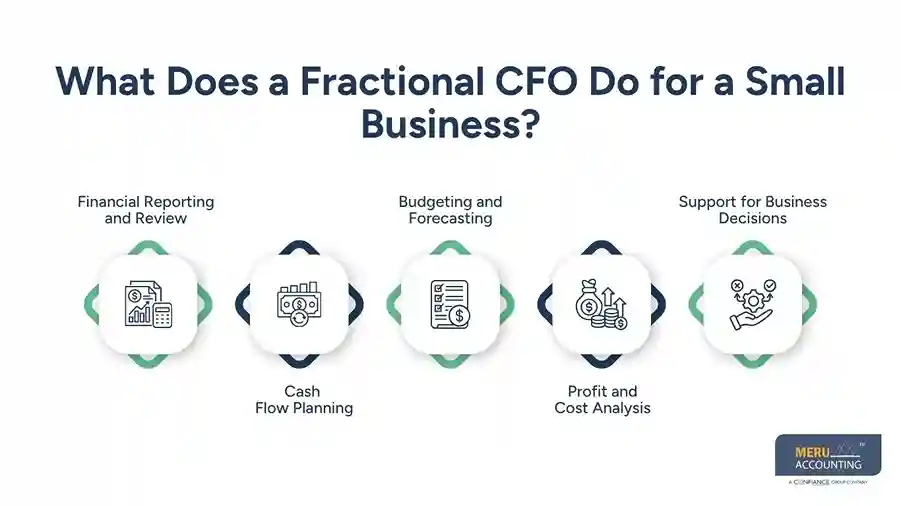
Profit and Cost Analysis
A CFO can look at gross margin, operating costs, pricing, and other drivers of profit. For firms with more than one product, service, location, or client group, this can also help show where the business earns or loses money.
Support for Business Decisions
Owners often need to make choices before they have perfect data. A CFO can help frame those choices with numbers.
This may include reviewing a new hire, equipment purchase, pricing change, debt plan, expansion, or other large cost.
When Should a Small Business Consider a Fractional CFO?
A fractional CFO for small business may make sense when the owner needs more financial insight than routine bookkeeping can provide.
Some common signs include:
- Cash flow is hard to predict.
- Monthly reports are not reviewed in a useful way.
- Sales are growing but profit is unclear.
- Costs are rising faster than expected.
- The business is planning a major purchase or expansion.
- The owner needs help with budgets or forecasts.
- Financial decisions rely too much on guesswork.
- The business has an accountant but needs more ongoing financial planning.
You do not need to wait for a financial problem before adding CFO support. Some owners bring in a CFO when the business reaches a point where financial decisions become more complex.
An outsourced fractional CFO can also work alongside an existing bookkeeper, accountant, or CPA. The CFO does not always replace those roles. Instead, each person can focus on a different part of the finance process.
optional anymore
on running the business
What to Expect From Monthly Fractional CFO Services
Monthly work is often where a fractional CFO for small business becomes part of the regular finance process. The goal is not just to produce reports but to review them and turn the data into useful next steps.
A typical monthly cycle may include:
Month-End Accounting Review
The process starts with accurate books. Bank and credit card accounts should be reconciled, income and costs recorded, and key account balances checked.
If the accounting data is not clean, the CFO review may point to the wrong trends.
Monthly Financial Statements
The business may receive an income statement, balance sheet, and cash flow report. Depending on the business, reports may also cover sales by service, location, product, or other useful areas.
Budget vs. Actual Review
The CFO compares planned results with actual results. Large gaps can then be reviewed to see whether they came from sales, payroll, overhead, timing, or another cause.
Cash Flow and Forecast Review
The forecast can be updated with current sales, receivables, payables, payroll, debt, and planned spending. This can help owners spot cash needs before they become urgent.
Key Business Metrics
Not every business needs the same metrics. A service firm may watch billings, labor costs, and margins. A retailer may focus on sales, inventory, gross margin, and cash. A contractor may need job-level cost and margin data.
The CFO should focus on measures that fit the business rather than filling reports with numbers that do not guide action.
Action Items
A useful monthly review should end with clear next steps. These may include cutting or reviewing a cost, following up on unpaid invoices, changing a budget, or updating a forecast.
When Should a Small Business Consider a Fractional CFO?
A fractional CFO for small business may make sense when the owner needs more financial insight than routine bookkeeping can provide.
Some common signs include:
- Cash flow is hard to predict.
- Monthly reports are not reviewed in a useful way.
- Sales are growing but profit is unclear.
- Costs are rising faster than expected.
- The business is planning a major purchase or expansion.
- The owner needs help with budgets or forecasts.
- Financial decisions rely too much on guesswork.
- The business has an accountant but needs more ongoing financial planning.
You do not need to wait for a financial problem before adding CFO support. Some owners bring in a CFO when the business reaches a point where financial decisions become more complex.
An outsourced fractional CFO can also work alongside an existing bookkeeper, accountant, or CPA. The CFO does not always replace those roles. Instead, each person can focus on a different part of the finance process.
Fractional CFO Services for Small Business From Meru Accounting
When monthly accounting is accurate and up to date, it becomes much easier to use those numbers for planning. At Meru Accounting, our fractional CFO for small business services combine monthly accounting support with financial review, cash flow planning, and business-focused reporting. This gives owners a regular view of where the business stands and what needs attention next.
Monthly Accounting and Financial Reporting
We can manage and review the core financial work that supports CFO planning, including:
- Monthly bookkeeping and account reconciliations
- Accounts payable and accounts receivable support
- Payroll accounting support
- Month-end close and financial statement review
- Income statement, balance sheet, and cash flow reporting
- Budget-to-actual comparisons
- KPI and financial trend analysis
Cash Flow, Budgeting, and Forecasting
Once the monthly numbers are in place, we can use them to help you plan ahead. Our work can include:
- Cash flow forecasting
- Budget preparation and updates
- Profit and expense analysis
- Review of expected income and upcoming expenses
- Financial planning for growth
- Support for major purchases, hiring, or other business decisions
We also work with QuickBooks, Xero, and Zoho Books and can fit into your existing accounting workflow where it makes sense. This allows your accounting records, monthly reports, and CFO-level financial planning to work together instead of being handled as separate processes.
With an outsourced fractional CFO, small businesses can get regular financial planning and analysis without adding a full-time CFO position. The level of support can also be adjusted as the business grows or its financial needs change.
Our Expert Insight
One thing we look at closely is where the profit is coming from. A business can have a good overall margin while certain services, products, locations, or customers bring in much less profit than expected. Reviewing revenue and costs at the right level can uncover pricing or cost issues that a basic P&L may not show.
We also pay attention to patterns, not one-off changes. A higher expense in one month may be normal, but the same increase month after month may point to a cost problem. Comparing current results with past months and the budget helps separate normal fluctuations from trends that need action.
That practical review is where an outsourced fractional CFO can add value: not just reporting the numbers, but helping the owner understand what changed, why it changed, and what deserves attention next.
Key Takeaways
- A fractional CFO for small business provides CFO-level support without a full-time CFO role.
- Monthly services can cover financial reports, cash flow, budgets, forecasts, and business metrics.
- Clean accounting records are the base for useful CFO analysis.
- CFO support can work alongside an existing bookkeeper, accountant, or CPA.
- An outsourced fractional CFO can provide flexible support as financial needs change.
- The right monthly process should focus on the numbers that affect real business decisions.
FAQs
They typically need current financial statements, bank records, A/R and A/P data, payroll details, and information about major upcoming expenses. Access to the accounting system can also help speed up the review.
Not usually. Tax returns are generally handled by a CPA or tax professional, while the CFO focuses on financial planning, analysis, and business decisions.
Yes. They can review cash coming in and going out, identify upcoming cash gaps, and build a forecast to help the owner plan ahead.
Common reports include the P&L, balance sheet, cash flow statement, and budget-to-actual results. The exact reports depend on the business and what the owner needs to track.
Yes. A CFO can review projected revenue, costs, hiring needs, cash requirements, and other financial factors before an expansion or major investment.
optional anymore
on running the business