An architecture firm can be busy all year and still struggle to answer a simple question: Which projects are actually making money? A packed project schedule, new client wins, and a growing team may look like signs of success, but they don’t always tell the full story. Fractional CFO services for architects help firm owners get a clearer picture of where the business stands and what needs to change.
From reviewing project fees and staff costs to planning future investments, a fractional CFO looks beyond the books and helps turn financial data into practical business decisions. This gives architecture firms a better way to judge new opportunities, set realistic growth goals, and build a business that is financially sound.
What You Will Learn From This Blog
- What fractional CFO services for architects cover and how they work.
- Why growing architecture firms need senior financial support.
- Key CFO tasks, from cash flow plans to project profit checks.
- How an outsourced CFO for architecture firms can help improve project margins.
- Which financial metrics firm owners should track.
- When to hire a fractional CFO and what to look for in a service provider.
What Are Fractional CFO Services for Architects?
Fractional CFO services give architecture firms access to senior financial skills on a part-time or as-needed basis. Rather than hiring a full-time finance head, a firm can work with a CFO for a set number of hours each month or under an agreed scope of work.
A fractional CFO does more than review past financial reports. They use financial data to help firm owners plan ahead, set goals, manage costs, and make sound business choices.
For example, an architecture firm may have several active projects, each with its own fee, staff needs, and payment terms. A fractional CFO can review these details to show which jobs are on track, which may run over budget, and how much cash the firm needs to meet its costs.
Their role may include:
- Setting budgets and cash flow plans.
- Reviewing project costs and profit margins.
- Building financial forecasts.
- Tracking revenue and unpaid client bills.
- Advising on fees, hiring, and growth.
- Preparing reports for key business decisions.
Unlike a bookkeeper, who records and tracks daily financial data, a fractional CFO helps turn that data into clear plans and action steps.
optional anymore
on running the business
Why Do Growing Architecture Firms Need Fractional CFO Support?
As an architecture firm grows, its financial needs become more complex. More projects can mean more staff, higher overhead, larger client bills, and greater cash needs. Without sound financial plans, growth can put pressure on the firm instead of making it more profitable.
Here are some common reasons firms seek CFO support.
1. Uneven cash flow
Architecture firms may bill clients at set project stages, such as design approval, permit filing, or project delivery. Yet payroll, rent, software, and other costs are due each month. A CFO helps plan for these gaps and set cash targets.
2. Rising staff and project costs
Hiring more architects, designers, and support staff can raise costs fast. A CFO helps firm owners assess whether new hires will add enough billable capacity and revenue to cover their cost.
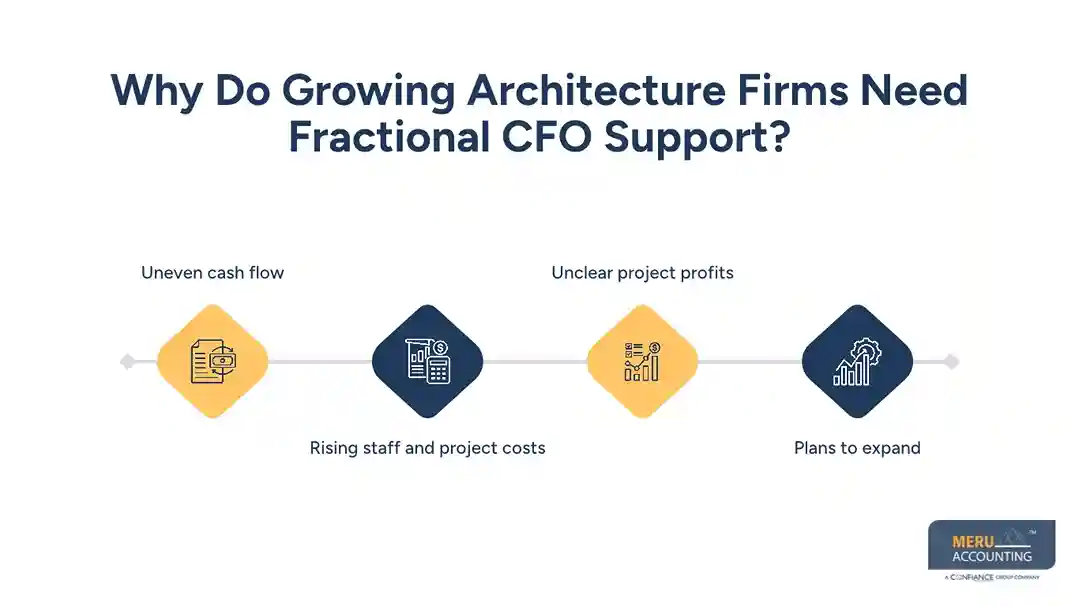
3. Unclear project profits
A firm may win many projects but still earn low profits if fees do not cover staff time, outside consultants, and other job costs. Financial reviews help owners spot these issues early.
4. Plans to expand
Opening a new office, adding a service line, or taking on larger projects calls for sound financial planning. A CFO can assess the costs, risks, and likely return before the firm makes a move.
What Do Fractional CFO Services for Architects Include?
The scope of fractional CFO services for architects can vary by firm size, project mix, and business goals. Most engagements cover a mix of planning, reporting, cost control, and financial advice.
1. Financial Planning, Budgeting, and Forecasting
A fractional CFO helps set annual budgets and build forecasts based on expected revenue, staff costs, overhead, and planned growth. These plans give firm owners a clear view of what they can spend and when they may need more cash.
Forecasts can also be updated as new projects come in, timelines change, or costs rise.
2. Cash Flow Management
Cash flow planning is vital for firms that work on long-term projects. A CFO reviews when client payments are due and compares them with payroll, rent, vendor bills, and other costs.
They may also review billing terms and unpaid invoices to help reduce cash gaps. This gives owners a better idea of how much cash they can use without putting daily work at risk.
3. Project Cost and Profit Analysis
A CFO reviews project budgets against actual costs to see whether each job is earning enough.
This may include:
- Staff hours spent on each project.
- Fees earned against work done.
- Costs of outside design and engineering experts.
- Changes in scope and extra work.
- Actual profit against the planned margin.
These reviews help firm owners spot jobs that take more time or money than planned.
4. Financial Reporting and Performance Reviews
A fractional CFO helps set up clear reports that show how the firm is doing. These may include profit and loss reports, balance sheets, cash flow reports, and project-level results.
They can also hold monthly review meetings to explain key changes, flag risks, and suggest next steps.
5. Pricing and Fee Structure Review
Setting the right fee is key to keeping projects profitable. A CFO can review staff costs, project hours, overhead, and profit goals to help set fees that cover the full cost of work.
They can also help assess fixed fees, hourly rates, and extra fees for changes in project scope.
6. Growth and Risk Planning
A CFO can help assess the cost and risk of taking on more work, hiring staff, buying tools, or opening a new office. They can also review cash reserves and debt needs to help the firm grow at a pace it can support.
How Does an Outsourced CFO for Architecture Firms Improve Project Profitability?
An outsourced CFO for architecture firms brings a closer look at the financial side of each project. Rather than judging success by total fees alone, they review the time, cost, and resources needed to earn those fees.
Here are some ways they can help.
Track project budgets against actual costs: A CFO checks planned staff hours and other costs against what the firm has spent. This helps spot budget gaps before they grow.
Review staff time and billable hours: They can assess how much paid staff time is spent on client work, admin tasks, and rework. This helps owners make better use of their team’s time.
Check the impact of scope changes: Extra client requests can add work without adding fees. A CFO can review the cost of these changes and help set a process to bill for extra work.
Compare profit across projects: Not all projects earn the same margin. By reviewing project results, a CFO can help firm owners see which job types, clients, and services bring in the best returns.
For example, a firm may find that small design jobs take more staff time than planned due to frequent client changes. With this data, the owner can review the fee model, set clear change terms, or adjust the project process.
Key Financial Metrics Every Architecture Firm Should Monitor
Tracking the right numbers helps architecture firm owners spot risks and make better plans. A fractional CFO can help set targets and review these figures each month.
Financial metric | What it tells you |
Net profit margin | How much profit remains after all costs. |
Utilization rate | How much staff time is spent on billable work. |
Revenue per employee | How much revenue the firm earns per team member. |
Days sales outstanding (DSO) | How long it takes to collect client payments. |
Project profit margin | How much profit each project earns after its costs. |
Backlog | The value of signed work yet to be completed. |
Operating expense ratio | How much revenue goes toward daily business costs. |
These metrics should not be viewed on their own. For example, a high backlog may look like a good sign, but it does not always mean the firm will earn a high profit. The work may have low fees, high costs, or long payment terms.
Likewise, a high utilization rate may point to strong staff use, but it can also mean the team has little room for new work. Looking at these figures together gives owners a more useful view of business health.
Fractional CFO Services for Architects by Meru Accounting
An architecture firm’s financial needs don’t end with tracking income and expenses. Owners need to know whether project fees cover the hours spent, how much each project contributes to overall profit, and whether the firm can afford to bring more people on board. These decisions call for financial insight that connects project performance with the firm’s overall goals.
At Meru Accounting, we bring accounting and financial management experience to growing businesses, including firms with project-based operations. Our fractional CFO services for architects focus on the financial side of running an architecture practice, with support across key areas:
- Project Budgeting and Cost Analysis: Set project budgets, compare estimated costs with actual spending, and review staff hours and outside service costs.
- Fee and Profitability Analysis: Assess project fees, pricing structures, and delivery costs to help identify jobs with weak profit margins.
- Cash Flow Forecasting: Map expected client payments against payroll, consultant fees, software costs, and other operating expenses.
- Financial Reporting and Performance Review: Prepare useful financial reports and review key figures to help owners assess business performance.
- Growth and Resource Planning: Evaluate the financial impact of new hires, larger projects, added services, and office expansion.
Our approach connects day-to-day accounting data with the financial decisions architecture firm owners make. With dedicated accounting support, multi-industry experience, and structured review processes, we help firms build a clearer picture of project performance and business health. This gives owners access to financial guidance without the expense of maintaining a full-time CFO position.
Our Expert Insight
A large project backlog can give architecture firm owners a false sense of financial security. Signed contracts show how much work is waiting to be done, but they don’t show when the firm will earn that revenue or how much of it will turn into profit.
For example, a firm may have $1 million in contracted work for the next 12 months. However, if most projects are in early design stages, client approvals are pending, or billing depends on milestones that keep getting pushed back, the firm may not have enough cash to cover planned hires and operating costs.
Our advice is to review the project backlog alongside expected billing dates, project timelines, remaining staff capacity, and estimated delivery costs. This gives owners a more realistic view of future revenue and helps them decide whether to hire, take on another project, or hold off on major spending.
The key distinction is that booked work is not the same as available cash or earned profit. Architecture firms that understand this can make growth decisions based on what their projects are likely to deliver, rather than the total value of contracts they’ve signed.
Key Takeaways
- Fractional CFO services give architecture firms access to senior financial support without a full-time hire.
- Cash flow planning is vital when project fees and client payments come in at set stages.
- Project-level cost reviews help firms spot low-margin work.
- Metrics such as utilization, DSO, and project profit margin can guide better business choices.
- An outsourced CFO can help firms plan for hiring, growth, and new work.
- The right CFO support should fit the firm’s size, goals, and project needs.
FAQs
Architecture firms may benefit from a fractional CFO when project finances become harder to manage, cash flow is less predictable, or owners need financial guidance before hiring, expanding, or taking on larger contracts.
Pricing depends on the firm’s size, financial needs, and level of CFO support. Providers may charge hourly rates, monthly retainers, or fixed fees for specific projects.
Yes. A fractional CFO can assess labor costs, overhead, consultant fees, project timelines, and target profit margins to help firms set fees that cover delivery costs and support their financial goals.
An accountant focuses on financial records, reports, reconciliations, and compliance. An outsourced CFO uses financial data to guide pricing, cash flow, budgets, profitability, and business growth decisions.
Yes. An outsourced CFO for architecture firms can provide part-time financial support without the salary and benefits of a full-time executive. Firms can choose a level of service that fits their budget and current needs.
optional anymore
on running the business