Every business must pay employees correctly and on time. Payroll involves much more than paying employee salaries. It includes calculating wages, managing tax deductions, maintaining employee records, preparing reports, and following labor laws. Even a small payroll error can lead to financial losses, employee dissatisfaction, or compliance issues. As businesses grow, payroll processing becomes more detailed. New employees, changing tax rules, different pay schedules, overtime calculations, and statutory deductions all increase the workload.
Many business owners find that managing payroll internally takes valuable time away from business growth. For this reason, many companies choose a payroll service organization to manage payroll responsibilities.
A professional service provider follows established payroll procedures, maintains accurate records, and keeps payroll activities organized. Outsourcing also reduces administrative work while giving business owners greater confidence in their payroll operations.
What You Will Learn From This Blog
- Understand the meaning of payroll processing and why it matters.
- Learn why businesses outsource payroll responsibilities.
- Discover the key benefits of working with a payroll service organization.
- Understand how payroll professionals manage payroll activities.
- Identify signs that indicate outsourcing may be the right choice.
- Learn how to select the right payroll partner.
- Explore common payroll challenges and practical solutions.
- Understand how Meru Accounting delivers professional payroll services.
What is Payroll Processing?
Payroll processing is the complete process of calculating employee salaries, wages, overtime, bonuses, tax deductions, statutory contributions, and net pay before employees receive their payments. It also includes maintaining accurate attendance records, employee information, salary registers, deduction details, and payment history. Every step must be completed carefully to ensure employees are paid correctly and on time.
In addition to salary calculations, payroll processing helps businesses comply with tax laws and employment regulations while generating payroll reports for business use. It also includes preparing payroll tax reports and supporting timely payroll tax filings where required.
These reports summarize payroll expenses, deductions, taxes, and employee compensation, making financial reporting, audits, and business decision-making more organized and reliable.
Why Businesses Choose To Outsource Payroll Processing
Payroll Becomes More Complex As Businesses Grow
A growing workforce increases payroll responsibilities. New hires, multiple departments, overtime, bonuses, and changing employee benefits require additional attention.
Many businesses outsource payroll processing to reduce internal workload while maintaining consistent payroll operations.
Internal Payroll Consumes Valuable Business Time
Business owners often spend several hours every payroll cycle checking attendance, calculating salaries, reviewing deductions, and preparing payments.
A payroll service provider manages these activities, allowing management to focus on customers, sales, and business development.
Payroll Accuracy is Essential
Payroll mistakes can create employee dissatisfaction and financial corrections. Incorrect deductions or delayed salary payments often require additional administrative work.
Professional payroll specialists use structured review procedures to maintain payroll accuracy.
Compliance Requirements Continue to Change
Tax laws, labor regulations, and statutory reporting requirements change regularly. Keeping internal payroll teams updated requires continuous monitoring.
A reliable payroll service organization stays informed about regulatory updates and applies them during payroll preparation.
Businesses Need Better Payroll Recordkeeping
Payroll records are required for tax filing, audits, employee verification, and financial reporting.
Professional payroll providers maintain organized documentation that remains easily accessible whenever required.
Key Benefits of Outsourcing Payroll Processing to a Payroll Service Organization
Better Payroll Accuracy
Professional payroll specialists follow standardized payroll procedures for every payroll cycle. Many payroll providers use review procedures to reduce calculation errors before payroll is finalized.
Accurate payroll processing creates reliable payroll records and minimizes correction work.
Reduced Administrative Work
Payroll preparation involves collecting attendance, reviewing leave records, calculating deductions, preparing reports, and processing salary payments.
A payroll service organization performs these activities, reducing the workload for internal administrative teams.
Better Compliance Management
Payroll compliance requires businesses to follow employment regulations, tax laws, and reporting deadlines.
Professional payroll providers maintain updated payroll procedures based on current legal requirements, reducing compliance risks.
Consistent Payroll Schedules
Employees expect salaries on the scheduled payment date every month.
Outsourced payroll processing follows established payroll calendars, allowing businesses to maintain consistent payment schedules throughout the year.
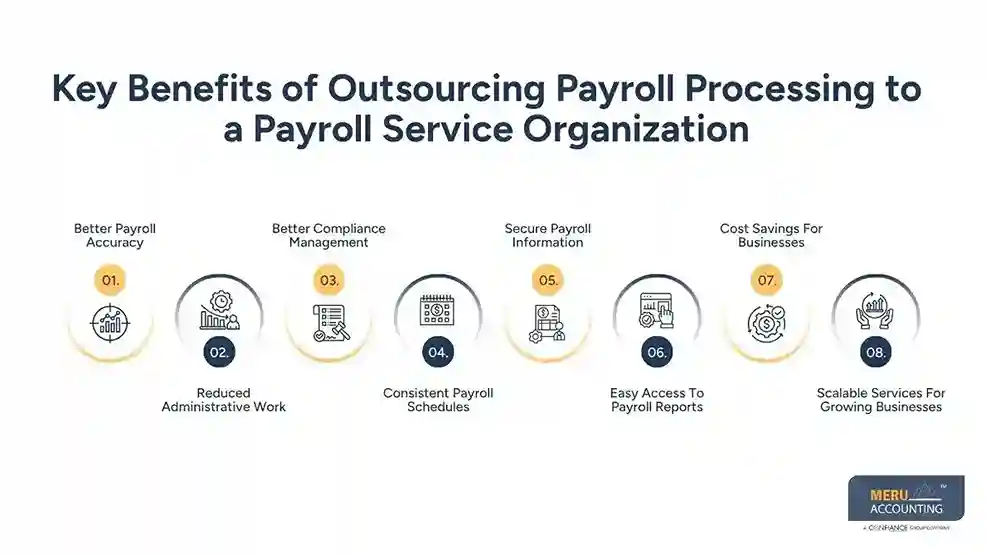
Secure Payroll Information
Payroll data includes employee salaries, tax information, bank details, and personal records.
A professional payroll service provider follows secure data handling procedures to protect confidential payroll information.
Easy Access To Payroll Reports
Businesses often require payroll summaries, tax reports, salary registers, and employee payment history.
Professional payroll providers generate organized reports that simplify financial analysis and management reviews.
Cost Savings For Businesses
Managing payroll internally often requires dedicated staff, specialized software, regular training, and ongoing compliance updates. These expenses can increase as the business grows and payroll becomes more complex.
Outsourcing reduces these overhead costs by providing professional payroll management without the need to maintain a full in-house payroll team.
Scalable Services For Growing Businesses
As businesses expand, employee numbers, salary structures, and reporting requirements also increase. Handling these changes with limited internal resources can become difficult.
An experienced service provider can easily manage changing workforce needs, allowing businesses to grow without disrupting payroll operations.
How Payroll Service Organizations Manage Payroll Processing
Collects Employee Payroll Information
Every payroll cycle begins with collecting attendance records, leave details, overtime hours, incentives, and employee updates. Complete information allows payroll processing to start with accurate data.
A payroll service organization follows a structured process to verify payroll information before salary calculations begin.
Calculates Employee Salaries and Deductions
Payroll specialists calculate gross pay, overtime, bonuses, tax deductions, retirement contributions, insurance, and other statutory deductions.
Each calculation is reviewed before final payroll approval to reduce payroll errors.
Reviews Payroll Before Payment
Payroll reports are checked carefully before salary payments are released. Employee records, deduction amounts, and payment details are verified.
This review process keeps payroll processing accurate and reduces the need for future payroll corrections.
Processes Employee Salary Payments
After payroll approval, salary payments are prepared according to the business payment schedule. Payment files and payroll summaries are generated for internal records.
A reliable payroll service provider follows organized procedures throughout every payroll cycle.
Maintains Payroll Records and Reports
Payroll records are stored for financial reporting, audits, employee requests, and tax compliance. These records include salary registers, deduction reports, tax documents, and payment summaries.
Well-maintained records make future payroll reviews much easier.
Signs Your Business Should Outsource Payroll Processing
Payroll Takes Too Much Time
If payroll preparation requires several days every month, outsourcing may become a practical solution. Business owners can spend more time managing operations instead of payroll administration.
Professional payroll processing reduces repetitive administrative work.
Payroll Errors Occur Frequently
Repeated salary corrections, tax adjustments, or employee payment issues often indicate weaknesses in the payroll process.
A payroll service organization follows standardized payroll procedures that reduce calculation mistakes.
Business Growth Creates More Payroll Work
Hiring additional employees increases payroll responsibilities. More departments, different salary structures, bonuses, and overtime create additional payroll complexity.
Professional payroll specialists can manage growing payroll requirements efficiently.
Compliance Becomes Difficult To Manage
Businesses operating in changing regulatory environments must update payroll procedures regularly.
Outsourcing payroll processing provides access to professionals who monitor payroll compliance requirements throughout the year.
Payroll Records Are Difficult To Maintain
Disorganized payroll records create challenges during audits and financial reporting.
A professional payroll service provider maintains complete payroll documentation for easy access whenever required.
How to Choose The Right Payroll Service Organization
Evaluate Payroll Experience
Look for a provider with practical experience managing payroll for businesses similar to yours. Industry knowledge allows payroll professionals to understand common payroll requirements.
Experience also strengthens payroll accuracy and reporting quality.
Review Compliance Knowledge
Payroll regulations differ across countries and industries. Choose a provider that stays updated with tax rules, statutory deductions, and employment regulations.
A knowledgeable payroll service provider reduces compliance risks.
Assess Data Security Standards
Payroll contains confidential employee information. Ask how payroll records are stored, protected, and accessed.
Strong security procedures protect sensitive payroll data from unauthorized access.
Understand Reporting Capabilities
Businesses require payroll summaries, tax reports, employee earnings statements, and payroll history throughout the year.
Reliable payroll processing should provide organized reports that are easy to understand and access.
Check Customer Support and Communication
Payroll questions often require quick responses. Choose a provider that communicates clearly and provides timely assistance during every payroll cycle.
Good communication creates a smoother working relationship.
optional anymore
on running the business
Common Payroll Processing Challenges And How Outsourcing Solves Them
Manual Payroll Calculations
Manual payroll calculations increase the possibility of human error, especially when employee numbers grow.
Professional payroll processing follows structured payroll procedures that create greater consistency.
Changing Tax Regulations
Payroll regulations frequently change. Businesses may struggle to update payroll calculations without dedicated payroll knowledge.
A payroll service organization monitors regulatory updates and applies required changes during payroll preparation.
Missed Payroll Deadlines
Late payroll affects employee satisfaction and business operations.
Outsourcing introduces organized payroll schedules that keep salary payments on track.
Incomplete Payroll Records
Missing payroll documentation creates difficulties during audits, tax filing, and financial reporting.
Professional payroll providers maintain complete records throughout every payroll cycle.
Limited Internal Payroll Resources
Small finance teams often manage accounting, taxation, reporting, and payroll together. This creates additional workload and increases the possibility of errors.
Outsourcing allows payroll specialists to manage payroll while internal teams focus on other financial responsibilities.
Why Businesses Choose Meru Accounting For Payroll Processing
Managing payroll requires accuracy, consistency, and knowledge of changing compliance requirements. Meru Accounting provides professional payroll processing services designed to reduce administrative workload while maintaining organized payroll operations.
Experienced Payroll Professionals
Our payroll specialists manage employee salary calculations, payroll records, deductions, and reporting. We follow established procedures for every payroll cycle. This process maintains accuracy and consistency.
Accurate Payroll Management
Meru Accounting follows structured review processes before payroll completion. Multiple verification steps reduce payroll errors and maintain reliable employee payment records.
Compliance-Focused Payroll Services
Our team stays informed about payroll regulations and statutory requirements. Businesses receive payroll support designed to help meet current payroll compliance requirements.
Organized Payroll Reports
We prepare payroll summaries, employee reports, salary registers, and tax reports. We also maintain complete payroll documentation. These records make financial reviews and audits easier.
Scalable Payroll Solutions
As businesses grow, payroll requirements increase with new employees, changing salary structures, and additional compliance responsibilities.
Meru Accounting provides payroll services that adapt to these changing business needs while maintaining consistent quality and timely payroll management.
Our Expert Perspective
Payroll is not only about paying employees every month. It is a financial process that affects compliance, employee trust, business reporting, and cash flow planning. During our experience serving businesses across different industries, we have found that many payroll problems begin with inconsistent processes rather than complex calculations.
Businesses that establish organized payroll procedures from the beginning often experience fewer payroll corrections, stronger compliance, and better financial records. Choosing an experienced payroll service provider allows business owners to focus on growth while experienced professionals manage payroll responsibilities with consistency and care.
Key Takeaways
- Payroll includes salary calculations, deductions, compliance, reporting, and employee records.
- Accurate payroll processing reduces payroll errors and strengthens employee confidence.
- Outsourcing saves valuable business time and reduces administrative responsibilities.
- A professional payroll service organization follows organized payroll procedures every pay cycle.
- Proper payroll records simplify audits, tax filing, and financial reporting.
- Compliance management becomes easier with experienced payroll professionals.
- Businesses should review provider experience, security, reporting, and communication before outsourcing.
- Meru Accounting delivers reliable payroll services designed for businesses of different sizes.
FAQs
Payroll processing is the process of calculating employee salaries, deductions, taxes, bonuses, and net pay while maintaining payroll records and following legal requirements.
A payroll service organization manages payroll activities accurately, maintains compliance, prepares payroll reports, and reduces the administrative work for business owners.
Yes. Small businesses often outsource payroll to save time, reduce payroll mistakes, and maintain accurate employee payment records without hiring additional payroll staff.
Payroll processing follows the company’s payment schedule, which may be weekly, bi-weekly, semi-monthly, or monthly, depending on business policy.
Choose a provider with payroll experience, compliance knowledge, secure data handling, clear reporting, responsive customer service, and the ability to manage your business’s payroll requirements efficiently.