




Handling money alongside the business is one of the hardest tasks for small business owners. Many owners spend hours on bills, payroll, and expenses. If they make mistakes in any of these processes, it can cause delays, inaccuracies in accounts, and increased costs. Simply hiring a bookkeeper for small business can solve most of these issues. A bookkeeper can help you track income, bills, and taxes easily. They can help you save time, cut mistakes, and give accurate reports.
Hiring a bookkeeper comes with two options. You can hire an in-house or use an outsourced bookkeeper. Hiring a bookkeeper-type online service makes it easy to get the required support. In this blog, we will help you with everything you need to know for hiring a bookkeeper for small businesses.
What You Will Learn From This Blog
- Why hiring a bookkeeper for small business is important for long-term success.
- How to identify the right time to hire a bookkeeper for your business.
- The key responsibilities of a small business bookkeeper and how they support daily operations.
- Step-by-step guidance on hiring an in-house or outsourced bookkeeper.
- The major benefits of hiring a bookkeeper, including better accuracy, time savings, and compliance.
- How professional bookkeeping helps with tax preparation, financial reporting, and business growth.
- Practical tips to choose the right small business bookkeeper and avoid common hiring mistakes.
Why Small Businesses Need a Bookkeeper
Small businesses often have small teams. Owners do many tasks at once. But many financial tasks may be missed or delayed. Here are some reasons why small businesses need a bookkeeper:
- Track daily sales and payments
- Manage bills and invoices
- Run payroll and pay taxes
- Prepare monthly or quarterly reports
- Track budgets and spending
A skilled bookkeeper makes sure tasks are done on time. You can simply hire a bookkeeper for small business as the solution. They help avoid fines, late payments, and cash flow issues. A professional bookkeeper for small business also helps owners make better financial decisions as the business grows.
Core Responsibilities Of A Professional Bookkeeper
The role of a bookkeeper for small business goes beyond recording numbers. They manage key financial tasks each day, helping business owners stay organized, make informed decisions, and keep their finances on track.
Recording Daily Transactions
A bookkeeper records all income and expenses on a daily basis. This ensures every financial activity is tracked accurately and consistently.
Managing Accounts Payable And Receivable
They monitor payments to vendors and track collections from customers regularly. This helps maintain steady cash flow and supports smooth business operations.
Bank And Credit Card Reconciliation
Bookkeepers match financial records with bank and credit card statements monthly. This reduces errors and quickly identifies discrepancies needing correction or review.
Maintaining Financial Reports
They prepare reports such as profit and loss and balance sheets. These reports help business owners clearly understand financial performance and position.
Payroll Processing Support
Bookkeepers assist in managing employee payroll, deductions, and payment records accurately. This ensures timely salary processing and proper compliance with payroll regulations.
Organizing Financial Documents
They keep invoices, receipts, and financial records well organized and updated. This makes audits, reviews, and financial checks easier and more efficient.
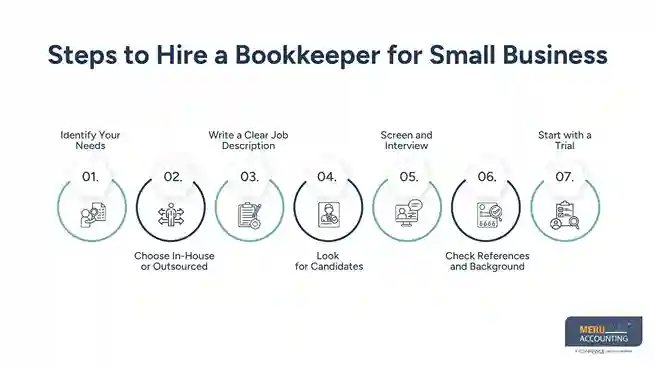
Steps to Hire a Bookkeeper for Small Business
Here are some easy steps to hire a bookkeeper for small business:
1. Identify Your Needs
Before hiring a bookkeeper for small business, list the tasks you need handled.
- Enter daily transactions
- Handle accounts payable and receivable
- Reconcile bank and credit card records
- Run payroll and pay staff
- Prepare monthly or quarterly reports
- Track budgets and costs
Knowing your needs helps pick the right person. Some bookkeepers focus on certain software or industries.
Tip: Write down tasks and priorities before posting the job. This saves time later.
2. Choose In-House or Outsourced
When choosing a bookkeeper for small business, you can hire staff in-house or use outsourced services. Both have benefits.
- In-house: Works on-site, full control, quick access
- Outsourced: Flexible, pay per work done, skilled help
Many small businesses find outsourcing cost-effective. Hiring bookkeeper services gives trained staff without full-time pay.
Tip: Check your monthly workload to see which option fits best.
3. Write a Clear Job Description
A clear description helps attract the right bookkeeper for small business. Include:
- Daily tasks and duties
- Skills or experience required
- Knowledge of software (QuickBooks, Xero, Wave)
- Work hours and pay
- Reporting and deadlines
Clear descriptions save time and bring suitable candidates.
Tip: Give examples of tasks to set expectations.
4. Look for Candidates
You can find candidates in many ways.
- Referrals from other owners
- Job boards or finance sites
- Freelance platforms for remote work
- Local bookkeeping firms
Always check credentials and references. Hire a bookkeeper for small business through trusted sources.
Tip: Ask for work samples to check skill and care.
5. Screen and Interview
Screen resumes and shortlist candidates. Interview to assess skill and fit.
- Ask about past bookkeeping work
- Test software knowledge
- Check detail and deadlines
- Ask how they handle sensitive data
Good interviews cut mistakes and delays.
Tip: Use scenario questions to see how they solve problems.
6. Check References and Background
Verify experience and trustworthiness.
- Contact past employers or clients
- Ask about accuracy and timeliness
- Confirm training or certificates
- Check for legal or financial issues
Trust is key when handling money. Hiring bookkeeper services often pre-checks staff, saving time.
7. Start with a Trial
Start with a trial before a long-term hire.
- Assign a small set of tasks
- Check speed and accuracy
- Review communication and reliability
- Decide on full-time hire
Trials cut risk and ensure fit.
Tip: Set clear goals to measure work quality.
Benefits of Hiring a Bookkeeper for Small Business
Here are some benefits you gain when you hire a bookkeeper for small business:
1. Save Time
Bookkeepers handle routine money tasks.
- Owners focus on clients and growth
- Reports are done faster
- Tasks are checked instead of being done by the owner
Time saved helps business grow.
Tip: Track hours saved weekly to see real gain.
2. Reduce Mistakes
Errors cost money and stress. Skilled bookkeepers lower mistakes.
- Daily check of transactions
- Review reports before submission
- Payroll and taxes done right
Fewer mistakes build trust with banks, clients, and staff.
Tip: Keep an error log to prevent repeated mistakes.
3. Clear Financial Reports
Bookkeepers give clear reports.
- Track profit and loss
- Monitor cash flow
- Check spending per project or client
- Spot trends to guide choices
Good reports help small businesses plan ahead.
Tip: Review reports monthly with your bookkeeper.
4. Stay Compliant
Small businesses must follow tax and legal rules.
- File taxes on time
- Keep records for audits
- Avoid fines or penalties
- Keep financial files safe
Bookkeepers help reduce the risk of breaking rules.
Tip: Ask your bookkeeper to give reminders for key dates.
5. Flexible Support
Hiring a bookkeeper can match work needs.
- Part-time, full-time, or outsourced
- Scale work up or down
- Handle busy seasons
Flexible help keeps costs low.
Tip: Use outsourcing during peak seasons to save money.
6. Focus on Growth
Bookkeepers free owners to focus on growth.
- Spend time on clients and sales
- Launch new products or services
- Plan business growth
Clear numbers help make confident choices.
Tip: Track business goals with your bookkeeper.
7. Secure and Private
Bookkeepers handle private money info.
- Keep records private
- Use safe software
- Follow data rules
Trust is key when you hire a bookkeeper for small business.
Tip: Limit access and check security often.
8. Avoid Hiring Mistakes
Small businesses make errors when hiring.
- Not checking references
- Ignoring software skills
- Poor communication
- Unclear tasks
Avoiding mistakes keeps work smooth.
Tip: Use a checklist for hiring steps.
9. Save Money
Bookkeepers cut costly mistakes.
- Avoid late tax fines
- Track spending to prevent waste
- Cut payroll or payment errors
Hiring an online bookkeeper can give you experts without paying them full-time.
Why Hiring A Bookkeeper Saves Time For Business Owners
One of the biggest benefits of hiring a bookkeeper for small business is the time you save each week. Instead of spending hours on bookkeeping, you can focus on running and growing your business while your finances stay organized.
Less Time On Financial Tasks
Business owners no longer spend hours managing books themselves daily. Outsourcing bookkeeping is one of the strongest benefits of hiring a bookkeeper.
Faster Financial Processes
Financial tasks are completed quickly and accurately by skilled bookkeepers. This reduces delays and keeps financial reporting consistent and up to date.
More Focus On Core Business
Business owners can focus on sales, marketing, and overall growth. Delegating bookkeeping tasks improves productivity and supports business development efficiently.
Reduced Administrative Burden
Financial administration is handled professionally, removing routine daily tasks. This simplifies operations and allows owners to concentrate on strategic activities.
Quick Access To Financial Data
Well-maintained financial records are organized and easy to retrieve anytime. Quick access helps make informed business decisions without wasting valuable time.
Better Time Management
Saved hours can be used for planning, analysis, and business strategy. Efficient bookkeeping is a key reason to enjoy the benefits of hiring a bookkeeper.
How A Bookkeeper Helps With Tax Preparation And Compliance
Working with a bookkeeper for small business can simplify tax preparation and help you meet filing requirements with confidence. Here are some ways they support tax compliance throughout the year.
Organized Financial Records
Well-maintained financial records simplify the preparation and filing of taxes. Organized documents are one of the most practical benefits of hiring a bookkeeper.
Accurate Tax Calculations
Correct tax calculations reduce mistakes and potential penalties for businesses. This ensures financial compliance and prevents unexpected costs or audits.
Timely Filing Of Returns
Deadlines are met without last-minute stress or rushed tax submissions. Timely filing ensures smooth operations and compliance with regulatory requirements.
Support During Audits
Proper documentation provides clarity during financial audits or tax reviews. Comprehensive records increase confidence and make audits easier to handle.
Tracking Deductible Expenses
Eligible deductions are identified and recorded accurately for maximum savings. This reduces taxable income and improves overall business tax efficiency.
Compliance With Regulations
Updated tax rules and requirements are applied to all financial activities. This ensures businesses operate smoothly and meet legal and financial obligations.
Mini Case Studies
Retail Shop: Part-time bookkeeper. Staff saved 15 hours/week. Mistakes dropped by 40 percent. Reports on time.
Consulting Firm: Outsourced bookkeeping. Payroll and invoices managed. Staff focused on clients.
Freelance Designer: Remote bookkeeper. Payments tracked, expenses logged, tax prep easier. Work improved.
Bakery: Outsourced bookkeeping. Orders and payroll handled. Cash flow clear, mistakes cut.
Tech Start-Up: Full-time bookkeeper. Investor reports on time. Trends checked weekly. Growth tracked.
Local Gym: Part-time bookkeeper. Membership fees tracked, spending managed. Owner focused on programs.
Small Salon: Outsourced bookkeeper tracked supplies, payroll, and appointments. Mistakes fell.
Nonprofit: Part-time bookkeeper tracked donations, spending, and grant reports. Compliance improved.
How to Use a Bookkeeper to Maximize Benefits
- Give clear tasks and deadlines
- Provide access to files
- Set expectations for reports
- Review work weekly
- Give feedback to improve
- Hold regular meetings to discuss tasks
This keeps work smooth and accurate.
Tools Bookkeepers Use
- QuickBooks or Xero
- Payroll software
- Cloud storage
- Dashboards for live info
- Alerts for late bills
The right tools make work fast and reduce mistakes.
Common Questions Before You Hire a Bookkeeper for Small Business
- Part-time or full-time?
- In-house or outsourced?
- Which software should they know?
- How soon can they start?
- Which reports need to be weekly or monthly?
Answering these first saves time and mistakes.
Comparison Table: In-House vs Outsourced
Feature | In-House | Outsourced |
Cost | Higher | Lower |
Flexibility | Low | High |
Reporting | Slower | Faster |
Training | Needed | Not needed |
Software | Extra | Included |
Reliability | Varies | High |
Extra Hiring Tips
- Ask for referrals
- Test software skills
- Start small, then expand tasks
- Keep files organized
- Set goals for speed and accuracy
- Schedule check-ins
- Ask about past mistakes and fixes
When you hire a bookkeeper for small business, you can gain a lot of benefits. Most of your accounting management tasks can run smoothly. Whether you hire in-house bookkeepers or outsource is up to you. But hiring an outsourced bookkeeper will prove to be more fruitful in the future. You can contact Meru Accounting today for clear, fast, and accurate bookkeeping done by professionals. Our outsourced bookkeeping services have helped small businesses around the world with significant savings and efficiency.
Our Expert Insight
Hiring a bookkeeper for small business is more than outsourcing financial tasks—it’s an investment in your company’s stability and growth. As your business expands, managing transactions, payroll, invoices, and tax records becomes increasingly complex. A qualified small business bookkeeper helps maintain accurate financial records, reduces costly errors, and provides timely reports that support better business decisions. Whether you choose an in-house professional or outsourced bookkeeping services, selecting the right partner allows you to spend less time on administrative work and more time growing your business with confidence.
Key Takeaways
- Hiring a bookkeeper for small business helps maintain organized and accurate financial records.
- A professional bookkeeper manages daily transactions, reconciliations, payroll, and financial reports efficiently.
- The benefits of hiring a bookkeeper include saving time, reducing errors, improving cash flow visibility, and supporting business growth.
- Choosing between an in-house and outsourced bookkeeper depends on your budget, workload, and business needs.
- Proper bookkeeping simplifies tax preparation, improves compliance, and helps avoid costly penalties.
- Following a structured hiring process makes it easier to find the right small business bookkeeper for your business.
- Reliable bookkeeping gives business owners better financial insights, allowing them to make informed decisions with confidence.


