When you hire an accountant for small business needs, the goal is not only to record sales and costs. A good accountant can keep books in order, prepare tax data, review reports, and give clear advice when money choices matter. The right level of service can also save time and reduce costly errors.
Many owners ask about small business accountant costs before they make a choice. Fees can vary by work, business size, tax needs, and the way the accountant bills. A simple firm with few sales may pay far less than a firm with staff, stock, many bank accounts, or more than one tax filing.
The U.S. IRS states that business records should show income, costs, and other key items that support tax filings. Good records also make it easier to track costs and prepare tax returns.
Knowing the price before you hire an accountant for small business work can help you set a fair budget. The key is to compare the work in each quote, not just the fee.
What You Will Learn From This Blog
- Why small firms may choose to hire an accountant for small business needs.
- What affects the cost of an accountant.
- Common hourly and monthly price models.
- What can raise or lower accounting fees.
- How to compare quotes from accounting firms.
- When outsourced accounting may be a good fit.
- What questions to ask before you hire an accountant for small business accounting.
Why Hire An Accountant For Small Business?
Keep Books In Order
When you hire an accountant for small business work, one key task is keeping financial records neat and up to date. Sales, bills, bank items, payroll, and other entries need the right record.
The IRS notes that good records can aid tax work, reports, and the review of business income and costs.
Stay Ready For Tax Work
Tax work needs more than a pile of bills and bank files. An accountant can sort data, check key figures, and prepare records for the tax filing process.
Self-employed owners may also need tax payments during the year. The IRS says many self-employed people must make tax payments as they earn income.
Get Clear Financial Reports
A small firm needs to know more than its bank balance. Profit and loss reports, balance sheets, and cash flow data can show how the firm is doing.
The small business accountant cost can also depend on whether basic reports or more detailed financial analysis are included. Such data gives an owner a sound base for key money choices.
Save Owner Time
Bookkeeping work can take many hours each month. Owners may spend that time on sales, staff, clients, stock, or daily work instead.
When you hire an accountant for small business tasks, some of the work can move to a trained finance team. The value is not just the fee saved in one task, but the time gained each month.
How Much Does A Small Business Accountant Cost?
Hourly Accounting Rates
Hourly billing can make small business accountant costs easier to manage when accounting needs are occasional rather than ongoing. Current U.S. market sources show that basic accounting work may sit below CPA advisory rates, while CPA work can cost much more.
For example, SmartAsset reports CPA hourly rates of about $150 to $400, with the rate tied to skill and the type of work.
Monthly Accounting Fees
A monthly plan may be a better fit for a firm that needs regular books, reports, and tax support. Current market guides place many small business monthly plans in the range of about $500 to $1,500, while more complex work can cost more.
When you hire an accountant for small business accounting, compare the fee with the services included in the plan. A low fee may cover only basic books, while a higher fee may include payroll, tax work, reports, and advice.
Tax Preparation Fees
When you hire an accountant for small business tax support, ask whether tax filing is included in the yearly fee or billed separately. A basic return may cost less, while a return with several entities, staff, assets, or complex tax matters may cost much more.
One current CPA fee guide places small business tax filing around $500 to $2,500, though actual quotes vary by case.
Bookkeeping And Accounting Plans
Bookkeeping and accounting are not always the same service. Bookkeeping records and sorts day-to-day data, while accounting can include reports, review, tax work, and advice.
A firm may need only monthly books at first. As sales rise, the owner may need tax work, cash reports, payroll checks, or planning.
Full-Service Accountant Support
A full-service plan may include bookkeeping, account checks, tax prep, payroll, reports, and regular calls. Such a plan costs more because the scope is much wider.
When you hire an accountant for small business needs, ask for a clear list of what the fee covers. Also ask what work is billed outside the plan.
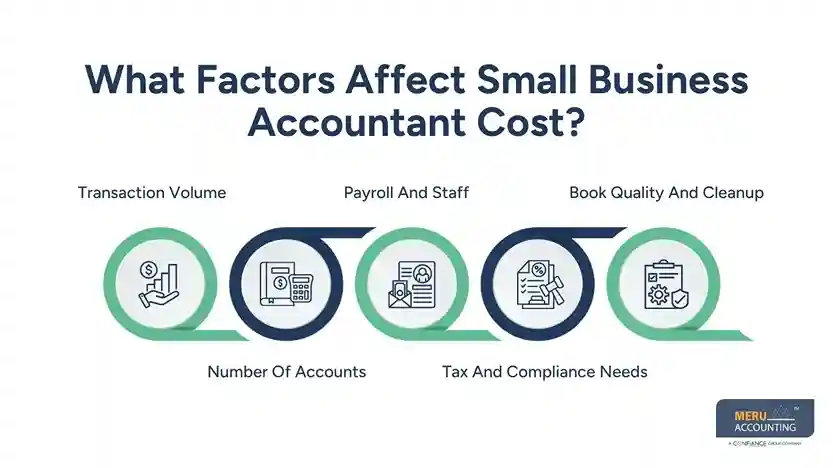
What Factors Affect Small Business Accountant Cost?
Transaction Volume
More sales and costs mean more records to sort and check. A firm with 40 bank items each month may need less work than one with 1,000 items.
That is why small business accountant cost often rises as the number of sales, bills, refunds, and bank entries grows.
Number Of Accounts
Each bank, card, loan, and payment account may need a check. More accounts mean more data to match and more items to review.
When multiple accounts require regular reconciliation, choosing to hire an accountant for small business support can reduce the administrative workload.
Payroll And Staff
Payroll adds more work to an accounting plan. Pay data, tax withholdings, reports, and employee records all need care.
A business with ten staff will often pay more than a firm with no staff. The fee may also rise when the firm needs payroll reports or tax filings.
Tax And Compliance Needs
Tax work can vary by business type, state, entity, and filing needs. A sole owner may have a simpler setup than a firm with several entities.
The IRS notes that the form of business can affect which taxes and forms apply.
Book Quality And Cleanup
Clean books cost less to maintain than books that need months of repair. Old bank gaps, mixed costs, wrong entries, and missing bills can add many hours.
Before you hire an accountant for small business work, ask if cleanup is part of the first quote. A low monthly fee may not include old-book repair.
optional anymore
on running the business
What Is The Average Accounting Services Cost For Small Business?
Basic Monthly Bookkeeping
A small U.S. firm with low transaction volume may see monthly fees around $300 to $750 for basic outsourced work. More active firms may fall around $500 to $1,500 or more.
These figures are market guides, not fixed rates. Accounting services cost for small business needs can change based on scope and location.
Bookkeeping With Tax Support
A plan that adds tax prep, tax review, or year-end work will cost more than basic books, especially when you hire an accountant for small business tax and accounting needs. The value comes from having the same team work with the records through the year.
Ask whether tax filing is part of the monthly fee or billed once a year. Clear terms make it easier to plan your cash.
Payroll And Financial Reports
Payroll, monthly reports, cash flow data, and management reports add more work. A business that needs weekly or custom reports may pay more than one that needs only a monthly profit and loss report.
The right plan should match how often the owner needs data when they hire an accountant for small business reporting and payroll support. Paying for reports that are never used may not be a good use of funds.
Complex Business Needs
Stock, several locations, many payment systems, foreign sales, loans, or several legal entities can raise the fee. Each extra layer can add more checks and more tax work.
For that reason, accounting services cost for small business work should be judged by the full scope, not by a base rate alone.
How To Choose The Right Small Business Accountant
Define The Work First
Before you hire an accountant for small business work, list what you need. Include books, payroll, tax work, reports, cleanup, and calls.
A clear list makes each quote easier to compare and helps you understand the small business accountant cost before signing an agreement.
Check Skills And Experience
Look for an accountant who knows your type of business. A retail firm may need stock and sales tax skills, while a service firm may need more focus on billing and cash flow.
Ask about similar clients and the type of work the accountant does each month. Experience with your business type can matter more than a low rate.
Ask About Software And Access
Ask which accounting system the firm uses and how you will share files. Owners should be able to see key reports and keep access to their business data.
Good record systems also matter for tax work. The IRS allows businesses to use a record system that clearly shows income and costs, including electronic systems.
Review The Agreement
Read the service terms before you sign. Check the monthly fee, tax fees, setup fee, notice period, extra work rate, and payment terms.
When you hire an accountant for small business needs, written terms protect both sides. Clear terms also make it easier to change the plan as the firm grows.
Why Choose Meru Accounting To Hire An Accountant For Small Business?
Practical Accounting Support
When you hire an accountant for small business needs, the service should match your daily finance work. Meru Accounting provides bookkeeping, tax, payroll, reporting, and other accounting services based on your business needs.
Flexible Service Options
Small business accountant costs can change based on the work included in a plan. Meru Accounting can shape accounting support around transaction volume, payroll, tax needs, reporting needs, and the level of service required.
Skilled Accounting Team
A good reason to hire an accountant for small business work is access to trained accounting professionals without building a large in-house team. Meru Accounting works with accounting professionals who follow clear processes for routine finance work.
Technology-Based Accounting
Cloud accounting tools make it easier to share records, review data, and keep finance work organized. Our team works with common accounting platforms to keep financial records easy to access and review.
Support That Fits Your Needs
Accounting services cost for small business needs can vary as the firm grows. Meru Accounting can adjust the level of service when transaction volume, payroll, tax work, or reporting needs change.
Our Expert Perspective
Our expert view is that accounting fees should match the work, service level, and value a business receives. When you hire an accountant for small business needs, compare bookkeeping, tax work, payroll, reports, cleanup, meetings, and extra fees instead of choosing only the lowest quote. Review the current books first, as poor records may add cleanup work and raise the total fee.
Small business accountant cost can also change as sales, staff, accounts, and transactions grow, so the service plan should allow room for future needs. Good accounting should provide more than data entry; clean records, timely reports, tax guidance, and useful financial data can give owners better control over money.
Key Takeaways
- Hire an accountant for small business needs when finance work takes too much owner time.
- Compare service scope before comparing fees.
- Basic accounting may cost less than full tax and advisory work.
- Small business accountant cost rises with volume, payroll, accounts, and tax needs.
- Ask if cleanup work is included in the first quote.
- Check whether tax filing is part of the monthly plan.
- Accounting services cost for small business needs varies by scope and complexity.
- Hourly rates can suit short jobs, while monthly plans suit ongoing work.
FAQs
Many small U.S. firms may pay about $500 to $1,500 per month for ongoing accounting work, but simple or complex cases can fall outside that range.
The main factors include transaction volume, number of accounts, payroll, tax work, business structure, bookkeeping condition, reporting needs, and the level of financial advice required.
A monthly accountant may be better for ongoing bookkeeping, reports, payroll, and tax support, while hourly accounting can suit one-time or occasional work.
Ask what is included, what costs extra, who will do the work, which software is used, how reports are shared, and how tax fees are billed.
An accountant can identify eligible deductions, review records, and plan for taxes, but tax savings depend on the business facts and applicable tax rules.
optional anymore
on running the business