
Hotels, inns, resorts, cafes, bars, and event sites deal with changing guest demands every day. Costs can rise frequently without getting noticed. Staff payroll, food costs, supply costs, and day-to-day bills may all affect the profit. To stay on track, owners need to understand facts about where cash comes from and where it goes. Hospitality bookkeeping is essential to understand sales, costs, cash flow, and profit within the business. With the right data, financial decision-making improves to a great extent.
When records are not up to date, it can be hard to know if the firm is making money. It can also be hard to spot waste, plan for growth, or deal with tax needs. In this blog, we will look at how hospitality bookkeeping helps firms make better financial choices and build a strong base for long-term success.
What You Will Learn From This Blog
In this blog, you will learn:
- What hospitality bookkeeping means
- Why is it key for financial planning
- How it helps track sales and costs
- How it helps with cash flow
- Why it helps with budgets and plans
- How it helps boost profit
- Signs that your firm may need better bookkeeping
- How external bookkeeping support can help
Understanding Hospitality Bookkeeping
Hospitality bookkeeping is the work of tracking and sorting all financial tasks for a hotel, food business, resort, or other guest-based firm.
This work may include:
- Sales tracking
- Cost tracking
- Payroll
- Bill payments
- Stock tracking
- Tax records
- Cash flow review
- Financial reports
Most guest service firms have more than one way to earn cash. A hotel may earn from rooms, food sales, events, and add-on guest services. This can make financial tracking harder than in many other fields.
Good hospitality bookkeeping keeps all financial data understandable. It helps owners see the complete state of the firm at any time.
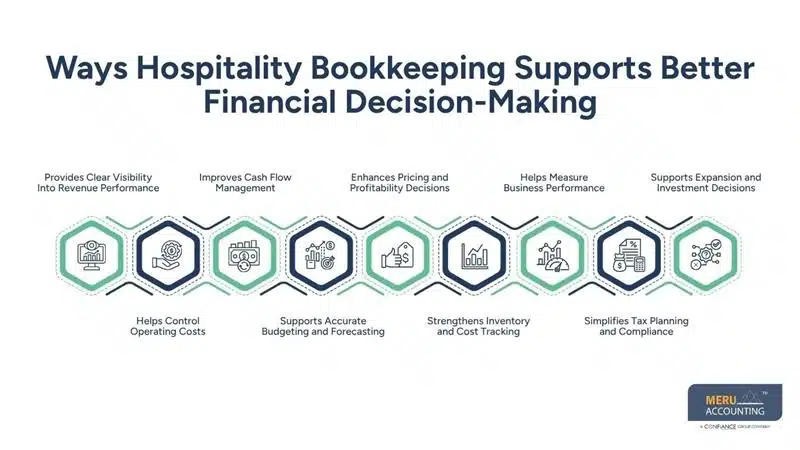
Ways Hospitality Bookkeeping Supports Better Financial Decision-Making
1. Provides Clear Visibility Into Revenue Performance
A firm must know where its sales come from if it wants to grow.
Tracking Revenue From Multiple Income Streams
Most guest service firms earn cash from more than one source.
These may include:
- Room stays
- Food sales
- Drink sales
- Event space fees
- Tour plans
- Guest add-on services
Hospitality bookkeeping helps track each source on its own. This makes it easy to see which parts of the firm bring in the most cash and which need more work.
Identifying High-Performing Services and Departments
When sales data is clear, owners can see which teams or services bring the best results.
For example, a hotel may find that events bring in more profit than room stays. A resort may learn that drink sales rise more than food sales.
These facts help create smart plans and wise use of funds.
2. Helps Control Operating Costs
Cost control is one of the best ways to raise profit.
Monitoring Labor, Inventory, and Overhead Expenses
Guest service firms often spend large sums on:
- Staff pay
- Food and drink stock
- Rent
- Electricity bills
- Water bills
- Repairs
- Tools and gear
Hospitality bookkeeping keeps track of these costs on a day-to-day basis.
This helps firms know where cash goes each month.
Finding Opportunities to Reduce Unnecessary Spending
Good records can point out waste that may not be easy to spot at first.
This may include:
- Too much staff time
- Food waste
- High supply use
- Extra vendor fees
- Stock loss
When these issues are found early, firms can cut waste and save cash.
3. Improves Cash Flow Management
Cash flow is the lifeblood of any firm.
A firm can show a profit on paper and still face cash issues if funds do not come in on time.
Tracking Incoming and Outgoing Funds
Hospitality bookkeeping helps track:
- Guest payments
- Card sales
- Vendor bills
- Staff pay
- Rent costs
- Loan payments
This gives owners a better understanding of cash in and cash out.
Maintaining Healthy Cash Reserves for Daily Operations
Strong cash flow helps firms pay bills on time and avoid stress. It also helps them deal with slow times, market shifts, and sudden costs.
A firm with good cash flow is in a much safer spot than one that runs short on funds.
4. Supports Accurate Budgeting and Forecasting
Plans work best when they are based on real facts.
Using Historical Financial Data for Future Planning
Past records can show:
- Sales trends
- Slow times
- Peak times
- Cost trends
- Guest demand changes
This data helps firms make better plans for the months ahead.
Creating Realistic Budgets Based on Business Trends
A good budget should be based on real results, not hopes.
Hospitality bookkeeping gives firms the facts they need to build fair and useful budgets.
This helps lower risk and makes it easier to meet financial goals.
5. Enhances Pricing and Profitability Decisions
Price plays a big role in profit.
If rates are set too low, the profit may fall. If it is set too high, the sales may drop.
Evaluating Profit Margins Across Services
Each part of a firm may bring a different level of gain.
For example:
- Rooms
- Food sales
- Drink sales
- Event work
Bookkeeping data helps owners see which areas earn the best return.
Adjusting Pricing Strategies Based on Financial Insights
When costs rise, firms may need to change rates. With strong records, owners can make price changes based on facts rather than estimates.
This helps protect profit while still giving guests good value.
6. Strengthens Inventory and Cost Tracking
Stock control has a direct link to profit.
Managing Food, Beverage, and Supply Costs
Hotels and food sites often keep large stock levels.
This may include:
- Food
- Drinks
- Paper goods
- Room items
- Clean-up goods
Hospitality bookkeeping helps track what comes in and what goes out.
This helps firms keep stock at the right level.
Reducing Waste and Inventory-Related Losses
Poor stock control can lead to:
- Waste
- Loss
- Theft
- Spoiled goods
- Extra orders
Good tracking helps cut these issues and save cash.
7. Helps Measure Business Performance
A firm must track results if it wants to grow.
Tracking Key Financial Metrics and KPIs
Bookkeeping data helps firms track key financial signals such as:
- Gross profit
- Net profit
- Cost rates
- Cash flow
- Sales growth
- Room use rates
- Guest spend rates
These signs show how well the firm is doing.
Comparing Actual Performance Against Financial Goals
Most firms set goals for sales, profit, and growth.
Bookkeeping reports help owners see if they are on track.
If goals are not met, they can act fast and make changes.
8. Simplifies Tax Planning and Compliance
Tax work is much easier when records stay up-to-date all year.
Maintaining Organized Financial Records Throughout the Year
Good bookkeeping keeps all key records in one place.
This may include:
- Sales logs
- Cost logs
- Staff payroll data
- Tax forms
- Vendor bills
This helps save time when tax dates come near.
Reducing Errors During Tax Preparation and Filing
Poor records can lead to tax mistakes. Good hospitality bookkeeping helps lower the risk of wrong data, missed forms, and late filings.
This can help firms avoid fees and stress.
9. Supports Expansion and Investment Decisions
Growth plans need strong financial data.
Assessing Financial Readiness for Growth
Before a firm grows, it should know:
- Cash on hand
- Debt load
- Profit level
- Cost trends
- Sales growth
Bookkeeping reports help owners judge if the time is right to grow.
Using Financial Reports to Secure Funding and Investments
Banks and fund groups often ask for financial reports.
These may include:
- Profit reports
- Cash flow reports
- Balance sheets
- Cost reviews
Strong records help build trust and may raise the odds of fund approval.
Signs Your Hospitality Business Needs Better Bookkeeping Practices
Your firm may need better bookkeeping if:
- Cash flow is hard to track
- Reports are late
- Costs rise with no clear cause
- Stock counts do not match records
- Tax work feels hard each year
- Profit seems hard to measure
- Financial data is not easy to find
- Plans are based on estimates
These signs often point to weak record systems.
How Outsourced Hospitality Bookkeeping Can Improve Financial Management
Many firms now hire external teams to handle bookkeeping work.
This can help by:
- Saving time
- Lowering staff load
- Raising data quality
- Giving clear reports
- Improving cash flow review
- Helping with tax work
- Giving access to skilled pros
Many firms also use hospitality accounting services to gain more help with reports, budgets, tax work, and financial plans. With expert help, owners can spend more time on guests and daily work.
Meru Accounting's Hospitality Accounting Services
At Meru Accounting, we offer hospitality accounting services built for hotels, resorts, cafes, restaurants, and other guest-based firms.
Our services include:
- Hospitality bookkeeping
- Bill pay support
- Client billing
- Staff payroll
- Cash flow review
- Inventory tracking
- Budgeting
- Tax-ready reports
- Financial reports
- Virtual accounting support
Our team knows the needs of the guest service industry. We have helped hospitality firms keep clear records, track key data, and make smart financial choices. With the right tools and skilled professionals, we help clients save time, cut waste, and grow with more trust in their numbers.
Our Expert Insight
Many hospitality firms spend most of their time on guest care, sales, and daily tasks. While these areas matter, financial data is equally important. Strong hospitality bookkeeping gives owners a clear view of how the firm is doing. It helps them track sales, watch costs, manage cash flow, and plan for growth.
Firms that use good data often make better choices and deal with changes more easily. Over time, this can lead to more stable growth and stronger profit.
Key Takeaways
- Hospitality bookkeeping helps firms make smart business choices.
- It gives a clear view of sales, costs, and profit.
- Good records help improve cash flow.
- Bookkeeping helps build strong budgets and plans.
- Cost tracking can help reduce waste and increase profit.
- Inventory tracking helps lower losses.
- Clear reports help firms judge results.
- Hospitality accounting services can help improve financial control.
- Accurate records support the growth and long-term success of hospitality businesses.
FAQs
Hospitality bookkeeping is the work of tracking and sorting money records for hotels, food sites, resorts, and other guest service firms.
It helps firms track sales, watch costs, manage cash flow, plan for taxes, and make smart money choices.
It helps owners spot waste, track costs, review sales, and make changes that can improve profit.
Yes. Hospitality accounting services can help small firms keep good records, save time, and gain clear financial reports.
Common reports include profit reports, balance sheets, cash flow reports, cost reports, and budget reports.