
An accounting management report is the backbone of strong business finance. It gives a clear view of profits, losses, and financial risks using financial accounting data. With the right structure, it helps managers make sound choices. Numbers are simplified into insights that guide growth planning.
Every company needs a management report for Accounting to track progress and stay on target. Without them, owners risk blind spots in money decisions. Well-prepared reports add discipline to financial accounting and support better business control. This is why management reporting for accountants is seen as vital in the modern business environment.
What You Will Learn From This Blog
- What a management report is and why it matters in financial accounting.
- The key components every accounting management report should include.
- How such reporting helps accountants support better business decisions.
- The step-by-step process for creating an effective management report.
- Common mistakes to avoid when preparing management reports.
- How reporting tools and templates improve accuracy and save time.
Introduction to Accounting Management Reports
An accounting management report is not just a sheet with numbers. It gives life to your data. This report explains where your money goes and how your business is doing through financial accounting data. Many small and mid-size firms depend on it for smart planning.
It may include income, cost, profit, cash flow, and key points from your balance sheet. It helps you see if the business is growing or needs change.
A well-prepared report is essential for effective business decisions based on financial accounting data. You don’t guess. You act based on facts. It keeps you aware of all the money in and out of your business.
Key Components of a Management Report for Accounting
Every good management report in financial accounting has a few core parts. These show how well your business runs.
Income and Cost Summary
Summarizes income and expenses from financial accounting records in one spot. Shows where profits are made and where costs rise. It helps spot areas that need action and better control.
Cash Flow Statement
Tracks cash coming in and going out. Helps plan for bills, payroll, and other costs. Shows if your business is strong or if cash will run out soon.
Balance Sheet Overview
List of what you own and owe. It tells the value of the business at a point in time. A healthy sheet shows a stable and growing firm.
Budget vs Actual Report
Shows what you planned versus what happened. Helps find areas that need fixing. Good for tracking if you’re hitting your financial targets each month.
Key Financial Ratios
These ratios compare sales, profits, or assets. They give fast insights into business health. Useful for knowing if money is being used well or poorly.
Why Management Reporting for Accountants Matters
Effective management reporting for accountants improves the quality of advice they provide to clients. These reports offer timely insights, promote accountability, and turn data into results.
From Data Entry to Strategic Role
Accountants now guide business growth. Reports help them advise leaders on better plans. It changes their role from number entry to key business support.
Better Advice for Clients
With reports, accountants give better tips. They help clients spot waste, boost profits, and grow faster. Reports turn numbers into smarter decisions.
Spotting Risks Early
Management reporting for accountants shows where things may go wrong and warns about bad trends or falling profits. This helps stop problems before they grow too big.
Adds Value to Accounting Work
Good reports make accountants more useful. They shift focus from tasks to insights. This builds trust and proves their work helps the business grow.
Steps to Craft the Perfect Accounting Management Report
Define the Purpose
- Know the specific audience that will read the report. Each group may want a different style or detail level.
- Decide if it is meant for managers or investors. Purpose helps you select only relevant numbers to show.
Collect the Right Data
- Collect records about income, expenses, invoices, and outstanding receivables for a precise management report for Accounting. Accurate collection is the basis for reliable reporting work.
- Include cost and expense data from all departments. This ensures every dollar spent is tracked with care.
- Add cash flow reports to show the movement of funds. Cash data reveals whether the business is strong or weak.
- Balance sheet details must also be part of the report. They provide a snapshot of assets and liabilities together.
- Include sales and growth records for trend spotting. Growth data shows how well the company is performing.
Choose a Clear Format
- Start the report with a simple executive summary. This helps busy leaders understand key insights quickly.
- Add an income statement to show revenue, expenses, and business profit. It highlights whether revenue covers costs and planned targets.
- Add balance sheet details showing assets and liabilities. It gives a clear picture of the financial strength position.
- Include a cash flow report with inflow and outflow. Cash flow shows daily stability and monthly flexibility.
- Use graphs and tables to present key business trends. Visuals keep reports attractive and easy to read.
Highlight Key Metrics
- Include profit margin to check the business’s earning strength in your report.
- Add revenue growth rates to show upward business performance. Growth helps managers track progress across financial periods.
- Include expense ratios to measure cost against revenue. This identifies areas where costs may be too high.
- Show cash flow trends using financial accounting data for both past and current months. These trends highlight the liquidity available for operations.
- Add the debt versus equity ratio to measure balance. Ratios reveal if borrowing levels are safe or risky.
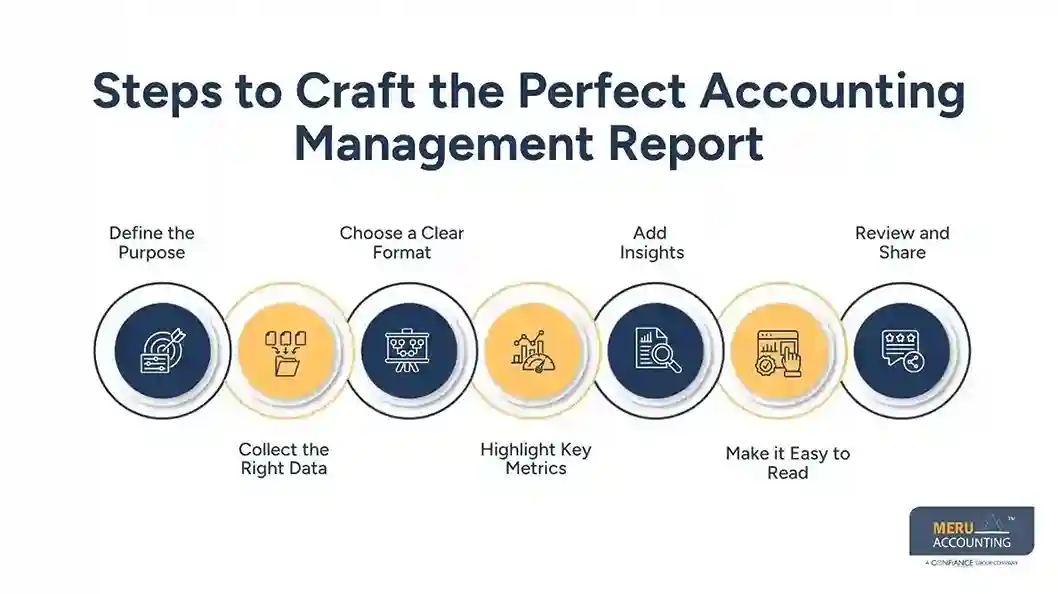
Add Insights
- Explain numbers with simple words in reporting for quick reader clarity. Insights make data useful instead of just static figures.
- Show reasons for the rise or fall in company income. Leaders need context before taking corrective or growth actions.
- Suggest cost control ideas to improve the overall profit margin. Action points add more value than plain financial figures.
- Point out risks that may harm the company’s growth. Risk analysis prepares leaders for better financial planning.
Make it Easy to Read
- Use short bullet points for presenting financial information. Simple points make reports more engaging and easier.
- Avoid long text and heavy jargon in the content. Clear words help all readers, even non-finance managers.
- Add neat tables with structured rows and financial columns in your report. Tables bring order to complex numbers and reduce confusion.
- Use graphs and charts that highlight major financial movements. Graphics allow readers to grasp results at first glance.
- Create headings and subheadings to divide major sections. A clear structure ensures the report is smooth and logical.
Review and Share
- Double-check all data for accuracy before final sharing. Even small errors can damage trust with company leaders.
- Make sure the report format is clean and professional. A neat look makes it easier for everyone to read.
- Share the report with only the right decision makers. Focused delivery ensures the right people act on time.
Tools and Templates to Streamline Management Reporting
Using the right tools to build a clear management report for accounting saves time and boosts accuracy. These tools turn raw data into action.
Cloud-Based Software: Online tools link to bank data. They track money in real time. This keeps reports fresh, helps avoid mistakes, and saves lots of time.
Report Templates: Templates give you a solid format. They save effort and ensure every part is clear. Templates also make each report look clean and simple.
Dashboards and Charts: Visuals help explain the numbers fast. A graph is easier than a long table. Charts make it simple for readers to spot trends and risks.
Automation Tools: These tools pull numbers from different apps. They keep data fresh and synced. No need to update by hand each time you report.
Common Mistakes to Avoid in Management Reporting
Even the best management reporting for accountants fails if basic errors slip in. These mistakes can lead to missed insights and poor decisions.
Too Much or Too Little Info: Avoid long or empty reports. Show only what matters. Aim for short but full details that support clear actions and useful decisions.
Ignoring Visuals: Without graphs, reports get dull. Visuals help readers get the message fast. Use clear charts to explain profits, losses, and changes over time.
Not Linking Report to Goals: Reports must match your goals. If a report doesn’t track targets, it’s not useful. Always show if you’re close or far from your goals.
No Regular Updates: Old reports don’t help much. Share updates monthly or each quarter. This keeps trends visible and actions on time.
Missing Action Points: Numbers mean little without actions. Each report must say what’s next. Suggest clear steps to take based on the numbers shown.
An accounting management report is more than numbers, but it is a tool for smart choices, risk checks, and growth. At Meru Accounting, we craft tailored reports that track income, costs, cash flow, and trends while linking them to clear goals. Our team uses tools like Xero, QuickBooks, Sage, Zoho Books, and Odoo to deliver real-time insights, not just templates. With our management reporting, you can turn your data into insight, and your insight drives growth.
Key Takeaways
- A management report turns financial accounting data into useful business insights.
- Clear reports help managers monitor performance, control costs, and identify risks early.
- Including financial statements, key metrics, and actionable insights makes reports more valuable.
- Accurate data, simple formatting, and regular reviews improve report quality.
- Modern reporting tools help automate data collection and support faster decision-making.
FAQs
It is a financial report that includes key data like income, cash flow, expenses, and trends. It helps business owners make smart decisions based on real-time financial facts.
Management reporting helps accountants deliver insights, not just numbers. It allows them to advise clients, track goals, spot risks, and become strategic business partners.
It’s best to create a report monthly or quarterly. Regular reports help you track growth, avoid issues, and plan better for the future.
You can use tools like Xero, QuickBooks, or Excel templates. These tools speed up report-making and reduce errors, making your Report more accurate and useful.
It should include income and expenses, cash flow, balance sheet summary, key ratios, and a comparison of budget vs actuals.
optional anymore
on running the business