Smart businesses in the UK keep all bills and invoices well-organised. These records give a clear view of how money moves in and out. When you track each bill, you avoid surprise costs and make smart choices. A good system also saves time during audits and tax returns. Without neat records, you risk errors, missed claims, and fines. Every invoice helps you understand earnings, and each bill shows spending. Keeping these files clean means peace of mind. As your business grows, accounting records become more important. It keeps you on track and helps you plan better.
What You Will Learn From This Blog
- The importance of maintaining accurate accounting records for UK businesses.
- How organised bills, invoices, and financial documents improve daily financial management.
- The role of proper record-keeping in supporting HMRC compliance and reducing errors.
- How accurate records help businesses manage cash flow and make better financial decisions.
- Best practices for storing, organising, and protecting important financial data.
- How professional accounting support can simplify record management and improve efficiency.
What Are Accounting Records and Why Do They Matter?
Accounting records include receipts, invoices, payroll slips, and billing and invoicing documents that help track business transactions accurately.
These records show your income, expenses, and taxes. Every UK business needs them to plan and stay compliant. When your files are clear, you see where the money goes and comes from. This helps in tax filing and better spending.
With strong records, you gain trust from banks, investors, and partners. It’s not just about rules, but it’s about control. If you miss keeping proper records, you may face tax issues.
The Importance of Accounting Records for Small and Large UK Businesses
The importance of accounting records lies in their role in tracking money, reducing errors, and building trust with lenders and tax bodies.
Helps in Smart Planning
With proper records, you can review past performance and plan your next steps with confidence. This helps you set goals, avoid mistakes, and improve cash handling.
Boosts Trust with Banks and Clients
Accurate records and efficient billing and invoicing practices build trust. Banks offer loans more easily when they see clean financials, while clients value businesses that are transparent and organised with their numbers.
Keeps You Ready for Checks
If HMRC audits your firm, you won’t panic. Good records let you show proof of income, costs, and taxes paid. This avoids penalties and keeps your reputation strong.
Key Differences Between Bills and Invoices
Bills and invoices are not the same, though they both play an important role in billing and invoicing management. You need both to keep complete financial records.
Aspect | Bill | Invoice |
Definition | A document received after a purchase, requesting immediate payment. | A document provided to customers that outlines the details of a sale and the agreed payment terms. |
Purpose | Records what your business spends and when payment is due. | Tracks earnings and sets due dates for customer payments. |
Timing | Sent at the point of purchase or service receipt. | Sent after providing a product or service to a client. |
Why It Matters | Helps manage outflows and ensures you track expenses accurately. | Helps manage inflows and guarantees you receive payment on time. |
Timing | Sent at the point of purchase or service receipt. | Sent after providing a product or service to a client. |
Top Reasons to Maintain Accurate Records
Good records and organised billing and invoicing processes make daily financial management easier. They support tax tasks, improve payment tracking, and help you stay protected from risks or losses. The importance of accounting records here cannot be ignored, as they act as a guide for smarter business management.
Track Your Money Flow
With solid records, you see where your money goes. This helps you set budgets, avoid waste, and know when it’s safe to spend or save.
Avoid Late Fees
You won’t forget payments or miss due dates. This means fewer penalties or late charges, keeping your business reputation and credit strong.
File Tax Returns with Ease
Filing taxes becomes simpler with organized data. You have all the figures ready, reducing errors and speeding up the process each year.
Spot Problems Early
Your records act like an alert system. They help you spot cost spikes or low-income trends before they become bigger issues.
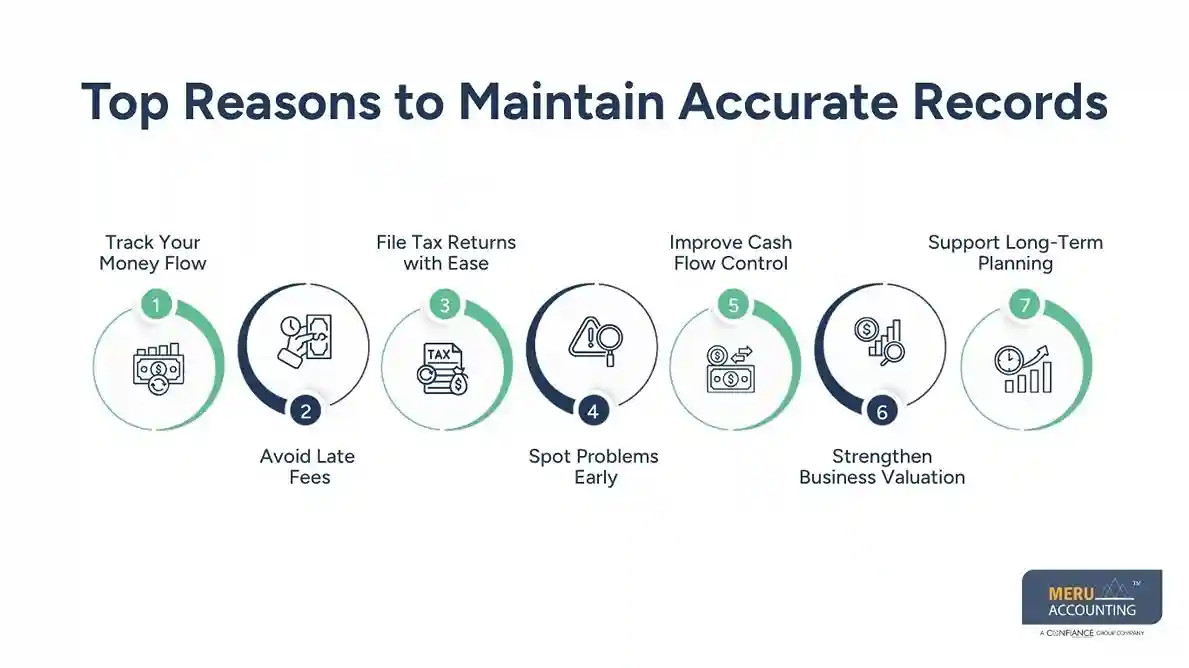
Improve Cash Flow Control
Well-kept accounting records let you predict incoming and outgoing money with more accuracy. This prevents cash shortages and ensures you always have funds for payroll, stock, or bills.
Strengthen Business Valuation
When you plan to sell or bring in investors, clean records show the true value of your firm. Buyers or partners rely on accounting data to judge if your company is profitable and worth their time.
Support Long-Term Planning
The accounting records go beyond daily tasks. They give you a long-term view of your performance, helping you set realistic targets for growth, expansion, or new investments.
How Poor Record-Keeping Affects Financial Health
Poor records lead to stress, loss, and errors. They put your business at risk, both legally and financially.
Leads to Cash Gaps
Incomplete accounting records can affect your cash flow visibility. You may struggle to manage funds for staff payments, stock purchases, or regular bills.
Causes of Tax Errors
Bad records lead to wrong tax returns. This may cause overpayments or missed claims. You may even face audits, fines, or other legal trouble.
Hurts Your Image
When lenders or partners review your finances, poor records raise red flags. They might see your business as risky or unreliable.
Benefits of Digital Tools for Managing Bills and Invoices
Digital tools simplify billing and invoicing tasks by helping businesses manage bills, invoices, and payment records efficiently. They reduce errors, save time, and make financial information easier to access.
Saves Time
With accounting software, you enter data once and reuse it. You avoid rework, cut paperwork, and spend more time on tasks that grow your firm.
Reduces Errors
Digital tools catch common mistakes. Totals, dates, and tax codes are checked. You get clean records that reflect your real financial status.
Easy to Share
Cloud software allows quick sharing. You can send files to staff or accountants instantly. This speeds up reviews, updates, and decisions.
Safe and Backed-Up
Digital systems store files securely. Backups protect against data loss from fires, theft, or system failures. Your files stay safe and easy to restore.
Best Practices for Organising Your Records
Proper storage and organised billing and invoicing records are key to maintaining reliable accounting records. Your system must be simple, repeatable, and built to grow with your business.
Sort by Type and Date
Place each file into the correct category. Then sort them by month or year. This helps during audits and speeds up tax prep.
Use Clear Labels
Name each file. Use dates, names, and invoice numbers. Avoid confusion with standard naming patterns that make searches quick.
Set a Routine
Check and update your records every week. Regular updates keep you alert to errors, missed bills, or overdue payments.
Back Up Your Files
Save your files in multiple places. Use cloud storage plus physical backup. This protects your business from unexpected data loss.
Why Accurate Records Help During Tax Season
When tax season comes, your accounting records become your best asset. You save time and avoid costly mistakes.
You Avoid Missed Claims
You can claim all allowed tax benefits if you maintain proper records. Well-managed billing and invoicing documents provide proof of every cost you report.
Speed Up the Filing
Accountants work faster with clear, complete files. This cuts prep time, avoids follow-ups, and speeds up refunds or payments.
Avoid Fines
Correct records ensure on-time and error-free filing. This keeps you away from fines, interest, or delayed tax returns.
How Well-Maintained Records Support Business Growth
Strong accounting records are more than a legal requirement. They are a growth tool that supports better planning and decision-making.
See What Works Best
Track income sources and expenses. Spot the products or services that give you high returns. Then focus more on what brings in results.
Plan for Big Moves
Lenders want proof before giving money. Solid records show you are ready. They also help you predict costs for hiring or expansion.
Track Your Goals
Set clear goals and use data to track them. Records let you check if you’re on track or if you need to adjust your plan.
How Meru Accounting Supports Better Accounting Record Management
At Meru Accounting, we understand the value of accurate accounting records. We provide UK firms with precise billing and invoicing management, ensuring every financial record is accurate and up to date. Our experts use top tools to manage your data efficiently.
With deep knowledge of UK tax rules and record-keeping requirements, we keep your records organized, secure, and protected. The importance of accounting records is something we emphasize for every client, as it builds stability and supports growth.
Our accounting professionals help businesses maintain clear financial documentation by reducing errors and improving data accuracy. Through structured record management practices, we make it easier for companies to access important financial information and make informed business decisions.
Our Expert Perspective
At Meru Accounting, we believe accurate accounting records are more than just a compliance requirement. They give businesses a clear understanding of their financial position, helping owners track performance, manage expenses, and make confident decisions.
In our experience, businesses that maintain organised billing and invoicing records along with financial documents are better prepared for tax filing, audits, and future growth. A strong record-keeping process reduces errors, improves cash flow visibility, and creates a reliable foundation for long-term business success.
Key Takeaways
- Accurate accounting records help businesses track income, expenses, and overall financial performance.
- Proper billing and invoicing management improves cash flow visibility, strengthens payment tracking, and reduces financial risks.
- Well-maintained records make tax filing easier and help businesses stay prepared for HMRC checks.
- Digital tools improve record accuracy, security, and accessibility.
- Organised financial documentation supports business growth, planning, and better decision-making.
- Professional accounting support helps maintain reliable records and improve financial efficiency.
FAQs
It helps track income and expenses, support tax returns, and show your business’s health. They are also needed to stay HMRC-compliant.
These records include invoices, bills, receipts, bank statements, payroll slips, and billing and invoicing records that support accurate financial tracking.
You must keep all key records for at least six years, including bills, invoices, and tax-related files.
A bill requests instant payment after a purchase. An invoice is sent to request payment after delivering a product or service.
Yes, missing or wrong records may lead to errors, fines, or audits. Good records help avoid these issues.
optional anymore
on running the business