
Client deposits are a normal part of legal work, but recording them the right way requires careful attention. IOLTA accounting keeps client funds separate from a law firm’s operating money and creates a clear record of every transaction. Proper recordkeeping protects client funds, meets legal and ethical duties, and makes trust account reviews much easier.
Many law firms receive advance retainers, settlement funds, filing fee deposits, and other client payments. Each deposit must be recorded correctly from the first day. A small error can create trust account shortages, reporting issues, or compliance concerns. Following a structured process makes daily accounting more accurate and keeps financial records reliable.
What You Will Learn From This Blog
- Understand the purpose of IOLTA accounting.
- Learn when client deposits belong in an IOLTA account.
- Know the correct steps for recording client deposits.
- Identify common mistakes made in IOLTA trust accounting.
- Discover best practices for managing trust funds.
- Learn how accounting software makes trust accounting easier
What Is IOLTA Accounting?
IOLTA accounting refers to the process of tracking and managing client funds held in an Interest on Lawyers’ Trust Account (IOLTA). These accounts hold client money that is either small in amount or expected to remain in trust for a short period.
Interest earned on these pooled accounts is generally directed to state IOLTA programs that fund legal aid and access-to-justice initiatives. In the United States, individual state bar associations establish trust accounting rules, while the American Bar Association provides guidance through its Model Rules of Professional Conduct.
Purpose Of IOLTA Accounts
An IOLTA account exists to protect client money until it is earned or paid for an approved purpose. Funds remain the client’s property while held in trust, making accurate IOLTA accounting an essential responsibility for every law firm.
Client Funds Stay Separate
Client deposits should never mix with office operating funds. Keeping separate accounts creates a clear audit trail and reduces the risk of errors that can create compliance problems in IOLTA trust accounting.
Every Transaction Must Be Recorded
Each deposit, payment, transfer, and withdrawal should appear in the accounting records. Complete transaction histories make monthly reviews easier and provide reliable financial information when questions arise.
Individual Client Ledgers Matter
Every client should have a separate trust ledger even though all funds remain in one pooled IOLTA account. Individual ledgers show available balances for each matter and prevent one client’s funds from being used for another client.
Compliance is An Ongoing Process
Trust accounting is not limited to opening an account. Daily recording, monthly reconciliation, document retention, and regular reviews all contribute to proper IOLTA accounting and long-term compliance.
Records Must Be Kept Secure
Supporting documents such as deposit slips, bank statements, invoices, settlement statements, and client authorizations should be retained according to applicable state rules. Well-organized records simplify internal reviews and regulatory audits.
Why Accurate Client Deposit Recording Matters In IOLTA Trust Accounting
Accurate recordkeeping protects clients, strengthens financial control, and demonstrates compliance with professional obligations. Every client deposit recorded through IOLTA accounting should match supporting documents and bank activity.
Protects Client Funds
Proper recording ensures client money remains available when needed. Accurate balances reduce the chance of accidental shortages and provide confidence that every client’s funds remain protected.
Meets Ethical Requirements
Most state bar associations require attorneys to maintain complete trust accounting records and perform regular reconciliations. Following these rules reduces compliance risks and demonstrates sound financial practices. Guidance is available through the American Bar Association and individual state bar authorities.
Creates Clear Financial Records
Every deposit should connect to the correct client, matter, and supporting documentation. Organized records make it easier to answer client questions and prepare financial reports.
Reduces Accounting Errors
Recording deposits immediately lowers the risk of duplicate entries, missing transactions, or incorrect balances. Consistent procedures strengthen IOLTA trust accounting across the entire firm.
Makes Bank Reconciliation Easier
Monthly reconciliation compares bank statements, trust account balances, and individual client ledgers. When deposits are recorded correctly throughout the month, reconciliation becomes faster and more accurate.
Builds Client Confidence
Clients expect their money to be handled with care. Clear records, timely reporting, and accurate trust balances show that the firm follows responsible financial practices through effective IOLTA accounting.
When Should Client Deposits be Placed in an IOLTA Account?
Not every payment received by a law firm becomes firm income right away. Many client payments must remain in trust until the firm earns the fees or pays approved expenses. Proper IOLTA accounting begins by knowing when a deposit belongs in an IOLTA account.
Advance Fee Deposits
Clients often pay retainers before legal work begins. These funds remain the client’s property until services are performed. Recording these deposits correctly is a basic part of IOLTA trust accounting and protects both the client and the firm.
Settlement Funds
Settlement checks frequently include money owed to the client, medical providers, or other parties. Depositing these funds into an IOLTA account creates a clear record until the money is distributed according to the settlement agreement.
Court And Filing Cost Deposits
Clients may provide funds to cover court filing fees, expert witness costs, or other legal expenses. These amounts should remain in the trust account until the firm makes the approved payments.
Escrow Or Third-Party Funds
Some legal matters require attorneys to hold money on behalf of buyers, sellers, or other parties. Proper IOLTA accounting records each transaction and keeps these funds available until all conditions have been met.
Unearned Legal Fees
Legal fees become firm income only after the agreed work has been completed. Until then, the funds should stay in the trust account and be transferred to the operating account only after they are earned and documented.
Client Money Held For a Short Period
Small client balances expected to remain in trust for a limited time are generally placed into an IOLTA account under applicable state rules. Law firms should follow their jurisdiction’s trust accounting requirements when deciding where client funds belong.
Refundable Client Cost Advances
Clients may deposit funds for future case expenses that are expected to be refunded if they are not used. These amounts should remain in the trust account until the expenses are paid or the unused balance is returned to the client.
optional anymore
on running the business
Step-By-Step Process To Record Client Deposits Using IOLTA Accounting
A consistent process reduces errors and creates reliable trust records. Every client deposit should follow the same workflow so that balances remain accurate throughout the legal matter.
Receive and Verify The Deposit
Confirm the payment amount, payment method, client name, and matter number before recording the transaction. Supporting documents such as checks, electronic payment confirmations, or deposit receipts should be reviewed for accuracy.
Deposit Funds Into the IOLTA Account
Deposit the client funds directly into the designated IOLTA bank account. Client money should never pass through the firm’s operating account before entering the trust account, as this creates unnecessary compliance risks in IOLTA trust accounting.
Record The Deposit in the Accounting System
Enter the transaction in your accounting software or trust accounting records. Include the deposit date, amount, payment reference, client matter, and transaction description. Accurate entries form the foundation of reliable IOLTA accounting.
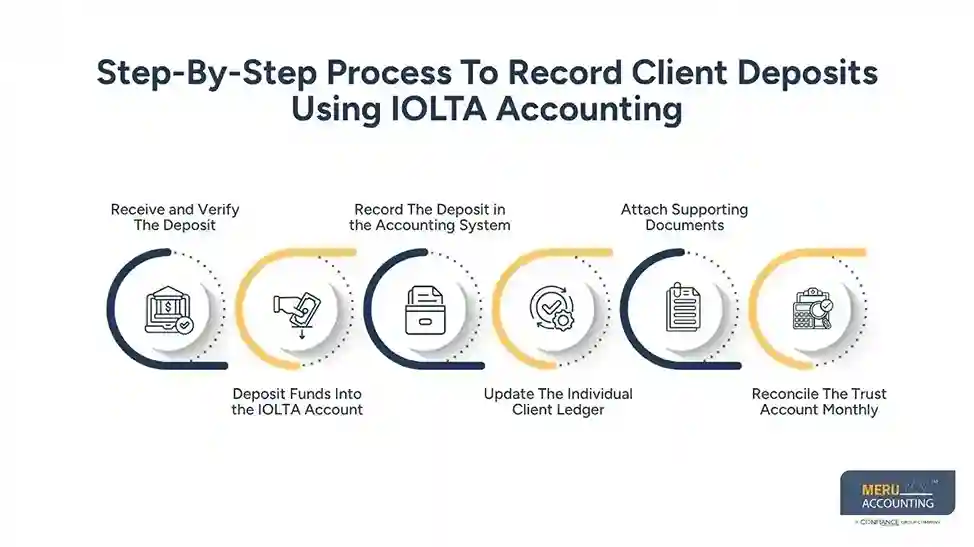
Update The Individual Client Ledger
Each client should have a separate trust ledger showing deposits, payments, transfers, and the current balance. Updating the ledger immediately keeps individual client balances accurate and prevents reporting errors.
Attach Supporting Documents
Store copies of deposit slips, client payment confirmations, settlement documents, invoices, and related records with the transaction. Complete documentation creates a clear audit trail if questions arise later.
Reconcile The Trust Account Monthly
Compare the bank statement with the trust account register and every individual client ledger. Monthly reconciliation identifies missing entries, posting mistakes, or bank differences before they become larger problems. Regular reconciliation is one of the most important parts of IOLTA accounting.
Common Mistakes to Avoid in IOLTA Trust Accounting
Even experienced law firms can make trust accounting mistakes without consistent procedures. Recognizing these common issues lowers compliance risks and protects client funds.
Mixing Client And Firm Funds
Client money should never be combined with operating funds. Mixing funds makes it difficult to identify ownership and may violate trust accounting rules.
Posting Deposits To The Wrong Client
Entering a deposit under the wrong client matter creates incorrect trust balances. Verifying client information before recording every transaction reduces this risk.
Delaying Deposit Entries
Waiting several days to record deposits increases the chance of forgotten transactions or inaccurate balances. Recording deposits as soon as they are received keeps IOLTA trust accounting current and reliable.
Moving Money Too Early
Legal fees should only transfer from the trust account after they have been earned and properly documented. Early transfers may create compliance concerns and client disputes.
Ignoring Monthly Reconciliation
Skipping monthly reconciliations allows errors to remain undetected for longer periods. Comparing bank balances, trust records, and client ledgers each month keeps IOLTA accounting accurate.
Poor Record Retention
Missing receipts, settlement statements, invoices, or bank records make audits and client reviews more difficult. Organized documentation strengthens financial reporting and demonstrates responsible trust account management.
Best Practices For Managing Client Deposits And Trust Accounts
Strong procedures create accurate records and reduce unnecessary accounting risks. Following best practices keeps trust accounts organized throughout every client matter.
Create Written Trust Procedures
Document the firm’s process for receiving, recording, approving, and reconciling client deposits. Written procedures create consistency across the accounting team.
Record Transactions Immediately
Enter deposits, transfers, and payments as soon as they occur. Timely recording provides current trust balances and reduces manual corrections later.
Perform Regular Internal Reviews
Review trust ledgers, bank statements, and supporting documents throughout the month instead of waiting until month-end. Frequent reviews identify issues before they affect client balances.
Separate Accounting Duties
When possible, assign different employees to record deposits, approve transactions, and complete reconciliations. Dividing responsibilities strengthens internal financial controls.
Use Trust Accounting Reports
Generate client ledger reports, trust balance reports, and reconciliation summaries regularly. These reports provide a clear view of client funds and strengthen IOLTA accounting practices.
Stay Updated With State Requirements
Trust accounting rules vary by jurisdiction and may change over time. Firms should review guidance issued by their state bar association and maintain procedures that align with current requirements.
How Accounting Software Simplifies IOLTA Accounting
Managing trust accounts with spreadsheets or manual records increases the chance of missed entries and reporting errors. Modern accounting software provides structured workflows that make IOLTA accounting more organized while keeping client funds separate from business finances.
Automates Transaction Recording
Accounting software records deposits, withdrawals, and transfers in one place. Automated entries reduce manual work and maintain consistent records for every client matter.
Maintains Individual Client Ledgers
Each client receives a separate trust ledger that tracks deposits, payments, and available balances. This makes IOLTA trust accounting easier to review during reconciliations and client reporting.
Simplifies Monthly Reconciliation
Software compares bank activity with trust account records and client ledgers. Identifying unmatched transactions becomes faster, reducing the time spent on month-end reviews.
Stores Supporting Documents
Deposit receipts, settlement statements, invoices, and payment records can be attached to transactions. Having documents linked to each entry creates a complete financial history.
Generates Trust Account Reports
Trust balance reports, client ledger reports, and reconciliation summaries are available whenever needed. These reports provide greater visibility into client funds and strengthen IOLTA accounting practices.
Reduces Data Entry Errors
Built-in validation checks identify duplicate transactions, missing information, and incorrect balances before reports are finalized. This creates more reliable trust account records.
Why Law Firms Choose Meru Accounting For IOLTA Accounting
Managing client trust funds requires precision, compliance, and accurate financial records. Meru Accounting provides specialized IOLTA accounting services that help law firms maintain organized trust accounts while meeting regulatory requirements.
Centralized Financial Records
We maintain organized accounting records in secure cloud-based systems, giving law firms easy access to trust account transactions, balances, and financial reports whenever required.
Accurate Transaction Management
Our experienced accounting team records and reconciles IOLTA transactions accurately, reducing manual errors and ensuring client trust funds remain properly managed.
Reliable Financial Reporting
We prepare detailed financial reports that provide clear visibility into trust account activity. Accurate reporting supports compliance, audits, and informed financial decisions.
Better Financial Visibility
Our real-time accounting solutions give law firms a clear view of trust balances, operating accounts, and financial performance, helping partners make confident business decisions.
Scalable Accounting Support
Whether serving a solo practice or a growing law firm, our IOLTA accounting services adapt to increasing transaction volumes and changing business requirements.
Secure Cloud-Based Accounting
We use secure cloud accounting platforms that allow authorized users to access financial information safely while protecting sensitive client and trust account data.
Our Expert Perspective
Strong IOLTA accounting depends on timely recordkeeping, complete documentation, and regular account reconciliation. Firms that follow consistent trust accounting procedures and use reliable accounting software maintain accurate client fund records, stay prepared for audits, meet compliance requirements, and build greater client confidence.
Key Takeaways
- IOLTA accounting keeps client funds separate from firm operating money.
- Every client deposit should be recorded immediately with complete supporting documents.
- Individual client ledgers are essential for accurate trust account management.
- Monthly reconciliation helps identify errors before they become larger issues.
- Strong internal procedures reduce compliance risks in IOLTA trust accounting.
- Accounting software creates organized records and simplifies reconciliation.
- Regular staff training and consistent documentation strengthen trust account management.
- Following state bar requirements protects client funds and maintains professional standards.
FAQs
IOLTA accounting is the process of recording and managing client money held in an IOLTA trust account until it is earned or properly distributed.
Deposit the client’s funds into the IOLTA account, record the transaction, update the client’s trust ledger, and keep all supporting documents together.
IOLTA trust accounting protects client funds, maintains accurate records, and helps law firms meet professional and regulatory requirements.
Most law firms should reconcile their IOLTA account every month by comparing bank statements, trust records, and individual client ledgers.
Yes. Accounting software records transactions, maintains client ledgers, generates reports, and simplifies reconciliation, making IOLTA trust accounting more accurate and efficient.
optional anymore
on running the business