
Law firm accounting services are essential for keeping legal practices financially organized, ensuring smooth cash flow, and supporting better decision-making. For law firms of all sizes, managing accounts payable and receivable efficiently is critical to maintaining profitability and sustaining client trust.
Without proper accounting processes, firms may face delayed payments, mismanaged expenses, and compliance challenges that can impact both operations and reputation.
Structured law firm accounting services provide clear visibility into client billing, vendor payments, and cash flow. They help reduce errors, improve efficiency, and allow law firms to focus on providing quality legal services.
What You Will Learn From This Blog
- Accounts payable is what a law firm owes, and accounts receivable is what clients owe.
- Understanding these helps maintain smooth cash flow and accurate financial records.
- Efficient management of accounts payable and receivable ensures timely payments, reduces errors, and prevents disputes with clients or vendors.
- Following best practices in law firm accounting services can improve overall financial management and operational efficiency.
- Outsourcing accounting for law firms allows access to skilled professionals, saves time, reduces costs, and ensures accurate bookkeeping.
- Tracking key metrics such as days sales outstanding, accounts payable turnover, and profit margins helps monitor financial health and make informed decisions.
- Implementing clear billing procedures, automated invoicing, and regular follow-ups can minimize late payments and improve cash flow.
Understanding Accounts Payable in Modern Law Firms
Accounts payable is the money a law firm owes to vendors, suppliers, or service providers. Keeping careful track of these obligations ensures that payments are made on time without negatively impacting cash flow. Maintaining accurate records of invoices helps prevent overpayments, missed payments, and financial discrepancies.
Paying invoices promptly is crucial for maintaining good relationships with vendors and avoiding late fees or service interruptions. Using accounting software can streamline accounts payable by automating approvals, reminders, and payments, which reduces the chance of human error in law firm accounting services.
It is also important to separate responsibilities among staff members to reduce the risk of fraud and strengthen internal controls. Additionally, identifying which invoices are urgent versus routine allows law firms to prioritize payments efficiently and keep operations running smoothly.
What Are Law Firm Accounting Services and Why They Matter
Law firm accounting services involve managing a firm’s financial transactions, tracking expenses, reconciling accounts, preparing financial reports, and ensuring compliance with applicable regulations. These services provide the structure and oversight necessary for accurate, reliable financial management.
Ensuring Financial Stability
Proper accounting gives law firms a clear view of cash flow, income, and expenses. By maintaining accurate records, firms can prevent financial errors, reduce overspending, and ensure profitability over the long term.
Enabling Strategic Decision-Making
Detailed financial records allow partners and managers to make informed decisions regarding investments, staffing, and practice growth. Insights from accounting services help guide business strategies and optimize resource allocation.
Maintaining Regulatory Compliance
Law firm accounting services ensure adherence to tax and legal requirements, minimizing the risk of penalties or audits. They help firms manage trust accounts, client funds, and other regulated transactions accurately.
Tailored Solutions for Each Firm
Every law firm has unique financial needs, from client billing and trust account management to litigation cost tracking. Customized accounting services address these specific challenges, providing practical solutions that fit the firm’s operations.
Reducing Administrative Workload
By relying on professional accounting support, lawyers and staff can focus on their legal responsibilities instead of spending excessive time on bookkeeping. This not only improves efficiency but also enhances client service and overall productivity.
How Law Firm Accounting Services Improve Financial Management
Expense Tracking
Keeping a detailed record of all expenses helps law firms understand cost centers and identify opportunities to reduce unnecessary spending. This ensures that resources are allocated efficiently and wisely.
Cash Flow Management
Effective accounts receivable and payable management ensures enough cash is always available for operations. It also helps avoid shortages that can disrupt day-to-day activities.
Accurate Billing
Law firm accounting services help ensure clients are billed correctly and promptly, reducing delays in payment collection. This supports steady revenue flow and reduces disputes.
Financial Reporting
Regular reporting provides insights into profits, losses, and trends, enabling strategic planning and growth. Clear reports make it easier to evaluate the firm’s financial performance.
Fraud Prevention
Structured accounting services reduce the risk of financial errors or internal fraud in law firms. Strong controls protect both the firm and its clients.
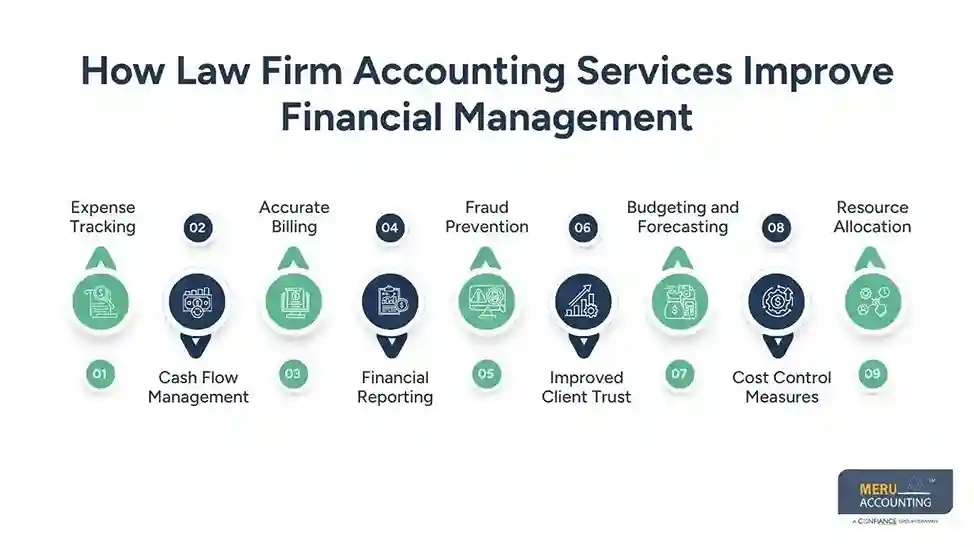
Improved Client Trust
Accurate and transparent financial practices foster confidence among clients and stakeholders. Reliable accounting strengthens the firm’s reputation and professional credibility.
Budgeting and Forecasting
Law firm accounting services help create realistic budgets and financial forecasts. This enables firms to plan for growth and manage expenses effectively.
Cost Control Measures
Regular monitoring of expenses and revenues helps identify areas to reduce unnecessary costs. It ensures the firm operates efficiently without compromising service quality.
Resource Allocation
Proper accounting insights help law firms allocate resources to high-priority cases and practice areas. This improves productivity and maximizes profitability.
Best Practices for Managing Accounts Receivable in Law Firm Accounting Services
Clear Billing Policies
Set transparent terms for invoicing, payment deadlines, and late fees to encourage timely client payments. Clear policies also reduce misunderstandings and client disputes.
Regular Invoice Follow-Up
Implement reminders and follow-ups to reduce delayed payments and maintain steady cash flow, which is an essential practice in law firm accounting services. Consistent follow-up helps maintain positive client relationships.
Detailed Client Statements
Providing clients with itemized statements can prevent disputes and speed up payments. It also builds trust and transparency in financial dealings.
Use of Technology
Automated invoicing and tracking tools can save time and reduce errors in accounts receivable management. Technology also provides real-time visibility into outstanding payments.
Segregate Client and Trust Accounts
Maintaining separate accounts for operational funds and client trust funds ensures compliance and accuracy. It also simplifies audits and regulatory reporting.
Offer Multiple Payment Options
Providing options like bank transfers, checks, or online payments makes it easier for clients to pay on time. Flexible options increase the likelihood of faster payments.
Common Challenges in Law Firm Accounting Services and How to Overcome Them
Late Payments from Clients
Use clear contracts, reminders, and automated invoicing to minimize delays. Addressing late payments promptly helps maintain steady cash flow.
Complex Billing Structures
Implement flexible accounting software to handle complex billing, a challenge routinely addressed by law firm accounting services. Proper tools reduce errors in client invoices.
Reconciliation Issues
Schedule regular reconciliations to identify discrepancies early and avoid costly mistakes. Timely reconciliation prevents the accumulation of errors over time.
Trust Account Compliance
Strictly segregate client funds and ensure all transactions are documented for audits. Maintaining compliance protects both the firm and its clients.
High Administrative Workload
Outsourcing accounting for law firms can reduce the administrative burden while maintaining accuracy. Delegating tasks frees internal staff to focus on legal work.
Errors in Manual Processes
Implement software and automation to minimize human error and streamline financial workflows. Automation also speeds up routine tasks and reporting.
Benefits of Outsourcing Accounting for Law Firms
Access to Expertise
Outsourcing accounting for law firms provides access to experienced professionals skilled in legal financial management. Expert handling ensures accuracy and reliability.
Cost Savings
By outsourcing accounting for law firms, firms save on salaries, benefits, and training costs while accessing high-quality services that reduce operational expenses. Outsourcing also reduces overhead and operational expenses.
Focus on Core Activities
Lawyers can concentrate on legal work rather than administrative tasks, increasing overall productivity. This improves client service and case outcomes.
Improved Accuracy
External accounting teams ensure precise bookkeeping, reducing errors and compliance risks. Accurate records enhance financial reporting and decision-making.
Scalability
Outsourcing accounting for law firms provides scalable resources that adjust with firm growth and workload without adding internal staff.
Up-to-Date Technology
Accounting firms bring advanced tools and software that improve efficiency in accounts payable and receivable management. Technology also enables faster reporting and better insights.
Key Metrics to Track in Law Firm Accounting Services
- Accounts Receivable Turnover: Measures how quickly invoices are collected and highlights billing efficiency.
- Days Sales Outstanding (DSO): Shows the average time clients take to pay and helps improve cash flow.
- Accounts Payable Turnover: Tracks how efficiently the firm pays vendors while maintaining healthy cash levels.
- Profit Margins by Practice Area: Identifies the most profitable services to support better resource allocation.
- Expense Ratios: Highlights cost control opportunities without affecting operational quality.
- Trust Account Balances: Ensures compliance and accuracy through regular trust account monitoring.
How to Reduce Errors and Improve Efficiency in Accounts Payable and Receivable
Standardized Procedures
Create clear protocols for invoicing, payment approvals, and reconciliations to minimize mistakes. Consistency ensures accountability across the team.
Use of Automation Tools
Accounting software can automatically match invoices, track payments, and generate reports. Automation reduces manual effort and increases speed.
Staff Training
Regular training ensures that staff understand processes and compliance requirements. Knowledgeable staff help prevent errors and maintain efficiency.
Regular Audits
Conduct periodic audits to detect errors, fraud, or inefficiencies in the accounting system. Audits provide assurance that processes are being followed correctly.
Communication With Clients and Vendors
Clear communication reduces disputes, delays, and misunderstandings in financial transactions. Transparent discussions build trust and improve relationships.
Implement Checklists
Checklists for recurring tasks like invoice approvals, reconciliations, and reporting improve consistency and reduce errors. They serve as a simple yet effective quality control tool.
Meru Accounting’s Solutions for Law Firm Accounting Services
Customized Accounting Services
Meru Accounting offers law firm accounting services tailored to small, mid-sized, and large law firms. This ensures flexible solutions aligned with each firm’s structure and growth goals.
Optimizing Accounts Payable
We provide structured processes for invoice approval, vendor payments, and reconciliation to minimize errors. This improves payment accuracy and strengthens vendor relationships.
Efficient Accounts Receivable Management
Meru Accounting ensures timely client billing, automated reminders, and clear reporting to maintain steady cash flow. This reduces payment delays and improves overall revenue predictability.
Outsourcing Accounting for Law Firms
Our outsourcing services reduce administrative burdens while providing accurate, reliable, and compliant accounting support. This allows legal teams to focus more on client work and case management.
Compliance and Reporting
We monitor trust accounts, prepare financial statements, and ensure compliance with local regulations. This minimizes regulatory risks and simplifies audits.
Technology-Driven Solutions
Meru Accounting integrates advanced accounting software to streamline financial operations and improve efficiency. This enhances data accuracy and supports faster financial decision-making.
Key Takeaways
- Law firm accounting services are critical for managing finances, ensuring compliance, and supporting growth.
- Efficient accounts payable and receivable processes improve cash flow, reduce errors, and build client trust.
- Outsourcing accounting for law firms saves time, reduces costs, and provides access to skilled professionals.
- Monitoring key financial metrics enables informed decision-making and better resource allocation.
- Implementing best practices like automation, standardized procedures, and regular audits enhances overall financial management.
FAQs
The best practices include timely invoice approvals, automated payments, regular reconciliations, and maintaining clear records of all vendor transactions to avoid late fees and errors.
Law firms can manage accounts receivable efficiently by sending timely invoices, setting clear payment terms, following up with clients regularly, and using accounting software to track payments.
Outsourcing accounting for law firms reduces administrative work, ensures accurate bookkeeping, helps with compliance, and allows lawyers to focus on core legal work.
By optimizing accounts payable and receivable, monitoring outstanding invoices, and maintaining proper financial reporting, law firm accounting services help ensure steady cash flow and prevent cash shortages.
Law firms should track metrics like accounts receivable turnover, days sales outstanding (DSO), accounts payable turnover, expense ratios, and trust account balances to stay financially healthy.