
Bookkeeping step by step is a clear and simple way to track business records. It helps you record income, costs, and every deal your business makes. This method keeps your books neat and helps you stay in charge of your money. Each part of the bookkeeping process builds on the one before it, giving you a full view of your cash flow.
The process of bookkeeping is key for both small and large firms. It gives you the tools to make smart choices and support growth. In this blog, you’ll learn bookkeeping step by step. We’ll cover each part of the bookkeeping process, from logging deals to sorting records and checking your books.
What You Will Learn From This Blog
This blog explains the complete bookkeeping process step by step and helps you understand how organized financial records and the right bookkeeping solutions support business success.
You will learn:
- What bookkeeping is and why every business needs a proper bookkeeping process.
- The essential steps involved in maintaining accurate financial records.
- The tools required to start and manage bookkeeping effectively.
- How bookkeeping helps with cash flow tracking, tax preparation, and business planning.
- Common bookkeeping mistakes and ways to avoid them.
- Tips to create a smoother and more efficient bookkeeping system.
- How professional bookkeeping support can improve your financial management.
What is the Bookkeeping Process?
The process of bookkeeping is a series of simple steps. Each step builds on the last to keep things clear and in order. Bookkeeping step by step means you start with the basics and add more as you go. By following a set process of bookkeeping and using the right bookkeeping solutions, you avoid errors and missing details while keeping records organized.
It helps you stay on track with your records and keeps your books neat and current. This method also makes it easy to find and fix mistakes before they grow.
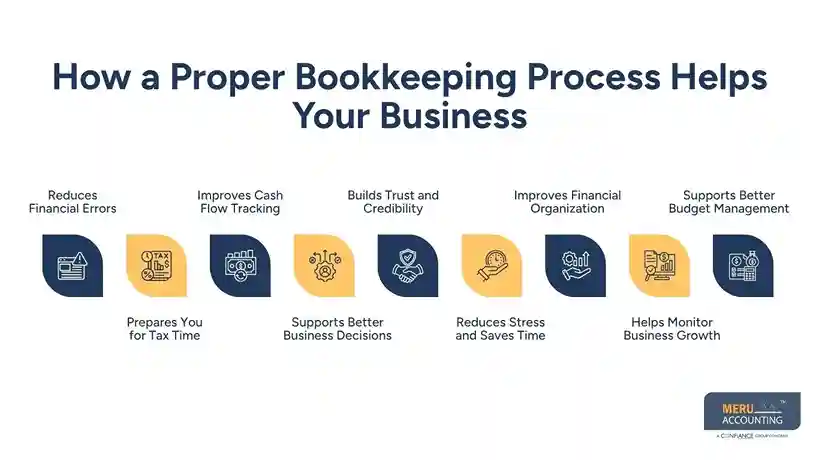
How a Proper Bookkeeping Process Helps Your Business
Reduces Financial Errors
A steady bookkeeping process helps prevent costly mistakes in your financial records.
Accurate records reduce confusion and help you maintain better control over your business finances.
Prepares You for Tax Time
A well-organized process prepares your business for tax time with clean and properly sorted files. Effective bookkeeping solutions help maintain updated records throughout the year, making tax preparation smoother and less stressful.
Improves Cash Flow Tracking
Following a bookkeeping process step by step helps you track cash flow and identify potential issues early. Regular monitoring of income and expenses helps you manage money more effectively.
Supports Better Business Decisions
Clear financial records support smart planning, accurate budgeting, and better business decisions. Reliable reports help you understand performance and create stronger growth strategies.
Builds Trust and Credibility
A proper bookkeeping system also builds trust with banks and investors by showing reliable financial information.
Well-maintained records make your business appear more organized and financially stable.
Reduces Stress and Saves Time
When managed correctly, bookkeeping provides peace of mind and reduces financial stress.
A structured process saves time by keeping important financial details easy to access.
Improves Financial Organization
A proper bookkeeping process keeps all transactions, reports, and documents arranged systematically.
Organized records make it easier to review business performance and plan future activities.
Helps Monitor Business Growth
Accurate bookkeeping allows you to measure growth by reviewing income, expenses, and profits.
Regular financial tracking helps you identify opportunities and areas that need improvement.
Supports Better Budget Management
Bookkeeping helps you create realistic budgets based on accurate financial information.
A clear view of your finances helps control spending and improve resource allocation.
Tools You Need to Begin the Bookkeeping Step by Step
Before starting, make sure you have the right tools. These tools make the bookkeeping process smoother and more accurate while helping you maintain organized financial records.
Chart of Accounts
A list of categories like sales, rent, inventory, and office supplies. A properly prepared chart of accounts helps you classify every transaction correctly.
Accounting Software or Ledger Book
Choose a tool that fits your skill level and business size. The right software or ledger, combined with effective bookkeeping solutions, helps record transactions and generate useful financial reports.
Receipts and Invoices
Save them to track all money coming in or going out. Organized receipts and invoices provide proof of transactions and support accurate recordkeeping.
Bank and Credit Card Statements
Use these to verify your financial records. Regularly checking statements helps find missing entries or errors in your books.
Storage (Folders or Cloud)
Keep digital or paper records organized for future reference. A secure storage system makes it easier to access important financial documents when needed.
Calculator or Spreadsheet Software
Use Excel or Google Sheets to help with totals and balances. Spreadsheets support quick calculations and simple tracking of business finances.
The 9 Essential Steps in Bookkeeping
Here’s a clear, easy-to-follow version of the bookkeeping process of bookkeeping:
Set Up Accounts
- List all accounts: cash, accounts receivable, inventory, etc.
- This chart of accounts guides bookkeeping step by step.
Record Transactions
- Write down every sale, expense, and deposit
- Use date, description, amount, and account name
- Recording is the heart of the bookkeeping process
Categorize and Classify
- Assign each transaction to the right account type: asset, revenue, expense, etc.
- Proper categorization keeps things organized
Post to Ledger
- Move entries into the general ledger.
- This is a record of all accounts, part of the bookkeeping process.
Reconcile Accounts
- Match ledger balances with bank statements and credit statements
- This step in the process of bookkeeping ensures your books match real life
Adjust Entries
- Adjust for unpaid bills, accrued income, depreciation, and prepayments
- Adjusting keeps your books accurate
Create Trial Balance
- List all account balances with debits and credits
- Total each side to check if they match
Prepare Financial Statements
- From your trial balance, make an income statement and balance sheet
- These reports reflect your business’s health
Review and Close Books
- Review statements for accuracy
- Close accounts
- Start fresh next period
Bookkeeping Step-by-Step Table
Step | Description |
1. Set Up Accounts | Create chart of accounts |
2. Record Transactions | Record daily income and expenses |
3. Categorize | Assign correct account types |
4. Post to Ledger | Enter in general ledger |
5. Reconcile | Match books to bank records |
6. Adjust Entries | Account for accruals, depreciation |
7. Trial Balance | Ensure balanced debits and credits |
8. Financial Statements | Create reports |
9. Review & Close | Final checks and close period |
Tips to Create a Smooth and Efficient Bookkeeping Process
Stick to a Set Schedule
Try to do your books on a set day or time. Daily or weekly is best. This habit helps you stay on track and avoid a pile-up of work. A few minutes each day can save hours later.
Use Software Tools
Bookkeeping software makes things much easier. It cuts down on time and errors. You can link your bank, track bills, and send invoices fast. Most tools also give reports that help you make smart choices.
Save and Sort All Receipts
Keep all your receipts, no matter how small the amount. Store them by date or by type. Use folders or digital apps. This makes tax time much smoother and helps prove your costs if ever asked.
Reconcile Monthly
Once a month, check that your records match your bank. This is called a “reconciliation.” It finds errors and helps keep things neat. It’s a simple task that stops big problems later on.
Ask for Help if Needed
If you’re not sure what to do, ask a pro. Businesses can also use professional bookkeeping solutions to receive expert assistance and maintain accurate financial records. It’s better to ask than to guess and risk a costly fix.
Common Bookkeeping Mistakes to Avoid
Ignoring Small Costs That Later Add Up
Small expenses like fees, coffee runs, and supplies can quickly increase your total spending. Using proper bookkeeping solutions helps businesses capture every transaction and avoid missing important financial details.
Putting Expenses in the Wrong Category
Incorrect expense categories can create inaccurate reports and affect budgeting decisions. Recording each cost in the right category keeps financial records clear and tax-ready.
Failing to Reconcile Your Accounts Each Month
Monthly account reconciliation helps identify missing entries, errors, and unusual transactions.
Regular checks keep your records accurate and support better financial planning.
Skipping Adjusting Entries for Items Like Depreciation
Adjusting entries help record non-cash expenses like depreciation and provide complete financial data. Ignoring these entries can make your business reports less accurate and incomplete.
Not Saving Receipts or Backup Files
Receipts and backups act as proof of transactions and support your financial records.
Keeping files safely stored helps during tax reviews, audits, or future reference.
Advantages of Maintaining an Effective Bookkeeping Process
Saves Time During Tax Season
Keeping records up to date helps you stay ahead. When tax time comes, you won’t have to rush. You can file faster, with fewer slips or mistakes.
Strengthens Budget Planning
When your books are clean, it’s much easier to plan. You can set limits, watch costs, and steer your cash flow with more control.
Enables Spotting Errors Early
Small slips can turn into big problems. Good books help you find wrong costs or missed paychecks before they cause harm.
Boosts Chances for Loans or Investors
Lenders want proof that you run things well. Clear books show that your firm is sound and worth their trust.
Offers a Clear View of Profit and Loss
Your books tell you if you’re on track. Advanced bookkeeping solutions make it easier to review financial reports and understand business profitability.
How Meru Accounting Simplifies Your Bookkeeping Process
Managing bookkeeping accurately requires time, knowledge, and attention to detail. At Meru Accounting, we help businesses maintain organized and accurate financial records with professional bookkeeping services. Our team handles transaction recording, account reconciliation, and financial reporting, and maintains clean books so you can focus on running your business.
We follow a structured bookkeeping process to reduce errors, improve financial visibility, and keep your records updated. Whether you are a small business or an established company, our bookkeeping solutions are designed to support your business goals and improve financial management.
With our expertise in accounting software and bookkeeping practices, we help businesses maintain reliable financial data, prepare for tax requirements, and make better financial decisions with confidence.
Our Expert Perspective
We have observed that many businesses struggle with bookkeeping due to delayed updates, inaccurate records, and poor expense tracking. A structured bookkeeping process helps overcome these challenges by keeping financial data organized and up to date. By maintaining accurate records and regular reviews, businesses can improve cash flow management, prepare better reports, and make smarter financial decisions.
Key Takeaways
A structured bookkeeping process helps businesses maintain accurate records and stay financially organized.
- Recording transactions regularly helps prevent errors and missing information.
- Proper categorization makes financial reports clearer and more useful.
- Reconciliation helps ensure your records match actual bank activity.
- Updated books support better budgeting, planning, and decision-making.
- Organized financial records make tax preparation easier and faster.
- Avoiding common bookkeeping mistakes protects your business from financial issues.
- Professional bookkeeping support and reliable bookkeeping solutions can save time, improve financial accuracy, and strengthen business operations.
Following a clear bookkeeping process allows businesses to understand their financial position and build a stronger foundation for future growth.
optional anymore
on running the business
FAQs
The main bookkeeping steps include setting up accounts, recording transactions, categorizing entries, posting to the ledger, reconciling accounts, adjusting balances, preparing reports, and closing books.
Bookkeeping helps small businesses track income and expenses, manage cash flow, prepare taxes accurately, and make informed financial decisions.
Accurate bookkeeping keeps income, expenses, and financial documents organized, making tax preparation faster and reducing the chances of reporting errors.
Small businesses can benefit from professional bookkeeping services because experts help maintain accurate records, reduce errors, and save valuable time.
Businesses can create an efficient bookkeeping system by using suitable software, maintaining a regular schedule, organizing documents, and reviewing financial records frequently.