Manual bookkeeping may take too much time and cost more. Many small businesses still write transactions in paper ledgers. Manual systems may cause mistakes, delays, and confusion often. Growing firms may find it hard to track cash with physical ledger accounting.
Digital bookkeeping may bring speed, lower errors, and better views. Small businesses in the USA may save time and money. Switching from manual to digital may give long-term gains. Managers may see money flow clearly and plan staff well.
Why Manual Bookkeeping Can Be Costly
Errors Happen Often
Manual bookkeeping may cause frequent mistakes in records. Mistakes may affect reports and may delay business decisions.
More Staff Hours
Manual systems may need more staff to track money. Employees may spend long hours checking accounts each day.
Paper Costs Rise
Paper, files, and other needs of physical ledger accounting may cost more than expected. Filing cabinets may take up space and incur extra bills.
Slow Audits
Manual bookkeeping may make audits long and hard. Finding old records may take hours and slow checks.
Limited Money View
Tracking cash by hand may hide key updates. Firms may miss key chances when physical ledger accounting slows down updates.
Digital Bookkeeping May Reduce Workload
Fast Bank Checks
Digital bookkeeping may finish bank checks in a few minutes. Mistakes may be shown on screen for quick review.
Up-to-Date Reports
Reports may update on their own with every entry. Managers may see current money data and make quick choices.
Easy Payroll
Payroll may work on its own and cut mistakes. Employees may get paid on time without manual work.
Smooth Tax Filing
Digital systems may handle taxes with fewer errors. Records may link with tax software for timely filing.
Cost Benefits of Moving from Manual Bookkeeping to Digital
Less Fixing Time
Fewer mistakes may cut the time spent fixing errors. Staff may focus on work that adds more value.
Lower Bills
Digital bookkeeping may cut costs for paper and ink. Businesses may save money while keeping records in order.
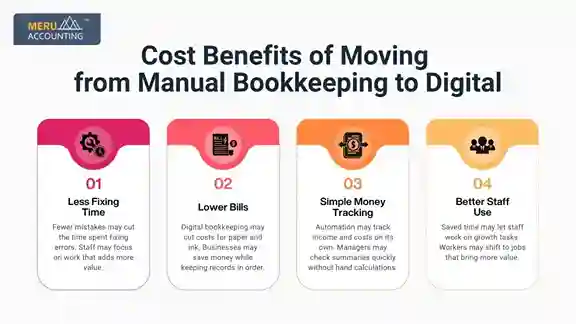
Simple Money Tracking
Automation may track income and costs on its own. Managers may check summaries quickly without hand calculations.
Better Staff Use
Saved time may let staff work on growth tasks. Workers may shift to jobs that bring more value.
How Digital Systems May Improve Accuracy
Auto Calculations
Mistakes in sums may be avoided on digital systems. Reports may stay accurate and ready for managers quickly.
Mistake Alerts
Software may show errors on screen for quick fixes. Managers may act before mistakes affect reports permanently.
Full Record History
All entries may be stored and found quickly online. Companies may see past data without digging through files.
Less Staff Input
Reports may work on their own with little effort. Digital tools may cut repeated work and human mistakes.
Time Efficiency Advantages
Fast Data Entry
Entering records digitally may take far less time. Manual bookkeeping may need double the effort for the same job.
Quick Search
Old records may be found instantly in digital tools. Search tasks in physical ledger accounting may waste hours each week.
Fast Reports
Reports may form quickly using automated digital tools. Managers may get ready reports without waiting for the staff.
Deadline Reminders
Software may track due dates and send alerts fast. Businesses may avoid late filings or missed payments easily.
Flexibility and Accessibility
Cloud Storage
Records may be saved online and checked from anywhere. Businesses may avoid location limits and reach files easily.
Team Work
Teams may work together from many locations quickly. Staff may edit and update records without office visits.
Data Safety
Digital records may stay safe with online backups. Paper files used in physical ledger accounting may be lost, stolen, or damaged with ease.
Phone Access
Business owners may check accounts from phones or tablets. Managers may track money while traveling or out of the office.
Scalability for Growing Businesses
Handle More Work
Digital bookkeeping may track more entries with no extra staff. Companies may grow without delays in checking accounts.
Adjust Reports
Reports may change to match business growth easily. Managers may see real-time money flow at any size.
Multi-Branch Tracking
Multiple locations may watch money flow efficiently online. Manual bookkeeping may fail to keep data the same everywhere.
Business Insights
Analytics may show trends and guide growth decisions. Digital tools may spot chances that paper records miss.
Environmental and Space Benefits
Cut Paper Use
Digital bookkeeping may reduce paper use a lot. Cutting out physical ledger accounting may save cash on ink, files, and storage.
Declutter Office
Filing cabinets may be replaced by digital records. Staff may enjoy more open and clean workspaces.
Lower Energy Bills
Less office storage may cut light and heating costs. Digital tools may use less power than paper systems.
Go Green
Digital files may support eco-friendly work practices. Businesses may improve their public image by using less paper.
Integration With Other Tools
Link Inventory
Software may update money records with stock changes. Manual tracking may cause mismatches and extra work.
Link Sales
Sales may update accounts instantly for accurate tracking. Digital bookkeeping may stop double entries and errors.
Track Expenses
Costs may be added automatically in digital systems. Manual work may take hours to reconcile all bills.
Link Tax Software
Records may sync with tax tools for correct filing. Digital systems may make rules easier and avoid fines.
Challenges of Moving from Manual to Digital
Staff Learning
Employees may need time to learn new software. Training may cut mistakes and make staff confident quickly.
Old Data Setup
Past records may need checks when moved to software. Errors may happen if the setup is rushed or unchecked.
Higher Start Costs
Software setup may need upfront money for a proper start. Long-term savings may make the initial cost worthwhile over time.
Tips for Smooth Transition
Start Small
Test the software with a few processes first. Gradual steps may reduce errors and staff confusion.
Train Often
Frequent sessions may build staff confidence with the software. Training may cut mistakes and encourage full system use.
Keep Backups
Manual records may stay as checks temporarily. Backups may avoid data loss and ensure a smooth switch.
Pick Right Software
Choose software that fits current business needs. Good match may cut extra work and save time.
Choosing Digital Bookkeeping Software
Cloud Storage
Look for secure files and online access. Cloud systems may allow multiple users with no conflicts.
Data Safety
Software should keep records safe from loss. Encryption may stop hacks and legal problems.
Connect Tools
Check links with payroll, CRM, and tax systems. Integration may cut repeated work and make business faster.
Easy to Use
Software should be simple for staff to work. Easy use may speed adoption and reduce training time.
Measuring Return on Investment
Track Staff Time
Time saved may be measured by less manual work. Staff may do higher-value tasks instead of routine jobs.
Cut Paper Costs
Savings may come from less printing and storage. Digital tools may replace file cabinets and paper folders.
Fewer Mistakes
Mistakes may fall, cutting the costs of corrections. Accurate records may improve decisions and reduce errors.
Fast Reports
Reports may be generated in minutes using digital tools. Managers may act fast with correct and clear data.
Switching from manual bookkeeping to digital may save money and time. Digital bookkeeping may improve speed, accuracy, and flexibility in the USA. Meru Accounting provides accounting and bookkeeping services supported by strong oversight and expert guidance. Our certified experts may create well-structured systems with minimal disruption. Businesses may enjoy clear records, fewer mistakes, and growth-ready processes. Partner with us for trusted, professional, and reliable support.
FAQs
- How does Manual Bookkeeping affect small business efficiency in the USA?
Manual Bookkeeping can slow down daily tasks because every entry requires handwritten checks and updates. - What are the risks of physical ledger accounting for growing businesses?
Physical ledger accounting can cause delays, misplacement of records, and difficulty tracking fast-changing financial data. - How do automated accounting tools reduce calculation errors?
Automation applies accurate formulas, flags inconsistencies, and keeps records structured. - When should a business move away from paper-based accounting?
A switch is helpful when transactions increase, month-end work becomes slow, or staff spend too much time verifying entries. - How do modern accounting systems support easier tax filing in the USA?
They keep records organized, maintain updated balances, and prepare structured data for tax season. - Can automated accounting reduce long-term operating costs?
Yes, it cuts printing, storage needs, correction time, and unnecessary manual effort. - How do cloud-based tools improve financial visibility for business owners?
Owners can view cash flow, access statements anytime, and track balances across multiple devices. - Does shifting from handwritten processes reduce audit stress?
Yes, organized online records make it easier to trace entries, verify data, and complete audits quickly. - Can modern accounting systems support multi-branch or remote teams?
Teams can update and review the same records from various locations without delays or mismatches. - How do automated systems speed up month-end closing?
They sort entries faster, match bank data quickly, and generate reports without repetitive manual steps. - How do updated accounting platforms help track daily expenses?
They categorize expenses automatically and ensure all transactions are captured on time. - What features help prevent missed payments or late filings?
Built-in reminders notify teams of due dates, tax deadlines, and vendor payment schedules. - How do modern systems help maintain year-round accuracy?
Consistent updates keep balances correct and reduce the need for frequent corrections. - Can accounting software improve cash flow insights for USA firms?
Yes, it presents spending patterns, incoming funds, and cash gaps in easy-to-read summaries. - How does automation make vendor payments faster?
It matches invoices quickly, prevents duplicate entries, and schedules timely payouts. - How can updated accounting tools support business scaling?
They manage higher transaction volumes without needing additional staff time. - How do software-based records improve staff productivity?
Employees spend less time on routine tasks and more time on analysis, planning, and business growth. - How do modern systems help maintain clean year-end reports?
They store organized entries and prepare closing statements without last-minute document hunting. - Can automated tools help reduce errors in financial statements?
Yes, they verify entries, ensure accurate totals, and remove inconsistencies caused by manual work. - Why do many USA firms shift away from Manual Bookkeeping?
Firms prefer faster updates, fewer mistakes, and better clarity than hand-written logs can provide.