
Startups today work in a space where speed, cost control, and clear financial tracking matter at every step. Online accountants are now playing a strong role in helping new businesses manage their money with more structure and less delay.
Instead of relying only on traditional office-based support, many startups are moving toward online accountants to handle books, reports, and financial planning from anywhere.
The shift is not only about convenience. It is also about better accuracy, faster reporting, and easier access to financial data. Many founders now prefer virtual accountants because they reduce manual work and help avoid common accounting mistakes that often affect early-stage companies.
At the same time, some businesses also explore support from an accountant online to manage basic financial tasks in a more flexible way. This change is reshaping how startups view financial control from the very beginning.
What You Will Learn From This Blog
- How online accountants support startup financial management
- Why startups are moving away from traditional accounting setups
- Key benefits of digital financial support systems
- Role of technology in improving financial clarity
- Services offered by modern accounting support systems
- Common problems startups face without structured accounting help
Introduction To Online Accountants And Modern Startup Finance
What Online Accountants Mean
Online accountants are professionals who manage financial records, tax work, and reporting through cloud-based tools. They do not need to work from a physical office, which allows startups to access support from any location. This helps young businesses stay flexible while maintaining financial order.
Shift From Traditional Bookkeeping Systems
Earlier, startups depended on in-house or local accountants. Now, virtual accountants provide faster updates and real-time access to data. This reduces delays in decision-making and helps founders stay aware of cash movement.
Role In Early-Stage Financial Planning
Startups often struggle with financial structure in the early phase. Online accountants help set up systems for income tracking, expense control, and budgeting. This creates a strong base for long-term stability.
Tools Used By Online Accountants
Most virtual accountants use cloud platforms like Xero, QuickBooks, or Zoho Books. These tools allow easy data sharing and reduce manual entry errors, improving accuracy in reports.
How Accountant Online Services Fit In Startup Needs
An accountant online can assist startups with simple tasks like invoice tracking and expense categorization. This is useful for small teams that need basic but consistent financial support.
Why Startups Are Shifting Toward Online Accountants
Cost Control Benefits
Startups often work with limited budgets. Online accountants reduce the need for full-time staff, helping businesses manage costs better while still maintaining accurate records.
Time Saving Support Systems
By using remote accountants, startups save time on daily financial tasks. Automated tools reduce manual work, allowing founders to focus more on business growth.
Scalability For Growing Businesses
As startups grow, financial needs also increase. Virtual accountants can easily adjust their services without requiring major system changes.
Remote Access Advantage
With virtual accountants, financial data can be accessed from anywhere. This is useful for founders working across different locations or time zones.
Error Reduction In Financial Records
Manual bookkeeping often leads to mistakes. Remote accountants reduce such risks by using structured digital systems for recordkeeping.
Key Benefits Of Hiring Online Accountants For Startups
Real-Time Reporting
Startups get updated reports from online accountants without waiting for month-end closures. This helps in better planning and faster actions.
Cash Flow Clarity
Clear tracking of income and expenses helps startups understand their financial position. Online accountants ensure records are always updated and accurate.
Compliance Support
Tax rules and regulations can be complex. Virtual accountants help startups stay compliant with basic filing and reporting requirements.
Investor Readiness
Startups often need clear financial reports for investors. Remote accountants prepare structured data that supports funding discussions.
Automation Of Routine Tasks
Repetitive tasks like data entry are automated by virtual accountants, reducing workload and improving speed. This also lowers the chances of manual errors in day-to-day accounting work.
How Online Accountants Are Transforming Financial Management For Startups
Automation Impact On Daily Work
Online accountants use automation tools to handle repetitive financial tasks. This reduces manual effort and increases accuracy in daily records.
Budgeting Accuracy Improvements
Better tools allow virtual accountants to create more precise budgets. This helps startups avoid overspending and manage resources better.
Better Financial Forecasting
With updated data, online accountants help startups understand future financial needs and plan ahead with more confidence.
This reduces guesswork and supports more stable financial planning.
Stronger Investor Reporting
Clear and structured reports prepared by virtual accountants help startups communicate better with investors and funding partners.
This builds trust and improves transparency during fundraising discussions.
Faster Decision-Making
When financial data is available in real time, startups can make quicker decisions. Online accountants play a key role in providing this timely information.
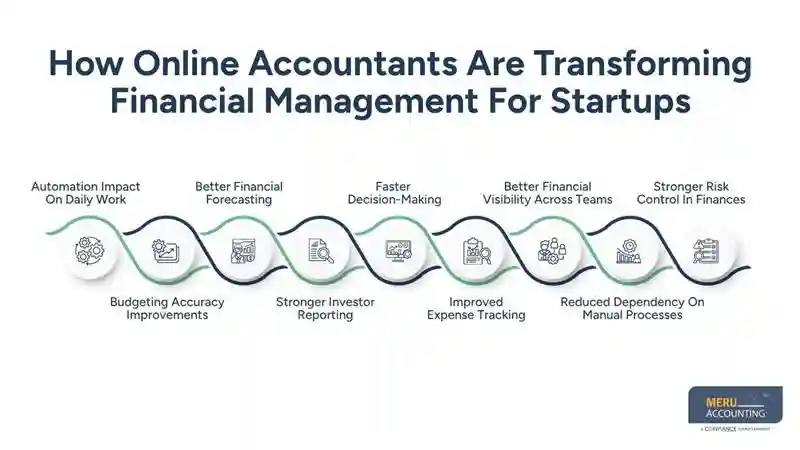
Improved Expense Tracking
Remote accountants help startups track every expense in a structured way. This ensures no cost goes unnoticed or unrecorded. It also helps identify unnecessary spending patterns early.
Better Financial Visibility Across Teams
Startups can share financial data easily across departments using online systems. Virtual accountants make this information accessible and clear. This improves coordination between finance, operations, and management teams.
Reduced Dependency On Manual Processes
By shifting to digital systems, virtual accountants reduce the need for manual spreadsheets. This improves speed and reduces human error. It also allows teams to focus more on analysis instead of data entry.
Stronger Risk Control In Finances
Remote accountants help identify unusual transactions or financial gaps early. This improves financial safety for startups. It also supports better internal control and reduces financial risks over time.
How Accountant Online Platforms Improve Decision-Making For Startups
Data Accuracy For Planning
An accountant online ensures financial records are updated and correct, which supports better planning decisions for startups. This reduces errors that can affect budgeting and long-term financial choices.
Improved Budget Tracking
Startups can track spending more closely with help from an accountant online, reducing the chances of overspending. It also helps founders compare planned budgets with actual spending in real time.
Simple Financial Dashboards
Many platforms used by an accountant online offer easy dashboards that show financial health in a clear format. These dashboards help founders understand key numbers without needing deep accounting knowledge.
Faster Response To Financial Changes
When market conditions change, an accountant online helps startups react quickly using updated financial data. This allows businesses to adjust spending or strategy without delay.
Better Cost Analysis
An accountant online helps break down costs clearly so startups understand where money is going and how to control it. This supports smarter cost-cutting decisions and better resource allocation.
Common Services Offered By Online Accountants For Startups
Bookkeeping Support
Online accountants manage daily records of income and expenses, ensuring clean and updated books for startups. This helps maintain financial clarity and reduces confusion during reporting periods.
Payroll Processing
They also handle employee payments and salary records, helping startups avoid errors in payroll cycles. This ensures employees are paid correctly and on time without manual mistakes.
Tax Filing Assistance
Basic tax filing and compliance support is provided by virtual accountants, reducing legal risk for startups. It also helps startups meet deadlines and avoid penalties from incorrect filings.
Invoicing Management
Startups rely on online accountants to create, track, and manage invoices efficiently. This improves cash flow by ensuring timely billing and follow-ups.
Financial Reporting
Regular reports created by remote accountants help startups understand performance and financial health. These reports support better decision-making and long-term planning.
Challenges Startups Face Without Online Accounting Support
Manual Errors In Records
Without virtual accountants, startups often make mistakes in manual bookkeeping, leading to confusion later. These errors can also affect financial reports and create issues during audits.
Low Financial Visibility
Lack of structured systems makes it hard to understand real-time financial status without online accountants. This often leads to poor planning and unclear business decisions.
Cash Flow Problems
Poor tracking of money flow creates issues that virtual accountants usually help prevent. It can result in delayed payments and difficulty in managing daily expenses.
Compliance Risks
Startups may miss important filing deadlines without guidance from remote accountants, leading to penalties. This also increases the risk of legal complications and financial stress.
Limited Scalability
Without support from virtual accountants, financial systems may not grow smoothly with the business. As the startup expands, managing accounts becomes more complex and time-consuming.
How Meru Accounting Supports Startups With Online Accounting
- Meru Accounting helps startups build structured financial systems through experienced support. This ensures smooth tracking from day one and reduces early-stage financial confusion.
- Our certified experts use modern cloud tools to deliver services that give startups real-time access to financial data anytime they need it.
- Meru Accounting provides reliable assistance for tax filing and basic compliance needs, helping young businesses avoid penalties and filing errors.
- As startups grow, services from Meru Accounting adjust easily to match increasing financial needs without disrupting existing systems.
- Startups receive simple and clear financial reports through structured systems, helping founders understand performance and make better decisions.
Our Expert Perspective
From our experience working with early-stage businesses, startups that adopt online accountants early build stronger financial discipline and avoid common cash flow gaps. A structured digital accounting setup not only improves accuracy but also gives founders the clarity needed to scale with confidence.
Key Takeaways
- Online accountants help startups manage money with more clarity
- They reduce manual work and improve financial accuracy
- Startups save cost and time with digital accounting support
- Real-time reporting helps in faster decision-making
- Cloud tools improve access and control over financial data
- Lack of proper accounting support can create financial risks
FAQs
Online accountants are finance professionals who manage bookkeeping, reporting, and tax tasks using cloud tools. Startups use them to track money and stay organized without in-house staff.
Startups prefer virtual accountants because they offer lower cost, faster reporting, and remote access to financial data, which helps in better daily decision-making.
Remote accountants track income and expenses in real time, helping startups see cash flow clearly and avoid financial shortages or overspending.
Yes, online bookkeepers and accountants are suitable for small startups because they are flexible, affordable, and can scale as the business grows.
Online bookkeepers and accountants usually offer bookkeeping, invoicing, payroll support, tax filing assistance, and financial reporting for better business control.