When bills pile up, payroll takes too long, or financial reports arrive late, business decisions can suffer. Businesses that outsource financial services can assign routine finance tasks to skilled teams and give their staff more time for daily operations. However, the right provider must offer more than a low price.
Financial services outsourcing companies differ in their skills, software, fees, security rules, and service quality. A poor choice can lead to errors, late reports, and extra costs. Before you outsource financial services, review your needs, compare providers, and set clear standards for quality and delivery.
What You Will Learn From This Blog
- Which financial tasks businesses can outsource.
- How to assess financial services outsourcing companies.
- What to ask about costs, data security, and work quality.
- How to compare in-house finance teams with outsourced services.
- How to measure the return on financial outsourcing.
Why do Businesses Outsource Financial Services to Improve Efficiency?
Businesses outsource financial services when routine finance work takes time away from core tasks, costs rise, or reports arrive too late. The decision often depends on workload, staff skills, and the need for accurate financial records.
Reduce Routine Work
Daily entries, invoice checks, and payroll tasks can take hours each week. Outsourcing these duties gives internal staff more time for sales, customer service, and business planning.
Control Operating Costs
Hiring a full finance team may not suit every budget. Financial services outsourcing companies offer access to specialist staff without requiring businesses to hire for every task.
Gain Access to Specialist Skills
Tax rules, payroll duties, and financial reports require the right knowledge. Businesses can outsource financial services to access relevant skills when their internal teams lack time or experience.
Meet Financial Reporting Deadlines
Late financial reports can delay spending plans and business decisions. An agreed work schedule gives the provider clear deadlines for account updates, reports, and other tasks.
Manage Growing Workloads
As transaction volumes rise, existing staff may struggle to keep up. Outsourcing lets businesses add selected finance services as their workload grows, subject to the provider’s capacity and contract terms.
Keep Business Goals in Focus
Business owners need time to manage staff, serve customers, and plan future growth. Outsourcing routine financial tasks allows them to focus on these goals while keeping control of budgets, payments, and major financial decisions.
Which Financial Services Can Businesses Outsource?
Businesses can outsource financial services in full or choose specific tasks based on workload, budget, and staff skills.
Accounting and Bookkeeping
Outside teams can record transactions, reconcile bank accounts, and maintain financial records. When businesses outsource financial services such as bookkeeping, they can keep accounts current and spot missing entries sooner.
Accounts Payable and Accounts Receivable
These services cover supplier bills, customer invoices, due dates, and overdue balances. Financial services outsourcing companies can track payments and send reminders, while the business keeps control of payment approval.
Payroll Processing and Management
Payroll services cover pay calculations, deductions, payslips, and payroll records. Before outsourcing, check that the provider knows the tax and labor rules that apply to your staff.
Financial Reporting and Analysis
Providers can prepare reports on income, costs, profit, and cash flow. These reports give managers useful data for spending plans, budgets, and business decisions.
Tax Preparation and Compliance
Tax-related services include record checks, return preparation, and filing support. Choose a provider with the right knowledge for your business location and tax duties.
Financial Planning and Virtual CFO Services
Virtual CFO services cover budgets, cash forecasts, profit reviews, and growth plans. Businesses can outsource financial services at this level when they need expert advice but do not require a full-time CFO.
What are the Benefits of Financial Services Outsourcing?
The main benefits include lower operating costs, access to skilled staff, and more time for business priorities. Results depend on the service scope and the quality of the provider.
Lower Operating Costs
Outsourcing may reduce spending on salaries, training, software, and staff benefits. Compare the full cost of financial services outsourcing companies with the total cost of running an internal team.
Access to Skilled Staff
Providers may have staff with experience in accounting, payroll, tax, and reporting. Ask about their qualifications and review process before you outsource financial services.
More Time for Core Business Tasks
Moving routine finance work to an outside team can free owners to focus on customers, sales, and staff. Clear duties prevent repeated questions and delays.
Timely and Clear Financial Records
A fixed work schedule can keep accounts current and reports ready for review. Agree on deadlines and send complete records to the provider on time.
Flexible Service Capacity
Financial services outsourcing companies may offer extra services as a business grows. Review fees, staff capacity, and delivery dates before adding new tasks.
Better Focus on Business Decisions
Clear financial reports show where costs rise and cash flow falls short. Managers can use these figures to plan spending while retaining control of key decisions.
How to Evaluate Financial Services Outsourcing Companies
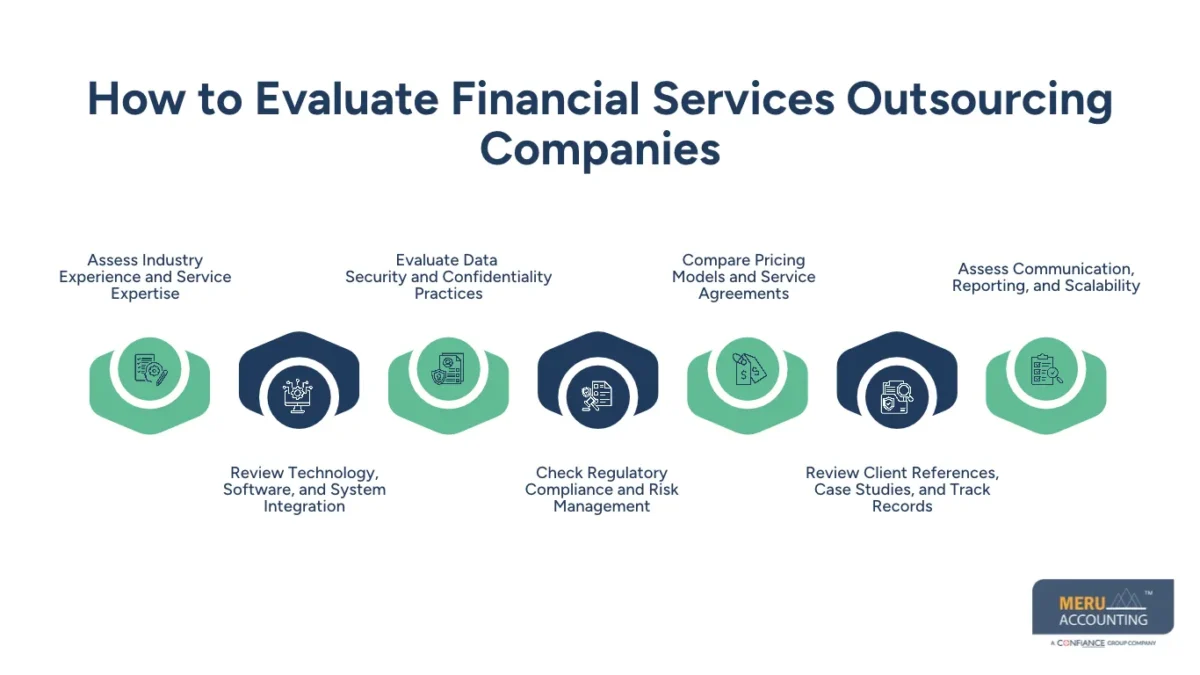
Do not choose a provider based on price alone. Compare its experience, work methods, security, and service terms before you outsource financial services.
Assess Industry Experience and Service Expertise
Look for experience with firms of a similar size and type. Ask for client references, staff qualifications, and examples of work related to your needs.
Review Technology, Software, and System Integration
Check whether the provider can use your current tools, such as QuickBooks, Xero, Zoho Books, NetSuite, or Odoo, when you outsource financial services. Ask how it transfers data and handles errors.
Evaluate Data Security and Confidentiality Practices
Financial records contain private business, customer, and staff data. Review access controls, backup methods, confidentiality terms, and procedures for reporting security incidents.
Check Regulatory Compliance and Risk Management
Confirm that the provider understands the tax, payroll, and data rules that apply to your business. Financial services outsourcing companies should define who checks records and handles errors.
Compare Pricing Models and Service Agreements
Providers may charge a monthly fee, hourly rate, or transaction-based price. Ask about setup costs, extra charges, service limits, response times, and exit terms.
Review Client References, Case Studies, and Track Records
Ask for references from firms with similar needs. Check whether the provider meets deadlines, keeps records accurate, and resolves problems in a clear way.
Assess Communication, Reporting, and Scalability
Confirm your main contact, report schedule, and response times. Before you outsource financial services, check how the provider will handle more work during busy periods.
optional anymore
on running the business
What Questions Should You Ask Before Choosing a Financial Outsourcing Provider?
Ask every shortlisted provider the same questions to make a fair comparison.
Questions About Skills and Work Quality
- Who will prepare and review our records?
- How do you find and correct errors?
Questions About Software and Data Access
- Can you use our current accounting software?
- How do you protect our financial records?
Questions About Fees and Service Terms
- Which tasks are included in the quoted fee?
- What extra charges may apply?
Questions About Communication and Growth
- Who will manage our account?
- Can your team handle more work as we grow?
Check that key promises appear in the contract before you outsource financial services.
In-House Financial Management vs. Outsourcing: Which is More Efficient?
The best choice depends on cost, workload, and the level of control your business needs.
Cost and Staffing
An in-house team brings salary, training, and software costs. When you outsource financial services, you may reduce these costs, depending on the provider’s fee and the amount of work involved.
Control and Access
Internal staff can respond directly to managers. Outside teams need clear access rules, approval steps, and reporting schedules.
Skills and Capacity
Financial services outsourcing companies can offer specialist skills without requiring a business to hire several full-time employees.
Speed and Workload
An outside team may clear routine backlogs, while internal staff may respond faster to urgent business questions.
Best-Fit Model
Businesses that outsource financial services can adopt a mixed model by keeping payment approvals and major financial decisions in-house while assigning routine bookkeeping, payroll, and reporting to an external provider.
What Are the Common Risks of Financial Services Outsourcing?
Businesses should assess potential risks before they outsource financial services, particularly when sharing sensitive records or transferring critical finance tasks to an outside team.
Data Breaches and Unauthorized Access
Weak access controls can expose sensitive records. Limit access to approved users and agree on how security incidents must be reported.
Errors and Missed Deadlines
Wrong entries or late filings can lead to extra costs. Set review steps and retain internal checks on key payments and reports.
Hidden Fees and Service Gaps
A low quote may exclude setup, urgent work, or extra reports. Ask for a full fee list and define the service scope in writing.
Dependence on One Provider
A service gap can disrupt work if one provider manages every task. Keep copies of records and agree on a clear exit plan.
Loss of Business Knowledge
An outside team handling outsourced financial services may lack context about unusual costs or customer terms. Share clear policies and review unusual transactions regularly.
How to Measure the ROI of Outsourcing Financial Services
Measure costs, time saved, accuracy, and the effect on daily work before and after you outsource financial services.
Compare Total Costs
Include service fees, setup charges, software, and review time. Compare these with the full cost of internal staff, tools, and training.
Measure Time Saved
Track staff hours spent on finance tasks before and after outsourcing. Check whether saved time creates measurable value for the business.
Track Accuracy and Timeliness
Review errors, late reports, payroll issues, and missed deadlines. Financial services outsourcing companies should agree on clear measures for work quality.
Review Cash Flow and Collection Time
Businesses that outsource financial services should track overdue invoices, customer payment times, and cash forecasts to assess changes in financial performance.
Calculate the Return
ROI (%) = (Financial Benefits − Total Outsourcing Cost) ÷ Total Outsourcing Cost × 100
For example, ₹6 lakh in annual benefits against ₹4 lakh in total costs gives a 50% ROI. Actual results depend on the business and the services purchased.
How Meru Accounting Delivers Financial Services Outsourcing
Meru Accounting provides accounting, bookkeeping, payroll, accounts payable and receivable, tax-related services, financial reporting, and virtual CFO services. Our services are based on each client’s needs and agreed work scope.
Services Based on Business Needs
We agree on the tasks, work schedule, and reporting needs before work begins. This gives both teams a clear view of their duties.
Accounting and Bookkeeping Services
Our services cover routine entries, account checks, and financial record management within the agreed scope.
Payroll and Accounts Management
We provide payroll, accounts payable, and accounts receivable services based on client needs and agreed procedures.
Reporting and Financial Planning
Our financial reporting and virtual CFO services give managers a clearer view of costs, cash flow, and financial results.
Software and Workflow Alignment
We work with platforms such as QuickBooks, Xero, Zoho Books, NetSuite, and Odoo, based on client requirements.
Our Expert Perspective
Businesses considering whether to outsource financial services should begin with a task that has clear costs, measurable results, and a manageable scope. Set measures for cost, accuracy, and delivery, then review the results after an agreed period. Expand the service only when the results meet your needs.
Key Takeaways
- Define the finance tasks you want to outsource.
- Compare financial services outsourcing companies on skills, security, fees, and service terms.
- Check client references and confirm duties in writing.
- Keep control of major payments and financial decisions.
- Track costs, time saved, accuracy, and delivery dates to measure the results of your decision to outsource financial services.
FAQs
Outsourcing financial services can reduce routine workloads, control operating costs, provide access to skilled staff, and improve financial reporting.
Businesses should compare industry experience, service quality, software skills, data security, pricing, client reviews, and contract terms.
Businesses can outsource accounting, bookkeeping, payroll, accounts payable, accounts receivable, tax preparation, financial reporting, and virtual CFO services.
Outsourcing can reduce costs when provider fees and internal review expenses are lower than the total cost of hiring and managing an in-house team.
Businesses can measure ROI by comparing total outsourcing costs with verified savings while tracking staff hours, error rates, reporting deadlines, and cash flow.
optional anymore
on running the business