A product shows as available online, but the shelf is empty. Another item sits in storage for months, tying up cash that could be used elsewhere. These problems often point to gaps in stock control. Outsource Inventory Management gives businesses a way to address such gaps by handing agreed stock tasks to an outside team.
From tracking daily sales to planning restocks, the right process can cut waste and keep orders on track. Some firms use inventory management solutions to handle records in-house, while others need an outside team to manage routine work. The best choice depends on stock volume, staff time, service fees, and how much control the business wants to retain.
What You Will Learn From This Blog
- How businesses outsource inventory management to manage stock, orders, and restocking.
- Which tasks an outside provider can handle and what benefits to expect.
- What affects service costs and how to judge the value for money.
- How inventory management solutions compare with outsourced services.
- Which risks and stock measures deserve regular attention.
What is Outsource Inventory Management?
Imagine a store selling 200 products across its website and a physical shop. Each sale, return, and delivery changes its stock count. Outsource Inventory Management moves agreed tasks, such as updating records and checking stock levels, to an outside firm.
The business still sets its stock rules and buying limits. The provider handles the work listed in the contract and shares reports for review.
How Outsource Inventory Management Works: Step-by-Step Workflow
Inventory Assessment and Data Review
Before work starts, the provider reviews product lists, sales records, and stock counts. A check of physical goods against system records can reveal missing items, duplicate entries, and old data.
Stock Tracking and Inventory Updates
Each delivery, sale, return, or stock transfer changes the quantity on hand. Inventory management solutions can record these changes, while routine checks catch errors before they affect new orders.
Order Processing and Stock Replenishment
When stock falls below an agreed level, the provider flags the item for review. The business can then approve a new order based on sales, supplier lead times, and available cash.
Warehouse Coordination and Inventory Reporting
Goods must be tracked as they enter storage, move to shelves, and leave for buyers. Reports show which items sell well, which sit too long, and where stock may be at risk.
Performance Monitoring and Regular Reviews
Regular reviews compare actual results with agreed targets for stock errors, order delays, and restocking. These checks show whether Outsource Inventory Management is meeting the business’s needs or requires changes.
optional anymore
on running the business
How Outsource Inventory Management Benefits Businesses
Lower Inventory Operating Costs
Hiring an outside team may cost less than employing staff for every stock task. Businesses should compare service fees with wages, training, software, and the cost of errors before claiming a saving.
Better Stock Accuracy and Visibility
A clear record of each stock movement makes it easier to find missing goods and correct errors. Inventory management solutions and regular stock checks give staff a clearer view of what is available.
Fewer Stockouts and Excess Inventory
Running out of a popular product can mean lost sales, while buying too much leaves cash tied up in goods. Better sales records and reorder plans can reduce both risks.
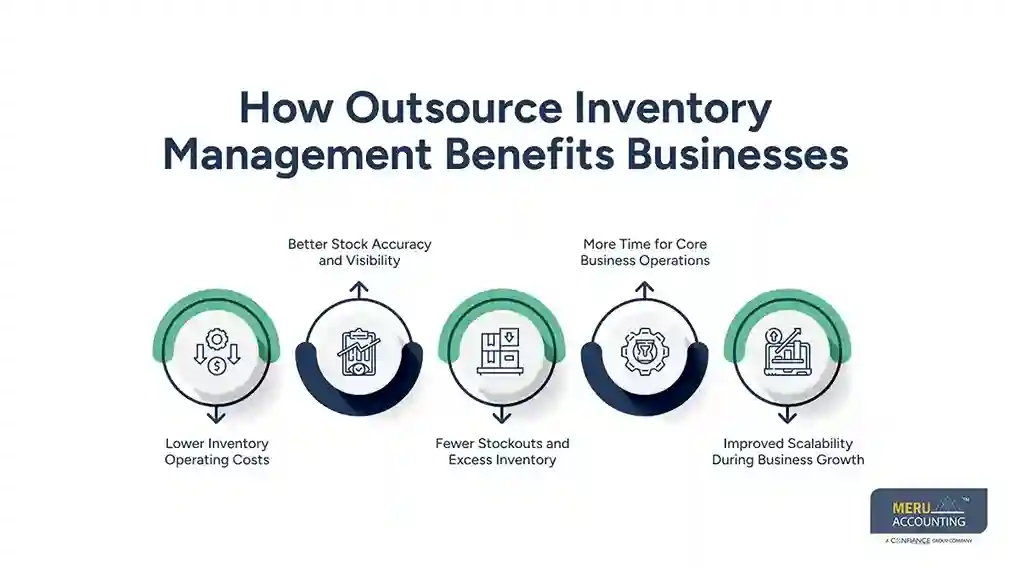
More Time for Core Business Operations
Owners can spend less time checking spreadsheets and chasing stock updates. That time can go toward product quality, customer needs, supplier deals, and sales plans.
Improved Scalability During Business Growth
A rise in orders often brings more stock checks, records, and supplier tasks. An outside provider may take on more work as demand grows, subject to agreed capacity, fees, and service terms.
How Much Does it Cost to Outsource Inventory Management?
Factors that Affect Outsourcing Costs
The cost of outsourced inventory management depends on product count, order volume, stock locations, reporting needs, and the tasks covered. Record updates alone usually cost less than a service that also handles storage, packing, and shipping.
Fixed Fees vs. Transaction-Based Pricing
A fixed monthly fee for inventory management solutions makes costs easier to plan when work stays steady. A transaction-based fee changes with order volume, which may suit seasonal firms but can raise bills during peak sales.
Hidden Costs Businesses Should Consider
Setup, data transfer, software links, extra stock counts, and contract exit fees can raise the total. Ask for a full cost list before signing so the quoted price does not hide key charges.
How to Calculate the Return on Investment (ROI)
When businesses outsource inventory management, they can calculate ROI by comparing the service fee with savings from lower labor costs, fewer stock losses, and reduced errors. Include staff hours, stock losses, storage, and errors, but count only savings that records can reasonably show.
ROI (%) = (Net Savings ÷ Total Outsourcing Cost) × 100
For example, a firm that saves ₹1,20,000 after paying ₹80,000 for the service gains ₹40,000 in net savings. Its ROI on that service cost is 50%, before any other costs are counted.
Outsourced Inventory Management vs. Inventory Management Software
Software records stock, tracks sales, and sends alerts when goods run low. Inventory management solutions suit firms that have staff to review alerts, fix errors, and act on the data.
Outsource Inventory Management transfers agreed tasks to an outside team. This may suit a business whose staff already have full workloads or whose stock process needs regular attention. Some firms combine software with an outside service to keep records in one place while handing routine checks to a provider.
The choice comes down to workload, cost, and control. A small store with few products may need only software, while a firm with many orders or stock locations may need extra staff as well.
Common Challenges When You Outsource Inventory Management and How to Avoid Them
Limited Control Over Inventory Operations
When you Outsource Inventory Management, a provider may use rules that do not fit the business’s buying needs. Set clear approval limits and state which stock changes or purchases need consent.
Data Accuracy and System Integration Issues
A wrong product code or a failed system link can lead to false stock counts. Test inventory management solutions and data transfers before launch, then compare sample records with actual goods.
Communication Gaps With Service Providers
A delay in reporting low stock can hold up new orders. Agree on who handles urgent issues, how quickly replies are due, and when both sides review results.
Inventory Security and Data Access Risks
Stock records may reveal sales trends, supplier details, and business plans. Limit access to the data the provider needs and set clear rules for storage, passwords, and account closure.
Unexpected Costs and Service Delays
Extra work during a sales rush may raise fees or delay reports. Set service targets, list extra charges, and agree on how peak demand and missed deadlines will be handled.
Key Inventory Management Metrics to Track After Outsourcing
Inventory Turnover Ratio
The inventory turnover ratio shows how often a business sells and replaces its stock after it chooses to Outsource Inventory Management. Calculate it by dividing the cost of goods sold by the average inventory value, then compare results across periods to identify slow-moving stock.
Order Fulfillment Rate
This rate shows the share of orders filled in full from available stock. A low result may point to poor stock planning, late updates, or gaps between sales and warehouse records.
Stockout Rate
The stockout rate tracks how often a product is unavailable when a buyer needs it. Check the figures by product to find items that need better reorder rules or closer supplier checks.
Inventory Carrying Costs
Storage, insurance, handling, damage, and cash tied up in stock all add to carrying costs. Review these costs over time to see whether stock levels fit actual demand.
Inventory Accuracy Rate
This rate compares the quantity in the system with the quantity found during a physical count. A high rate shows that records match actual goods more closely, though regular checks remain necessary.
How Meru Accounting Can Help With Inventory Records and Reporting
Effective inventory management solutions rely on accurate stock records to support better purchasing and cost decisions. Meru Accounting provides accounting and bookkeeping services that can keep purchase entries, sales records, supplier bills, and stock-related costs in order.
For businesses using Outsource Inventory Management, these records make it easier to review provider fees, track expenses, and assess the value of goods held. Meru Accounting can prepare agreed financial reports based on the records supplied by the business.
The scope should be clear from the start. Accounting and reporting tasks do not automatically include warehouse work, physical stock counts, or order handling.
Our Expert Perspective
Outsource Inventory Management should begin with a simple question: do the stock records match the goods on hand? Handing poor records to an outside firm will not fix the source of the problem.
Start with a small product group or one site, set clear targets, and review results over an agreed period. Compare stock accuracy, late orders, staff time, and total cost before expanding the service. This gives the business real results to weigh against the fee.
Key Takeaways
- Outsource Inventory Management moves agreed stock tasks to an outside firm.
- The service can cover stock records, order updates, restock alerts, and reports.
- Fees depend on stock volume, order count, system needs, and service scope.
- Check extra charges, data access, and contract terms before signing.
- Track stock turnover, order fulfillment, stockouts, carrying costs, and record accuracy.
- Inventory management solutions may suit simple needs, while outsourced services can suit firms with more daily work.
- Clean records and regular reviews give the business a sound basis for judging results.
FAQs
Businesses can outsource stock tracking, inventory updates, order processing, stock replenishment, warehouse coordination, and inventory reporting.
The cost depends on stock volume, order count, service scope, warehouse needs, software links, and the provider’s pricing model.
Outsourcing inventory management can reduce operating costs, improve stock accuracy, limit stockouts, save staff time, and meet growing business needs.
Outsourced inventory management assigns stock tasks to an outside team, while inventory management software gives in-house staff tools to manage stock records and orders.
Choose a provider based on its service scope, pricing, stock reporting, system integration, data security, performance targets, and contract terms.
optional anymore
on running the business