Hiring employees in another state can open new doors for a business, but it can also create payroll work that is easy to overlook. Each state can have its own tax, unemployment, and filing rules, and remote employees can make work locations harder to track. Outsourced payroll services can help businesses manage these details while keeping payroll accurate and on schedule.
Multi-state payroll is more than paying employees and recording wages. Businesses may also need to track state withholding, unemployment taxes, local requirements, new-hire reports, and changes in employee work locations. Understanding how these pieces fit together can help you choose the right payroll setup and avoid costly cleanup later.
What You Will Learn From This Blog
- How outsourced payroll services work
- Why payroll gets harder across state lines
- What tax and pay data businesses need to track
- How an outsourced team can manage multi-state payroll
- Common payroll errors to watch for
- What to ask before hiring a payroll provider
- How payroll services for startups can support early growth
What Are Outsourced Payroll Services?
Outsourced payroll services let a business have an outside team manage some or all of its payroll work. Depending on the service, this may include payroll processing, wage and tax calculations, payroll records, tax filings, employee reports, and year-end forms.
The goal is not only to save time. A good payroll process should also keep pay data, tax data, and accounting records in sync. Federal payroll rules alone cover income tax withholding, Social Security, Medicare, and federal unemployment tax.
The work can get more involved when employees work in different states. A provider may need to track each employee’s work location, pay, state tax setup, and filing needs. The business still owns its employer duties, so it should know what its provider does and what it must review.
For a small firm, payroll services for startups can also help build a sound process before payroll becomes hard to manage. This can be useful when a startup moves from a few workers to a team spread across several states.
Why Multi-State Payroll Is More Complicated Than Single-State Payroll
With one state, payroll still needs care, but there are fewer state rules to track. With workers in several states, the payroll setup may need to change by worker and by work location.
State income tax rules can differ. Some states do not have a broad state income tax, while others do. Local taxes may also apply in some places. The IRS notes that state and local income tax withholding can apply based on state and local rules.
State unemployment tax is another part of the process. Most employers pay both federal and state unemployment tax, and multi-state employers have added reporting needs.
Remote work adds another layer. An employee may live in one state and work for a company based in another. If that employee moves, starts working from home, or works in a new state, the payroll setup may need review.
This is one reason outsourced payroll services can be useful for firms with a remote or growing team. A set process can help keep each worker’s payroll data tied to the right state and tax setup.
What Businesses Need to Track for Multi-State Payroll
A strong payroll process starts with good data. Businesses should keep key details for each worker and review them when there is a change.
State Income Tax Withholding
The business needs to know which state rules apply to an employee’s wages. The right setup may depend on where the employee works, where the employee lives, and the facts of the job.
Federal withholding is based in part on the employee’s Form W-4 and the amount and type of pay.
State Unemployment Tax
State unemployment tax is separate from federal unemployment tax. Employers should track the state tied to the wages and use the right state account and rate.
The IRS states that employers who pay wages in more than one state are treated as multi-state filers for Form 940 reporting.
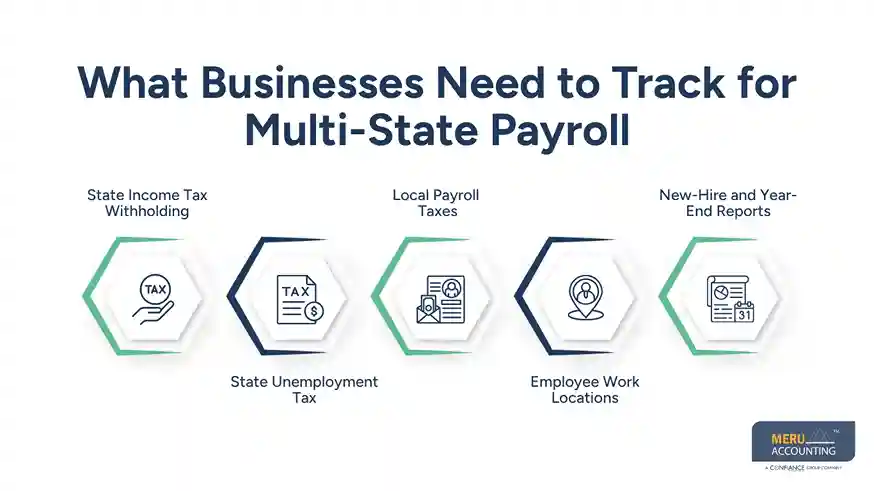
Local Payroll Taxes
Some cities, counties, and other local areas have their own payroll tax rules. These can be easy to miss if a company only looks at state-level data.
Employee Work Locations
A current work address matters. A remote worker who moves to another state can change the payroll and tax work the company needs to review.
New-Hire and Year-End Reports
Businesses also need to keep employee records ready for required reports and forms. W-2 forms, for example, show wage and tax data for the year and include state and federal tax details.
How Outsourced Payroll Services Handle Multi-State Payroll
The exact process varies by provider, but a sound setup should begin with a review of the company’s workers, states, pay rules, and payroll schedule.
The provider can then set up each worker with the needed tax and work-location data. During each pay cycle, the team can process wages, deductions, taxes, and payroll records based on that setup.
Outsourced payroll services may also help with payroll tax deposits, returns, payroll reports, and year-end forms, depending on the scope of the service.
The accounting side matters too. Payroll should flow into the books in a way that lets the business track wages, employer taxes, benefits, and other payroll costs. This gives the owner and accounting team a cleaner view of labor cost and cash flow.
Still, outsourcing does not mean the owner should stop reviewing payroll. Businesses should have a clear process for approving payroll, reporting employee changes, checking reports, and handling unusual pay items.
optional anymore
on running the business
Common Multi-State Payroll Mistakes Businesses Should Avoid
Multi-state payroll errors often start with small data gaps. Some common issues include:
- Using the wrong state for an employee’s work location
- Failing to update payroll after an employee moves
- Missing a state registration
- Applying the wrong state tax rate
- Overlooking local payroll tax rules
- Mixing payroll data between states
- Failing to review state unemployment tax
- Treating all remote workers the same
- Not tying payroll records back to the books
- Waiting until year-end to find payroll errors
A missed state setup can affect more than one pay run. It may also lead to tax corrections, late filings, or extra work to fix records.
This is why outsourced payroll services should include more than basic pay processing. The provider should have a clear process for collecting worker data, checking changes, and keeping payroll records in order.
Things to Consider Before Choosing a Payroll Provider
Price is one factor, but it should not be the only one. Ask how the provider handles multi-state payroll before signing up.
Multi-State Experience
Ask whether the provider works with companies that have employees in several states. A provider should understand that state and local payroll needs can vary.
Service Scope
Find out what is included. Does the service cover payroll runs, tax filings, tax deposits, year-end forms, payroll reports, and payroll accounting support?
Accounting Integration
Payroll should connect well with the company’s accounting workflow. Ask how payroll data is sent to the books and how corrections are handled.
Employee Changes
Ask what happens when a worker moves, joins from another state, changes pay, or starts working from home.
Review and Support
You should know who checks payroll and who you can contact when an issue comes up. Clear support can matter when a tax notice or payroll error needs fast action.
For startups, payroll services for startups should also be able to grow with the team. A system that works for five employees may need a new process when the company has 25 employees in several states.
Meru Accounting's Outsourced Payroll Services
At Meru Accounting, we handle the payroll-related accounting work that keeps payroll records accurate and your books up to date. Our team works within your existing payroll system, accounting software, and internal processes, so the support fits the way your business already operates. We can also support businesses with remote and multi-state teams that need consistent payroll records as they grow.
What We Handle
Our outsourced payroll support includes:
- Payroll accounting: Recording wages, payroll taxes, benefits, and other payroll-related costs.
- Payroll reconciliation: Reconciling payroll reports with bank and general ledger records.
- Payroll expense tracking: Keeping payroll costs properly classified and recorded in the books.
- Payroll reporting: Preparing payroll-related reports for monthly close, management review, and accounting needs.
- Payroll record maintenance: Keeping payroll records organized and ready for tax and financial review.
- Payroll cleanup: Reviewing and correcting payroll-related entries when records are behind or contain errors.
- Software and workflow support: Working with the payroll and accounting software your business already uses.
For payroll services for startups, we can also support the accounting side of payroll as your team expands. Our team can work with your current processes and software while keeping payroll records organized and aligned with your accounting needs.
Our Expert Insight
Multi-state payroll works best when employee data and payroll data are kept current. In practice, one of the first things to check when payroll looks wrong is the employee setup: work state, pay rate, tax setup, and recent changes.
It is also worth checking payroll against the books each month. Wage expense, employer tax, benefits, and payroll liabilities should make sense when compared with payroll reports and bank activity. A mismatch that stays open can make month-end close and tax work harder later.
Businesses should also define who owns each step. The payroll provider may run payroll and file certain forms, while the business may still need to give correct employee data, approve payroll, and respond to tax notices. Clear roles reduce gaps.
Key Takeaways
- Outsourced payroll services can take much of the day-to-day payroll work off an internal team.
- Multi-state payroll needs careful tracking of work locations, state taxes, unemployment taxes, and local rules.
- Remote workers can change a company’s payroll needs when they move or work from another state.
- Payroll data should tie back to the accounting records.
- Businesses should ask what a provider handles before choosing a service.
- Payroll services for startups should be able to support growth without creating a hard-to-manage process.
- Outsourcing payroll does not remove the need for the business to review and approve key payroll data.
FAQs
If you hire an employee in another state, you may need to register for that state’s payroll tax accounts. The requirements vary by state and business situation.
A move can change the employee’s state tax and payroll setup. Update the employee’s work location before the next payroll and review any related filing requirements.
Payroll covers employee pay, deductions, and related tax work. Payroll accounting records that activity in the company’s books and reconciles it with financial records.
It depends on the provider’s service agreement. Ask whether the provider reviews notices, responds to them, or only gives you the records needed to handle them.
They can be, especially when a startup hires employees across state lines. Payroll services for startups can help keep payroll and accounting processes organized as the team grows.
optional anymore
on running the business