A restaurant’s menu tells customers what they can order, but its books tell a different story about the business. Which dishes bring in the best margins? Are slow weekdays eating into profits? Are rising supplier prices making some menu items less profitable? These are the kinds of questions independent restaurant and bar owners need to answer to keep their businesses on track. Outsourced restaurant accounting helps bring those numbers into focus without the cost of maintaining an in-house accounting department.
Instead of spending evenings sorting receipts, checking sales, and chasing bills, owners can rely on an accounting team to handle these tasks. From bookkeeping and payroll to cost tracking and financial reports, the right support helps turn day-to-day transactions into useful business insights.
What You Will Learn From This Blog
- What outsourced restaurant accounting means and how it works.
- Why independent restaurants and bars need expert accounting support.
- What tasks you can hand over to an outside accounting team.
- Common money and record-keeping issues in the food and drink business.
- How to choose the right restaurant accounting outsourcing companies.
- How Meru Accounting supports independent restaurants and bars.
What Is Outsourced Restaurant Accounting?
Outsourced restaurant accounting means hiring an outside team to manage some or all of your finance and bookkeeping work. Instead of hiring full-time staff, you work with skilled bookkeepers and accountants who handle tasks based on your needs.
These tasks may include daily sales entries, bank checks, bill payments, payroll records, tax prep, and monthly reports. The team can also help track food costs, labor costs, and cash flow.
For example, a small bar may need help with sales records, tip records, vendor bills, and payroll each month. A local restaurant may need daily sales checks, food cost reports, and help with cash flow. An outside team can take on these tasks while the owner and staff focus on daily work.
The scope can be small or wide. You may outsource only your books or hand over most of your finance work. This makes outsourced restaurant accounting a good fit for owners who need skilled help but do not need a full-time finance team.
optional anymore
on running the business
Why Independent Restaurants and Bars Need Specialized Accounting Support
Restaurants and bars have money flows that differ from those of many other small firms. Sales may come from dine-in guests, takeout orders, food apps, bar sales, and event bookings. At the same time, costs can shift due to food prices, staff hours, waste, and changes in guest demand.
Here are some key reasons to seek expert support.
1. Better Control Over Food and Drink Costs
Food and drink costs can change each week. Price hikes, waste, spoilage, and poor stock checks can lower your profit. An expert bookkeeper can help track what you buy and what you sell. This helps you spot cost changes and take action before they grow.
2. Clear View of Labor Costs
Staff pay is a major cost for most food and drink firms. You need to track work hours, overtime, tips, and payroll taxes with care. Good records help you see how labor costs affect sales and plan staff hours based on demand.
3. Better Cash Flow
A busy weekend does not always mean you have cash on hand to pay bills. Rent, vendor bills, payroll, and tax payments all have due dates. With regular books and cash flow reports, you can plan ahead and avoid last-minute cash gaps.
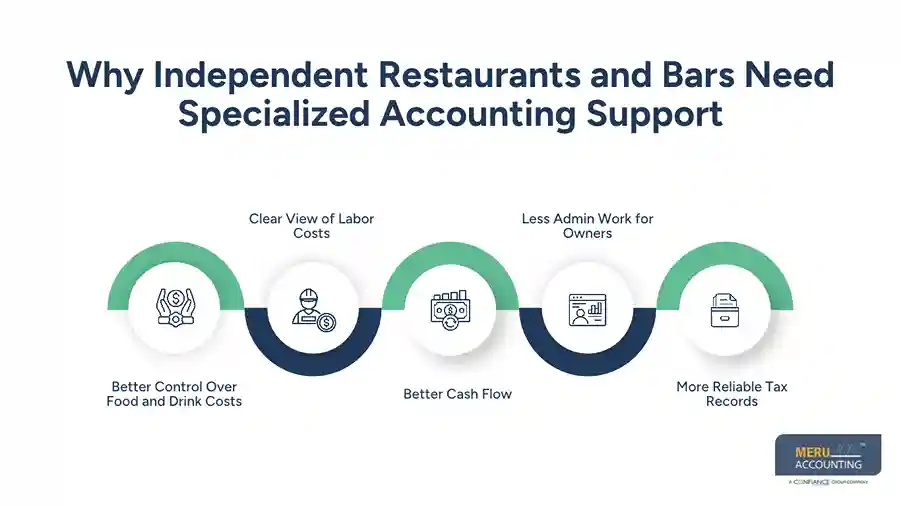
4. Less Admin Work for Owners
Many owners spend hours each week on bills, sales records, and bank checks. Outsourced restaurant accounting can take this work off your plate. You get more time to manage staff, serve guests, and grow your business.
5. More Reliable Tax Records
Poor records can lead to missed costs, wrong tax entries, and late filings. An expert team can keep your books in order and help prepare the records needed for tax work. This also makes it easier to work with your tax CPA.
What Services Are Included in Outsourced Restaurant Accounting?
The scope of outsourced restaurant accounting can vary based on the size of your business, the number of staff, and the level of support you need.
Common services include:
1. Restaurant Bookkeeping and Bank Reconciliation
Your team records daily sales, costs, bills, and other money moves. They also match bank and card records with your books to find gaps, missed entries, or errors.
For bars and restaurants, this may include sales from cash, cards, food apps, and online orders. Good records help ensure that each sale is logged in the right place.
2. Food and Beverage Cost Tracking
An outside team can sort food and drink costs, track stock-related costs, and help review changes in gross profit. These reports can help owners see if rising supply costs or waste are hurting their margins.
3. Payroll and Tip Accounting
Payroll support may include wage records, staff hours, overtime, tip records, and payroll entries. Bars and restaurants often have shift-based staff and tip income, so clean records are key.
Your team should also help keep payroll data in line with tax and labor rules. The owner remains in charge of setting pay and work terms.
4. Accounts Payable and Accounts Receivable
Accounts payable covers the bills you owe to food vendors, drink suppliers, landlords, and other service firms. An outside team can record bills, track due dates, and prepare payment reports.
Accounts receivable support may be useful for event sales, catering work, or business clients who pay after service.
5. Tax Prep and Financial Reporting
Your accounting team can keep tax records in order and help with tax prep. It can also prepare monthly profit and loss reports, balance sheets, and cash flow reports.
These reports show how much you earn, where your money goes, and what you owe. They give you a sound base for plans and key business choices.
Common Accounting Challenges for Independent Restaurants and Bars
Even a well-run restaurant can face bookkeeping and financial issues. Many of these problems start when sales, costs, and staff records are not checked on time.
Mixed Sales Records: Sales from cash, cards, food apps, and POS systems may not match bank deposits. Each source needs to be checked so that sales are not missed or counted twice.
High Food and Drink Waste: Spoiled food, over-ordering, spills, and poor stock checks can raise costs. If these costs are not tracked, your reports may not show the true cost of sales.
Tip and Payroll Errors: Bars and restaurants may have many staff, shift changes, overtime, and tip payouts. Poor records can lead to wrong pay and tax entries.
Late Vendor Payments: Missed bills can hurt vendor ties and lead to late fees. A clear bill list helps you plan what to pay and when.
Poor Cash Flow Planning: Owners may focus on sales but fail to plan for rent, payroll, tax, and stock costs. Regular reports can help you spot cash gaps before they turn into bigger issues.
Lack of Timely Reports: If books are not closed each month, you may not know if your costs are rising or your profit is falling. This can delay key choices on price, staff, and stock.
Meru Accounting’s Outsourced Restaurant Accounting Services for Independent Restaurants and Bars
A restaurant’s financial records need to tell the full story, from daily POS sales and bar receipts to food purchases, staff wages, vendor bills, and monthly operating costs. At Meru Accounting, we provide outsourced restaurant accounting support that helps independent owners keep these records accurate and understand how their business is performing.
Our outsourced restaurant accounting services cover the key financial tasks restaurants and bars deal with throughout the month:
- POS Sales and Daily Bookkeeping: We record restaurant and bar sales, organize income by source, and maintain accurate books for dine-in, takeout, delivery, and other sales channels.
- Bank, Credit Card, and POS Reconciliation: We match sales records with bank deposits and payment processor statements to identify missing deposits, duplicate entries, and differences in recorded sales.
- Food, Beverage, and Operating Expense Tracking: We categorize purchases from food suppliers, beverage distributors, and other vendors to help owners review spending and monitor changes in operating costs.
- Payroll and Tip Accounting: We maintain payroll records, track wage and tip entries, and organize related expenses for accurate financial reporting.
- Accounts Payable and Vendor Bill Management: We record supplier invoices, track payment due dates, and maintain clear records of outstanding bills.
- Monthly Financial Reporting: We prepare profit and loss statements, balance sheets, and cash flow reports to help owners review revenue, expenses, and business performance.
- Catch-Up and Cleanup Bookkeeping: We correct disorganized records, address unreconciled transactions, and bring overdue books up to date.
Our approach goes beyond recording transactions. We bring together bookkeeping, reconciliation, and financial reporting so restaurant owners can see how daily business activity affects their bottom line. Our dedicated accounting teams, multi-industry experience, and review processes help maintain consistency and accuracy as your business grows.
Whether you operate a neighborhood restaurant, a cocktail bar, or a family-owned dining business, Meru can provide accounting support that fits your operations. We help you spend less time sorting through financial records and more time making decisions about your menu, staff, suppliers, and next stage of growth.
Our Expert Insight
One key measure every restaurant owner should watch is prime cost. It is the total of food and drink costs plus labor costs. These two cost groups often make up a large share of a restaurant’s running costs.
For example, if a restaurant has $40,000 in monthly sales, $12,000 in food and drink costs, and $13,000 in labor costs, its prime cost is $25,000, or 62.5% of sales.
This number can help owners see how much of their sales goes toward two key cost groups. But it should not be viewed on its own. Rent, power, repairs, fees, and other costs also affect the final profit.
We suggest that owners review prime cost each month and compare it with past months. Also, check if a rise came from higher supply prices, more staff hours, lower sales, or waste. This helps you find the real cause rather than making cuts at random.
A good accounting team can help keep these costs in view and give you reports that support better choices.
Key Takeaways
- Outsourced restaurant accounting gives independent restaurants and bars access to skilled finance support without hiring a full-time team.
- Key services may include bookkeeping, payroll, tip records, bill tracking, tax prep, and financial reports.
- Regular sales checks and cost reports can help find errors and control waste.
- Prime cost reviews help owners track food, drink, and labor costs.
- When choosing restaurant accounting outsourcing companies, review their industry skills, service scope, work checks, and report quality.
- The right team can give owners more time to focus on guests, staff, and growth.
FAQs
Yes. It can be a cost-effective option for small restaurants that need reliable bookkeeping, payroll accounting, and financial reports but cannot justify hiring a full-time accountant.
Independent restaurants commonly use accounting software such as QuickBooks Online, Xero, and other platforms that connect with their POS and payroll systems. The right choice depends on business size, reporting needs, and existing integrations.
Yes. Depending on the service agreement, an outsourced team can record food purchases, track inventory-related costs, and help review cost of goods sold (COGS). This helps owners understand how stock costs affect gross profit.
Yes. Many providers support restaurants with multiple locations by maintaining separate location records, tracking revenue and expenses, and preparing consolidated financial reports. This helps owners compare the performance of each location.
Restaurant owners should review a profit and loss statement, balance sheet, cash flow statement, and location-wise sales and expense reports where applicable. These reports help assess profitability, cash position, outstanding liabilities, and operating costs.
optional anymore
on running the business