
For CPA firms, steady cash flow and strict compliance go hand in hand. When client payments are delayed or records are incomplete, both revenue and regulatory accuracy suffer. This is why outsourcing accounts receivable has become a practical choice for many CPA firms that want better control over collections, reporting, and compliance without increasing internal workload.
Outsourced accounts receivable services are no longer just about sending invoices and following up on payments. It directly affects cash flow planning, audit readiness, and client trust.
Before making this decision, CPA firms must understand how outsourcing works, what risks it addresses, and how the right partner can support long-term growth.
This blog explains everything CPA firms should know—from cash flow benefits to compliance safeguards—before choosing an accounts receivable outsourcing firm.
What You Will Learn From This Blog
In this blog, you will learn:
- Concept of Outsourcing Accounts Receivable for CPA Firms
- Why outsourcing accounts receivable improves cash flow stability
- Common compliance risks related to poor AR management
- How accounts receivable outsourcing helps meet compliance standards
- The role of an accounts receivable outsourcing firm in CPA operations
- How to choose the right outsourcing partner
- How CPA firms can get maximum value from accounts receivable outsourcing
Understanding Outsourcing Accounts Receivable
Outsourcing accounts receivable means handing over AR-related tasks to a specialized service provider. These tasks usually include:
- Invoice generation and delivery
- Payment tracking and follow-ups
- Customer statements
- AR aging reports
- Reconciliation of receivables
- Reporting for audits and compliance
For CPA firms, outsourcing accounts receivable allows internal teams to focus on advisory, tax planning, and client strategy instead of chasing payments and fixing AR errors.
An experienced accounts receivable service provider works as an extension of the CPA firm’s finance function, following agreed processes and compliance requirements.
Importance of Outsourcing Accounts Receivable for CPA Firms
CPA firms manage sensitive financial data and are accountable for accuracy. Poor accounts receivable handling can cause delayed collections, incorrect reporting, and compliance issues.
Here’s why outsourcing accounts receivable matters for CPA firms:
Reduces Internal Workload
Managing accounts receivable internally requires constant monitoring. Accounts receivable outsourcing reduces daily operational pressure on CPA staff.
Improves Accuracy
An accounts receivable outsourcing firm uses trained professionals who focus only on AR tasks, reducing errors in invoicing and reporting.
Supports Client Satisfaction
Timely and accurate billing improves client relationships and avoids disputes.
Strengthens Financial Reporting
Clean AR records make month-end and year-end closings smoother for CPA firms.
The Cash Flow Impact of Outsourcing Accounts Receivable
Cash flow is one of the biggest reasons CPA firms choose outsourced accounts receivable services
Faster Invoicing
Delayed invoices lead to delayed payments. Accounts receivable outsourcing ensures invoices are generated and sent on time.
Better Payment Follow-ups
An accounts receivable service provider follows structured follow-up schedules, reducing overdue balances.
Clear Visibility of Receivables
With accurate aging reports, CPA firms know exactly which clients owe money and for how long.
Predictable Cash Flow
When collections improve, CPA firms can better plan expenses, payroll, and growth.
Reduced Days Sales Outstanding (DSO)
Outsourcing accounts receivable helps reduce DSO by speeding up invoicing and improving collection follow-ups. This means payments are received faster, and cash flow becomes more consistent.
Fewer Bad Debts
An accounts receivable service provider identifies slow-paying clients early and manages collections more effectively. This reduces the risk of bad debts and improves overall receivables quality.
Outsourced accounts receivable services directly improve working capital without increasing internal staffing costs.
Compliance Risks CPA Firms Face Without Proper AR Management
Improper AR management exposes CPA firms to multiple compliance risks.
Inaccurate Financial Statements
Unreconciled receivables lead to incorrect revenue reporting.
Audit Issues
Missing invoices, mismatched payments, or outdated AR records can raise audit red flags.
Tax Reporting Errors
Revenue recognition errors can impact tax filings and compliance.
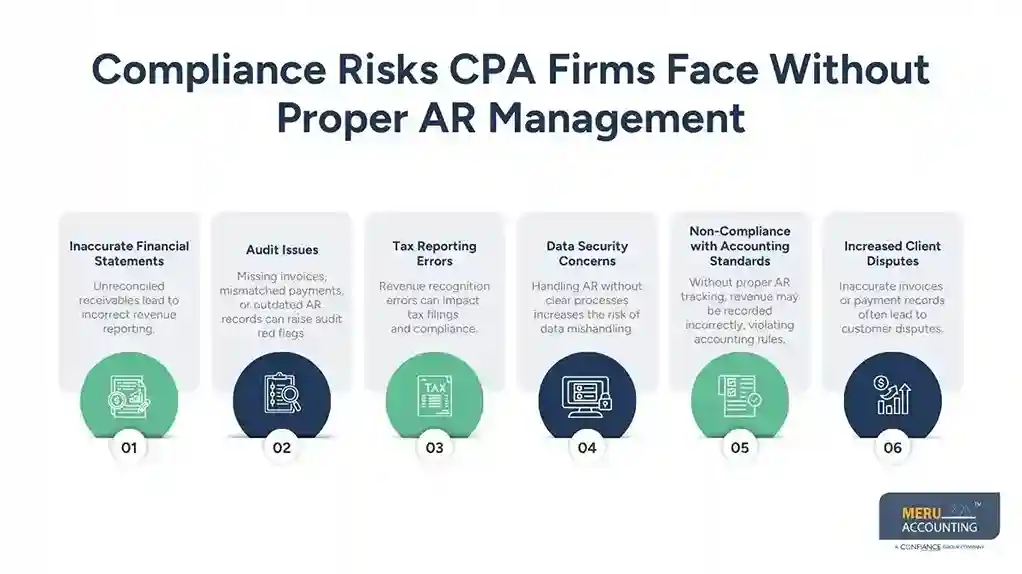
Data Security Concerns
Handling AR without clear processes increases the risk of data mishandling.
Non-Compliance with Accounting Standards
Without proper AR tracking, revenue may be recorded incorrectly, violating accounting rules. This can lead to inaccurate financial statements and compliance penalties.
Increased Client Disputes
Inaccurate invoices or payment records often lead to customer disputes. Disputes delay collections and can damage client trust.
Without outsourcing accounts receivable, CPA firms often rely on manual processes that increase these risks.
How Outsourcing Accounts Receivable Supports Compliance Standards
Outsourcing accounts receivable plays a key role in maintaining compliance.
Standardized Processes
An accounts receivable outsourcing firm follows defined procedures that align with accounting standards.
Proper Documentation
All invoices, receipts, and adjustments are documented and stored properly.
Regular Reconciliation
Frequent reconciliation ensures AR balances match general ledger records.
Audit-Ready Reports
Accounts receivable outsourcing ensures that AR aging, customer statements, and transaction histories are always available.
By outsourcing accounts receivable, CPA firms reduce compliance stress during audits and reviews.
Role of an Accounts Receivable Outsourcing Firm in CPA Operations
An accounts receivable outsourcing firm does more than basic collections.
Daily AR Operations
They handle invoicing, posting payments, and updating customer accounts.
Reporting and Analysis
They provide detailed AR aging, collection summaries, and trend reports.
Software Expertise
Most accounts receivable service providers work with tools like QuickBooks, Xero, NetSuite, and Odoo.
Compliance Support
They align AR processes with accounting standards and regulatory needs.
Customer Communication Management
An accounts receivable outsourcing firm handles client reminders and payment follow-ups professionally. This improves collection rates and maintains strong client relationships.
Dispute and Credit Management
They manage invoice disputes and coordinate credit adjustments when needed. This ensures AR records stay accurate and reduces delays in collections.
For CPA firms, outsourcing accounts receivable means having a reliable partner who understands accounting accuracy and compliance.
Cost Efficiency and Scalability Benefits of Outsourced Accounts Receivable Services
Hiring and training internal AR staff can be expensive.
Lower Operational Costs
Accounts receivable outsourcing eliminates recruitment, training, and infrastructure costs.
Flexible Scaling
As client volume grows, an accounts receivable service provider can scale services without delays.
Predictable Pricing
Outsourced accounts receivable services often come with fixed or usage-based pricing.
Better Use of CPA Expertise
CPA teams spend more time on advisory and high-value services instead of routine AR tasks.
Key Factors to Evaluate Before Choosing an Accounts Receivable Outsourcing Firm
Not all providers offer the same quality. CPA firms should evaluate:
Industry Experience
Choose an accounts receivable outsourcing firm that understands CPA firm workflows and client expectations. They should be familiar with standard accounting practices and AR processes used by CPA firms.
Data Security Measures
Ensure strong data protection and confidentiality standards to protect sensitive client information. Look for encryption, access controls, and secure data storage policies.
Software Compatibility
The provider should work with your existing accounting systems, like QuickBooks, Xero, or NetSuite. This helps avoid data loss, duplicate work, and integration issues.
Reporting Quality
Clear and timely AR reports are essential for accurate financial planning and audits.
Make sure the firm provides detailed aging reports, reconciliation, and collection summaries.
Communication and Support
Regular updates and transparent communication matter when outsourcing accounts receivable.
A dedicated point of contact ensures the quick resolution of any issues or queries.
Compliance Knowledge and Process Controls
An accounts receivable service provider should understand accounting standards and audit requirements. Strong process controls and audit trails help maintain compliance and reduce risks.
Service Flexibility and Scalability
Choose a firm that can scale services up or down based on your client workload and seasonal changes. Flexible engagement models ensure consistent AR performance as your firm grows.
Common Challenges in Outsourcing Accounts Receivable and How to Avoid Them
Outsourcing accounts receivable can fail if it is not managed correctly. CPA firms should be aware of common challenges and take steps to avoid them.
Poor Process Alignment
A mismatch between your internal AR processes and the provider’s workflow can create delays. To avoid this, document your workflows and approval steps before outsourcing accounts receivable.
Lack of Visibility
Limited visibility into AR status can cause confusion and slow decision-making. Choose an Accounts receivable service provider that provides timely and detailed reports.
Data Security Concerns
Sharing sensitive financial data with an external team increases risk. Verify the firm’s security policies, access controls, and data storage practices.
Communication Gaps
Poor communication can lead to missed deadlines and unresolved issues. Set regular review meetings and define clear points of contact for both parties.
How CPA Firms Can Maximize Value From Outsourcing Accounts Receivable
To get the most from outsourced accounts receivable services:
- Define clear KPIs like collection days and overdue percentages
- Review AR reports regularly
- Maintain open communication with the accounts receivable outsourcing firm
- Integrate AR data into broader financial planning
- Provide training and process updates to the outsourcing team when policies change
- Conduct periodic performance reviews and audits to ensure accuracy and compliance
CPA firms that treat outsourcing accounts receivable as a partnership see better outcomes.
Why CPA Firms Choose Meru Accounting for Outsourcing Accounts Receivable
Meru Accounting understands the unique needs of CPA firms. Our outsourcing accounts receivable services are designed to improve cash flow while supporting compliance and accuracy.
End-to-End Accounts Receivable Management
Complete handling of AR tasks, including invoicing, collections, and reconciliation.
Timely Invoicing and Structured Follow-Ups
Invoices are issued promptly, and follow-ups are performed systematically.
Accurate AR Aging and Reconciliation
AR records are kept clean and updated with regular reconciliation.
Audit-Ready Documentation
Detailed documentation is maintained to support audits and compliance requirements.
Experience with Global Accounting Standards
AR processes follow international accounting standards and best practices.
Support Across Major Accounting Platforms
Compatible with QuickBooks, Xero, NetSuite, and Odoo for smooth integration.
Key Takeaways
- Accounts receivable outsourcing improves cash flow for CPA firms
- Proper AR management reduces compliance risks
- An accounts receivable outsourcing firm supports accuracy and audit readiness
- Cost savings and scalability are major benefits
- Choosing the right partner is critical for long-term success
FAQs
Outsourcing accounts receivable means hiring an external team to handle invoicing, payment tracking, and collections so CPA firms can focus on client accounting and advisory.
It improves cash flow by speeding up invoice delivery, tracking payments accurately, and ensuring faster follow-ups for overdue accounts.
CPA firms may face risks like inaccurate revenue reporting, audit issues, missing documentation, and incorrect tax reporting due to weak AR processes.
Choose a firm with strong data security, AR experience, software compatibility, clear reporting, and consistent communication.
Benefits include improved cash flow, reduced workload, accurate AR records, better compliance, and scalable support as your client base grows.