A new hire, a change in pay rate, or an employee moving to another state can affect more than one part of payroll. Keeping wages, tax withholdings, and employee records up to date takes careful attention. A payroll consultant can help businesses handle these changes and avoid errors that lead to extra costs or compliance issues.
For small businesses, these challenges can take time away from daily work. The problem often isn’t one big payroll mistake but several small issues that build up over time. Here are seven common payroll challenges and how businesses can address them.
What You Will Learn From This Blog
- Seven common payroll issues that can affect daily business work.
- How a payroll consultant helps improve payroll accuracy and tax compliance.
- Key payroll needs of small consulting firms.
- When to seek outside payroll support.
- What to look for when choosing payroll help.
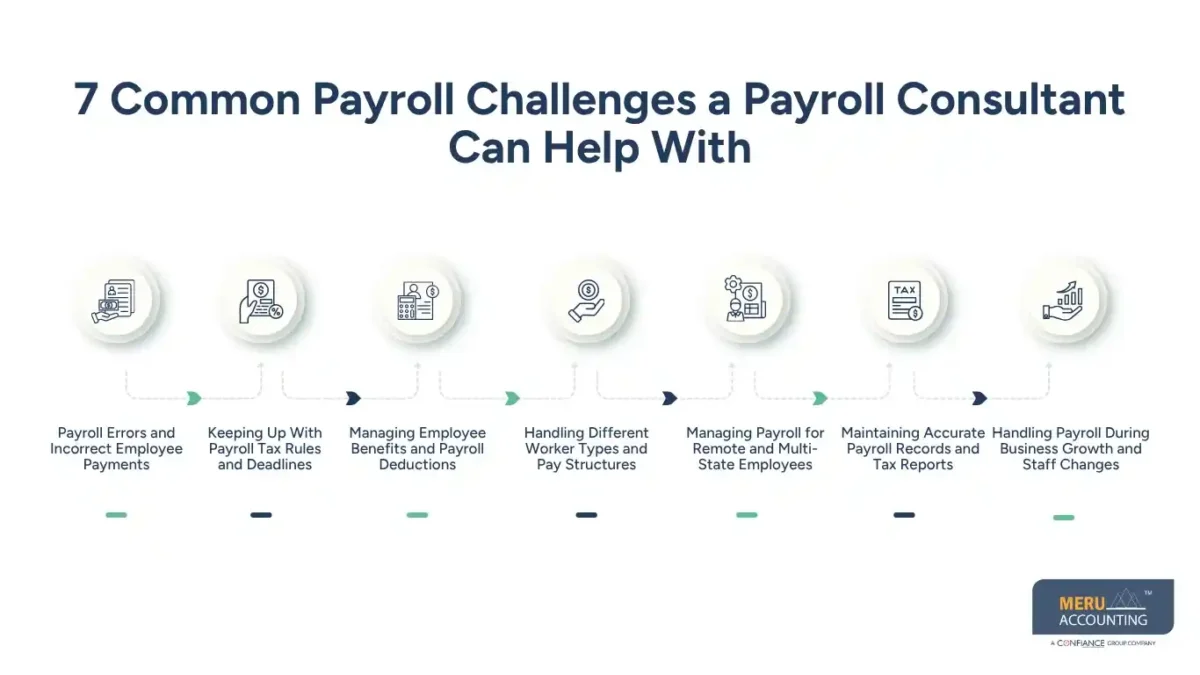
7 Common Payroll Challenges a Payroll Consultant Can Help With
Payroll issues can affect cash flow, staff trust, and tax records. Here are seven common problems a payroll consultant can help businesses manage.
1. Payroll Errors and Incorrect Employee Payments
Wrong pay can cause stress for both staff and owners. Common errors include missed work hours, wrong pay rates, duplicate payments, and poor tracking of paid time off. These issues may seem small, but they can add up over time.
A payroll consultant can review pay records, time sheets, and wage rates to find gaps. They can also help set clear steps for checking payroll before each pay run. For example, a review of hours worked against approved time sheets can help catch errors before staff are paid.
A clear review process helps reduce pay errors and builds trust with staff.
2. Keeping Up With Payroll Tax Rules and Deadlines
Payroll tax rules can change based on the state, type of worker, and level of pay. Employers may need to withhold federal income tax, Social Security, and Medicare taxes. They may also need to pay state and local payroll taxes.
Missing a tax due date or using the wrong tax rate can lead to fines and extra work. A payroll consultant can help review tax setup, check key dates, and keep payroll records ready for tax reports.
They can also help businesses set up a tax calendar and review payroll reports before filing. However, employers remain responsible for meeting their tax duties, even when they use outside payroll help.
3. Managing Employee Benefits and Payroll Deductions
Employee pay is not just about wages. Health plans, retirement savings, paid leave, wage garnishments, and other benefits can affect take-home pay.
Each type of deduction may have its own rules. For example, some benefit costs are taken from pay before tax, while others are taken after tax. Using the wrong setup can lead to errors in pay and tax reports.
A payroll consultant can review benefit plans, deduction codes, and staff records. They can also help check that each deduction is set up in line with the plan terms and rules.
Clear records and regular checks can help avoid errors and make pay slips easier for staff to read.
4. Handling Different Worker Types and Pay Structures
Many businesses hire a mix of full-time staff, part-time workers, hourly staff, salaried staff, and independent contractors. Each group may have a different pay rate, tax setup, and record needs.
Worker status is also important. A business cannot treat a worker as an independent contractor just because both sides agree to it. The right status depends on the facts of the work and the level of control the business has over the worker.
A payroll consultant can help review pay setups, worker records, and payroll steps. They can also flag cases where a business may need legal or tax advice on worker status.
For firms that pay staff by the hour, salary, or project, a clear pay plan helps keep records in order and lowers the risk of errors.
5. Managing Payroll for Remote and Multi-State Employees
Remote work gives businesses access to talent in more places. But it can also make payroll harder to manage. An employee who works from a new state may create tax and filing duties for the employer.
Businesses may need to review state income tax rules, unemployment tax, local tax rules, and state wage laws. They may also need to register with state tax agencies before running payroll for a worker in that state.
A payroll consultant can help identify the states where the business has staff and review the related payroll setup. They can also help track work locations and flag new filing needs when an employee moves.
This support is useful for firms with remote teams, as one payroll setup may not work for every state.
6. Maintaining Accurate Payroll Records and Tax Reports
Payroll records support tax filings, wage checks, staff queries, and business reports. Missing time sheets, old pay rates, or poor records of deductions can make it hard to confirm what a worker was paid.
A payroll consultant can help set up a clear record system for pay runs, tax forms, hours, benefits, and staff changes. They can also review payroll reports to spot gaps and help keep key files easy to find.
Businesses should also limit access to payroll data. Pay records hold private staff details, so only approved users should be able to view or change them.
Good records make it easier to answer staff questions, check past pay, and meet tax record rules.
7. Handling Payroll During Business Growth and Staff Changes
A payroll process that works for five staff may not work well for fifty. As a business grows, it may add new roles, pay plans, benefits, and work sites. Staff may also join, leave, or change their work hours.
These changes can lead to missed updates, wrong pay rates, or gaps in tax records. A payroll consultant can review the current process and help build steps that can support a larger team.
They may also help set up clear tasks for new hires, staff exits, pay changes, and benefit updates. This can reduce manual work and help keep each pay run on track.
A payroll process should grow with the business, not slow it down.
How a Payroll Consultant Helps Businesses Improve Payroll Accuracy and Compliance
A payroll consultant does more than check pay slips. They look at how payroll works from start to finish and find ways to make each step clear and reliable.
Here are some ways a payroll consultant can help:
- Review payroll setup: Check pay rates, tax details, staff data, and benefit codes.
- Check payroll reports: Look for odd pay amounts, missing hours, and wrong deductions.
- Improve payroll steps: Set clear rules for time entry, approval, and pay runs.
- Track tax dates: Help the business plan for tax deposits and filing due dates.
- Keep records in order: Set up clear files for pay runs, tax forms, and staff changes.
- Support payroll software: Help review system settings and make sure the tools fit the business.
A consultant can also work with the business’s current payroll team or provider. The goal is to make payroll easier to check, fix, and manage. Business owners should still review key reports and stay aware of their legal duties.
Payroll for Small Consulting Business: Key Considerations for Owners
Payroll for small consulting business owners can look different from payroll in other firms. Consulting work may depend on client projects, billable hours, and staff with different pay plans. A small team may also include both employees and outside contractors.
Owners should pay close attention to a few key areas:
- Hourly and salaried pay: Track work hours and pay rates with care, mainly when staff work on more than one client project.
- Employee or contractor status: Review each role based on the work setup, not just the contract title.
- Project-based work: Keep time records clear so pay is not mixed up with client billing.
- Remote staff: Check state tax rules when staff work from more than one state.
- Cash flow: Plan for pay dates, tax deposits, and benefit costs, even when client payments are late.
A payroll consultant can help small consulting firms set up a pay process that fits their team and work model. This can help owners avoid last-minute fixes as the firm takes on more clients and hires more staff.
When Should a Business Hire a Payroll Consultant?
Not every business needs outside payroll help from day one. But some signs show that the current process may need a closer look.
A business may need a payroll consultant when:
- Payroll errors keep coming back each pay period.
- Tax forms or payments are often late.
- The team has grown, and manual payroll takes too much time.
- Staff works in more than one state.
- The business is unsure about worker status or pay rules.
- Payroll records are spread across files and systems.
- Owners spend too much time fixing pay issues.
A payroll consultant can help find the cause of these issues and suggest a clear plan. The right time to seek help is before small gaps turn into costly problems.
optional anymore
on running the business
Meru Accounting Reliable Payroll Consulting Services
Payroll and accounting go hand in hand. Businesses need more than accurate paychecks; they also need payroll expenses, tax records, and employee data properly reflected in their books. Meru Accounting brings multi-industry accounting experience to help businesses manage these connected tasks.
Our Payroll Support Services
- Payroll Processing: Calculate wages, review work hours, and prepare payroll records.
- Payroll Tax Support: Track tax withholdings and maintain payroll tax records.
- Employee Records: Maintain wage, deduction, benefit, and paid time off records.
- Payroll Reconciliation: Match payroll entries with bank records and accounting books.
- Payroll Reporting: Prepare payroll summaries and reports for financial reviews.
Our team works with different business models and existing workflows, so you can get support that fits your needs. With skilled accounting professionals available at a fraction of the cost of a US in-house team, Meru Accounting offers a practical way to expand your payroll support without adding full-time staff.
Need help managing payroll? Contact Meru Accounting to discuss the right support for your business.
Our Expert Insight
One detail businesses should pay close attention to is how payroll is recorded in the general ledger. The amount paid to employees isn’t always the full payroll expense. Employer-paid payroll taxes, benefits, and other payroll costs must also be recorded in the right accounts.
For example, if a business records only net pay as its payroll expense, its books may understate labor costs. This can affect monthly profit reports and make it harder to compare labor costs across periods.
We recommend reviewing payroll journal entries against payroll reports and bank activity. Pay close attention to gross wages, employee withholdings, employer taxes, and benefit costs. Each amount should be posted to the correct account so financial reports show the true cost of having employees.
Key Takeaways
- Payroll errors can affect staff trust, cash flow, and tax records.
- A payroll consultant can help review pay data, tax setup, and payroll steps.
- Remote staff and mixed worker types can add more payroll duties.
- Small consulting firms need clear records for hours, pay rates, and project work.
- Regular payroll reviews can help find issues before they grow.
- Business owners remain responsible for their payroll and tax duties, even when they hire outside help.
FAQs
Yes. They can review payroll records, tax deposits, employee forms, and wage reports to help identify gaps before an audit.
The employer should verify the error, calculate the correct amount, and issue any required pay adjustment under applicable wage laws.
It depends on the business structure. For example, S corporation owners who work in the business generally must receive reasonable compensation through payroll.
Contractors are generally paid through accounts payable, not employee payroll. Businesses may also need Form W-9 and Form 1099-NEC for eligible payments.
Yes, provided the new schedule meets state payday laws and any applicable employment agreements. Employees should be informed before the change takes effect.
optional anymore
on running the business