Payroll outsource companies can take over key payroll tasks, from pay runs and tax work to payslips, records, and year-end forms. For a small or mid-size firm, payroll can take time and needs care because a small error in pay, tax, or worker data can lead to staff issues, late filings, or added costs.
Working with payroll outsource companies gives a firm a way to move part or all of this work to an outside team. The right payroll outsourcing service provider can run pay on time, keep records in order, and deal with routine payroll tasks based on the plan agreed with the firm.
Payroll outsourcing does not mean that a firm can stop checking its payroll. In the U.S., the IRS says an employer will often still be liable for federal payroll taxes when a third party is used.
What You Will Learn From This Blog
- What payroll outsource companies do and how their work fits into a firm’s payroll cycle.
- How payroll outsourcing works from data setup to pay runs, tax work, and records.
- The main payroll outsourcing solutions and when each type may fit.
- What payroll outsourcing may cost and which factors can raise or lower the fee.
- How outsourced payroll compares with an in-house payroll team.
- How to review a payroll outsourcing service provider before signing a contract.
- What questions to ask about tax work, data safety, support, fees, and error handling.
What Are Payroll Outsource Companies?
Payroll outsource companies are outside firms that manage some or all payroll tasks for a business. Their work can include checking wages, calculating deductions, processing salaries, preparing pay slips, keeping payroll records, and creating payroll reports.
Many payroll outsource companies also handle payroll tax tasks, such as preparing tax forms and making tax deposits when these services are included in the agreement. The exact work depends on the provider, the country, state, type of workers, and payroll plan selected by the business.
Some payroll outsource companies provide a managed payroll team that works with the client’s staff during each pay cycle. The business sends approved details such as hours, pay rates, leave, bonuses, and new worker data, while the outside team processes the payroll and returns reports for review.
Other providers mainly offer payroll software along with setup, system updates, and customer support, allowing the business to run payroll on its own while receiving technical or payroll-related assistance.
Specialist payroll firms focus on more complex needs, such as multi-state payroll, contractors, international workers, or different pay rules. These payroll outsource companies may be useful for businesses that have workers in several locations or need more than a basic payroll system.
Before hiring a provider, businesses should check the services offered, tax responsibilities, data controls, support process, pricing, and contract terms to make sure the service fits their payroll needs.
How Does Payroll Outsourcing Work?
Gather Worker Data
The first step is to collect worker data, pay rates, tax forms, bank details, benefits, and other payroll data. A clear data check is key before the first pay run.
Track Hours And Pay
Hourly staff may need time records, while salaried staff may have fixed pay. Overtime, bonus pay, leave, commissions, and other items must be sent to the payroll team before the cut-off.
Run The Payroll
The payroll team checks the data, runs the pay cycle, works out deductions, and prepares pay statements. The client should have a clear review step before funds are sent.
Handle Tax Work
A payroll outsourcing service provider may prepare payroll tax forms, reports, and deposits. Exact duties vary by country, state, worker type, and contract.
Keep Payroll Records
Payroll records should be kept in a clear and safe form. U.S. wage rules also require covered employers to keep key records on wages, hours, and other worker data.
What Services Do Payroll Outsource Companies Provide?
Payroll Run
Payroll outsource companies can process regular pay runs for salaried and hourly staff. The work may cover gross pay, deductions, net pay, bonuses, commissions, and other pay items.
Tax Filing
A provider may prepare and file payroll tax forms and make tax deposits. Firms should confirm which filings are covered, who reviews them, and who is liable if a filing is late.
Payslip And Records
Many payroll outsourcing solutions include payslips, payroll reports, worker records, and year-end forms. A good record system makes it easier to review past pay and answer worker queries.
New Hire Setup
The payroll team can add new staff, collect required payroll forms, set pay rates, and enter benefit or tax data. Clear checks at this stage can prevent errors in later pay runs.
Payroll Reports
Reports can show wages, taxes, deductions, employer costs, and other payroll data. Reports may also be sent to the firm’s bookkeeper or finance team for account work.
Types Of Payroll Outsourcing Solutions
Full-Service Payroll Outsourcing
Full-service payroll outsourcing covers most payroll tasks from one place. The provider may manage worker data, pay runs, tax work, reports, payslips, and year-end forms.
Payroll Software And Managed Services
This model combines payroll software with outside support. The firm may run some tasks on its own, while the provider handles setup, system care, tax work, or issue checks.
PEO Payroll Services
A Professional Employer Organization, or PEO, can combine payroll with wider HR services. PEO work can include benefits, HR help, and worker administration, based on the contract.
A PEO is not the same as a basic payroll provider. The IRS treats certified PEOs under a special tax framework, so firms should check the provider’s status and contract before signing.
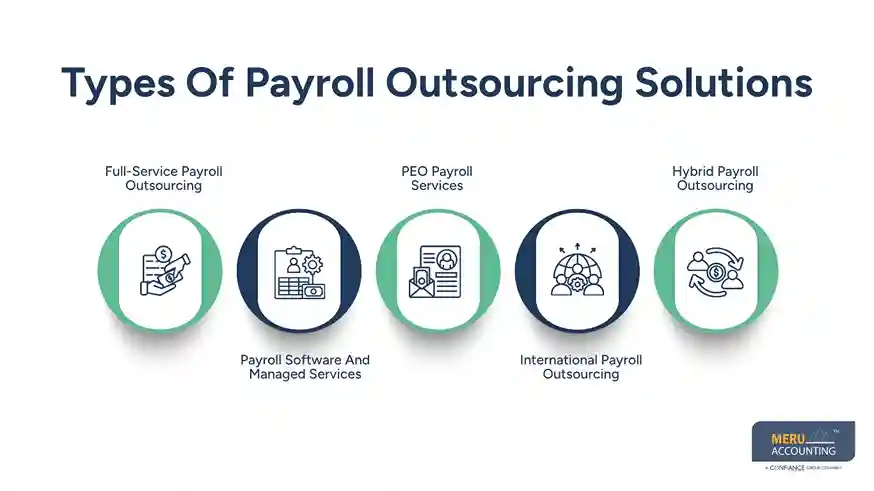
International Payroll Outsourcing
International payroll outsourcing is built for firms with workers in more than one country. The provider may deal with local pay rules, tax needs, currency, local records, and country-level reports.
Hybrid Payroll Outsourcing
A hybrid model lets the firm keep some payroll tasks in-house and send the rest to an outside team. For example, HR may approve time and leave, while payroll outsource companies handle pay and tax work.
optional anymore
on running the business
Benefits Of Using Payroll Outsource Companies
Less Admin Work
Payroll outsource companies can take routine payroll work off an internal team’s list. Staff can then spend more time on finance, sales, HR, or other core work.
Access To Payroll Skills
An outside team may have staff who work with payroll every day. Such knowledge can be useful when a firm has changing pay rules, many worker types, or more than one state.
Better Process Control
A set payroll cycle creates clear cut-off dates, checks, approvals, and reports. Payroll outsourcing solutions can give firms a repeatable process instead of a system that depends on one employee.
Easier Growth
Payroll work can become harder as headcount grows. Payroll outsource companies can give a firm a way to add workers without building a large payroll team at the same time.
Clear Cost Planning
An outside payroll fee can be easier to plan than the full cost of an internal payroll team. The firm should still check all add-on fees before making a cost claim.
How Much Do Payroll Outsourcing Services Cost?
Per Employee Fees
Some payroll outsource companies charge a fee for each worker. This can suit firms with a stable headcount, but the total cost rises as more workers are added.
Base Monthly Fees
Some providers charge a fixed base fee plus a per-worker amount. A firm should check whether the base fee covers tax filings, support, reports, and year-end work.
Per Payroll Run
A provider may charge based on each payroll run. This can matter for firms that pay workers weekly, biweekly, or on other schedules.
Extra Service Fees
New hire setup, off-cycle pay, year-end forms, special reports, tax notices, and system changes may carry extra fees. A full fee list is worth reviewing before the contract is signed.
Factors That Set Cost
Headcount, pay frequency, locations, worker types, tax needs, benefits, software, and support level all affect cost. Payroll outsource companies should give a clear view of both base fees and likely extra charges.
Payroll Outsourcing Vs. In-House Payroll
Factor | In-House Payroll | Payroll Outsourcing |
Staff Cost | An in-house team needs wages, benefits, training, payroll software, and backup staff. These costs can rise as payroll needs grow. | Payroll work is handled by an outside provider for a set fee or agreed pricing plan. The business can avoid hiring a full payroll team. |
Control | The business has direct control over payroll tasks, reviews, approvals, and payroll data. | The provider handles daily payroll work, while the business keeps control through approvals, reports, and review steps. |
Skill Needs | Internal staff need knowledge of pay rules, tax forms, payroll records, software, and other payroll tasks. | A payroll outsourcing service provider brings payroll staff with relevant knowledge and experience as part of the service. |
Scale | A small internal team may work well when payroll is simple. More workers or locations may require more staff and payroll resources. | Payroll outsource companies can take on more payroll work as the business grows, without requiring the business to hire for every new task. |
Risk | The business is responsible for payroll checks, tax work, records, and correcting errors. Strong review steps are needed to reduce mistakes. | The provider manages agreed payroll tasks, but the business should still review payroll reports, tax activity, and key worker data. Clear roles are important in both models. |
How To Choose The Right Payroll Outsourcing Service Provider
Check Service Scope
Start with the exact work you need. Ask if the payroll outsourcing service provider covers pay runs, tax forms, deposits, payslips, year-end forms, reports, and worker setup.
Check Experience
Look for experience with firms of a similar size and pay setup. Among different payroll outsource companies, providers familiar with your state, country, worker type, or industry may be better suited to your needs.
Check Tax Controls
Ask how tax filings and deposits are checked. The IRS warns that employers can remain liable when a third-party provider fails to make required tax payments.
Check Data Safety
Payroll data can include bank details, tax data, pay data, and worker records. Ask about access control, data backup, user rights, and how data is sent and stored.
Check Support
Ask how fast the provider responds when a pay issue comes up. A clear support process matters most when payroll is close to its pay date.
Questions To Ask Payroll Outsource Companies Before Hiring
What Does The Fee Include?
Ask for a full list of services covered by the quoted fee. Also ask for rates for off-cycle payroll, new hires, year-end work, tax notices, and special reports.
Who Handles Tax Deposits?
Ask who prepares, checks, and sends payroll tax payments. U.S. employers should also have a way to verify federal tax deposits made by a provider. The IRS recommends using EFTPS so employers can review payment history.
How Are Payroll Errors Fixed?
Ask what happens when an error is found. The contract should state who reviews the issue, who contacts the worker, and how a correction is made.
How Is Data Protected?
When evaluating payroll outsource companies, ask where payroll data is stored, who can access it, and what steps are followed if an account or system has a security issue.
What Happens If We Leave?
Ask how payroll records will be returned if the contract ends. A good exit plan should cover data export, final filings, year-end forms, and access to past payroll records.
Meru Accounting’s Payroll Services
Payroll Processing
Meru Accounting can manage regular payroll tasks for businesses that want an outside team to handle their pay cycle. Our team can work with salary, hourly pay, deductions, bonuses, and other payroll data based on the client’s process.
Payroll Data Management
Accurate worker data is key to each pay run. Meru Accounting can assist with payroll data entry, review, payroll records, and account checks so that payroll information stays clear and ready for each cycle.
Payroll Tax Support
Among payroll outsource companies, businesses should consider providers that understand the payroll tax requirements relevant to their location and worker types. Our team can assist with payroll tax-related accounting work and record checks based on the agreed scope of service.
Payroll Reports
Payroll reports give business owners and finance teams a view of wages, deductions, taxes, and payroll costs. Meru Accounting can prepare and organize reports that can also be used for bookkeeping and financial review.
Payroll And Bookkeeping
Payroll is closely linked with bookkeeping because wages, taxes, and related costs flow into the financial records. Meru Accounting can connect payroll-related records with bookkeeping work to keep the finance process more organized.
Flexible Payroll Support
Every business has different payroll needs. Meru Accounting can provide payroll support based on the size of the business, pay cycle, worker type, accounting system, and level of outside assistance required.
Our Expert Perspective
When choosing among payroll outsource companies, businesses should look beyond pricing and assess accuracy, internal controls, data security, reporting, and the provider’s ability to support their payroll process.
Businesses should review pay data, deductions, tax reports, and payroll entries, while also confirming which duties remain with the employer. The payroll process should connect with bookkeeping so wages, taxes, and benefits are recorded correctly.
A reliable payroll outsourcing company should offer clear service terms, secure data handling, timely support, and a process suited to the business’s size, worker types, pay cycle, and tax needs.
Key Takeaways
- Payroll outsource companies handle some or all payroll work for a business.
- Services may include pay runs, tax work, payslips, records, reports, and year-end forms.
- Payroll outsourcing solutions can be full-service, software-led, PEO-based, international, or hybrid.
- The cost depends on worker count, pay frequency, locations, services, and extra fees.
- A payroll outsourcing service provider should be checked for service scope, tax controls, data safety, support, and contract terms.
- Outsourcing does not always remove the employer’s tax duties. U.S. employers generally remain responsible for federal employment tax obligations unless a specific third-party arrangement changes that liability.
- Firms should review payroll reports and tax payments even when an outside provider handles the work.
FAQs
Payroll outsource companies are third-party firms that manage payroll tasks such as pay processing, tax work, payslips, and payroll records for businesses.
Payroll outsourcing works by sending employee pay data to an outside provider that processes wages, deductions, taxes, payslips, and payroll reports.
Payroll outsource companies may provide payroll processing, tax filing, direct deposit, payslips, new-hire setup, payroll reports, and year-end payroll forms.
Payroll outsourcing costs vary based on employee count, pay frequency, services used, locations, tax needs, and extra payroll tasks.
Choose a payroll outsourcing service provider based on service scope, payroll experience, tax controls, data security, support, pricing, and contract terms.
optional anymore
on running the business