Payroll outsourcing costs can look low on a quote but rise when a business needs extra pay runs, tax forms, or employee record changes. A provider may charge a monthly fee for routine work while billing separately for tasks that many business owners assume are included.
The hidden costs of payroll outsourcing often appear in contract terms that receive little attention during price comparisons. Knowing which fees apply, when they arise, and how they affect the annual budget can help businesses choose a service that fits their needs.
What You Will Learn From This Blog
- What drives payroll outsourcing costs and why providers charge different rates.
- Which pricing models businesses can choose and what standard fees may cover.
- Where the hidden costs of payroll outsourcing can appear in a service contract.
- How to compare outsourcing fees with the full cost of in-house payroll.
- How to control extra charges without cutting essential payroll services.
What Factors Affect Payroll Outsourcing Costs?
Two businesses with the same number of employees may receive different quotes because their payroll needs are not the same. Pay frequency, staff pay rules, tax duties, and software needs all affect payroll outsourcing costs.
Number of Employees and Payroll Frequency
A provider may charge per employee or per payroll run, so a firm with 100 employees may pay more than one with 20. Weekly payroll can also cost more than monthly payroll because the provider must process wages more often.
Payroll Complexity and Employee Compensation
Fixed salaries are often easier to process than wages that include overtime, commissions, shift pay, bonuses, or leave adjustments. Businesses with changing pay rates should check whether these tasks raise payroll outsourcing costs.
Tax Filing and Regulatory Compliance Requirements
Payroll services may cover tax calculations and filings, but the scope depends on the country and the agreed package. Indian firms may need tasks linked to PF, ESI, professional tax, or TDS, based on their legal duties.
Software Integration and Reporting Needs
Links between payroll, attendance, HR, and accounting systems can reduce manual data entry but may require setup work. Custom reports and older software systems can add to payroll outsourcing costs if the provider charges for extra configuration.
Common Payroll Outsourcing Pricing Models
Providers use different billing methods, and each can suit a different business size or payroll process. Compare the full annual price, including the hidden costs of payroll outsourcing, instead of choosing a plan based only on its starting rate.
Per-Employee, Per-Month Pricing
The provider charges a monthly rate for each employee included in payroll, so the bill changes with headcount. Check whether the rate includes payslips, staff changes, tax tasks, and year-end documents.
Fixed Monthly Pricing
A fixed plan charges one monthly fee for a set list of payroll services and may suit firms with stable staff numbers. Ask about employee limits, extra payroll runs, and other hidden costs of payroll outsourcing that may arise when your needs change.
Per-Payroll-Run Pricing
The provider charges for each payroll cycle, which may suit businesses that process wages less often. Extra payments for bonuses, urgent corrections, or missed salaries may raise the total payroll outsourcing costs.
Customized Payroll Service Packages
A custom package combines selected services, such as payroll processing, tax filings, employee records, and reports. Request an itemised quote to identify the hidden costs of payroll outsourcing, including fees for tasks outside the agreed package.
optional anymore
on running the business
What is Included in Standard Payroll Outsourcing Fees?
Standard fees often cover routine salary calculations, payslips, payroll records, and agreed reports, while excluded services can create hidden costs of payroll outsourcing. Ask for a written service list before comparing payroll outsourcing costs.
- Salary calculations: The provider calculates gross pay, agreed deductions, and net pay using the data your team submits.
- Payslips and payroll records: Employees receive payslips, while the business receives agreed wage and deduction records.
- Routine payroll processing: The provider processes payroll on set dates after receiving approved salary and attendance data.
- Agreed tax tasks: The plan may cover named tax calculations or filings, but not every statutory duty by default.
- Standard reports: The service may include wage summaries, deduction reports, and payroll cost reports.
- Basic query handling: Routine questions about payslips and payroll records may be covered within agreed support limits.
A low base fee may exclude special runs, year-end forms, and custom reports, so businesses should check the terms before signing. These exclusions are common areas where the hidden costs of payroll outsourcing may arise.
Hidden Costs of Payroll Outsourcing Businesses Should Watch For
Extra charges can appear when a business needs work beyond its regular payroll schedule or agreed service package. Reviewing these fees in advance gives a clearer view of total payroll outsourcing costs.
Setup and Employee Data Migration Fees
Moving payroll to a new provider may involve data transfer, record checks, payroll setup, and test runs before launch. Ask whether the quoted setup fee covers data cleanup and corrections to incomplete employee records.
Off-Cycle Payroll Processing Charges
Bonus payments, urgent salary corrections, and extra pay runs may fall outside the normal monthly service. Check the fee for each additional run and how much notice the provider needs.
Tax Filing and Compliance Service Fees
Some providers charge separately for tax returns, amended filings, or special compliance reports that fall outside the base plan. Ask which filings are included and who handles errors caused by late or incorrect data.
Employee Onboarding and Offboarding Charges
Adding an employee may require new payroll records, tax details, and salary settings, while a staff exit may need a final settlement. If the provider charges for each change, frequent hiring and exits can raise payroll outsourcing costs.
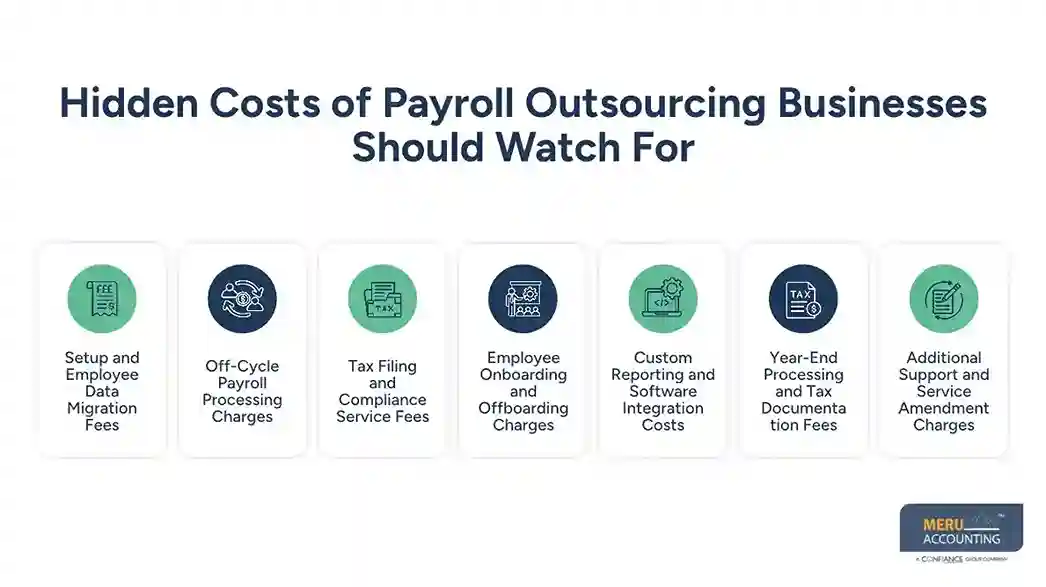
Custom Reporting and Software Integration Costs
A standard plan may include basic reports but charge extra for custom formats, dashboards, or links to other systems. Ask for both the initial setup price and any ongoing maintenance fee before approving the work.
Year-End Processing and Tax Documentation Fees
Annual wage statements, tax forms, and year-end reports may carry separate charges even when routine payroll is included. Confirm whether these tasks are part of the monthly fee or billed at the end of the year.
Additional Support and Service Amendment Charges
Urgent requests, extra support hours, and changes to payroll rules may trigger fees under some contracts. Check the hourly rate, service limits, and approval process to avoid unexpected charges.
How to Calculate the Total Cost of Payroll Outsourcing
A reliable estimate includes the monthly service fee, setup costs, extra payroll runs, and all other expected charges. Use a full-year calculation to compare payroll outsourcing costs across providers.
For example, a business pays ₹8,000 per month, ₹12,000 for setup, and ₹15,000 for extra services during the year.
Cost item | Annual amount |
Monthly fee: ₹8,000 × 12 | ₹96,000 |
One-time setup fee | ₹12,000 |
Extra service charges | ₹15,000 |
Total annual cost | ₹1,23,000 |
These are illustrative figures, not market rates, and exclude applicable taxes. The example shows why comparing only the monthly fee can leave ₹27,000 in additional annual costs out of the budget.
Payroll Outsourcing Costs vs. In-House Payroll Expenses
Outsourcing replaces some internal payroll work with a service fee, while in-house payroll requires staff time, software, training, and internal checks. Compare all these expenses to decide which option offers better value for your business.
Cost Factor | In-House Payroll Expenses | Payroll Outsourcing Costs |
Salary And Staff Time | Staff manage payroll calculations, records, and employee queries. | Providers handle agreed tasks while your team approves payroll. |
Software And System Costs | Businesses pay for payroll software, updates, and system links. | Providers may include software or charge extra for integrations. |
Training And Compliance Work | Staff needs training to manage payroll rules and tax changes. | Providers handle agreed compliance tasks, but employers retain certain legal duties. |
Error And Correction Costs | Payroll errors can cause delays, tax issues, and extra work. | Correction fees depend on the provider’s contract and error policy. |
Growth And Staff Changes | More employees may require extra staff, software, and training. | Fees may rise with headcount, extra runs, and added services. |
How to Identify Hidden Charges in a Payroll Outsourcing Contract
A clear contract should list the service scope, billing rules, extra fees, and conditions that may change the price. Review these details before signing so you can estimate the full annual cost.
- Check the full fee list: Request all monthly, setup, year-end, and extra-run charges in writing.
- Check staff limits: Confirm how the provider bills for new hires, leavers, contractors, and part-time employees.
- Review price changes: Look for annual rate rises, minimum fees, and charges linked to staff growth.
- Confirm tax duties: List the filings, calculations, and payment tasks covered by the contract.
- Ask about corrections: Find out who pays when the provider makes an error or your team sends incorrect data.
- Check exit terms: Review notice periods, early exit fees, and the cost of transferring payroll records.
For US employers, using a payroll service does not generally remove the employer’s duty to ensure employment taxes are reported and paid correctly. Employers should keep access to their records and check their tax accounts, while businesses in other countries should review their local rules.
Ways to Control Payroll Outsourcing Costs Without Reducing Service Quality
Businesses can reduce avoidable fees by setting clear payroll deadlines, choosing suitable services, and reviewing invoices. The goal is to control payroll outsourcing costs without removing checks needed for accurate pay and compliance.
Choose a Plan That Matches Your Needs
List the payroll tasks your business needs each month and ask providers to price those services. Avoid paying for unused features, but retain the tax and reporting tasks your business requires.
Send Complete Payroll Data on Time
Set deadlines for attendance, overtime, leave, bonuses, and salary changes before each pay run. Complete data can reduce urgent requests, repeated corrections, and extra processing charges.
Review Invoices Each Month
Compare each invoice with the agreed rates and check whether extra work was approved. Ask about unfamiliar charges before they become a regular part of your payroll outsourcing costs.
Use Existing Software Links
Use suitable links between payroll, HR, attendance, and accounting systems to reduce manual data entry. Compare setup and upkeep fees with the time saved before paying for custom software work.
Plan For Staff Changes and Year-End Work
Tell the provider about planned hiring, exits, bonuses, and annual reports well before the due dates. Early planning can reduce urgent requests and make extra service fees easier to budget.
Compare the Full Annual Price
Ask each provider to quote for the same staff count, pay frequency, tax tasks, reports, and special runs. Comparing yearly totals gives a fairer view of payroll outsourcing costs than comparing base rates alone.
Why Choose Meru Accounting for Payroll Services?
Meru Accounting provides payroll and accounting services for businesses that need a clear process for salary records, payroll tasks, and related financial data. Defining the service scope in advance makes it easier to assess fees and compare providers.
- Payroll Processing: Meru Accounting provides payroll processing based on agreed pay rules, employee data, and payroll schedules.
- Payroll Records and Reports: Businesses can define reporting needs to keep wage records and payroll expenses clear.
- Accounting Software: Meru Accounting works with QuickBooks, Xero, Zoho Books, and NetSuite based on client requirements.
- Compliance-Related Tasks: Businesses can discuss the payroll tax and statutory tasks required for their locations and workforce.
- Service Scope and Pricing: Firms can review staff count, payroll frequency, reporting needs, and extra services before agreeing on the work.
Businesses comparing payroll outsourcing costs should request a clear list of included tasks and additional charges. Meru Accounting can discuss the required services so firms can review their options and plan their payroll budget.
Our Expert Perspective
The biggest pricing gap often appears when a business assumes that a task is included, but the contract lists it as extra work. A bonus run, staff exit, or year-end form can change the final bill if the service scope is unclear.
Before signing, ask providers to price real cases, including a new hire, a final settlement, an urgent payment, and year-end reporting. This gives finance teams a more useful estimate and makes the hidden costs of payroll outsourcing easier to compare.
Key Takeaways
- Payroll outsourcing costs depend on employee numbers, pay frequency, payroll complexity, and service scope.
- Compare the full annual fee instead of relying on the monthly rate.
- Check setup, extra runs, employee changes, software links, tax filings, and year-end charges.
- Review contract terms for price changes, correction fees, and record transfer costs.
- Send accurate payroll data on time to reduce avoidable extra work.
- Compare providers using the same service list to find the right fit for your budget.
FAQs
Payroll outsourcing costs depend on employee count, pay frequency, location, and service scope, so businesses should request a quote based on their needs.
The hidden costs of payroll outsourcing include setup fees, extra payroll runs, tax filings, employee changes, software integration, and year-end forms.
Add annual service fees, setup charges, extra payroll runs, tax services, and other contract fees to estimate the full yearly cost.
Payroll outsourcing may cost less when savings on staff time, software, and training exceed the provider’s annual fees and extra charges.
Businesses can reduce payroll outsourcing costs by comparing annual quotes, checking contract terms, sending accurate data on time, and reviewing invoices.
optional anymore
on running the business