
Portfolio accounting for financial advisors managing multi-client investment structures helps professionals handle complex investment records across several client accounts with greater accuracy and control.
As advisory firms expand, managing different portfolios, asset classes, trusts, retirement plans, and business investments becomes more demanding and requires structured financial tracking. It supports organized transaction recording, client reporting, performance monitoring, and financial transparency while also helping reduce reporting errors, improve compliance, and maintain reliable financial data for better investment decisions.
Modern advisory firms often manage stocks, bonds, ETFs, mutual funds, private investments, and real estate-linked assets for many clients at the same time.
Without a proper system, manual tracking can lead to reporting delays and financial mistakes. It improves reporting quality, supports tax preparation, and helps advisors maintain updated records across all investment structures.
Firms handling property-based investments may also review what is property accounting to better manage asset-level reporting, rental income, and expense tracking.
What You Will Learn From This Blog
- The meaning and purpose of Portfolio accounting for financial advisors and why it is used in managing investment records
- How it supports multi-client investment structures and helps in handling multiple portfolios in an organized way
- Why accurate investment reporting is important for advisory firms to maintain trust and reduce financial errors
- The major parts of an investment accounting system include transaction tracking, reconciliation, and reporting functions
- How it improves financial transparency by giving clear and structured investment information for each client
- The role it plays in tracking investment performance across different asset classes and client accounts
- Why scalable accounting systems are important for growing advisory firms handling increasing client data
- How cloud-based systems improve accounting operations by offering real-time access and better data control
- How Meru Accounting supports financial advisors with investment accounting services to improve accuracy, reporting quality, and operational efficiency
What Is Portfolio Accounting and Why Is It Important for Financial Advisors?
Portfolio accounting helps financial advisors record and manage investment activity such as purchases, sales, dividends, interest income, and capital gains across multiple client accounts.
This structured recording reduces reporting confusion and improves overall financial accuracy. It also supports multi-asset tracking by organizing stocks, bonds, ETFs, mutual funds, and alternative investments under a single reporting framework, making it easier for advisors to manage diverse portfolios efficiently.
It also plays an important role in client-level reporting, where each investor may require customized reports based on their financial goals and tax needs.
Maintaining accurate records throughout the year simplifies tax reporting, including capital gain tracking and year-end preparation. In addition, it strengthens compliance and audit readiness by ensuring proper documentation and transaction history are always available for review.
Some advisory firms that manage property-backed investments also refer to what is property accounting to better understand rental income tracking, expense allocation, and financial reporting related to real estate assets.
How Portfolio Accounting Supports Multi-Client Investment Management
Centralized Financial Data
Advisors can efficiently manage many client accounts from one unified system. Centralized records improve reporting speed and reduce manual work. Duplication of financial entries gets minimized through structured data flow.
Separate Account Structures
Each client portfolio may include different risk levels, financial goals, and investment strategies. Advisors maintain separate financial records for each individual client. Clear separation of client data improves accuracy and control.
Consolidated Family Reporting
Some clients require combined reporting for family trusts, retirement plans, and investment entities. Consolidated financial reporting becomes possible across multiple linked accounts. Multi-entity tracking becomes easier for advisors through portfolio accounting, helping maintain accuracy and clarity in grouped client structures.
Investment Allocation Monitoring
Financial advisors need to closely monitor how assets are distributed across portfolios. Tracking allocation percentages helps manage overall investment exposure. Better visibility supports stronger risk control.
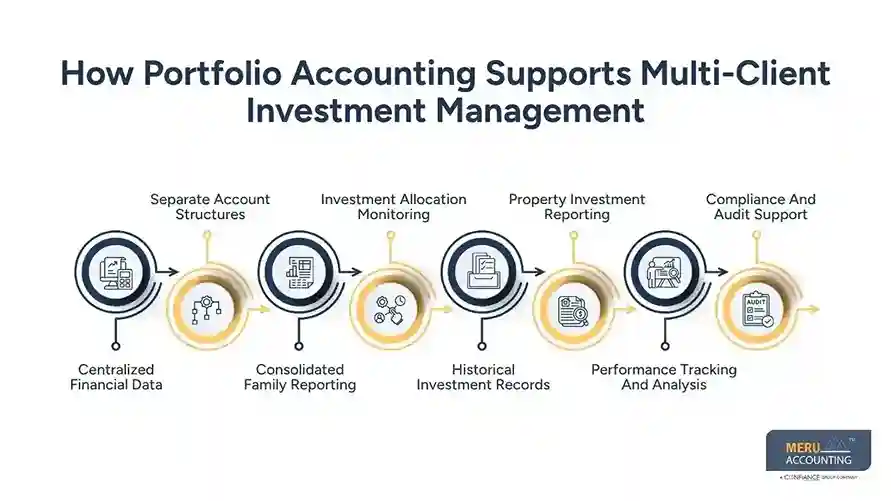
Historical Investment Records
Maintaining detailed historical transaction data helps advisors review long-term investment performance and year-over-year reporting analysis. Long-term financial comparison becomes more reliable with structured records.
Property Investment Reporting
Advisory firms handling real estate investments often compare accounting methods with what is property accounting to improve property asset reporting accuracy. Better rental income tracking and expense classification improve reporting quality.
Performance Tracking And Analysis
Financial advisors can evaluate returns across different portfolios using structured financial data. Performance tracking helps compare investment results over different time periods. Clear analysis supports better investment planning and client guidance.
Compliance And Audit Support
Maintaining organized financial records helps meet regulatory and audit requirements with greater ease. Proper documentation ensures all transactions are traceable and verifiable. Strong recordkeeping reduces risks during compliance reviews and financial audits.
Why Financial Advisors Need Accurate Portfolio Accounting Systems
Better Financial Decision Support
Accurate records help advisors review investment performance and make informed financial recommendations for clients. Improved insights support more balanced portfolio strategies.
Reduced Reporting Errors
Manual reporting systems increase the risk of mistakes. Portfolio accounting improves transaction tracking and reduces reporting inaccuracies. Strong data validation further improves record quality.
Improved Client Trust
Clients expect reliable investment reports. Accurate financial reporting helps build confidence through organized and transparent financial information. Consistent updates strengthen long-term client relationships.
Easier Regulatory Compliance
Financial advisory firms must maintain proper investment records for legal and compliance purposes. Organized financial systems support structured documentation and help ensure adherence to reporting standards. Proper audit trails make reviews smoother.
Faster Reporting Cycles
Automated reporting systems reduce delays in preparing investment summaries and financial statements, aligning with structured reporting practices often explained under what is property accounting. Real-time data access speeds up reporting workflows significantly.
Stronger Operational Control
Financial oversight improves across multiple client structures and investment accounts, supporting better control and monitoring of activities. Better visibility helps in timely corrective actions.
What Are the Key Components of Portfolio Accounting for Investment Structures?
Investment Ledger Management
Detailed ledgers are maintained for purchases, sales, transfers, dividends, and interest income across client portfolios. These records help ensure accurate and structured financial tracking for all investment activities.
Portfolio Reconciliation
Regular reconciliation helps verify that portfolio records match brokerage statements and bank transactions. This process improves data accuracy and reduces mismatches in financial reporting.
Performance Measurement
Financial advisors use portfolio accounting systems to review investment growth, returns, and portfolio value changes. Performance insights support better evaluation of client portfolio outcomes.
Cost Basis Tracking
Tracking cost basis helps advisors calculate gains and losses accurately for tax reporting purposes. Proper tracking also supports more precise financial planning and compliance reporting.
Income Distribution Monitoring
Dividend payments, interest income, and client distributions are tracked across investment accounts. Income visibility helps maintain clear and updated financial records.
Asset Classification Reporting
Some firms managing real estate funds also study what is property accounting for property asset classification and expense reporting. This helps in better separation and understanding of real estate-related financial data.
How Portfolio Accounting Improves Client Reporting and Financial Transparency
Accurate Client Statements
Detailed statements showing holdings, investment activity, and account balances help provide clients with a clear view of their financial position at all times.
Real-Time Portfolio Updates
Modern systems allow advisors to review updated investment information quickly and improve communication with clients. Faster updates help reduce delays in decision-making and reporting.
Clear Investment Breakdown
Clients can better understand their portfolios when reports clearly separate asset types, gains, losses, and income activity. Clear segmentation improves the readability of financial reports.
Better Tax Reporting Visibility
Portfolio accounting supports tax-ready financial reporting and helps clients review investment tax obligations more clearly. This simplifies year-end tax planning and preparation.
Customized Reporting Formats
Different clients may need different report formats. Accounting systems support customized reporting based on client needs. Flexibility ensures better client satisfaction and clarity.
Stronger Financial Transparency
Organized financial records improve transparency between financial advisors and their clients. Transparency helps build long-term trust and confidence.
How Portfolio Accounting Helps Track Investment Performance Across Clients
Multi-Client Performance Review
Financial advisors can compare investment performance across many client portfolios. Structured records help identify differences in returns and overall portfolio outcomes.
Return Measurement Analysis
Returns can be measured over different time periods using organized investment records. Clear data helps advisors evaluate growth patterns more effectively.
Benchmark Comparison Support
Investment performance can be compared against market benchmarks and financial targets. This helps assess how well portfolios are performing in different market conditions.
Risk Exposure Tracking
Asset concentration and investment risk across portfolios can be reviewed more effectively. Better visibility supports improved risk management decisions.
Alternative Asset Reporting
Some advisory firms handling real estate assets also review what is property accounting for rental property income and expense tracking. Detailed reporting improves understanding of alternative investments.
How Meru Accounting Supports Portfolio Accounting for Financial Advisors
Meru Accounting provides portfolio accounting support services designed to help financial advisors manage multiple investment accounts with greater accuracy and control. O
ur team assists with investment accounting support, ensuring structured tracking of transactions across different portfolios. This helps advisors maintain clear and organized financial records while handling diverse client investment structures such as trusts, retirement plans, and family investment accounts.
At Meru Accounting, we also support financial reporting needs by preparing organized client reports, investment summaries, and financial statements that improve clarity and decision-making.
Regular portfolio reconciliation services are offered to ensure financial records match source documents, reducing errors and improving accuracy. Along with this, tax reporting coordination helps advisors manage investment-related tax preparation in a structured and timely manner.
In addition, cloud accounting system support enables advisory firms to operate with improved efficiency through modern digital platforms.
Meru Accounting also assists with multi-structure investment management, including property-linked investments, where firms may also refer to what is property accounting for better reporting of real estate-related financial data.
Our Expert Perspective
Managing multiple investment portfolios without a structured accounting process often results in reporting delays, reconciliation gaps, and reduced data accuracy, similar to challenges often discussed in what is property accounting related financial structuring.
Financial advisors handling many client accounts need precise transaction records, organized reporting systems, and consistent portfolio reviews to maintain financial control and reliability.
In growing advisory firms, issues usually begin with missing transaction details, delayed reconciliations, or inconsistent account entries across portfolios.
A reliable accounting system helps strengthen financial control, improve reporting quality, and enhance operational efficiency while supporting better client service and informed decision-making.
Key Takeaways
- Portfolio accounting helps financial advisors manage complex client investment structures across multiple accounts.
- Accurate investment tracking improves reporting quality and strengthens financial transparency for clients.
- Multi-client investment management requires organized financial tracking systems to handle diverse portfolios efficiently.
- Structured systems support tax reporting, reconciliation, and performance tracking with better accuracy and control.
- Cloud-based accounting systems improve operational efficiency by enabling faster access to updated financial data.
- Scalable systems support long-term business growth by helping advisory firms manage increasing client demands.
FAQs
Portfolio accounting is the process of tracking, recording, and reporting investment transactions across client portfolios. It helps financial advisors maintain accurate investment records and organized financial data.
It helps advisors manage client investments, improve reporting accuracy, track portfolio performance, and support tax reporting requirements. Better structure leads to stronger financial control.
Advisors can manage multiple client accounts together while keeping separate financial records for each portfolio. This reduces confusion and improves data clarity.
Yes. Some advisory firms use accounting methods alongside what is property accounting methods when managing real estate investment structures.
Cloud-based systems improve reporting speed, support remote access, reduce manual work, and improve financial record management across advisory operations.