
What is portfolio accounting system is a question many finance teams and business owners ask when they begin to manage multiple investments, assets, or funds. A financial portfolio management system is designed to track, record, and report financial data at the portfolio level rather than just at the business level. Unlike basic tools, it gives a clear view of performance across assets, clients, or funds.
In contrast, financial portfolio management systems focus on investment tracking, valuation, and performance reporting, while traditional accounting software handles general bookkeeping tasks such as income, expenses, and compliance reporting. Understanding this difference helps businesses choose the right system based on their financial structure and goals.
What You Will Learn From This Blog
- Clear understanding of what is portfolio accounting system
- Key functions of portfolio-focused financial tools
- How traditional accounting software works
- Main differences between financial portfolio management systems and standard tools
- Benefits of using a portfolio-based system
- Real industry use cases
- Practical tips to select the right system
What Is Portfolio Accounting System?
Definition Of Portfolio Accounting System
A financial portfolio management system is a financial tool that tracks investments across multiple assets or accounts, helping explain what is portfolio accounting system in practical financial terms. It helps monitor returns, risks, and asset allocation in one place.
Focus On Investment Tracking
To better understand what is portfolio accounting system, it is important to note that it records transactions like buy, sell, dividends, and interest. It ensures all investment data is updated and accurate.
Multi-Asset Management
It supports stocks, bonds, real estate, and other assets. This is why understanding what is portfolio accounting system is important for firms handling diverse portfolios.
Real-Time Valuation
A key part of financial portfolio management system is its ability to provide updated asset values based on market changes. This helps in timely decision-making.
Performance Reporting
Users can track returns over time and compare results. This helps evaluate investment success clearly.
Compliance And Audit Support
It maintains records needed for audits and regulatory checks. This improves transparency and trust.
Core Functions Of A Portfolio-Based Accounting Approach
Transaction Recording
To understand what is portfolio accounting system in practical terms, all portfolio transactions are recorded in detail with complete accuracy. This includes trade dates, settlement dates, and pricing information.
Asset Valuation
The system calculates the current value using reliable market data sources. This ensures accurate financial reporting at all times.
Income Tracking
Income from dividends, interest, or rent is tracked separately and clearly. This gives a better income overview for analysis.
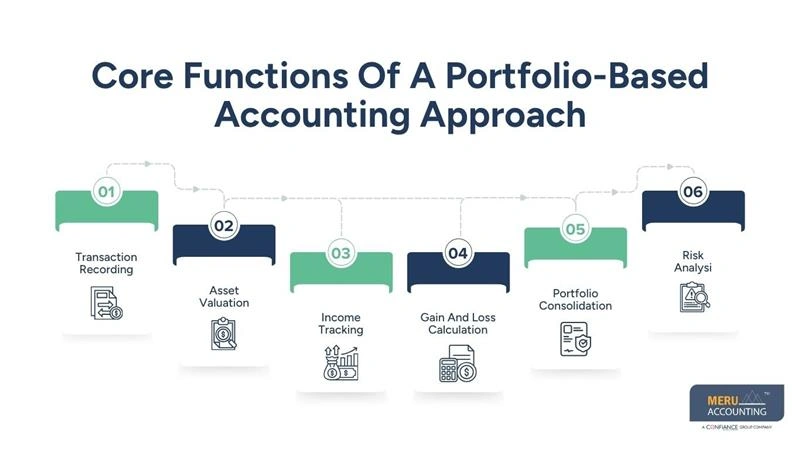
Gain And Loss Calculation
It calculates realized and unrealized gains or losses with precision. This helps assess overall investment performance effectively.
Portfolio Consolidation
Multiple accounts can be combined into one detailed report easily. This gives a full view of overall financial position.
Risk Analysis
Some portfolio accounting platforms include tools to measure financial risk levels. This helps in managing exposure across investments.
Understanding Traditional Accounting Software
While learning what is portfolio accounting system, it is also important to understand that traditional accounting software is designed to manage the core financial activities of a business. It focuses on recording daily transactions and maintaining the general ledger with proper structure and accuracy.
These systems track operating costs and revenue in an organized way, helping businesses understand their profitability over time. They also support the preparation of key financial reports such as balance sheets and income statements, which are essential for internal review and regulatory compliance.
In addition to reporting, traditional accounting software plays an important role in tax management and operational tasks. It assists with tax calculations and filings, helping businesses meet legal requirements without errors.
Many systems also include features for payroll processing and billing, which support routine financial operations and ensure smooth business functioning. These capabilities make traditional software suitable for handling standard accounting needs across various industries.
However, traditional accounting tools have a limited focus when it comes to investment tracking. They are not built to manage complex asset portfolios or provide detailed insights into investment performance.
This is where financial portfolio management systems differ, as they are specifically designed to track, value, and report on investments across multiple assets and accounts.
Portfolio Accounting Systems Vs Traditional Accounting Software
Aspect | Portfolio Accounting Systems | Traditional Accounting Software |
Purpose And Focus | This difference becomes clear when understanding what is portfolio accounting system is compared to traditional tools focused on general accounting. | Focus on managing daily business accounting and financial records |
Data Structure | Organize data based on assets, portfolios, and investment categories | Use an account-based structure with ledgers and a chart of accounts |
Reporting Style | Provide reports on returns, performance, and asset allocation | Provide reports like profit and loss statements and balance sheets |
Real-Time Updates | Often use live market data for accurate and updated valuations | Update data based on manual or system entries over time |
Complexity Of Transactions | Handle complex investment transactions such as trades, dividends, and valuations | Handle standard business transactions like sales, expenses, and payroll |
User Base | Used by investment firms, fund managers, and wealth advisors | Used by small to large businesses for general accounting needs |
Benefits Of A Portfolio-Centric Financial System
- This becomes clearer when understanding what is portfolio accounting system, as users can see how each asset performs in detail, improving financial clarity and control.
- Accurate and timely data helps in making informed investment choices, which reduces risk and uncertainty.
- Automation reduces manual work and repetitive tasks, which improves efficiency for finance teams.
- Reports are detailed, structured, and reliable for review, which supports better analysis and planning.
- Scalability is a major reason businesses explore what is portfolio accounting system for long-term growth.
- These systems help meet reporting standards and audit requirements, which reduces compliance risks and errors.
Use Cases Across Different Industries
Investment Firms Example
An investment firm managing multiple client portfolios uses financial portfolio management systems, which directly relate to what is portfolio accounting system, to track every transaction, including buy, sell, and dividend entries. The system provides accurate reports on performance and asset allocation, which helps the firm maintain transparency with clients.
In one case, a mid-sized firm handling over 200 client accounts improved reporting accuracy and reduced manual errors after adopting a financial portfolio management system. This allowed faster reporting cycles and better client communication.
Real Estate Business Example
A real estate company managing several properties uses financial portfolio management systems, which help explain what is portfolio accounting system in real-world asset management, to track rental income, expenses, and property values. Each property is treated as part of a larger portfolio, giving a clear financial overview.
For example, a property management company with multiple commercial units used the system to monitor income and expenses for each location. This helped them identify underperforming properties and make better investment decisions based on accurate data.
How To Select The Right System For Your Business
Identify Your Needs
Understand whether you need investment tracking or general accounting based on your operations clearly. This helps narrow down options effectively and avoids confusion later.
Check Integration Options
While deciding what is portfolio accounting system best suited for you, ensure the system works smoothly with your existing tools and platforms. This improves overall workflow efficiency and reduces manual effort.
Evaluate Reporting Features
Look for systems with strong reporting capabilities and flexible report formats for better use. This supports better financial analysis and review for decision-making.
Consider Scalability
Choose a system that can grow with your business over time as needs increase. This avoids future issues and system limitations during expansion.
Review Compliance Support
When analyzing what is portfolio accounting system, ensure it meets all regulatory and compliance requirements for your industry. This is important for financial accuracy and control in operations.
Assess Cost And Value
Compare pricing with features and long-term benefits offered by the system carefully. This helps in making a smart and informed choice for your business.
Why Choose Meru Accounting For Portfolio Accounting Needs
Expert Financial Knowledge
Meru Accounting brings strong experience in handling complex financial systems, including services related to what is portfolio accounting system, with accuracy. Reliable and accurate service delivery is ensured for every client consistently.
Customized Solutions
Services are carefully tailored based on specific business needs and goals. Overall efficiency and business results are improved in a structured manner.
Advanced Tools Support
Modern accounting and portfolio systems with advanced features are used by the team. Better data handling and financial control are ensured through this approach.
Global Client Experience
Clients across multiple industries and global regions are served consistently by Meru Accounting, including those seeking what is portfolio accounting system solutions. Strong reliability and trust in services are built over time.
Focus On Accuracy
Error-free and precise financial reporting is ensured through strong internal review processes. Long-term client trust and confidence are strengthened through accuracy.
End-To-End Services
Complete support from setup to reporting is provided, especially for businesses implementing what is portfolio accounting system in a structured way. Financial management becomes simpler and more efficient for businesses.
Our Expert Perspective and Insight
From our experience, when exploring what is portfolio accounting system, many businesses realize they start with traditional accounting tools but later find them limited when managing growing and diverse investment portfolios.
As assets increase, it becomes difficult to get clear, detailed insights into performance and returns, making financial portfolio management systems a more effective solution for structured financial tracking.
For example, real estate firms managing multiple properties often struggle to track individual income and expenses using basic software. Financial portfolio management systems solve this by allowing asset-wise reporting and better visibility. Industry studies, including those from the CFA Institute, also show a rising shift toward such systems as investment management becomes more complex.
Key Takeaways
- What is portfolio accounting system refers to a tool designed for managing investments
- Financial portfolio management systems focus on tracking assets, returns, and performance
- Traditional accounting software handles general business transactions
- Portfolio systems provide better visibility for investment-heavy businesses
- Choosing the right system depends on business needs and asset complexity
FAQs
It is a tool used to track and manage investments like stocks, bonds, or properties in one place.
Regular software tracks income and expenses, while financial portfolio management systems track investments and returns.
Investment firms, wealth managers, and businesses with multiple assets should use them.
Yes, if they manage investments or multiple assets, these systems can be helpful.
It depends on the system, but with expert help, the process can be smooth and well-managed.