Understanding the difference between a bookkeeper and a CPA for small business is important for owners who want better control over their finances. While both professionals support financial management, their responsibilities are different. A bookkeeper manages daily records, tracks transactions, and keeps financial data organized.
A CPA handles tax planning, financial analysis, compliance, and higher-level financial decisions. Knowing the difference between a bookkeeper and a CPA for small business helps business owners choose the right support at the right stage of growth.
Small businesses deal with sales records, expenses, payroll, taxes, and financial reports every day. Without proper systems, errors can affect business decisions and financial health. Many firms start with bookkeeping support and later add CPA-level tax expertise as they grow.
In many cases, CPA and accounting services work together to create accurate records, better planning, and stronger financial control for long-term business success.
What You Will Learn From This Blog
- Understand the difference between a bookkeeper and a CPA for small business
- Learn the daily duties of a bookkeeper
- Know the role of a CPA in financial management
- Find out when businesses need one or both experts
- Learn how CPA and bookkeeping services work together
- Understand how small businesses can improve financial decisions
- Discover how growing firms benefit from organized financial support
Difference Between a Bookkeeper and a CPA for Small Business
The difference between a bookkeeper and a CPA for small business becomes clearer when owners understand the tasks each professional handles. While both support financial operations, their work areas are different.
Daily Record Management
Bookkeepers record sales, expenses, invoices, and payments. They maintain organized financial records and make sure daily transactions stay updated.
Financial Review And Analysis
CPAs review business data and provide insights based on financial records. They help owners understand trends and future needs.
Tax Filing Responsibilities
Bookkeepers prepare records needed for tax filing. CPAs handle tax returns and tax planning strategies.
Training And Certification
Bookkeepers may receive bookkeeping training and software skills. CPAs complete licensing requirements and pass professional exams.
Business Advice Support
CPAs often provide guidance related to tax savings and planning. Bookkeepers focus mainly on keeping records accurate.
Compliance And Reporting
Understanding the difference between a bookkeeper and a CPA for small businesses also includes compliance needs. CPAs help ensure reporting follows regulations.
Key Responsibilities of a Bookkeeper in a Small Business
Bookkeepers handle the daily money flow of a company. Their work creates the base for future financial decisions. Accurate bookkeeping helps businesses maintain organized records and improve financial visibility.
Recording Transactions
Bookkeepers enter daily sales and expenses into accounting systems. They ensure each transaction is recorded correctly to maintain accurate financial data.
Managing Accounts Payable
Bills and supplier payments are tracked and processed on time. Proper payment management helps businesses avoid late fees and maintain vendor relationships.
Handling Accounts Receivable
Customer invoices and payment collections are monitored. Timely follow-up on payments supports better cash flow and reduces outstanding balances.
Payroll Support
Some bookkeepers process payroll and maintain employee payment records. Payroll accuracy helps businesses ensure employees are paid correctly and on schedule.
Bank Reconciliation
Bookkeepers compare records with bank statements and fix differences. Regular reconciliation helps identify errors and detect missing or duplicate entries.
Financial Report Preparation
Basic reports help owners monitor cash activity and spending patterns. These reports provide useful insights that support daily business decisions.
These tasks explain part of the difference between a bookkeeper and a CPA for small businesses because bookkeeping focuses on daily financial records.
How CPA and Bookkeeping Services Support Business Operations
CPAs handle more detailed financial work, and their role often expands as businesses grow. Many businesses rely on CPA and bookkeeping services to maintain financial accuracy and understand the difference between a bookkeeper and a CPA for small businesses when building stronger financial systems.
Tax Planning
CPAs review financial data and identify tax-saving opportunities. They also help businesses create tax strategies that reduce liabilities and improve financial efficiency.
Tax Return Preparation
They prepare and submit business tax returns. Proper tax filing also helps reduce errors and lowers the risk of penalties or notices.
Financial Statement Analysis
CPAs examine reports and explain performance trends. Their analysis helps business owners understand profits, expenses, and financial health.
Audit Assistance
Businesses facing audits often seek CPA support. CPAs also review financial records and provide guidance during audit processes.
Business Growth Guidance
CPAs assist with expansion plans and financial forecasting. They also help owners assess risks before making major business decisions.
Compliance Support
Rules and reporting standards often change. CPAs help firms remain compliant and ensure financial practices follow current regulations.
Many firms use CPA and accounting services together because bookkeeping records create the information CPAs need. This combination helps businesses maintain accurate records and make stronger financial decisions.
Signs Your Business Needs A Bookkeeper
Not every company needs a CPA from day one, and recognizing the difference between a bookkeeper and a CPA for small businesses helps determine when bookkeeping support is enough. Some businesses first need help managing daily financial records and keeping information organized.
Transactions Increase
As sales grow, tracking records manually becomes difficult. Increased transactions can also raise the chances of missed entries and reporting errors.
Receipts Become Hard To Manage
Missing receipts can create tax and reporting problems. Poor record organization can also make expense tracking more difficult.
Cash Flow Feels Unclear
Owners may not understand where money is coming from or going. Clear financial records help improve visibility into business cash movement.
Payroll Takes Too Much Time
Employee payment work can become overwhelming. Payroll errors may also affect employee satisfaction and business compliance.
Reports Are Delayed
Late financial records create decision problems. Delayed reports can make it harder to plan budgets and monitor business performance.
Time Moves Away From Core Work
Owners should focus on business growth rather than data entry. Spending too much time on bookkeeping tasks can reduce attention on daily operations.
These signs often help owners understand the difference between a bookkeeper and a CPA for small business and identify when bookkeeping support becomes necessary.
Key Situations When a CPA Becomes Essential for Small Businesses
A CPA becomes more valuable during complex financial situations, especially when understanding the difference between a bookkeeper and a CPA for small business helps make the right hiring decision.
Tax Rules Feel Difficult
Tax laws can change and become hard to understand. A CPA helps businesses stay updated and reduce compliance risks.
Business Structure Changes
Moving from sole ownership to a corporation often needs guidance. Structure changes can also affect taxes and legal responsibilities.
Financial Planning Becomes Important
Growth planning requires a detailed financial review. Strong planning helps businesses set goals and manage future costs.
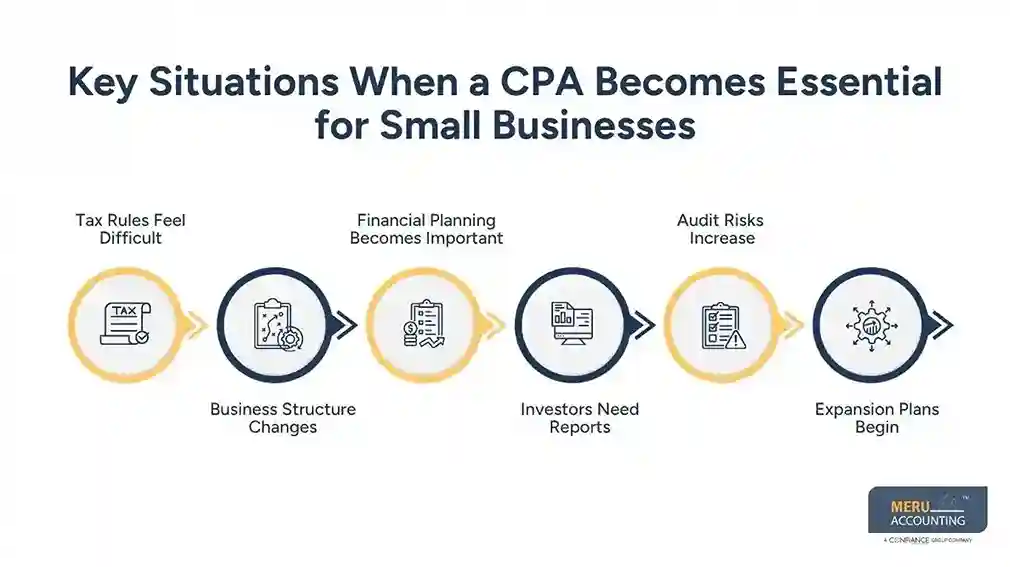
Investors Need Reports
Outside funding requires stronger financial records, which highlights how bookkeepers and CPAs play different roles in preparing investor-ready financial statements. Investors expect clear statements and accurate financial data.
Audit Risks Increase
Tax notices or reviews may require CPA support. Professional guidance can help businesses respond with proper documentation.
Expansion Plans Begin
Growth usually creates more financial responsibilities. Expanding operations may also require budgeting and tax planning support.
Businesses often add CPA and bookkeeping services together during these stages. This combination helps improve financial accuracy and supports better business decisions.
How CPA And Bookkeeping Services Work Together
Many owners think they must choose one professional. In many cases, both roles create stronger financial systems and support better business management.
Bookkeepers Build The Base
Accurate records create reliable financial information. Organized bookkeeping also helps businesses maintain consistent financial data.
CPAs Use Financial Data
CPAs analyze bookkeeping data and create financial guidance. They use this information to support tax planning and financial decisions.
Better Tax Preparation
Clean records reduce tax filing problems. Accurate bookkeeping also helps avoid missing information during tax season.
Improved Business Planning
Financial reports support stronger decisions. Better financial insights help owners plan budgets and future goals.
Lower Error Rates
Two levels of review help catch mistakes. Regular monitoring can also reduce reporting and calculation errors.
Better Financial Visibility
Owners gain a clearer view of financial performance. Better visibility helps businesses track income, expenses, and cash flow trends.
This relationship further explains the difference between a bookkeeper and a CPA for small businesses because both support different needs and contribute to stronger financial management.
Common Misunderstandings About Bookkeepers And CPAs
Business owners often make assumptions that create confusion and lead to poor financial decisions. A clear understanding helps improve financial planning and business control.
One Person Can Handle Everything
Not every professional performs both roles. Each role requires different skills and training for financial accuracy.
Bookkeepers File Complex Taxes
Most tax planning work belongs to CPAs. Bookkeepers mainly focus on recording and organizing financial data.
CPAs Handle Daily Data Entry
Daily transaction recording often belongs to bookkeeping work. This division helps maintain accuracy in financial records.
Small Businesses Need Only One Option
Different growth stages require different support. Many businesses benefit from using both services together.
Software Replaces Experts
Accounting software helps but cannot replace professional judgment. Human review is still important for financial accuracy.
Support Is Needed Only During Tax Season
Financial guidance helps throughout the year. Continuous monitoring improves decision-making and reduces year-end stress.
Understanding these points improves awareness of the difference between a bookkeeper and a CPA for small businesses and helps owners choose the right support at the right time.
Why Choose Meru Accounting?
At Meru Accounting, we understand that small businesses need financial support that fits their stage and goals. Our team provides reliable CPA and bookkeeping solutions designed to help owners maintain organized records and make informed decisions.
We assist businesses with bookkeeping, tax preparation, reporting, payroll support, financial reviews, and software management. Whether you need help understanding the distinction between a bookkeeper and a CPA for small businesses or require complete support, our professionals can guide you through each step.
Our services help businesses across the US and global markets maintain strong financial processes while reducing errors and improving reporting accuracy. Through trusted CPA and bookkeeping solutions, we help owners spend more time growing their business.
Our Expert Perspective
From our experience with small businesses, financial challenges often arise when record-keeping is delayed or unclear. Understanding the difference between a bookkeeper and a CPA for small business early helps owners assign the right tasks to the right expert. Using both roles at the right stage supports better accuracy, smoother compliance, and stronger financial control.
Key Takeaways
- Bookkeepers manage daily financial records and transactions
- CPAs provide tax support and financial guidance
- The difference between a bookkeeper and a CPA for small businesses becomes more important as firms grow
- Bookkeeping creates the financial base for business decisions
- CPAs help with planning, taxes, and compliance
- Many growing firms benefit from CPA and bookkeeping services
- Business needs often change over time
- Strong financial records help support business growth
FAQs
A bookkeeper records daily transactions while a CPA handles taxes, analysis, and financial guidance.
Yes, many firms use CPA and bookkeeping services together for better financial management.
You may need a bookkeeper when financial records become hard to manage.
A CPA becomes useful during tax planning, growth stages, or financial complexity.
Software helps with tasks, but professional review and guidance still matter.