
The cash flow statement for real estate plays a key role when investors compare rental properties across different locations. It shows how money moves in and out of a property and helps investors understand whether a property will generate steady income or create financial pressure over time. In simple terms, it tells whether a rental property is truly earning money after all expenses are paid.
In today’s property markets, prices, rent levels, taxes, and costs vary widely from one city to another. Because of this, relying only on property price or rental yield can be misleading. A proper cash flow statement for real estate gives a clearer picture of real performance and helps investors make safer decisions.
What You Will Learn From This Blog
- Why cash flow matters more than just rental income numbers
- How a cash flow statement for real estate helps compare different markets
- What factors affect rental property cash flow
- How to identify strong cash flow properties
- Common mistakes investors make when reviewing property finances
- Practical ways to improve investment decisions using cash flow data
Why Investors Rely on Cash Flow in Real Estate Decisions
Stability Of Income
Investors focus on steady income rather than property value growth alone. A cash flow statement for real estate helps show whether monthly rent can cover costs and still leave profit. This stability is important for long-term financial planning decisions.
Real Profit Measurement
Profit in real estate is not only about the rent collected monthly. Expenses like taxes, repairs, and loan payments reduce actual earnings significantly. The real estate cash flow statement shows the actual profit after all costs are deducted.
Risk Awareness
Markets can change quickly due to economic or local factors. A property that looks profitable today may not stay that way. Investors use financial analysis to understand risks before making investment decisions.
Better Comparison Across Markets
Different cities have different costs and rental rates overall. This helps investors compare properties in a fair way across markets. It supports better evaluation of real investment performance.
Long Term Planning
Investors use cash flow data to plan expansions, refinancing, or property selling decisions. Without a cash flow statement for real estate, long-term financial planning becomes guesswork and less reliable for growth strategies.
Understanding The Cash Flow Statement For Real Estate Investments
Income From Rent
The first part of a cash flow statement for real estate is rental income. This includes monthly rent and any additional income, like parking or storage fees. It also reflects seasonal rent changes in many rental markets.
Operating Expenses
Expenses include maintenance, insurance, property tax, and management fees. These reduce total profit and must be tracked carefully in every cash flow statement for real estate. Accurate tracking helps avoid unexpected financial shortfalls.
Loan Payments
If the property is financed, mortgage payments are a major part of cash flow calculation. A proper cash flow statement separates principal and interest clearly for better financial clarity.
Net Cash Flow
Net cash flow is what remains after subtracting all expenses. This is the most important part of any cash flow statement for real estate because it shows real earnings and investment strength.
Cash Flow Before Tax
Some investors also calculate cash flow before taxes to understand operational performance. It helps in comparing multiple properties more effectively across different markets and investment types.
Why Cash Flow Statement For Real Estate Matters In Market Comparisons
Comparing Different Cities
Property prices in New York are very different from those in smaller cities. A cash flow statement for real estate helps investors compare real returns, not just price differences.
Understanding Cost Structures
Each market has different operating costs affecting overall investment returns. Insurance or taxes may be higher in certain locations than others. A real estate cash flow statement highlights these differences clearly for better investment decisions.
Identifying Strong Markets
Investors use a real estate cash flow statement to identify markets where rental income stays strong compared to expenses. It also helps in spotting areas with steady tenant demand and lower investment risk overall.
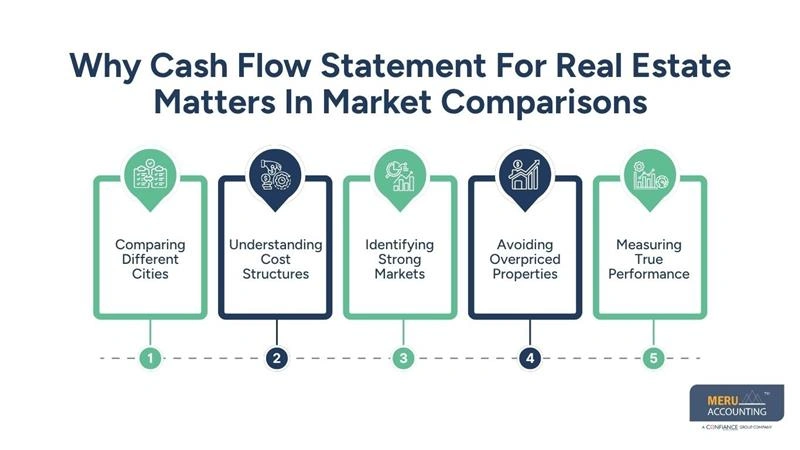
Avoiding Overpriced Properties
High-price markets often look attractive but may offer poor returns. The real estate cash flow statement helps avoid such mistakes by showing true income potential clearly. It ensures price matches real earning capability accurately.
Measuring True Performance
It gives a fair view of performance across different regions. A cash flow statement for real estate supports better investment decisions based on real financial data. It helps investors choose more stable and profitable opportunities.
Key Components That Impact Rental Property Cash Flow Across Different Markets
Rental Demand Levels
High demand increases rent and improves overall rental income results. Strong demand also reduces vacancy risk in most rental markets, supporting steady property performance.
Property Taxes
Taxes vary by location and directly affect monthly cash flow results. Investors always evaluate tax levels carefully during property analysis across different regions.
Maintenance Costs
Older properties or harsh climates increase maintenance costs significantly over time. Unexpected repairs can also create sudden pressure on overall rental income and returns.
Financing Rates
Interest rates impact loan payments and overall borrowing costs. Even small rate changes can affect long-term profitability and monthly affordability for investors.
Vacancy Rates
If a property stays vacant often, cash flow drops quickly. A cash flow statement for real estate includes expected vacancy rates to show true rental income stability and real investment performance.
How Location Influences Rental Income And Operating Expenses
Urban Vs Suburban Areas
Urban areas may have higher rent but also higher costs. A real estate cash flow statement helps compare both sides clearly. Investors must balance income potential with higher living and maintenance expenses.
Economic Strength Of The Area
Strong job markets improve rental demand, which improves cash flow. Stable employment also supports longer tenant stays and reduced vacancy periods.
Local Regulations
Some cities have strict rental laws that affect income. These must be included in the cash flow statement for real estate. Rules can also limit rent increases and impact long-term returns.
Property Appreciation Trends
While appreciation is important, it does not affect monthly cash flow directly. It mainly supports long-term wealth building rather than immediate income generation.
Infrastructure Development
New transport or business hubs can increase rental income over time. Improved infrastructure also attracts more tenants and raises overall property demand steadily.
How To Find Cash Flow Properties In Competitive Real Estate Markets
Analyze Rental Income Carefully
To understand returns, investors must learn how to find cash flow properties using real rental data, not estimates. Verified rental listings give a clearer view of actual earning potential in the market.
Compare Expenses Accurately
Knowing how to find cash flow properties includes checking taxes, repairs, and fees. Even small hidden costs can reduce overall monthly profit significantly.
Use Local Market Reports
These reports help identify whether a property can generate positive cash flow. They also show trends in rent growth and demand over time.
Focus On Net Return
The best way how to find cash flow properties is to focus on net income, not gross rent. Net return shows the real money left after all costs are paid.
Check Vacancy Rates
A property with frequent vacancies will not perform well even if rent is high. High vacancy risk can reduce yearly income stability and overall investment safety.
Evaluating Cash Flow Vs Capital Appreciation
Income Vs Growth
Cash flow provides monthly income while appreciation gives long-term value growth. Both factors influence overall investment decisions in different ways.
Short Term Stability
A strong cash flow statement for real estate ensures short-term financial stability. It helps investors manage monthly expenses without financial stress.
Long Term Wealth Building
Appreciation builds wealth slowly, but cash flow provides regular returns. Together they support steady financial progress over time.
Balanced Strategy
Investors often combine both approaches for stronger financial results. This balance reduces risk and improves overall portfolio performance.
Market Dependence
Some markets focus more on appreciation, while others support better cash flow. Understanding market type helps investors choose suitable strategies.
Common Mistakes Investors Make When Analyzing Cash Flow Statements
Ignoring Hidden Costs
Many investors forget maintenance and repair costs in the cash flow statement for real estate. These overlooked costs often reduce actual profit more than expected.
Overestimating Rent
Expected rent is often higher than actual market rent. This gap can lead to unrealistic income expectations during investment planning.
Ignoring Vacancy Rates
Not accounting for vacancy reduces accuracy of cash flow analysis. Even short vacancy periods can significantly lower annual rental income.
Wrong Expense Estimates
Underestimating costs leads to incorrect investment decisions. Small errors in expense planning can affect overall profitability greatly.
Lack Of Market Comparison
Without comparing markets, investors may misjudge property value. Proper comparison helps identify stronger and more stable investment opportunities.
Why Choose Meru Accounting?
Meru Accounting supports real estate investors by preparing accurate financial reports and helping them understand property performance in detail. A well-structured cash flow statement for real estate prepared by experts can improve decision-making and reduce risk.
Our team assists investors in:
- Preparing detailed rental property reports
- Analyzing income and expenses across properties
- Building clear cash flow models for different markets
- Supporting better investment decisions with financial clarity
We also help investors understand how to find cash flow properties by reviewing real data and simplifying complex financial records. This reduces confusion and improves confidence in investment planning.
With structured reporting and clear analysis, investors can compare multiple properties across cities and choose options that fit their financial goals.
Our Expert Perspective
From our practical experience in real estate financial analysis, one clear insight stands out: many investors focus too much on property price and ignore monthly cash flow. A proper cash flow statement for real estate often reveals risks that are not visible at first look.
We have seen many cases where properties looked strong on paper but failed to perform due to hidden costs, vacancies, or weak rental demand. Careful review of financial data changes this outcome in many situations.
Understanding how to find cash flow properties early in the process helps avoid weak investments and supports long-term financial stability. A structured approach to cash flow analysis leads to more informed and safer investment choices over time.
Key Takeaways
- Cash flow is more important than just property price
- A cash flow statement for real estate shows true profitability
- Market differences make cash flow comparison essential
- Expenses and vacancy rates strongly impact returns
- Knowing how to find cash flow properties improves investment decisions
- Proper analysis reduces financial risk and improves planning
FAQs
It is a financial report that shows income and expenses of a rental property to calculate real profit.
It helps investors understand whether a property generates real income after all costs.
You can learn how to find cash flow properties by comparing rent, expenses, and vacancy rates in different markets.
Yes, but it depends on future appreciation. However, it may create short-term financial pressure.
Taxes, maintenance, insurance, loan payments, and management fees are included.