
Modern property firms handle large volumes of rent records, costs, leases, taxes, and investor data. In such a setup, advanced features in real estate accounting systems play a strong role in improving accuracy, reporting speed, and financial control.
These tools are no longer optional; they are now part of stable financial management in real estate operations.
Key features in real estate accounting systems help firms move away from manual tracking and reduce errors in rent rolls, expense allocation, and compliance work.
At the same time, firms also rely on offshoring accounting services to support daily bookkeeping tasks, reporting, and data handling with cost control and skilled support.
This blog explains how advanced features in real estate accounting systems improve reporting quality, strengthen control, and support better decision-making in property businesses.
What You Will Learn From This Blog
- How advanced features in real estate accounting systems improve reporting accuracy
- How financial control becomes stronger with system based tools
- Why offshoring accounting services supports real estate accounting work
- Ways automation helps reduce errors and delays in reporting
- How firms improve efficiency using modern accounting systems
Importance Of Modern Accounting Technology In Real Estate Management
Accurate Rent And Lease Tracking
Advanced features in real estate accounting systems help track rent schedules, lease terms, and payment history without manual effort. This reduces missed entries and improves clarity in tenant records.
Better Expense Classification
Real estate firms deal with repairs, taxes, insurance, and service costs. With advanced features in real estate accounting systems, expenses are automatically grouped for better reporting.
Improved Compliance Handling
Tax rules and property regulations change often. These systems help maintain records that support audits and compliance checks with less manual correction.
Real-Time Financial View
Managers can see updated financial data anytime. This helps in faster planning and reduces dependency on delayed reports.
Reduced Manual Workload
With automation in place, teams spend less time on data entry. This allows focus on review and analysis instead of repetitive tasks.
How Advanced Functionalities Improve Financial Reporting In Real Estate Accounting
Automated Report Generation
Advanced features in real estate accounting systems create income statements, balance sheets, and property reports without manual formatting. This improves speed and reduces reporting errors.
Data Accuracy Across Properties
Large firms manage multiple buildings. These systems keep records consistent across all assets, ensuring correct financial summaries.
Custom Reporting Options
Users can build reports based on property type, location, or tenant category. This improves decision-making for investors and managers.
Real-Time Data Sync
Updates in rent or expenses are instantly reflected in reports. This ensures financial statements always stay current.
Better Investor Communication
Clear and structured reports help investors understand cash flow and returns without confusion. This improves transparency and builds stronger confidence in financial performance reporting.
Integration With Lease Data Systems
Advanced features in real estate accounting systems connect directly with lease management tools to ensure rent, escalations, and renewals are updated automatically in financial reports. This reduces manual matching work between contracts and accounting records.
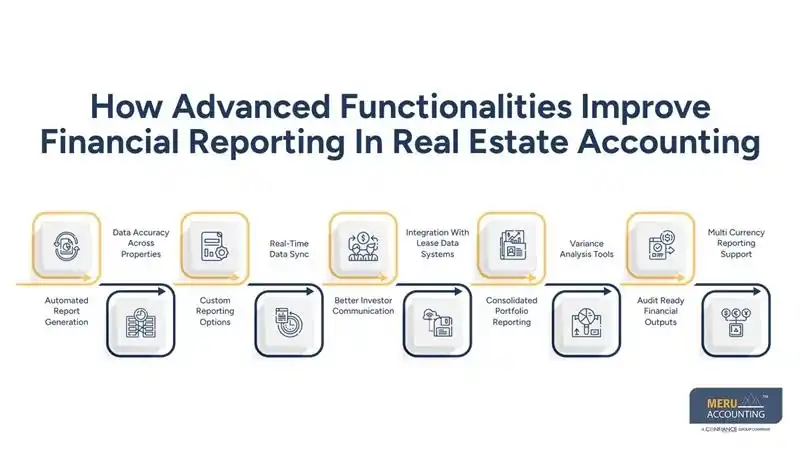
Consolidated Portfolio Reporting
Firms managing multiple properties can combine all financial data into one structured view. This helps leadership compare performance across assets and identify high or low performing properties more easily.
Variance Analysis Tools
These systems highlight differences between planned budgets and actual results. It allows finance teams to quickly understand overspending or income gaps without manual calculation.
Audit Ready Financial Outputs
Reports are stored with complete transaction history and timestamps. This makes audits faster and reduces the need for last-minute document preparation.
Multi Currency Reporting Support
For global real estate investors, systems can handle different currencies and convert them into a single reporting format. This ensures consistency in international financial reporting.
Improving Financial Control With Advanced Accounting Functionalities
Budget Tracking Tools
Advanced features in real estate accounting systems allow firms to set budgets for properties and compare actual spending against planned values.
This helps management quickly identify overspending areas and take corrective action before costs grow out of control.
Approval Workflows
Expense approvals can be controlled through system rules, reducing unauthorized spending. It also ensures that every payment goes through the right review level, improving accountability across departments.
Fraud Risk Reduction
Digital logs make it easier to track changes and prevent manipulation of records. This creates a clear record of who changed what and when, which strengthens internal control systems.
Cash Flow Monitoring
Real-time dashboards help track incoming rent and outgoing costs for better cash control. This also helps property managers plan short-term liquidity needs more effectively.
Audit Trail Support
Every transaction is recorded, making audits faster and more transparent. It also reduces dependency on manual paperwork during compliance checks and financial reviews.
Role Of Offshoring Accounting Services In Real Estate Accounting Efficiency
Cost Reduction Benefits
Offshoring accounting services help real estate firms reduce in-house staffing costs while maintaining quality work. This also allows companies to allocate more budget toward core property operations and expansion plans.
Skilled Financial Support
Teams handling offshoring accounting services are trained in property accounting standards and reporting systems. They also bring experience from working with multiple international clients, which improves accuracy and consistency.
Time Zone Advantage
Work continues even after local office hours, improving turnaround time for reports. This ensures that financial updates are ready by the next business day without delays.
Integration With Accounting Systems
Offshoring accounting services work directly within advanced features in real estate accounting systems to maintain accuracy. This smooth integration reduces manual data transfer errors and improves reporting reliability.
Scalable Support Model
Firms can scale services up or down based on property growth or seasonal workload. This flexibility helps real estate businesses manage costs efficiently during both high and low activity periods.
Integration Of Advanced Features In Real Estate Accounting Systems With Outsourced Support
Smooth Data Sharing
Advanced features in real estate accounting systems allow secure data sharing with offshore teams for real-time updates. This ensures that all stakeholders work on the same updated financial records without duplication or confusion.
Centralized Financial Control
Even with external teams, management retains full control over approvals and reporting. This helps maintain strong oversight on financial decisions while still using external support.
Reduced Reporting Delays
With offshoring accounting services, reports are prepared faster using system-driven automation. This helps finance teams meet tight monthly and quarterly closing timelines more easily.
Consistent Accounting Standards
Outsourced teams follow the same system rules, ensuring uniform reporting across properties. This reduces variations in reporting formats and improves overall financial clarity.
Improved Decision Support
Management receives faster insights due to the combined use of systems and offshore expertise. This allows quicker reactions to financial trends such as rent changes or expense spikes.
Benefits For Property Managers And Real Estate Firms
Better Decision Making
Advanced features in real estate accounting systems provide clear financial insights that support investment and leasing decisions. This helps managers evaluate property performance with greater clarity before making long-term commitments.
Time Saving Operations
Automation reduces time spent on manual bookkeeping and reporting. It also allows teams to focus more on analysis and planning instead of repetitive data entry tasks.
Strong Financial Visibility
Managers get a full view of property performance in one system. This improves awareness of cash flow, rent collection, and overall profitability across assets.
Improved Tenant Management
Payment history and lease details are easily accessible. This makes it easier to handle tenant queries and reduce delays in communication or billing issues.
Efficient Cost Management
Offshoring accounting services further reduces overhead while maintaining financial accuracy. It also helps real estate firms manage accounting workloads without expanding internal teams.
Challenges In Adopting Advanced Real Estate Accounting Systems
Initial Setup Complexity
Installing advanced features in real estate accounting systems requires proper planning and system mapping. This often involves defining workflows, property structures, and reporting formats before full implementation.
Training Requirements
Staff must be trained to use system tools correctly. Without proper training, firms may not fully use available features, which can limit reporting quality and control.
Data Migration Issues
Old records may need cleaning before system transfer. This step is important because incorrect or incomplete data can affect future financial reports and accuracy.
Integration With Existing Tools
Some firms face difficulty connecting old software with modern systems. This can slow down adoption and may require technical support during the transition phase.
Dependence On Technology
System downtime can temporarily affect reporting speed. This makes it important for firms to have backup processes and proper system maintenance plans in place.
How To Improve Efficiency In Real Estate Accounting Systems
Regular System Updates
Keeping advanced features in real estate accounting systems updated ensures better performance. It also helps fix system errors and improves security for financial data handling.
Proper Workflow Design
Clear approval and reporting structures improve system use. This reduces confusion in task handling and ensures every financial process follows a defined path.
Use Of Offshoring Support
Offshoring accounting services help maintain daily accounting tasks without delays. It also ensures work continues even during peak workload periods or staff shortages.
Data Quality Checks
Regular review of data improves accuracy in reports. This helps prevent small errors from building into larger financial discrepancies over time.
Staff Training Programs
Continuous learning helps teams use system features better. It also increases confidence in handling advanced reporting and control tools effectively.
How Meru Accounting Supports Real Estate Firms
Meru Accounting provides structured support for real estate businesses using modern tools and global service models. The firm works closely with property managers to improve financial reporting and control.
We combine advanced features in real estate accounting systems with expert accounting support to ensure accuracy in rent tracking, expense control, and reporting. Our team also supports offshoring accounting services, helping real estate firms reduce cost while maintaining strong financial systems.
Key support areas include:
- Property accounting and rent reconciliation
- Financial reporting and management dashboards
- Lease and expense tracking support
- Integration with real estate accounting platforms
- Offshore bookkeeping and reporting services
With experience across global clients, Meru Accounting ensures that advanced features in real estate accounting systems are used effectively for better control and financial clarity.
Our Expert Perspective
From our experience working with real estate firms, advanced features in real estate accounting systems significantly improve reporting accuracy and reduce month-end delays. Many firms see better control when automation and structured workflows are fully used. When combined with offshoring accounting services, routine accounting tasks become faster and more consistent. This balance helps management focus more on planning and financial decisions rather than manual corrections.
Key Takeaways
- Advanced features in real estate accounting systems improve reporting speed and accuracy
- Automation reduces manual errors in property accounting
- Financial control becomes stronger with system-based tracking tools
- Offshoring accounting services helps reduce costs and improve efficiency
- Integration of systems and offshore teams improves overall financial management
- Real estate firms gain better decision-making through structured data
FAQs
Advanced features in real estate accounting systems include automation tools for rent tracking, lease management, expense control, and financial reporting that improve accuracy and reduce manual work.
Financial reporting becomes more accurate and timely through real-time data updates and consistent record management across all properties.
Real estate companies use these features to manage rent collection, expense tracking, compliance, and property performance in a structured and efficient manner.
Cost control improves through real-time monitoring of budgets, better expense tracking, and early identification of unnecessary spending.
Integration with offshoring accounting services allows remote teams to handle data updates, reporting, and accounting tasks with improved speed and accuracy.