
Accurate monthly finances provide the information businesses need to make informed decisions with confidence. By reviewing income, expenses, cash flow, and account balances every month, business owners can monitor financial performance, identify issues early, and plan future activities more effectively.
A well-prepared monthly report summarizes this information, making it easier to compare results, manage budgets, and maintain financial stability. Consistent monthly financial reviews also strengthen tax planning, cash flow management, and long-term business growth.
What You Will Learn From This Blog
- The importance of preparing monthly financial statements accurately.
- The three core financial statements every business should review each month.
- The key financial components that influence business performance.
- A step-by-step process for preparing reliable monthly financial reports.
- Common mistakes that affect monthly finances and how to avoid them.
- The best accounting tools for managing monthly financial records efficiently.
- The business benefits of maintaining organized monthly financial statements.
- How professional accounting support can simplify monthly financial management.
What are Monthly Financial Statements?
Monthly financial statements are reports that summarize a business’s financial activities for a specific month. They provide a clear view of income, expenses, assets, liabilities, and cash flow, allowing business owners to evaluate performance and make informed decisions. These statements form the foundation of every monthly report and play an important role in maintaining accurate monthly finances.
Income Statement (Profit And Loss)
An income statement shows the revenue earned and expenses incurred during the month. It also indicates whether the business generated a profit or experienced a loss over the reporting period.
Balance Sheet
A balance sheet presents the business’s assets, liabilities, and owner’s equity at the end of the month. It provides a clear picture of the company’s financial position and overall stability.
Cash Flow Statement
A cash flow statement records the movement of cash into and out of the business. It shows whether the business has sufficient cash available to meet operating expenses and financial commitments.
These three financial statements work together to provide a complete view of business performance. Reviewing them regularly strengthens monthly finances, makes every monthly report more meaningful, and allows business owners to identify financial trends before they become major concerns.
Why Monthly Financials Matter for Every Business
Clear Financial Visibility
Regularly reviewing monthly finances gives a complete view of income, expenses, and cash flow. This allows business owners to understand their financial position and monitor overall performance.
Better Business Decisions
Accurate financial information provides a reliable basis for making decisions about spending, pricing, budgeting, and future investments instead of relying on assumptions.
Early Issue Detection
Monthly financial reviews make it easier to identify declining revenue, rising costs, or cash flow problems before they affect business operations.
Effective Budget Management
Comparing actual financial results with planned budgets helps businesses control expenses, allocate resources wisely, and maintain financial discipline.
Stronger Financial Planning
Well-organized financial records support tax preparation, cash flow management, and long-term business planning while creating greater confidence in future decisions.
Key Components of Monthly Reports You Must Track
To maintain accurate monthly finances, it is important to understand the key components that make up a monthly report. Missing even one important element can affect the accuracy of your financial information and lead to poor business decisions.
Revenue
Revenue is the total income earned by the business during a month from sales, services, or other operating activities. Tracking revenue regularly allows you to measure business growth and overall financial performance.
Expenses
Expenses include all business costs such as rent, employee salaries, utilities, office supplies, marketing, and other operating expenses. Classifying expenses into fixed and variable costs provides better control over monthly finances and business spending.
Assets
Assets are valuable resources owned by the business, including cash, inventory, equipment, vehicles, property, and accounts receivable. Monitoring assets regularly provides a better understanding of the company’s financial strength.
Liabilities
Liabilities represent all financial obligations that the business must pay, including loans, unpaid supplier invoices, taxes payable, and other outstanding debts. Reviewing liabilities helps manage repayment schedules effectively.
Equity
Equity represents the owner’s financial interest in the business after subtracting total liabilities from total assets. Monitoring equity provides valuable insights into monthly finances and long-term financial stability.
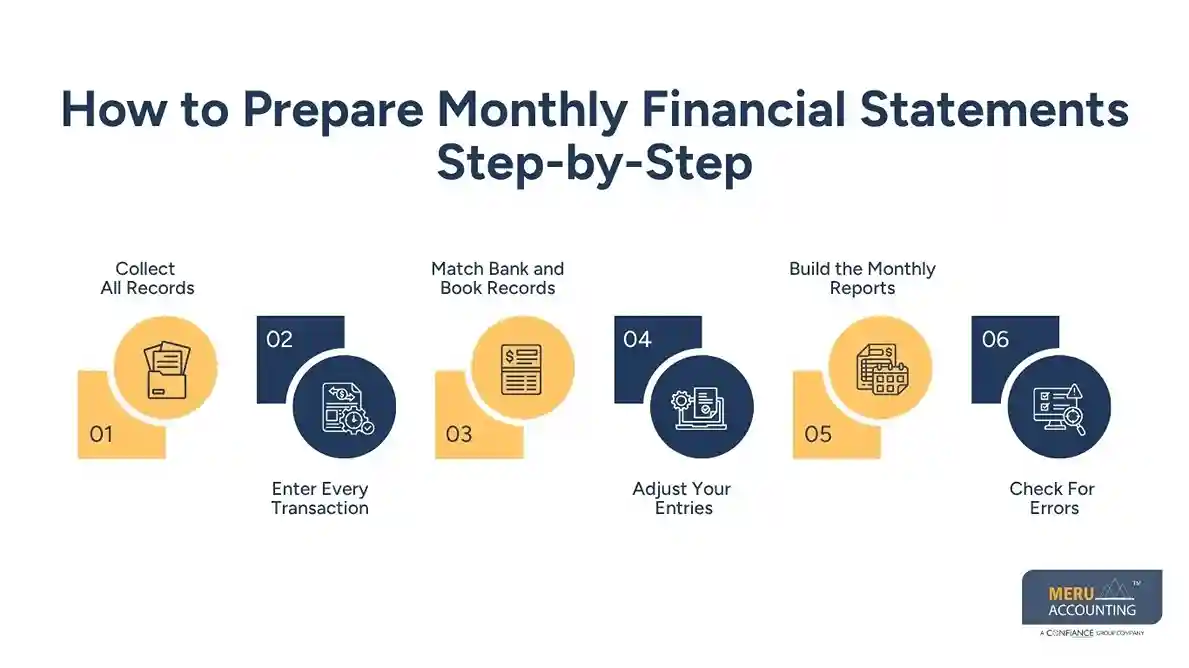
How to Prepare Monthly Financial Statements Step-by-Step
Learning how to prepare monthly financial statements becomes easier when you maintain consistent monthly finances through the same process every month. A structured approach ensures all financial records are complete, accurate, and ready for better business decision-making.
Collect All Records
Gather all invoices, sales receipts, purchase bills, bank statements, payroll records, and other financial documents in one place. Organized records make the reporting process faster and reduce the risk of missing important information.
Enter Every Transaction
Record every sale, purchase, payment, and expense in your accounting system as they occur. Regular updates keep financial records accurate and prevent last-minute work at the end of the month.
Match Bank and Book Records
Compare your accounting records with your bank statements to confirm that every transaction has been recorded correctly. Resolve any differences before preparing your financial statements.
Adjust Your Entries
Record outstanding expenses, accrued income, depreciation, and other necessary adjustments that have not yet been entered. These adjustments ensure your financial statements reflect the true financial position of the business.
Build the Monthly Reports
Prepare your financial reports using accounting software such as Excel, Xero, or other accounting tools. These reports provide a complete summary of your monthly finances, including revenue, expenses, profit, and cash flow.
Check For Errors
Review every account balance, calculation, and financial entry carefully before finalizing the reports. Accurate financial statements provide reliable information for planning and business decisions.
Following these steps every month creates accurate and well-organized financial records, making your monthly financial statements more reliable and useful for managing business performance.
Tools and Templates to Organize Your Monthly Finances
You don’t need to do all of this by hand. Many tools make it easy to organize and manage your monthly finances efficiently.
QuickBooks
Tracks income, expenses, and taxes. It offers easy reporting and connects to your bank. Many small businesses trust it for quick, clean monthly reports.
Xero
Cloud-based software that helps track sales, bills, and cash flow. Xero supports add-ons and gives real-time updates to manage all your records and reports easily.
Zoho Books
This tool helps manage quotes, invoices, payments, and bank reconciliations. It also links with other Zoho apps, making monthly accounting smoother and faster.
Excel
Best for manual control. It allows full freedom to build your reports and models, though it takes time and care to avoid errors or missed entries.
Using the right tool helps you stay on top of your monthly finances and financial records.
Common Mistakes to Avoid in Monthly Financial Statement Preparation
Making errors in your monthly financials can hurt your business. You may lose money, miss tax dues, or make bad choices. Here are some mistakes to avoid.
Missing entries
Forgetting to record a bill or sale leads to errors in your final reports and affects the accuracy of your monthly finances. This skews your numbers and gives a false view of profits or losses.
Skipping bank reconciliation
Not matching your bank statement to your books may hide duplicate payments or missed income. Regular checks catch errors and keep your records clean.
Mixing business and personal funds
Combining personal and business expenses makes reports unclear. Always use separate accounts to avoid confusion and keep financial data clean and audit-ready.
Not updating records on time
Delays in adding receipts, payments, or invoices may lead to clutter and confusion when preparing your monthly report. Daily or weekly updates help avoid last-minute panic and wrong reporting.
Incorrect account mapping
Posting expenses to the wrong account affects tax reports and budget planning. Always double-check the chart of accounts while entering any financial data.
Ignoring unpaid invoices
Unpaid sales mean lower cash flow. If left unchecked, it may lead to cash gaps. Follow up often and set reminders to recover due amounts.
Overlooking small expenses
Many small costs add up and can quietly impact your monthly finances if left unrecorded. Ignoring them may lead to inaccurate profit margins and loss of tax deductions that your business might need.
Benefits of Keeping Your Monthly Reports Organized
Maintaining well-organized monthly financial statements keeps your monthly finances accurate and provides a clear understanding of business performance. Accurate records also make it easier to identify opportunities, manage risks, and plan for future growth.
Better Cash Flow Control
Organized financial records show how much cash is available and where it is being spent. This makes it easier to manage daily operations and avoid cash shortages.
Faster Business Decisions
Up-to-date financial information allows business owners to make timely decisions based on accurate data instead of assumptions. Quick access to financial reports also reduces delays in planning.
Easy Tax Filing
Well-maintained financial records simplify tax preparation by keeping income, expenses, and supporting documents organized throughout the year. This reduces errors and saves valuable time.
Find Cost Leaks
Regularly reviewing expenses in your monthly report makes it easier to identify unnecessary spending and areas where costs can be controlled. This contributes to better financial management and higher profitability.
Track Growth
Monthly financial statements help businesses monitor monthly finances while comparing sales, expenses, and profits over time. These comparisons reveal performance trends and support informed planning for future growth.
Attract Investors
Clear and accurate financial records demonstrate responsible financial management. Investors and lenders are more likely to trust businesses that maintain reliable financial statements.
Peace of Mind
Organized financial reports reduce last-minute pressure and provide confidence that business records are complete and accurate. This allows owners to focus on managing and growing their business.
Maintaining organized monthly financial statements creates stronger financial control, reduces reporting errors, and provides the information needed to make confident business decisions with lower financial risk.
How Meru Accounting Helps You Prepare Accurate Monthly Financial Statements
Preparing monthly financial statements requires accuracy, consistency, and timely reporting. At Meru Accounting, we help businesses maintain reliable financial records that support confident decision-making and long-term growth.
Accurate Transaction Recording
Our professionals record every financial transaction with precision. Every monthly report reflects complete, accurate, and reliable financial information for better monthly finances.
Timely Bank Reconciliation
We reconcile bank accounts on a regular basis. Regular reconciliation identifies discrepancies, maintains accurate balances, and improves the reliability of financial records.
Complete Financial Statement Preparation
We prepare income statements, balance sheets, cash flow statements, and other financial reports. Every report provides a clear view of business performance and financial position.
Expense and Revenue Monitoring
Our team carefully tracks business income and operating expenses to keep your monthly finances accurate and well-organized. Proper monitoring supports better cost control and improved profitability.
Compliance and Financial Accuracy
We maintain financial records in accordance with applicable accounting standards. Proper documentation supports tax preparation and regulatory compliance.
Management Reporting and Business Insights
We prepare customized monthly financial reports based on your business requirements. Meaningful financial insights help monitor performance, identify trends, and support informed business decisions.
Our Expert Perspective
Preparing monthly financial statements is more than a routine accounting task; it is a fundamental practice for maintaining financial control and supporting long-term business growth.
Consistent financial reporting enables businesses to evaluate performance, monitor cash flow, manage expenses, and make informed decisions based on accurate financial data.
At Meru Accounting, our experienced professionals combine accounting expertise with modern technology to deliver timely, accurate, and reliable financial reports.
Well-organized monthly financial statements improve visibility into your monthly finances, strengthen compliance, reduce reporting risks, and support confident business decisions.
Key Takeaways
- Well-managed monthly finances and financial statements provide a clear picture of business performance.
- Regular financial reporting supports better budgeting and decision-making.
- Income statements, balance sheets, and cash flow statements work together to evaluate financial health.
- Accurate transaction recording and bank reconciliation improve reporting reliability.
- Reviewing financial reports every month helps identify risks before they become major issues.
- Organized financial records simplify tax preparation and compliance.
- Accounting software improves reporting efficiency and reduces manual errors.
- Professional accounting support helps businesses maintain accurate financial records and achieve long-term financial stability.
FAQs
Monthly financial statements should be prepared at the end of every month to monitor financial performance and support informed business decisions.
Sales invoices, purchase bills, bank statements, payroll records, expense receipts, and tax documents are essential for accurate monthly financial reporting.
Yes, small businesses can prepare monthly financial statements using accounting software, although professional assistance helps maintain accurate monthly finances and compliance.
Monthly financial statements track short-term business performance, while annual financial statements summarize the financial results of an entire year.
Bank reconciliation ensures accounting records match bank transactions, improving the accuracy and reliability of financial statements.