Property tax results do not start when a return is filed. They often start when an investor picks the legal and tax setup for an asset. Property investment accountants look at the owner, the asset, the debt, the rent, the plan to sell, and the likely path for future growth before a structure is set.
A sound setup can shape how rent, costs, losses, gains, and cash move through the tax return. An accountant for property investors can also test whether the chosen entity fits the investor’s aims, risk level, family plan, and future property deals. The best result will vary by facts.
For U.S. investors, tax rules can differ by entity and by the way an activity is run. Rental income and costs are often reported on Schedule E, while partnerships and S corporations may use Form 8825 for rental real estate items. The IRS also notes that passive activity and at-risk rules can limit losses.
What You Will Learn From This Blog
- Understand why choosing the right entity structure can affect property tax outcomes.
- Learn how property investment accountants review an investor’s overall tax position.
- Identify the key factors to consider when selecting an entity structure.
- Understand which tax areas should be reviewed before buying or restructuring property.
- Recognize common entity structure mistakes that may increase tax costs.
- Know when it may be time to review or change your property investment structure.
Why Entity Structure Matters For Property Investment Tax Planning
Tax Treatment
The entity can affect where rent, costs, losses, and gains are reported. A single-owner LLC may be taxed in one way, while a partnership or corporation may use another tax path. The legal form and tax election should be reviewed together.
Loss Rules
Rental losses do not always reduce other income in full. The IRS states that rental real estate is generally passive, with special rules for some owners. At-risk and passive loss limits can also restrict deductions.
Debt And Basis
Debt can affect basis, cash flow, and the amount of loss that may be used. Property investment accountants review loan terms, owner basis, capital work, and past tax records before judging the tax result.
Sale Planning
A sale can create gain, depreciation-related tax, and other tax effects. The structure may also affect how proceeds reach the owner. An accountant for property investors can test the sale plan early.
Long-Term Fit
A structure should fit more than one tax year. An accountant for property investors should ask whether the plan includes more homes, new partners, refinancing, or a future sale.
How Property Investment Accountants Evaluate The Right Entity Structure
Investor Goals
Property investment accountants start with the investor’s main goal. Income, growth, cash flow, family ownership, risk control, and exit plans can point toward different choices.
Property Type
A long-term rental may need a different review from a short-term rental, development deal, or mixed-use asset. Income source and activity level can change the tax view.
Ownership
The number of owners and their roles matter. Tax advisors review ownership shares, capital input, profit rights, and plans for new owners before a structure is set.
Debt And Financing
Loan terms can affect cash flow, basis, and the tax result. Tax professionals review existing debt, planned borrowing, guarantees, and refinancing needs when comparing structures.
Income And Loss Profile
Expected rent and property costs can shape the tax plan. Tax advisors review expected income, losses, depreciation, and applicable loss limits before recommending a structure.
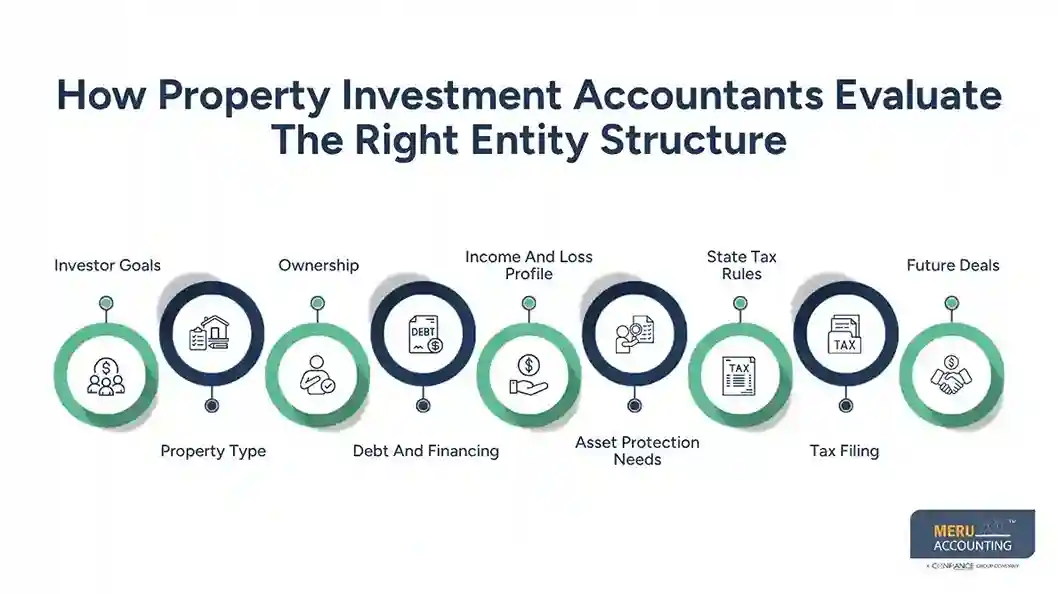
Asset Protection Needs
Tax savings should not be the only factor in the decision. Investors should also review liability risks and ownership needs with legal counsel before choosing an entity.
State Tax Rules
Federal tax treatment is only one part of the review. State taxes, filing duties, entity fees, and local rules can affect the overall cost of ownership.
Tax Filing
Each structure can bring its own filing duties and records. Partnerships, S corporations, and other entities may need separate returns or schedules. An accountant for property investors can map the filing work before the deal closes.
Future Deals
Property investment accountants test how the setup may work if the investor adds debt, buys another asset, brings in a partner, or sells one property. A structure should fit the planned path, not just the first purchase.
optional anymore
on running the business
Choosing The Right Structure For Your Property Investments
Individual Ownership
Direct ownership can be simple for a small rental portfolio. The owner may report rental income and costs on the required individual return, subject to the tax rules that apply.
LLC Ownership
An LLC can provide a legal framework, but its federal tax treatment depends on factors such as ownership and elections. Property investment accountants should review both state law and federal tax treatment.
Partnership
A partnership can fit deals with two or more owners. The IRS generally treats partnership income and loss as items that pass through to the partners, subject to tax rules and limits.
S Corporation
An S corporation may fit some business cases, but rental property does not become a better tax choice just because an S election is made. Property investment accountants should model the tax and admin cost first.
Corporation
A corporation can bring a distinct tax setup and added filing needs. An accountant for property investors should compare the full tax cost, legal cost, cash needs, and exit plan before choosing it.
Tax Benefits Of Structuring Property Investments Correctly
Clear Expense Tracking
A sound entity can make it easier to keep rent, repairs, loan costs, tax, and other property costs tied to the right asset. Property investment accountants can then trace each cost to the right property and tax record.
Better Loss Review
A tax advisor can assess whether a loss is usable now or may be limited by passive activity, at-risk, basis, or other rules. The IRS notes that passive loss limits can restrict deductions.
Depreciation Planning
Depreciation can be a major part of rental tax work. The tax result depends on the asset, basis, placed-in-service date, and tax rules. A tax advisor can review the records before filing.
Sale And Gain Review
A planned sale gives time to review basis, depreciation, selling costs, and gain. An accountant for property investors can model the likely tax effect before the sale is final.
Cash Flow Planning
A clear entity and record set can give the owner a better view of tax cash needs. Property investment accountants can also compare expected tax costs with rent, debt payments, and planned distributions.
Common Entity Structure Mistakes Property Investors Should Avoid
Choosing By Tax Rate Alone
A low tax rate does not prove that a structure is best. Property investment accountants should compare current tax, future tax, filing cost, owner cash needs, and exit effects.
Mixing Personal And Property Funds
Personal and property funds should not be mixed without a clear tax and legal reason. Separate bank records can make income and cost checks far easier.
Ignoring State Rules
Federal tax is only one part of the review. State rules can change the cost of a structure. An accountant for property investors should include the state view.
Moving Property Without Review
Transferring an existing property to a new entity can have tax, loan, title, and legal effects. A tax advisor should review the full transfer before any deed or ownership change is made.
Waiting Until Tax Filing
Tax planning done after a deal is closed may leave few choices. Property investment accountants should be involved before major purchases, transfers, or ownership changes.
When To Review Or Restructure Your Property Investment Entity
Before a New Purchase
A new purchase is a key time to review ownership and tax setup. The choice can depend on price, debt, use, owners, and the planned hold period.
Before Refinancing
A refinance can change debt, cash flow, and basis records. An accountant for property investors can check whether the current setup still fits the new loan plan.
After Portfolio Growth
Property investment accountants can review whether the setup still fits as the portfolio grows. More assets can bring more owners, debt, records, and tax work.
Before a Sale
A sale can trigger tax that is much larger than a yearly rental tax bill. A review before listing or signing can show the likely tax result and any limits on available choices.
After a Major Change
Marriage, new ownership, a partner exit, a new business, or a shift in property use can change the tax plan. Property investment accountants should revisit the setup when facts change.
How Meru Accounting Supports Property Investors
Tax Structure Review
Meru Accounting can review the current ownership setup and the tax treatment linked to it. Our team can compare the tax impact of different entity choices based on the investor’s facts and plans.
Property Tax Planning
Our work can cover rental income, property costs, depreciation, debt, losses, and future sale plans. Property investment accountants can use these details to build a clearer tax plan.
Entity Comparison
Different entities can create different tax and filing results. Meru Accounting can compare the main options so investors can see the likely tax impact, record needs, and ongoing filing work.
Clean Financial Records
Good tax planning starts with clear records. Our accounting process can keep rent, repairs, loan costs, capital work, and other property expenses properly recorded for tax review.
Ongoing Tax Support
Property plans can change after a purchase. Meru Accounting can review the structure when an investor buys another property, refinances debt, adds an owner, or plans a sale.
Practical Tax Guidance
Our goal is to make complex tax matters easier to understand. We focus on the numbers, explain the main tax issues, and point out areas that may need review by a tax or legal professional.
Our Expert Perspective
From our experience, entity structure works best when it is planned around the full property life cycle, not just the current tax year. We find that investors often focus on the tax rate but overlook basis, debt, loss limits, filing costs, and the tax effect of a future sale. A structure that looks efficient at purchase may create added cost or limits later. For that reason, we recommend reviewing the structure whenever ownership, financing, property use, or investment goals change.
Key Takeaways
- Entity choice can affect property tax reporting.
- Property investment accountants should review tax, legal, debt, and ownership facts together.
- Rental losses may face passive activity and at-risk limits.
- LLC tax treatment can vary by ownership and tax election.
- A structure should fit current assets and future plans.
- Moving property into an entity needs review before action.
- Clean records make tax review more reliable.
- Purchases, sales, refinancing, and ownership changes are key review points.
FAQs
The best entity structure depends on your property type, ownership, tax goals, financing, and long-term investment plan.
Entity structure can affect how rental income, expenses, losses, depreciation, and property sale gains are reported and taxed.
An LLC may suit some investors, but the right choice depends on tax rules, state laws, ownership, financing, and future plans.
Property investment accountants can review your structure and tax position to identify legal tax planning options that may reduce your overall tax cost.
Review your entity structure before buying or selling property, refinancing, adding owners, or making major changes to your investment portfolio.
optional anymore
on running the business