QuickBooks Banking management plays an important role in keeping business records clear and updated. Every business needs proper tracking of money coming in and going out. When bank data is handled well, owners can review their cash position and make better financial choices.
Many businesses use QuickBooks for daily accounting tasks, but managing bank feeds, matching records, and reviewing transactions can take a lot of time. Errors in bank entries may create problems during reporting, tax work, and financial review.
Outsourcing QuickBooks Banking tasks gives businesses access to skilled accounting teams that manage records, checks, and updates with care. It allows business owners to focus on growth while trained experts handle daily accounting needs.
What You Will Learn From This Blog
- The importance of proper QuickBooks Banking management for businesses.
- How outsourcing banking tasks can reduce daily accounting pressure.
- Ways experts manage bank feeds, matching, and transaction reviews.
- The role of banking rules and regulations in financial recordkeeping.
- How outsourced accounting teams maintain clean and reliable reports.
Introduction to QuickBooks Banking Management for Businesses
QuickBooks Banking management includes connecting bank accounts, reviewing transactions, matching records, and keeping financial data updated. Businesses use these features to maintain accurate books and avoid confusion in financial reports.
Bank feeds allow transactions to enter the accounting system from linked accounts, where accounting teams review entries and match them with the correct records. A proper review process keeps income and expense records organized while reducing the chances of missing important transactions.
Every transaction needs careful checking before becoming part of financial reports. Experts review transaction dates, amounts, vendors, and categories to maintain accuracy.
Organized records make month-end closing easier, allowing businesses to find past payments, deposits, and expenses without delays. Proper handling of bank records keeps financial information reliable, while following banking rules and regulations ensures correct transaction records and reduces reporting issues.
What Is Bank Rule?
A bank rule is a feature in QuickBooks that automates the categorization of bank transactions based on details such as transaction type, payee, category, class, and location. It reduces manual work by applying predefined conditions to similar transactions and can also be used to automatically split transactions into different categories.
These rules can be customized according to business needs. Users can prioritize, copy, edit, export, and import rules to manage transactions more efficiently and maintain organized financial records.
Why Businesses Need Effective QuickBooks Banking Management
A business may handle hundreds or thousands of transactions every month, making proper review important to avoid errors and financial confusion. Effective QuickBooks Banking practices give businesses better control over records, daily operations, and money movement.
Better Financial Control
Accurate records give business owners a clear view of income, expenses, and cash usage. Regular account reviews create stronger control over financial activities and spending patterns.
Faster Transaction Review
Manual transaction checks can take hours, while trained teams can review entries in an organized way. A proper review process keeps records updated and reduces pressure on internal business teams.
Accurate Monthly Reports
Financial reports depend on correct transaction details, categories, and updated records. Proper management creates reliable reports that support planning and business decisions.
Lower Accounting Risks
Small transaction mistakes can create incorrect balances and affect financial information. Regular checks and following banking rules and regulations keep
Top Benefits of Outsourcing QuickBooks Banking Services
Outsourcing bank management tasks gives businesses professional accounting support without the cost of hiring a full-time internal team. Many companies choose outsourced services to maintain accurate records, reduce workload, and manage financial data properly.
Improved Accuracy In Financial Records
Accuracy is one of the main benefits of outsourcing accounting tasks. Professional teams review transactions carefully, place expenses in the correct categories, and maintain organized records.
Proper transaction categorization reduces reporting issues caused by wrong entries. Outsourced teams check details, match records, and create clean financial information for business owners.
Time Savings For Business Owners And Teams
Managing bank records can take many hours every week, especially for businesses with high transaction volumes. Outsourcing allows owners and employees to focus on sales, operations, and important business activities.
Accounting professionals handle routine reviews, transaction updates, and record maintenance. This reduces internal workload and keeps books ready for regular reporting.
Better Bank Reconciliation Management
Bank reconciliation in QuickBooks Banking compares business records with bank statements to confirm that financial data matches actual activity. Regular reconciliation keeps balances correct and identifies missing or unusual transactions.
A proper reconciliation process supports accurate reports and better financial review. Following banking rules and regulations during reconciliation creates stronger and more reliable records.
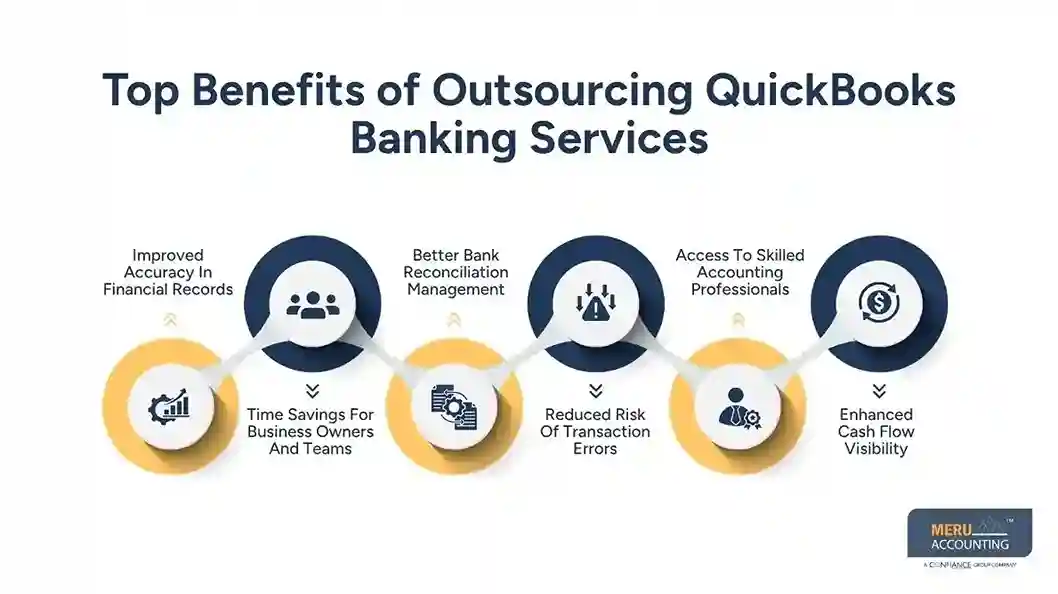
Reduced Risk Of Transaction Errors
Transaction errors can happen due to incorrect entries, duplicate records, or wrong account selection. Outsourced accounting teams review transactions regularly to find and fix issues early.
Careful monitoring creates better control over financial records. Proper handling of transactions also keeps data accurate and reduces future accounting problems.
Access To Skilled Accounting Professionals
Outsourcing gives businesses access to trained accounting professionals who understand bookkeeping tasks and accounting software. Their experience allows them to handle different transaction types and reporting needs.
Experts know how to manage bank feeds, reviews, and account updates properly. This allows businesses to receive professional support without building a large internal accounting team.
Enhanced Cash Flow Visibility
Accurate QuickBooks banking records give business owners better insight into cash movement and help them track financial activity. Updated records make it easier to plan payments and manage spending.
Regular bank reviews help identify cash shortages and support better financial decisions. Following banking rules and regulations keeps cash records accurate and dependable.
Functions of Bank Rules in QuickBooks
Bank rules are useful features in QuickBooks Banking that allow businesses to manage repeated transactions. These rules reduce manual work and create a more organized process for handling bank entries.
Automated Addition of Transactions to the Register
Bank rules can automatically assign details to similar transactions. They allow users to set conditions based on names, amounts, or descriptions.
Creating Custom Rules
Businesses can create rules for common payments and deposits. For example, regular rent payments can follow a fixed category. This saves time during transaction review.
Assigning Categories Automatically
Rules can place transactions into selected accounts. This reduces the need to manually choose categories for every entry. Proper setup keeps records consistent.
Reducing Manual Review Time
Repeated transactions do not need the same level of attention every time. Automation reduces daily bookkeeping effort. Accountants can focus on reviewing important entries.
Splitting of Transaction
Some payments include multiple types of expenses. Bank rules allow transactions to be divided into different categories.
Managing Combined Payments
A single payment may include office supplies, services, and other costs. Splitting allows each part to reach the correct account. This creates more accurate reports.
Improving Expense Tracking
Detailed expense tracking shows where business money is used. It gives owners a clearer financial picture. Proper splitting also supports better planning.
Handling Regular Mixed Costs
Some businesses have repeated payments with different parts. Rules can make handling these payments easier. This reduces repeated manual work.
Steps to Apply a Bank Rule to Transactions in QuickBooks Online Accounting Software
Using bank rules correctly in QuickBooks Banking ensures that automated entries match business needs, accounting requirements, and transaction management processes.
Open the Banking Section
First, log in to QuickBooks Online and open the banking area. Select the connected bank account where transactions appear. Review the available entries before creating rules.
Select a Transaction
Choose a transaction that needs a rule. Check details such as vendor name, amount, and category. These details form the base for the new rule.
Create a New Bank Rule
Open the rules option and select the option to create a new rule. Add conditions based on transaction details. Choose the account and category that match the activity.
Review Rule Settings
Check the rule before saving it. Make sure the conditions and categories are correct. A proper review prevents wrong entries.
Apply and Monitor the Rule
Save the rule and monitor future transactions in QuickBooks Banking. Review automated entries from time to time to keep records accurate and follow banking rules and regulations.
However, to prevent any undesirable action to take place due to the application of bank rule, one need to take certain precautionary steps:
- Each rule should have a payee name
- Ensure the assignment of exact conditions and settings information for the applied rule
- Once the rules are applied to the required transactions, check accounting entries for correction
On reassuring that proper bank rules have been created for the banking transactions, the accounting online user will experience the easiness that these rules bring to the forefront like:
- It scans downloaded bank and credit card details in order to bifurcate transactions based on the payee and other subcategories.
- It also provides for an automated split in a transaction based on a percentage or amount.
In this way, we use bank rules in QuickBooks in automating banking in online mode. It helps in improved automation in the way an accounting user can control accounting entries and thereby acts as a time saver.
optional anymore
on running the business
How Outsourcing Helps Manage QuickBooks Banking Rules And Regulations
Businesses using QuickBooks Banking need accurate financial records and proper accounting practices to maintain reliable reports. Outsourced accounting teams manage transactions carefully while following required processes related to banking rules and regulations.
Maintaining Accurate Transaction Records
Outsourced accounting professionals review financial entries before final approval. They check payment details, dates, and categories to maintain clear and dependable records.
Organizing Supporting Documents
Invoices, receipts, and payment records are matched with accounting entries for better tracking. Organized documents make financial reviews, audits, and tax work easier.
Following Proper Accounting Procedures
Professional teams use structured methods to record and manage transactions. They follow accounting practices and consider banking rules and regulations while maintaining financial data.
Preparing Audit Ready Records
Businesses may require financial information during audits or internal checks. Outsourced teams keep files organized, making reviews faster and reducing record-related issues.
Reducing Compliance Risks
Incorrect records or missing details may create reporting problems. Regular transaction reviews help identify unusual entries and keep financial information accurate.
Keeping Accounting Records Updated
Outsourced teams review old and incomplete entries to maintain updated books. Updated records give businesses better visibility into their financial position.
Common Challenges in Handling QuickBooks Banking In-House
Without proper knowledge of QuickBooks Banking, businesses may struggle with transaction reviews, reconciliation, and maintaining updated records. These issues can affect record accuracy, reporting, and daily financial management.
Lack of Accounting Knowledge
Many business owners and teams may not have complete accounting knowledge to manage bank records properly. Incorrect handling of transactions can create errors in reports and affect financial decisions.
Limited Software Skills
QuickBooks includes many banking features that require proper understanding and practice. Without enough training, businesses may struggle to use these tools effectively and maintain accurate records.
Managing High Transaction Volumes
As businesses grow, the number of transactions increases and manual reviews become more difficult. Internal teams may find it challenging to update records while handling other daily responsibilities.
Delayed Reviews And Updates
Bank transactions require regular checking to keep financial information current. Delays in reviews can lead to missing entries, incorrect balances, and unclear financial reports.
Pressure on Internal Teams
Small teams often handle multiple business activities at the same time. Managing banking tasks along with other duties can increase workload and reduce productivity.
Why Choose Meru Accounting For QuickBooks Banking Services
Meru Accounting provides outsourced bookkeeping and accounting services for businesses that need reliable financial record management. Our team works with businesses across industries and understands the need for accurate transaction handling.
Experienced Accounting Team
Our professionals manage bookkeeping tasks with attention to detail. We review records, categorize transactions, and maintain updated books according to banking rules and regulations.
QuickBooks Expertise
Our team understands QuickBooks features and workflows. We manage bank feeds, reconciliation, and transaction reviews.
Customized Accounting Support
Every business has different needs. We provide services based on business size, reporting needs, and accounting requirements.
Focus On Record Accuracy
We follow review steps to maintain clean records. Accurate data creates better financial reports.
Reliable Monthly Support
Regular accounting support keeps books updated. Businesses receive timely information for planning and review.
Our Expert Insight
From our experience working with businesses, proper QuickBooks Banking management is not only about recording transactions. It is about creating a system where every financial activity can be understood and reviewed.
Many accounting issues begin with small record gaps. Regular transaction checks, proper categories, and organized files create stronger financial control.
Our experts believe that outsourcing banking tasks allows business owners to spend more time on operations while trained accountants handle financial records with care.
Key Takeaways
- QuickBooks Banking management keeps business records organized and updated.
- Outsourcing banking tasks gives access to skilled accounting professionals.
- Proper transaction review reduces errors and improves financial clarity.
- Bank rules make repeated transaction handling easier.
- Following banking rules and regulations keeps financial records reliable.
- Outsourced accounting services reduce workload for business owners.
- Regular reconciliation creates better control over money movement.
FAQs
QuickBooks Banking management is the process of connecting bank accounts, reviewing transactions, matching records, and keeping financial data updated.
Businesses outsource bank management tasks to save time, reduce errors, and get support from trained accounting professionals.
Bank rules allow users to set conditions for repeated transactions. They can automatically assign categories and reduce manual work.
Yes, professional accounting firms follow proper methods to protect financial records and maintain organized data.
Bank reconciliation should be done regularly. The schedule depends on transaction volume and business needs.