Managing repairs can be hard when a rental has many bills, vendors, and units. QuickBooks for landlords gives rental owners a clear way to record repair bills, track costs by property, and review cash flow. Keeping invoices, receipts, and payment details in one place can make tax filing easier and show where rental money is being spent.
Repair costs can range from a small plumbing fix to a large roof job. Recording each cost under the correct expense account is key. QuickBooks for landlords gives owners one place to record bills, payments, receipts, and repair details, while landlord bookkeeping keeps each transaction linked to the right property and expense type.
What You Will Learn From This Blog
- How QuickBooks for landlords can be set up for repair and maintenance tracking.
- How to sort repair costs by property, unit, and type of work.
- How to track common rental property maintenance costs with less manual work.
- How to keep repair records ready for tax review.
- How effective landlord bookkeeping can provide a clearer view of rental cash flow.
- When an owner may need help from a bookkeeper or tax professional.
How QuickBooks for Landlords Helps Track Property Maintenance Expenses
Create Separate Property Records
QuickBooks for landlords can be set up so each property has a clear record. Owners can use classes, locations, or other tracking fields based on the QuickBooks plan they use.
A clear setup lets an owner see which property had the most repair spend during a set time.
Record Bills By Expense Type
Repair bills should not all sit under one broad account. Use clear names such as plumbing, HVAC, electrical, lawn care, and general repairs. Separate expense accounts show how much was spent on each type of work and make landlord bookkeeping easier to review when preparing tax records.
Attach Receipts And Bills
A receipt can show the date, vendor, work done, and amount paid. Keep these details with the transaction when the QuickBooks plan allows receipt or document storage.
Strong records can make it easier to answer questions about rental property maintenance costs later.
Track Costs By Unit
A property with many units may need unit-level notes. For example, a $450 plumbing bill for Unit 4 should not be mixed with work done in Unit 8.
Unit notes can show where repair money went and can aid future review.
Review Monthly Reports
Monthly reports can show repair spending by property and account. A sharp rise in costs may point to an old system, a major repair, or poor vendor control.
QuickBooks for landlords gives owners a way to review these figures before small issues become larger cash-flow problems.
Top Ways to Manage Rental Property Maintenance Costs in QuickBooks
Set A Repair Budget
Set a repair budget for each property based on past expenses, property age, and expected work. A budget is not a tax rule, but it can help with cash planning.
Compare actual maintenance and repair expenses with the budget each month to identify overspending and adjust future estimates.
Use A Clear Chart Of Accounts
Keep repair accounts simple but useful. Separate routine repairs from larger property work when the nature of the cost calls for different treatment.
A clean chart of accounts gives QuickBooks for landlords better data for reports.
Check Every Vendor Bill
Review the vendor name, date, property, amount, and work done before a bill is paid. A basic check can catch duplicate bills and wrong property charges. Landlord bookkeeping starts with verified bills and payment details.
Keep Capital Work Separate
Not every property cost is a current repair. A new roof, major remodel, or other long-term asset may need different tax treatment than a routine repair.
Owners should ask a tax professional when the treatment is not clear. The IRS treats repairs and improvements under different rules.
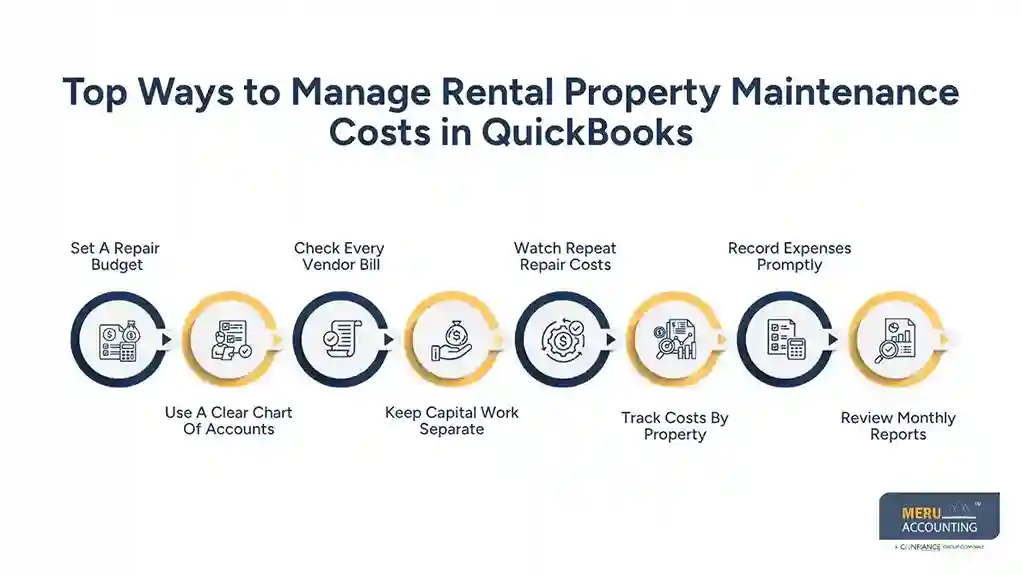
Watch Repeat Repair Costs
Repeated calls for the same issue may show that a larger fix is needed. A repair history can show how much has been spent on one system over time.
A clear record of past repairs makes these patterns easier to spot and review.
Track Costs By Property
Assign each repair bill to the right property or unit. This makes it easier to compare rental property maintenance costs across properties.
Record Expenses Promptly
Enter repair bills and payments soon after they occur. Timely records give QuickBooks for landlords more accurate data for reports.
Review Monthly Reports
Check monthly reports for high or unusual repair spending. Regular reviews can show where landlord bookkeeping needs closer attention and aid future budget plans.
optional anymore
on running the business
How To Set Up QuickBooks For Landlord Bookkeeping
Create Property-Based Tracking
Start by listing each rental property and deciding how transactions will be tagged. The exact setup can vary by QuickBooks product and portfolio size.
A fixed method makes landlord bookkeeping more consistent from month to month.
Build Useful Expense Accounts
Create accounts for common repair types, such as plumbing, HVAC, electrical, cleaning, pest control, and general maintenance.
Avoid making dozens of tiny accounts that add work without adding useful detail.
Connect Rental Bank Accounts
Separate rental bank accounts can make transaction review much easier. Bank feeds can bring transactions into QuickBooks for review and coding.
QuickBooks for landlords works best when imported transactions are checked rather than accepted without review.
Add Vendor Details
Save useful vendor details, such as the vendor name and type of work. Keep invoices and receipts with the related records when the system permits.
These details make it easier to check rental property maintenance costs over time.
Reconcile Each Month
Bank reconciliation checks the books against the bank statement. Differences should be reviewed and fixed before reports are used for tax or business decisions.
Regular reconciliation is a key part of landlord bookkeeping.
How To Track Common Rental Property Maintenance Costs
Plumbing Repairs
Plumbing work may include leaks, clogged drains, broken valves, or fixture repairs. Record each bill under the correct property and expense category.
Accurate entries help landlords track repair expenses and understand how much is being spent on plumbing issues at each property.
HVAC Service
HVAC costs may include routine service, small repairs, or major system work. The type and size of the work matter when deciding how to record it.
Keep the invoice and work details so QuickBooks for landlords has a clear audit trail.
Electrical Work
Electrical costs can range from a simple outlet repair to larger work. Record what was done, where it was done, and what the vendor charged.
Detailed notes can aid both landlord bookkeeping and later tax review.
Pest Control
Pest control is a common rental expense. Keep regular service bills under a clear account so costs can be reviewed by property and month.
Separate entries make it easier to see whether rental property maintenance costs are rising over time.
Cleaning And Yard Work
Cleaning, lawn care, and similar routine work should be recorded in suitable expense accounts. Keep vendor bills as proof of the work.
A clear system lets QuickBooks for landlords show these costs in reports without extra sorting.
Best Practices For Managing Rental Property Maintenance Costs
Review Costs Every Month
Do not wait until tax season to review repair spending. A monthly check gives owners time to find errors and spot unusual costs. Monthly review keeps landlord bookkeeping up to date.
Keep Tax Records Separate From Personal Costs
Never mix personal spending with rental expenses when it can be avoided. Separate accounts and cards make transaction review much easier.
Clean records can reduce confusion when rental property maintenance costs are reviewed for tax purposes.
Keep Detailed Repair Notes
Record the property, unit, vendor, date, work done, and amount. Add photos or invoices when useful and available.
These details give QuickBooks for landlords more value than a simple dollar amount alone.
Compare Vendors
For repeat work, review vendor prices, service quality, and response time. The lowest bid is not always the best choice if poor work leads to repeat calls.
Regular vendor reviews can help reduce unnecessary repair expenses over time.
Ask A Tax Professional About Unclear Costs
Some work may be a repair, while other work may be an improvement or capital expense. Tax treatment can depend on the facts and the applicable tax rules.
When the treatment is unclear, ask a qualified tax professional rather than guessing in QuickBooks for landlords.
Is QuickBooks For Landlords Right For Managing Maintenance Expenses?
Small Rental Portfolios
Owners with a few units may find QuickBooks for landlords useful for income, bills, repairs, and basic reports. The setup can stay fairly simple.
A small portfolio still needs sound landlord bookkeeping if the owner wants clean tax records.
Growing Rental Portfolios
More units mean more bills, vendors, and property-level transactions. Clear tracking makes it easier to sort expenses by property.
QuickBooks for landlords can be a suitable choice when an owner needs organized accounting without the added features of a full property management platform.
Multiple Properties
Owners with several properties need clear tracking rules. Each repair should be tied to the right property and, where useful, the right unit.
That structure gives a better view of rental property maintenance costs across the portfolio.
Owners Who Need Reports
QuickBooks can provide reports that show income and expenses over a chosen period. Owners can use these reports to review repair trends and cash flow.
QuickBooks for landlords can be useful when regular reports are part of the owner’s workflow.
When Another Tool May Fit Better
Large property managers may need features for tenant portals, work orders, rent collection, maintenance requests, and property operations. QuickBooks may then work best alongside a property management system.
The right choice depends on portfolio size, workflow, staff, and reporting needs.
Meru Accounting’s Rental Property Bookkeeping Services
Clean Transaction Records
Meru Accounting can help owners keep rental income and expense records organized. Each transaction can be reviewed and placed in the right account based on the available records.
A clean file gives QuickBooks for landlords better data for reports and review.
Property-Level Tracking
Rental owners may need to know how much each property spends on repairs. Meru Accounting can help set up a consistent process for property and expense tracking.
That process can make landlord bookkeeping easier to review each month.
Monthly Reconciliation
Bank reconciliation can find missing entries, duplicates, and timing differences. Regular checks can keep the books closer to the actual bank balance.
Meru Accounting can assist with this routine work, so owners have more time for property tasks.
Expense Review
Repair bills can be checked for date, vendor, amount, and property before they are closed in the books. Unclear items can be flagged for owner review.
Such checks can give owners a clearer view of rental property maintenance costs.
Tax-Ready Records
Accurate expense records do not replace tax advice, but they give a tax professional the details needed for review. Keep invoices, receipts, bank records, and other source documents as required.
Meru Accounting can help maintain rental accounting records for owners using QuickBooks for landlords.
Our Expert Insight
From our experience with rental bookkeeping, repair costs are easier to manage when every bill is recorded as soon as the work is done. QuickBooks for landlords can give owners a clear view of repair spending when property and expense details are entered with care. We also find that monthly reviews can catch duplicate bills, missing receipts, and unusual costs early. Keeping repair records clear can make tax review less stressful and give owners a better view of each property’s cash flow.
Key Takeaways
- QuickBooks for landlords can track repair bills, vendor costs, and property expenses in one accounting system.
- Use clear accounts and property tags to keep repair data easy to review.
- Track rental property maintenance costs by type, property, and unit where useful.
- Reconcile rental bank accounts each month.
- Keep receipts, invoices, and repair notes with the related records when possible.
- Do not assume every major repair is a current expense; ask a tax professional when the tax treatment is unclear.
- Effective landlord bookkeeping gives owners clearer records for cash-flow review and tax preparation.
- Meru Accounting can assist with rental bookkeeping, reconciliation, expense review, and QuickBooks support.
FAQs
QuickBooks for landlords can track repairs by property, expense type, vendor, date, and amount for clear rental records.
Landlords can record each bill under the right maintenance account and assign it to the related property or unit.
Yes, QuickBooks for landlords can organize repair transactions by property using suitable classes, locations, or tracking methods.
Routine repairs may be deductible, but major improvements can have different tax treatment, so check the rules with a tax professional.
Landlords can control rental property maintenance costs by setting budgets, reviewing vendor bills, tracking repeat repairs, and checking monthly reports.
optional anymore
on running the business