A lost receipt, a wrong cost entry, or a late tax payment can cause trouble when a small firm files its tax return. A QuickBooks tax accountant checks these records, reviews the totals, and gets the books ready for tax review. QuickBooks tracks sales, bills, pay, and cash flow, but each entry must be right before it can be used for tax work.
For US firms, tax plans should start well before the filing date. A QuickBooks accountant for small businesses checks income, reviews costs that may qualify for tax breaks, and tracks tax duties. Regular checks give owners time to fix errors and plan for tax bills before the due date.
What You Will Learn From This Blog
- What a QuickBooks tax accountant does to plan for taxes and check records.
- How QuickBooks reports help track tax costs and plan spending.
- Which common costs may qualify for tax breaks.
- How to keep books ready for tax filing.
- Which US tax rules may apply to small firms.
- When to hire an accountant for book and tax work.
What Does a QuickBooks Tax Accountant Do?
Review Income and Expense Records
A QuickBooks tax accountant checks sales, bills, refunds, and cash paid against source records. For example, one bank deposit may cover many client bills. Each bill must match the right sum in the bank record.
Check Tax Categories
Office goods, tools, and personal buys need the right account codes. A QuickBooks accountant for small businesses checks these entries and flags costs that need proof or a tax review.
Plan for Tax Payments
More sales can lead to a higher tax bill. An accountant checks current profit, past tax paid, and likely costs to work out figures for a tax pro to review.
Prepare Records for Filing
Tax work takes less time when bills, bank records, pay data, and reports are in order. The accountant sorts these files so the tax pro can check them with ease.
Check Records With Tax Rules
A cost in QuickBooks does not mean it can be claimed as a tax break. A QuickBooks tax accountant checks its use, proof, and the rules that apply before marking it for review.
optional anymore
on running the business
How QuickBooks Supports Small Business Tax Planning
Track Income Throughout the Year
Monthly reports show if sales rise or fall. A QuickBooks tax accountant checks current totals against past results and flags changes that may affect tax bills.
Review Profit and Cash Flow
A firm may earn a profit while clients still owe money. A review of unpaid bills, costs, and cash on hand shows how much money the owner can use to pay tax bills.
Estimate Tax Costs
Income and cost reports give a base for tax estimates. A QuickBooks accountant for small businesses works out the figures, while a tax pro checks tax breaks, credits, and filing rules.
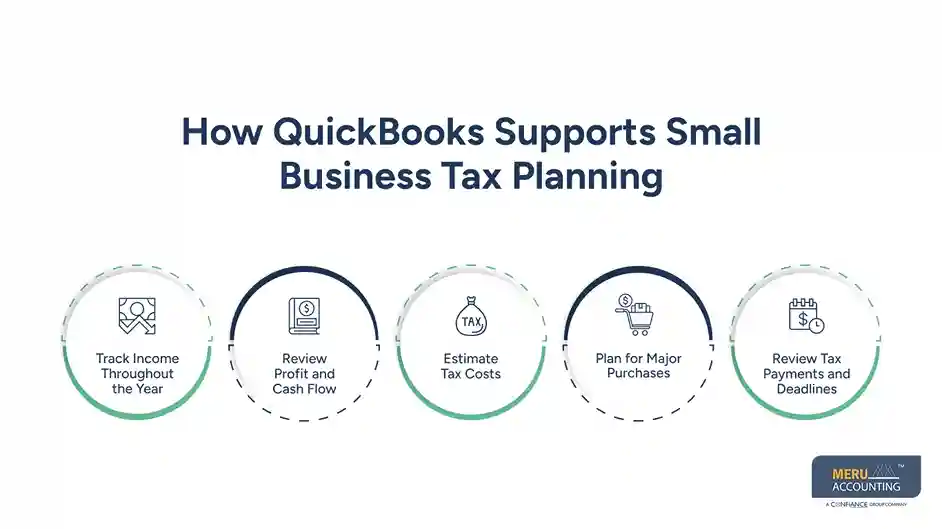
Plan for Major Purchases
A car or new PC can affect cash flow and taxable income. Owners should ask a tax pro if the cost may qualify for a tax break through depreciation or another allowed method.
Review Tax Payments and Deadlines
Late tax payments may lead to fees or added interest. A QuickBooks tax accountant checks recorded payments against tax notices and tracks due dates for tax on profit, payroll, and sales.
Small Business Tax Deductions to Track in QuickBooks
Office Expenses, Supplies, and Equipment
Eligible costs may include paper, postage, software fees, and other goods used for work. Some tools and gear may need to be listed as assets, not as day-to-day costs.
Keep receipts, buy dates, and notes on how each item is used. A QuickBooks tax accountant checks these entries and flags items that need a tax review.
Vehicle, Travel, and Business Meal Expenses
Work trips may lead to costs for fuel, parking, hotels, or meals. Yet not all costs qualify for a full tax break. Private trips and personal car use must stay apart from work costs.
Log the date, cost, miles where needed, and reason for each trip. These facts help the tax pro check each claim.
Employee Wages, Benefits, and Contractor Payments
Wages, some staff benefits, and some fees paid to contractors may count as business costs. The totals should match pay reports, proof of payment, and tax forms that apply.
A QuickBooks accountant for small businesses can check these sums and flag missing contractor data before tax filing.
Home Office and Other Eligible Business Expenses
A home office tax break may apply if the space meets IRS rules. Home costs, such as web service and power bills, may need to be split between work and home use.
Keep the bills and notes that show how you worked out the work share. Do not claim the full home cost without first checking the rules.
How to Maintain Tax-Ready Books in QuickBooks
Categorizing Transactions and Reconciling Bank Accounts
Wrong account codes can skew reported profit. Sort each entry into the right class and match bank and card records each month. This can reveal lost entries, double costs, and errors in pay.
Separating Personal and Business Expenses
Use a separate bank account for the firm where you can. If an owner pays a firm bill with their own money, log it the right way. Do not treat it as a normal payment from the firm bank account.
A QuickBooks tax accountant can flag mixed costs that need more detail before tax review.
Recording Assets, Loans, and Depreciation
A QuickBooks accountant for small businesses can check if gear purchases need to be logged as fixed assets and added to a plan for depreciation. Loan payments also need the right split. The part paid toward the loan balance is not usually a tax break, but the interest may qualify under the rules.
Checking Profit and Loss Statements for Errors
A sharp rise in travel costs or a drop in sales needs a closer look. Check the reports against bills, bank records, refunds, and pay data before you close the books.
Keeping Receipts and Supporting Papers
A QuickBooks accountant for small businesses can match receipts to cost entries to check the amount and reason for each purchase. Save bills, invoices, tax notices, and other records in clear digital files for later review.
Small Business Tax Compliance Requirements in the USA
Federal Income Tax and Estimated Tax Obligations
Federal tax duties vary by firm type. Sole owners, partners, and firms set up as corporations may face different tax rules. Some owners must also pay tax in set amounts during the year.
A QuickBooks tax accountant can prepare reports, but owners should check current IRS rules or ask a tax pro to confirm their duties.
Payroll Tax Reporting and Payments
Employers may need to take federal income tax, Social Security, and Medicare tax from staff pay. They may also need to pay the firm’s share and file set tax forms. Wrong pay totals or late tax deposits can lead to fines.
Match pay records, tax paid, and year-end forms with the books before filing.
Sales Tax Records and State Filing Requirements
Sales tax rules vary by state. Duties may depend on what a firm sells, where its clients live, and where it must pay tax. Some firms may need to file in more than one state.
Track sales that are taxed, sales that are tax-free, refunds, tax charged, and tax paid by state. Check each state’s rules before filing.
1099 Reporting and Independent Contractor Records
Some payments to contractors must be reported on Form 1099-NEC or another tax form. The rules depend on the type of pay and the IRS rules for that tax year.
Keep contractor data, proof of pay, and Form W-9 when needed. Check the rules for the tax year in question. Do not assume all payments follow the same rules.
When Should a Small Business Hire a QuickBooks Tax Accountant?
Tax Records Fall Behind
Unchecked entries can hide lost receipts and double costs until year-end. A QuickBooks tax accountant can check the backlog and set a clear plan to close the books each month.
Tax Rules Become Hard to Apply
Hiring staff, buying gear, or selling in new states can bring new tax duties. Expert review can help when owners are unsure which forms, tax breaks, or rules apply.
Estimated Tax Payments Are Unclear
Changes in profit can affect future tax bills. An accountant can work out new figures for a tax pro to check before the next due date.
Payroll or Contractor Records Need Review
Gaps between pay totals and the books can affect tax reports. A QuickBooks accountant for small businesses can match pay costs and contractor fees with the books to find errors before tax filing.
When the Owner Needs More Time
Monthly bookkeeping work can take time away from sales and daily tasks. A QuickBooks accountant for small businesses can take on agreed tasks while the owner stays in charge of sound records and tax duties.
Why Choose Meru Accounting for QuickBooks Tax and Accounting Services?
Meru Accounting provides bookkeeping, tax, payroll, accounts payable and receivable, and financial reporting services for firms. Our work covers the records that owners need for regular checks and tax prep.
- QuickBooks Record Review: At Meru Accounting, our QuickBooks tax accountant checks income, costs, bank records, and account totals to flag errors and missing entries.
- Tax-Ready Bookkeeping: We sort entries and proof files and prepare reports for tax review.
- Payroll and Contractor Records: We check pay totals and sort payment data for tax reports.
- Monthly Financial Reports: Our team of certified experts prepares profit and loss reports and balance sheets for regular firm reviews.
- Ongoing Accounting Services: We provide bookkeeping and accounting services based on each firm’s records and agreed needs.
Meru Accounting works with firm owners and their tax advisers to keep financial data clear and ready for review. Tax advice, tax return prep, and filing should be done by pros who are qualified and allowed to do that work.
Our Expert Perspective
Small errors can change the figures used to plan for tax. A $3,000 computer buy may need a different tax treatment from $3,000 spent on day-to-day office goods. The right method depends on the facts and tax rules for that year.
A QuickBooks tax accountant should check unusual entries, review proof files, and flag issues that need expert advice. Monthly bank checks and timely tax estimates give owners more time to fix errors before they file.
Key Takeaways
- A QuickBooks tax accountant checks books and flags items that need tax review.
- QuickBooks reports help with tax plans, but costs must meet the rules to qualify for tax breaks.
- Keep receipts, bills, bank records, and pay data in order.
- Match bank records each month to find errors before filing.
- Federal, state, payroll, sales tax, and 1099 duties vary by firm.
- A QuickBooks accountant for small businesses can prepare books and reports for tax review.
- Check current IRS and state rules for tax duties and due dates.
FAQs
A QuickBooks tax accountant checks income, costs, and tax records to plan for tax bills and track due dates.
Small firms can track eligible office costs, gear, work trips, wages, and home office costs, subject to IRS rules.
QuickBooks sorts books and tax reports, but a qualified tax pro should check tax sums and prepare returns when needed.
Small firms can track income, sort costs, match bank records, and keep pay and contractor data in QuickBooks.
When should a small business hire a QuickBooks tax accountant?
A small firm should hire a QuickBooks tax accountant when rules get complex, books fall behind, or tax estimates and filings need expert review.
optional anymore
on running the business