




Real estate is a business where activity never truly slows down. Agents and small brokers are always on the move, answering calls, meeting clients, visiting sites, and following up on leads. With so much focus on sales and relationships, real estate bookkeeping often feels like something that can wait until later. Many professionals only look at their numbers when a problem shows up or when taxes are due.
When bookkeeping is not handled regularly, it becomes difficult to understand how the business is really performing. Money may be coming into the bank, yet expenses quietly reduce profit. Agents may feel busy and productive but still feel unsure about savings, taxes, or future plans. This uncertainty creates stress and makes growth harder.
Strong bookkeeping for real estate agents brings clarity and control. It helps agents understand what they earn from each deal, how much they spend to close it, and what remains after costs. In this blog, we will give you a checklist that can make bookkeeping a daily part of your real estate business. Following this checklist will help both agents and brokers stay organized, confident, and prepared all year.
What Makes Real Estate Bookkeeping Unique?
Real estate income is irregular by nature. One deal may bring a large commission, while the next month may bring no income at all. This uneven cash flow makes real estate bookkeeping very different from businesses with steady monthly sales.
Agents also spend money long before income arrives. Marketing campaigns, listing photos, sign boards, travel, and online ads are paid upfront. Without proper tracking, agents may believe they are earning well while actually losing money on certain deals. This is why bookkeeping for real estate agents must be detailed and consistent.
Trust accounts add another layer of responsibility. Client funds must be recorded accurately and handled with care. Any mistake can cause legal trouble and loss of trust. Commission splits with brokers, partners, or teams also increase complexity. Clean real estate bookkeeping helps agents stay compliant, organized, and protected from costly errors.
Essential Real Estate Bookkeeping Checklist
A strong foundation is the key to long term success. This checklist supports accurate real estate bookkeeping and helps agents maintain clean financial records.
Must Have Records
- Commission income from every closed deal
- Listing, staging, and advertising costs
- Client trust account deposits and withdrawals
- Office rent, utilities, and daily supplies
- Software tools, CRM systems, and subscriptions
- Travel, fuel, parking, and vehicle costs
- License renewals, memberships, and training fees
Each record tells part of the business story. Without full records, bookkeeping for real estate agents becomes incomplete and unreliable. Missing details can lead to wrong decisions and tax issues.
Key Accounts to Track
- Business checking account
- Client trust account
- Business credit cards
- Tax savings or holding account
Keeping these accounts separate is critical. Mixing funds is one of the most common mistakes in real estate bookkeeping and can create serious problems later.
Daily Real Estate Bookkeeping Tasks
Daily tasks build discipline and consistency. These small actions support accurate bookkeeping and prevent backlog.
Daily Checklist
- Record all income and expenses the same day
- Upload and store receipts digitally
- Log client related payments correctly
- Review bank balances for errors or unusual charges
Daily bookkeeping keeps records fresh and accurate. It also helps agents stay aware of spending while deals are still active, making it easier to control costs.
Weekly Real Estate Bookkeeping Checklist
Weekly reviews help agents step back and look at the bigger picture. They ensure records stay aligned and up to date.
Weekly Tasks
- Match bank records with bookkeeping entries
- Review pending, delayed, or unpaid commissions
- Check client trust account balances carefully
- Review business credit card transactions
- Update deal notes and transaction progress
Weekly real estate bookkeeping helps catch errors early. It also reduces pressure at month end and keeps cash flow clear.
Monthly Real Estate Bookkeeping Tasks for Agents and Small Brokers
Monthly tasks turn daily data into useful insight. This stage shows how the business is really performing.
Monthly Checklist
- Close monthly books fully and accurately
- Review profit and loss statements in detail
- Confirm commission splits and payouts
- Review tax savings and future obligations
- Analyze expense trends over time
- Prepare records for tax advisors or auditors
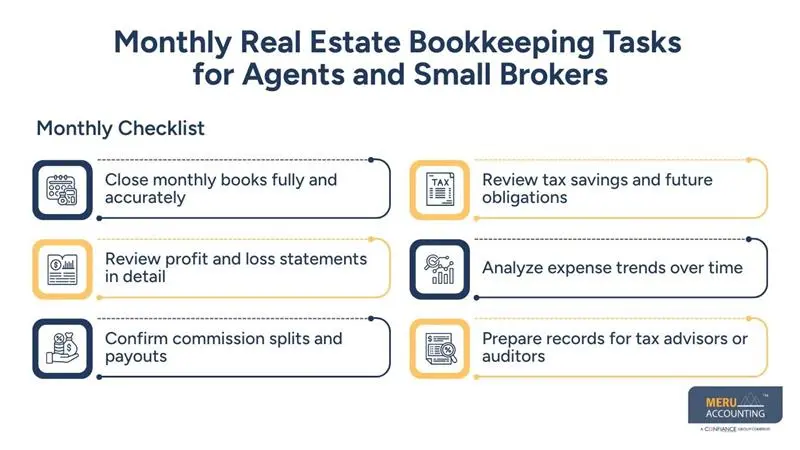
Monthly bookkeeping helps agents see real profit, not just bank balance. For small brokers, it also supports team planning and budgeting. Bookkeeping for real estate agents leads to smarter decisions and stable growth for agents.
Documents and Reports Every Real Estate Agent Should Maintain
Proper real estate bookkeeping is not just about entering numbers. It also depends on keeping the right documents and reports ready at all times. These records support accuracy, audits, and tax filing.
Essential Documents to Maintain
- Commission statements
Keep records of every closed deal with commission details and payment dates. - Expense receipts and bills
Save receipts for marketing, travel, tools, and office costs to support bookkeeping for real estate agents. - Trust account records
Maintain clear logs of client deposits, withdrawals, and balances. - Bank and credit card statements
These help verify entries and catch missing transactions. - Vendor invoices
Track payments made to photographers, advertisers, and service providers.
Key Financial Reports to Review
- Profit and loss statement
- Expense summary by category
- Commission income report
- Trust account reconciliation report
These documents strengthen bookkeeping and help agents stay organized, compliant, and confident.
Common Real Estate Bookkeeping Mistakes Agents Should Avoid
Many agents struggle with real estate bookkeeping not because it is hard, but because small mistakes happen again and again. These issues slowly weaken financial clarity and cause stress later.
Common Mistakes to Watch For
- Mixing personal and business money
Using one account for everything makes tracking profit very hard. Clean separation is a basic rule of real estate bookkeeping. - Delaying bookkeeping updates
Waiting weeks to record income or expenses leads to forgotten entries and missing receipts. This weakens bookkeeping for real estate agents. - Ignoring small daily expenses
Costs like fuel, parking, snacks during site visits, or small tools seem minor but add up over time. - Poor tracking of commission splits
Not recording broker or team splits clearly causes wrong profit numbers. - Weak trust account tracking
Client funds must always be accurate and up to date. Errors here can lead to serious trouble.
Avoiding these mistakes improves bookkeeping accuracy and builds confidence in financial reports.
Meru Accounting’s Real Estate Bookkeeping Services
Handling bookkeeping alone takes time and focus away from selling. Meru Accounting helps agents and brokers stay focused on clients by providing accounting and bookkeeping services.
We provide specialized real estate bookkeeping services designed for agents and small brokers. Our team understands commission income, trust accounts, and the challenges of real estate operations.
Our Services Include
- Daily and monthly real estate bookkeeping
- Accurate income and expense tracking
- Trust account monitoring and reconciliation
- Clear and easy to understand reports
- Dedicated support for bookkeeping for real estate agents
With Meru Accounting, agents gain clarity and peace of mind. Our bookkeeping for real estate agents reduces errors, saves time, and keeps books ready throughout the year.
Consistent bookkeeping also helps agents build long term discipline in their business. When records are updated on time, agents develop a clear habit of tracking money with care. Over time, bookkeeping for real estate agents becomes less of a task and more of a routine that supports stability. Clean books help agents feel prepared, reduce financial stress, and stay focused on clients instead of paperwork.
If you are a real estate agent or broker and could not manage records all by yourself, outsource it today to Meru Accounting. Contact us now and schedule a free meeting with our real estate bookkeeping expert.
Key Takeaways
- Real estate income is uneven and needs careful tracking
- Daily, weekly, and monthly tasks keep books accurate
- A checklist simplifies real estate bookkeeping
- Strong bookkeeping for real estate agents improves control
- Expert support helps agents focus on closing deals
Why Choose Meru Accounting for Manufacturing Accounting Services
Meru Accounting has years of experience in managing accounting for manufacturers around the world. We help in determining costs by tracking stock, mapping overheads, and building cost sheets that match the flow of your business.
We work with the real time data, provide reports, and use the latest accounting software. To know the true cost of manufacturing in your business, contact us now! Get everything you need to know for growing your plant and protecting your profits.
FAQs
Bookkeeping helps agents track real income, manage expenses, and stay prepared for taxes and audits.
Daily updates are best, supported by weekly checks and monthly closings.
Yes, but it requires time and discipline. Many agents choose expert help to reduce stress.
Income, expenses, trust accounts, and commission splits are critical in bookkeeping for real estate business.
Meru Accounting manages complete real estate bookkeeping for agents and brokers, provides clear reports, and offers quick response.


