Real estate development accounting plays a key role in guiding strong investment choices in property projects. It helps investors and developers understand cost, return, and risk in a clear and structured way.
In the modern business environment, real estate project development accounting is not just about record keeping but about improving financial clarity for better project outcomes. Many firms also rely on real estate developer accounting to support planning and long-term growth.
This topic is important because real estate projects involve large funds, long timelines, and many risks. Without proper financial control, even good projects may face losses. Real estate development accounting helps bring order to this process by tracking every cost and income stage in detail.
What You Will Learn From This Blog
- How accounting supports real estate investment choices by giving clear financial data for better decisions
- Ways cost and cash flow are managed in projects to keep spending under control and avoid fund gaps
- How risk and profit are measured in development work using structured financial tracking and reports
- How financial reports guide better planning by showing project performance and future needs
- How firms like Meru Accounting support real estate finance work with accurate accounting and reporting support
What Is Real Estate Development Accounting?
Clear Financial Structure For Projects
Real estate development accounting builds a clear system for tracking money in and out of a project. It ensures every stage, from land purchase to final sale, is recorded with care. This structure helps avoid confusion in large projects.
Role In Investment Clarity
Property development accounting gives investors a clear view of project strength. It shows where money is spent and what returns may come. This makes investment planning more stable and less risky.
Link With Real Estate Developer Accounting
Real estate developer accounting supports daily financial tracking for builders and firms. It works closely with real estate development accounting to ensure no cost is missed during execution.
Compliance With Financial Standards
Proper accounting follows global rules like IFRS and FASB guidelines. These rules help maintain trust and accuracy in financial reports.
Better Control Over Project Funds
Real estate project development accounting helps control fund use at each stage. It reduces waste and ensures money is used in the right place at the right time.
Support For Long-Term Growth
Strong systems, like property developer accounting help firms plan future projects based on past data. This improves long-term financial stability.
How Real Estate Developer Accounting Improves Investment Planning
Accurate Budget Planning
Real estate development accounting helps build clear budgets before a project starts. It reduces the chances of cost errors and supports better planning decisions.
Forecasting Project Returns
With real estate project development accounting, expected returns can be estimated more clearly. This helps investors decide if a project is worth funding.
Comparing Multiple Projects
Investors often compare different projects. Real estate developer accounting provides structured data that makes comparison easier and fairer.
Better Use Of Capital
Real estate development accounting ensures that capital is used wisely. It avoids overspending and helps improve return on investment.
Early Identification Of Financial Gaps
With property development accounting, financial gaps can be seen early. This allows quick changes before problems grow.
Stronger Investment Confidence
Clear financial data builds trust. Property developer accounting gives investors more confidence to invest in new projects.
Real estate project development accounting strengthens decision-making by presenting accurate and transparent financial insights.
Key Financial Reports Used In Real Estate Development Accounting
Project Cost Reports
Real estate development accounting uses cost reports to track spending at each stage. This includes land, labor, and material costs.
Profit And Loss Statements
These reports show whether a project is gaining or losing money. Real estate developer accounting uses them to measure success.
Cash Flow Reports
Cash flow reports show how money moves in and out. Real estate project development accounting uses this to manage liquidity.
Balance Sheets
Balance sheets give a full view of assets and liabilities. They help track project strength over time.
Progress Billing Reports
These reports show payments linked to project progress. Real estate development accounting uses them to match work done with funds received.
Investment Summary Reports
These reports give a final view of project performance. Property developer accounting uses them for decision-making.
Role Of Real Estate Development Accounting In Cost Tracking And Budget Control
Material Cost Monitoring
Property development accounting tracks material use closely. This helps reduce waste and control spending.
Labor Cost Control
Labor costs are a major part of projects. Real estate developer accounting helps monitor wages and work hours.
Contractor Payment Tracking
Payments to contractors are tracked to avoid delays. Real estate development accounting ensures timely and correct payments.
Budget Vs Actual Comparison
This process compares planned costs with actual spending. It helps identify gaps early in the project cycle.
Cost Overrun Prevention
Property development accounting helps prevent cost overruns by early alerts on overspending. Real estate project accounting also supports continuous monitoring to keep the project within approved budget limits.
Financial Discipline In Projects
Strong accounting systems improve discipline in fund use and reduce unnecessary costs. Real estate project development accounting also encourages structured financial planning at every stage of development.
How Real Estate Developer Accounting Helps In Risk Assessment And Mitigation
Identifying Financial Risks Early
Real estate development accounting helps detect risks in cost and funding early in the project. Real estate developer accounting also supports early warning signals when spending patterns start going beyond planned limits.
Market Risk Evaluation
Real estate project accounting studies market trends to reduce investment loss risk. Real estate project development accounting also uses historical pricing data to understand demand changes and reduce wrong investment timing.
Cash Shortage Planning
It helps plan for cash gaps so that work does not stop due to a lack of funds. Property developer accounting also ensures proper fund scheduling to maintain smooth project execution.
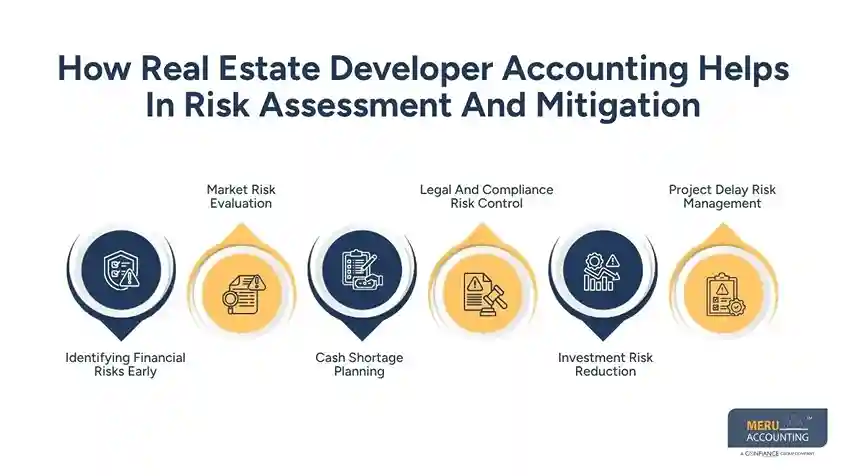
Legal And Compliance Risk Control
Proper accounting reduces the chance of legal issues by maintaining clean records. Real estate project development accounting also helps ensure tax and regulatory records stay accurate and updated.
Investment Risk Reduction
Property development accounting gives clear data that reduces poor investment choices. Property developer accounting also helps compare project performance to avoid high-risk investments.
Project Delay Risk Management
Delays often increase cost. Real estate project accounting helps track progress to reduce delay risks.
Real estate development accounting also highlights schedule gaps so corrective actions can be taken early.
Impact Of Real Estate Development Accounting On Project Profitability
Better Cost Efficiency
Real estate development accounting reduces waste and improves cost control, which increases profit. Real estate developer accounting also ensures every expense is justified and aligned with project goals.
Improved Pricing Strategy
It helps set better pricing for property units based on real cost data. Property development accounting also supports profit-based pricing by analyzing the total development cost.
Higher Return Visibility
Real estate project accounting shows real returns in a clear format for better decisions. Real estate project development accounting also helps investors understand actual ROI before committing funds.
Strong Financial Control
Better control of funds leads to improved profit margins in projects. Real estate developer accounting also reduces unnecessary spending through continuous monitoring.
Reduced Financial Leakage
Real estate project development accounting reduces hidden costs and financial loss. Property developer accounting also improves transparency in vendor and contractor payments.
Long-Term Profit Planning
It supports planning for future profits based on past project data. Real estate development accounting also helps refine future investment strategies using historical performance.
Investment Decision-Making Through Real Estate Development Accounting Data
Data-Based Investment Choices
Real estate project development accounting gives real data for making investment decisions. Clear financial records support accurate and informed planning for investors.
Risk Vs Return Balance
It helps compare risk and return in a simple way for better planning. Balanced evaluation supports the selection of financially stable opportunities.
Project Viability Checks
Real estate developer accounting checks if a project is financially strong before approval. Financial strength analysis highlights feasibility before capital commitment.
Performance History Analysis
Past project data helps improve future investment choices. Historical performance insights guide the selection of stronger investment options.
Investor Communication Support
Clear reports help investors understand project value easily. Transparent reporting improves clarity during investment discussions.
Decision Speed Improvement
Real estate development accounting helps speed up decision-making with clear data. Structured information reduces delays in financial approvals.
Cash Flow Management In Real Estate Developer Accounting Practices
Incoming Cash Tracking
Real estate development accounting tracks all incoming payments from investors and buyers. Accurate tracking ensures proper recording of every inflow.
Outgoing Payment Control
It also tracks all outgoing expenses to avoid cash gaps. Controlled monitoring helps maintain financial balance across stages.
Working Capital Planning
Real estate developer accounting ensures enough funds are available for daily work. Proper planning supports smooth operational flow without interruptions.
Payment Schedule Management
It helps manage payment timing for suppliers and contractors. Organized schedules support timely settlements and better coordination.
Cash Flow Forecasting
Future cash needs are planned using past data and trends. Forecasting improves preparation for upcoming financial requirements.
Financial Stability Support
Strong cash flow control helps keep projects stable during long cycles. Stable planning reduces financial pressure across development phases.
How Meru Accounting Supports Real Estate Financial Management
Meru Accounting provides structured financial support for real estate firms and developers. The team works with real estate development accounting systems to improve accuracy in cost tracking, reporting, and planning. With strong experience in global accounting standards, Meru Accounting also supports property developer accounting needs for firms handling multiple projects.
We also help in budgeting, financial reporting, tax support, and system setup using tools like QuickBooks, Xero, and other platforms. This ensures that developers can focus more on project work while financial records stay accurate and updated. Meru Accounting also supports migration from old systems to modern accounting tools for better control and clarity.
Key Takeaways
- Real estate development accounting improves financial clarity in projects
- It supports better investment decisions with accurate data
- Real estate developer accounting helps control costs and cash flow
- Financial reports guide risk and profit planning
- Strong accounting systems reduce project delays and cost issues
- Clear records help investors make better choices
Our Expert Perspective
From practical experience in real estate financial work, structured accounting systems often determine project success more than market timing. Projects with strong real estate development accounting practices show better cost control and fewer delays. Clear reporting also helps investors stay confident during long project cycles. Real estate developer accounting adds further strength by keeping daily records aligned with project goals.
FAQs
Real estate development accounting tracks all project costs, income, and financial movement in a structured way. Clear financial tracking helps investors understand project strength before making investment decisions.
Real estate developer accounting provides clear data on budgets, spending, and expected returns. Better financial clarity supports the comparison of projects and selection of stronger investment options.
Key reports include cost statements, profit and loss reports, cash flow reports, and balance sheets. Financial reports help assess project performance and overall financial stability.
Financial tracking highlights cost issues, funding gaps, and delays at an early stage. Early visibility supports quick corrections and reduces the chances of financial loss.
Cash flow management ensures funds are available for construction, labor, and materials on time. Smooth fund availability prevents delays and maintains financial stability throughout the project.