
Real estate firms handle a large amount of financial data every day. From rent payments and vendor invoices to tax records and investor reports, accounting tasks can quickly become hard to manage. As firms grow, handling these tasks in-house often takes more time, staff, and cost than expected. This is why many firms now choose to outsource their real estate financials to trusted accounting experts.
Strong financial management plays a key role in the success of a real estate business. Poor recordkeeping, late reports, and accounting mistakes can hurt cash flow, tax filing, and long-term growth. Real estate firms also need clear financial data to make smart choices about property deals, investments, and future growth plans.
Outsourcing accounting work gives firms access to skilled teams, modern tools, and trusted reporting systems without the cost of building a large in-house team. It also cuts the workload for business owners and property managers so they can focus on growth, tenant support, and property work.
This blog explains how outsourcing real estate financials helps firms improve work speed, simplify accounting tasks, and keep clear financial reports for better business results.
What You Will Learn From This Blog
In this blog, you will learn:
- Why accurate financial records matter for real estate firms
- Common accounting issues faced by property firms
- The value of real estate accounting financial reporting for tax filing and planning
- How outsourcing accounting work improves speed and accuracy
- Signs that show your firm may need outsourced accounting support
- How expert accounting services help real estate firms grow with confidence
Why Accurate Real Estate Financials Matter for Business Growth
Accurate real estate financials help firms stay stable, improve planning, and support long-term growth. Real estate firms handle many income streams, property costs, taxes, loan payments, and investor deals. Without clear accounting records, it becomes hard to know the true financial health of the business.
Better Financial Visibility
Clear financial records help firms:
- Track profits and operating costs
- Review property results
- Monitor rental income and costs
- Plan future investments with confidence
This level of visibility supports smart business choices and better financial control.
Improved Tax Filing
Real estate firms must keep accurate records for:
- Tax deductions
- Depreciation schedules
- Property taxes
- Financial reviews
Mistakes in these areas can lead to fines, late filings, and cash flow issues.
Stronger Investor and Lender Trust
Investors and lenders expect timely and accurate financial reports. Well-prepared reports help firms:
- Show property income and returns
- Improve financial clarity
- Build investor trust
- Support loan and funding approvals
Better Risk Control
When accounting systems stay updated and organized, firms can spot financial risks early and respond faster. This helps firms run more smoothly and stay strong in a fast-moving real estate market.
Common Accounting Challenges Faced by Real Estate Firms
Real estate firms often face accounting issues because of the large number of transactions and reporting needs tied to property management and investment work.
Managing Multiple Properties
One of the biggest issues is handling separate records for many properties. Firms must track:
- Rental income
- Repair costs
- Utility bills
- Vendor payments
- Property operating costs
Without the right accounting support, this process can become hard and time-consuming.
Cash Flow Management Issues
Cash flow issues are common in real estate firms. Late rent payments, surprise repair costs, and loan bills can create financial stress if firms do not monitor accounts closely.
Old Accounting Systems
Many firms still rely on manual data entry or old software. This often leads to:
- Duplicate entries
- Reporting mistakes
- Missing transactions
- Late financial updates
Complex Tax Requirements
Real estate accounting includes detailed tax and compliance work, such as:
- Depreciation tracking
- Payroll taxes
- Property taxes
- Financial reporting needs
Missing filing dates or filing wrong reports can create legal and financial issues.
Investor Reporting Issues
Investors expect clear and timely financial updates. Late or unclear reports can lower investor trust and affect business ties.
As firms grow, these accounting issues become harder to manage in-house. This is one of the main reasons many firms choose outsourced accounting support.
The Growing Need for Real Estate Accounting Financial Reporting
The need for strong real estate accounting financial reporting keeps growing as real estate work becomes more complex. Property owners, investors, lenders, and regulatory groups all expect accurate financial data shared on time.
Why Financial Reporting Matters
Financial reports help firms understand property and investment results. Key reports include:
- Balance sheets
- Income statements
- Cash flow reports
- Cost summaries
These reports give firms useful insight into business operations and financial health.
Better Planning and Forecasting
Accurate reporting supports:
- Budget planning
- Property upgrade plans
- Expense forecasting
- Investment reviews
This helps firms make smart financial choices and prepare for future growth.
Growing Investor Expectations
Investors now expect detailed financial updates that include:
- Occupancy rates
- Operating costs
- Rental income
- Return on investment
Firms that provide organized and accurate reports improve trust and build stronger investor ties.
Compliance and Reporting Standards
Real estate firms must follow accounting standards, tax laws, and filing rules. Organized reporting systems help lower the risk of mistakes, fines, and compliance issues.
The Role of Technology
Modern accounting technology has changed reporting needs. Many firms now expect:
- Real-time financial access
- Cloud-based accounting systems
- Faster reporting processes
- Better financial visibility
Outsourced accounting providers often use advanced systems that improve reporting speed and accuracy.
Key Ways Outsourcing Helps Streamline Accounting Operations for Real Estate Firms
Access to Skilled Accounting Experts
Outsourcing gives real estate firms access to accounting experts who understand industry-specific financial work. These experts handle:
- Bookkeeping
- Account reviews
- Payroll
- Tax filing
- Financial reporting
This helps firms improve work speed and lower training costs.
Better Accuracy and Fewer Mistakes
Outsourced accounting teams use proven systems and review steps to lower:
- Data entry mistakes
- Reporting issues
- Tax calculation errors
- Missing transactions
Better accuracy helps firms keep trusted financial records.
Faster Financial Reports
Timely reports are important for business planning and investor communication. Outsourced providers use automated systems that improve reporting speed and deliver updated financial reports faster.
Lower Operating Costs
Building an in-house accounting team can cost a lot. Outsourcing helps firms lower:
- Salary costs
- Benefits costs
- Software costs
- Training costs
Firms also gain flexible support based on business needs.
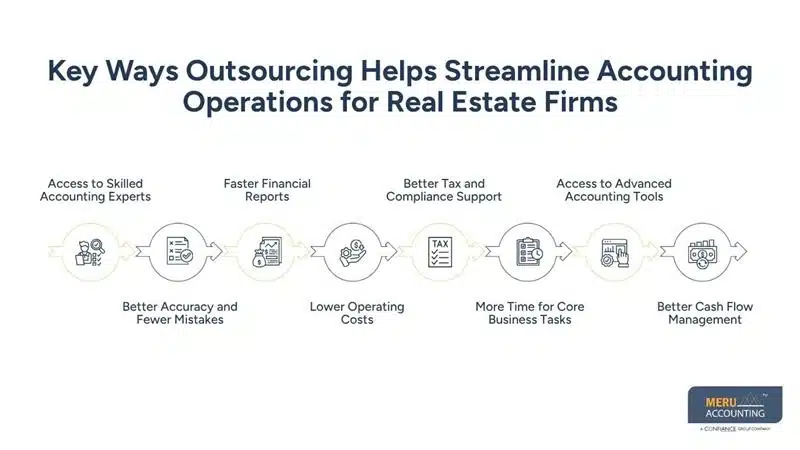
Better Tax and Compliance Support
Outsourced accounting experts stay updated on changing tax laws and compliance rules. This helps firms:
- Avoid fines
- Meet filing dates
- Improve reporting accuracy
- Stay compliant
More Time for Core Business Tasks
Property managers and business owners often spend too much time on accounting work. Outsourcing lets internal teams focus on:
- Property management
- Tenant support
- Client relationships
- Business growth
Access to Advanced Accounting Tools
Many outsourced firms use cloud-based accounting systems and automated reporting tools that improve:
- Data safety
- Financial visibility
- Reporting speed
- Work efficiency
Better Cash Flow Management
Outsourced accounting teams help firms manage cash flow by tracking receivables, costs, and payment schedules. Better cash flow insight helps firms manage financial duties and avoid financial stress.
Strong cash flow management also supports better plans for future investments and property growth.
Signs Your Firm Should Outsource Real Estate Financials
Many real estate firms wait too long before seeking outside accounting support. Spotting warning signs early can help firms improve operations and avoid financial problems.
Frequent Accounting Mistakes
If your firm often faces:
- Reporting mistakes
- Missing transactions
- Account review issues
- Incorrect records
It may be time to outsource accounting work.
Delayed Financial Reports
Slow reporting affects business planning and decision-making. Outsourcing can help improve reporting speed and accuracy.
Growing Workloads
As property portfolios grow, accounting duties increase. Internal teams may struggle to manage added financial tasks in an efficient way.
Cash Flow Problems
Difficulty tracking payments, costs, and cash flow may show the need for expert accounting support.
Tax Compliance Issues
Managing tax rules and filing needs without expert support can raise the risk of fines and reporting issues.
High Employee Turnover
Frequent turnover in the accounting team can affect report quality and financial consistency. Outsourcing gives firms stable and trusted support.
Limited Time for Business Growth
When business owners spend too much time on bookkeeping and office work, outsourcing becomes a smart solution that allows more focus on growth and operations.
How Meru Accounting’s Investment Portfolio Accounting Services Support Real Estate Firms
At Meru Accounting, we understand the financial issues real estate firms face while handling many properties, investors, and reporting needs. Our Investment Portfolio Accounting Services help firms maintain organized records, improve financial insight, and streamline accounting work.
Our team helps real estate firms with:
- Bookkeeping
- Account reviews
- Financial reporting
- Investor updates
- Cash flow management
We use modern accounting systems and smooth work steps to help firms maintain accurate real estate financials without adding more work to in-house teams.
We also help firms improve real estate accounting financial reporting by giving clear and timely financial reports that support better business choices. Our experts stay updated with accounting standards and tax laws to help firms lower reporting risks and maintain strong accuracy.
By outsourcing accounting work to Meru Accounting, real estate firms can spend more time on property management, client support, and business growth while we manage the financial side with care and accuracy.
Key Takeaways
- Accurate real estate financials support business growth and financial stability
- Real estate firms often face reporting, compliance, and cash flow issues
- Real estate accounting financial reporting helps firms improve trust and financial planning
- Outsourcing accounting work improves speed and reporting accuracy
- Expert accounting support helps lower operating costs
- Advanced accounting tools improve financial visibility and work control
- Outsourcing helps firms focus more on property operations and business growth
- Meru Accounting provides trusted accounting support built for real estate firms
FAQs
Investment portfolio accounting is the process of tracking, recording, and reporting all work tied to investment assets such as stocks, bonds, and funds.
Firms outsource services to lower costs, improve accuracy, meet regulatory needs, and gain skilled accounting help.
Outsourced teams use skilled staff and modern systems to speed up tasks, lower errors, and prepare reports faster.
Yes. Outsourced accounting providers stay up to date with financial rules and help firms prepare accurate compliance reports.
Meru Accounting offers skilled support, safe systems, accurate reporting, and scalable plans built for asset management firms.