Understanding real estate taxes vs personal property taxes is important for commercial property owners because a business may own land, buildings, machines, furniture, computers, and other assets that can face different tax rules.
The main difference is the type of property being taxed. Real property often includes land and buildings, while personal property may include movable business assets such as equipment, machinery, furniture, and computers. State and local laws decide which assets are taxable and how they are valued, so owners should review the rules that apply to each property location.
What You Will Learn From This Blog
- The main difference between real property and personal property taxes.
- How real estate taxes vs personal property taxes affect commercial property owners.
- Which assets may fall under each tax type.
- How property value, location, and local rules can affect tax bills.
- Why accurate asset and property records matter.
- Common mistakes that commercial property owners should avoid.
- How real estate tax services can fit into property accounting and tax record work.
Real Estate Taxes Vs Personal Property Taxes: What Is The Difference?
Real Estate Tax
Real estate tax generally applies to land and buildings. A commercial office, warehouse, retail building, or industrial site may be subject to this tax based on local assessment rules.
Personal Property Tax
Personal property tax may apply to movable business assets. Examples can include computers, office furniture, machinery, tools, and equipment, although the exact taxable items vary by state and local law.
Different Tax Rules
The rules for real estate taxes vs personal property taxes can differ because local tax authorities may use separate assessment methods, forms, filing dates, and exemption rules for real property and business personal property.
Different Asset Records
A building may appear in property records, while equipment may be listed in a fixed asset register or personal property tax return. Keeping these records separate can make tax review easier.
Local Law Matters
There is no single U.S. rule that applies to every commercial property. State, county, city, and other local tax rules can decide whether an asset is taxable and how its value is set.
How Real Estate Taxes Apply To Commercial Property
Land And Buildings
Land and permanent structures are generally treated as real property. Understanding real estate taxes vs personal property taxes starts with identifying whether the taxable asset is land and a permanent structure or a movable business asset.
Property Assessment
A local assessor may determine the taxable value of a property under the rules of that jurisdiction. The assessed value used for local tax is not always the same as the federal tax basis of the property.
Tax Rates
The amount due can depend on the assessed value and local tax rate. Other charges, exemptions, credits, or local rules may also affect the final bill.
Property Improvements
A building addition or major improvement may affect property records and future assessments. Owners should keep invoices, permits, contracts, and project records for major work.
Tax Bill Review
A commercial owner should review the property address, parcel number, assessed value, tax rate, exemptions, and amount due instead of checking only the final balance.
A review of real estate taxes vs personal property taxes can help separate land and building assessments from taxes that may apply to equipment, furniture, and other business assets.
How Personal Property Taxes Apply To Business Assets
Equipment And Machinery
Machinery and equipment may be treated as tangible personal property for local tax purposes. The IRS also lists machinery and equipment among examples of tangible personal property for federal depreciation purposes.
Office Equipment
Computers, printers, desks, chairs, and other office assets may fall under personal property rules in some locations. The owner should check the local definition before deciding whether an item must be reported.
Asset Age
Some local tax systems use the age or value of an asset when calculating taxable value. This means the purchase cost alone may not determine the amount of personal property tax.
Sold Assets
When equipment is sold, discarded, or removed, the business should update its asset records. Local filing rules may require the owner to remove those assets from a personal property report.
Filing Requirements
Some jurisdictions require businesses to file a personal property return even when the assets already appear in accounting records. Filing dates and forms depend on the local tax authority.
Real estate tax services can include organizing property data and tax records so that real property and personal property information can be reviewed separately.
Real Estate Taxes Vs Personal Property Taxes: Commercial Examples
Office Building
An owner may have land and an office building as real property, while desks, computers, printers, and other equipment may be treated as personal property. This shows why real estate taxes vs personal property taxes should be reviewed as separate parts of the owner’s total property tax position.
Retail Store
A retail property may contain the building, signs, shelves, counters, computers, and display equipment. Some items may be taxable as real property while others may fall under personal property rules.
The exact classification depends on the applicable state and local law.
Warehouse
A warehouse owner may have the land and building along with forklifts, racks, computers, tools, and other equipment. These assets may not all receive the same tax treatment.
A detailed asset list can make it easier to review which items are included in each tax record.
Manufacturing Facility
A factory may have a high value of machinery in addition to land and buildings. The owner may therefore need to track both property groups with care.
Real estate tax services can be used to organize property data, review tax records, and maintain tax calendars where those services are included in the engagement.
Rental Property
A commercial landlord may own a building and may also own equipment or other movable assets provided to a tenant. The distinction between real estate taxes vs personal property taxes can also depend on ownership, use, lease terms, and local law.
optional anymore
on running the business
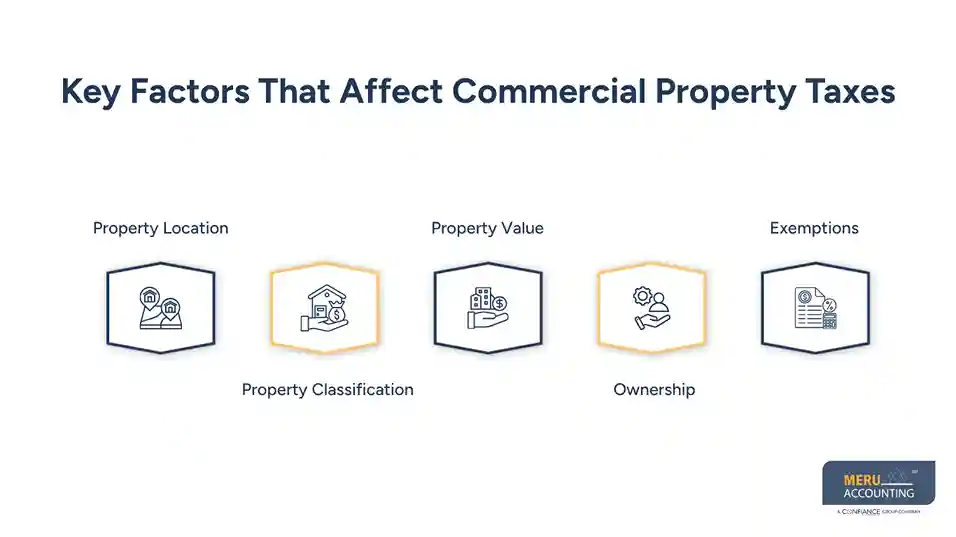
Key Factors That Affect Commercial Property Taxes
Property Location
Location is a major factor because property tax rules are set at the state and local level. A company with properties in several states may have different filing duties for each site.
Property Classification
The classification of an asset can affect which tax rule applies. A building, fixture, machine, computer, or piece of furniture may each require a different review.
Property Value
The assessed value of real property and the taxable value of personal property can affect the tax amount. The valuation method depends on the relevant jurisdiction.
Ownership
Ownership can matter when property is leased, rented, or shared. The lease agreement and local tax rules should be reviewed before deciding who has a filing or payment duty.
Exemptions
Some jurisdictions provide exemptions or thresholds for certain property or taxpayers, which can create additional differences between real estate taxes vs personal property taxes. These rules vary and should be checked with the applicable tax authority.
Real estate tax solutions may include tracking exemptions, tax dates, property details, and supporting records when these items fall within the service scope.
Common Mistakes To Avoid
Mixing Property Types
One common mistake is putting every business asset into the same property category. This can make local tax reporting less accurate.
Understanding real estate taxes vs personal property taxes can make it easier to keep buildings and movable business assets in the right records.
Using Federal Rules For Local Tax
Federal depreciation rules do not automatically determine local property tax treatment. The IRS has its own rules for depreciation, while local tax authorities set their own property tax rules.
Missing Filing Dates
A business may have separate dates for real property tax payments and personal property filings. A tax calendar can reduce the chance of missing a required filing or payment.
Keeping Old Assets
Assets that have been sold, scrapped, or removed should be reviewed in the records. Keeping old assets on a local property report may affect the reported taxable value.
Ignoring Tax Bills
Owners should review more than the amount due. Property details, assessment data, exemptions, and tax rates can all matter when checking a bill.
Real estate tax services can provide structured tax record review for owners who need their property data checked against accounting records and tax statements.
Why Choose Meru Accounting For Real Estate Tax Services?
Property Record Review
Meru Accounting provides real estate tax services that can include review and organization of commercial property records, tax bills, asset data, and related accounting information.
Tax Data Organization
Property tax work often needs data from invoices, asset registers, prior tax bills, and property records. Meru Accounting provides accounting services that organize this information for review.
Asset Tracking
Meru Accounting provides accounting support for tracking property costs and fixed assets. Clear asset records can make it easier to compare accounting data with property tax records.
Multiple Properties
Businesses with several commercial properties may have different tax dates and local filing rules. Meru Accounting provides real estate tax services for businesses that need property information arranged by location.
Tax Calendar Records
Tax dates can be tracked by property and jurisdiction so that owners have a clear record of upcoming filings and payments.
Real estate tax solutions can be part of a broader accounting workflow when property owners need tax records, asset data, and financial records kept in order.
Our Expert Perspective
Real estate taxes vs personal property taxes should be reviewed as two related but separate areas of commercial property taxation. The biggest issue is often not the tax bill itself but whether the underlying property and asset records are correct.
A commercial owner should keep a current list of land, buildings, equipment, furniture, machinery, and other business assets, then compare that list with local tax records. Real estate tax services can add value when the work includes clear records, tax bill checks, local filing dates, and proper separation of property types.
Owners should also remember that local property tax rules can change, so a past treatment should not be assumed to apply to a new property or a later tax year.
Key Takeaways
- Real estate taxes vs personal property taxes apply to different types of commercial assets.
- Land and buildings are generally treated as real property.
- Equipment, machinery, furniture, and computers may be treated as personal property under local law.
- The rules for real estate taxes vs personal property taxes vary by state and local tax authority.
- Federal depreciation rules and local property tax rules are separate.
- Property owners should keep accurate records for buildings, improvements, equipment, and sold assets.
- Tax bills should be checked for value, rates, property details, exemptions, and payment dates.
- Real estate tax services can include tax bill review, property record organization, and tax calendar tracking.
- Businesses with properties in several locations may need to track separate local requirements.
- A qualified tax professional or local tax authority should be consulted for a specific tax classification or filing question.
FAQs
Real estate taxes generally apply to land and buildings, while personal property taxes may apply to business equipment, machinery, furniture, and other movable assets.
Understanding real estate taxes vs personal property taxes is important because a commercial property owner may pay both taxes when the property includes taxable real estate and taxable business assets under applicable state or local rules.
Commercial equipment such as machinery, computers, furniture, and tools may be subject to personal property tax, which is one key distinction when comparing real estate taxes vs personal property taxes under applicable state and local rules.
Real estate taxes are generally based on the assessed value of land and buildings, while personal property taxes may be based on the taxable value of qualifying business assets.
Qualifying real estate taxes and personal property taxes paid for business property may be deductible under applicable federal tax rules and IRS requirements.
optional anymore
on running the business