Commercial property accounting needs clear and correct records. Recording rent and costs is key to keeping accounts right. Good records help owners track money, check profits, and pay taxes on time. Without proper accounts, decisions may rely on guesswork instead of facts.
Clear records show how tenants pay and how a property works. They make it easy to plan repairs, control costs, and create reports. Commercial property accounting keeps income and spending in order. This guide shows simple steps to record rent and costs clearly, helping property managers keep reliable records and make smart choices.
Understanding Lease Income
- Base Rent
In commercial property accounting, base rent is the primary income recorded to track tenant payments and property performance. Record rent right away so no payment is missed.
Example:
Tenant A pays $5,000 each month, and Tenant B pays $3,500 every three months. Recording each amount keeps the total rent correct and helps track profit. - Extra Charges
Extra charges can be for utilities, taxes, parking, or repairs. Keep them apart from rent to track all income clearly.
Example:
Tenant C pays $200 for utilities and $50 for parking each month. Recording them separately makes the totals clear and avoids disputes. - Late Fees
Late fees apply when tenants pay late. Record them at once to track payments and tenant habits.
Example:
Tenant D pays $500 late. Recording it keeps all income counted and makes tax reporting easy. - Incentives and Discounts
Discounts or free rent lower the total income for a time. Record them so reports show the correct rent due.
Example:
Tenant gets one month free in a 12-month lease. Record it as a discount to keep reports accurate.
Steps to Record Lease Income
Set Up a Lease Income Account
Create accounts for rent and each extra charge. This prevents mistakes and makes reporting easy.
Example:
Accounts like Base Rent Income, Utility Charges, and Parking Fees keep records clear.
Record Payments Immediately
For precise commercial property accounting, payments should be recorded immediately to reflect true cash flow.
Example:
Tenant E pays $3,000 on the 5th. Record it on the same day to match bank statements.
Categorize Extra Charges
Use separate accounts for electricity, water, maintenance, and other charges. This shows which income streams grow or shrink.
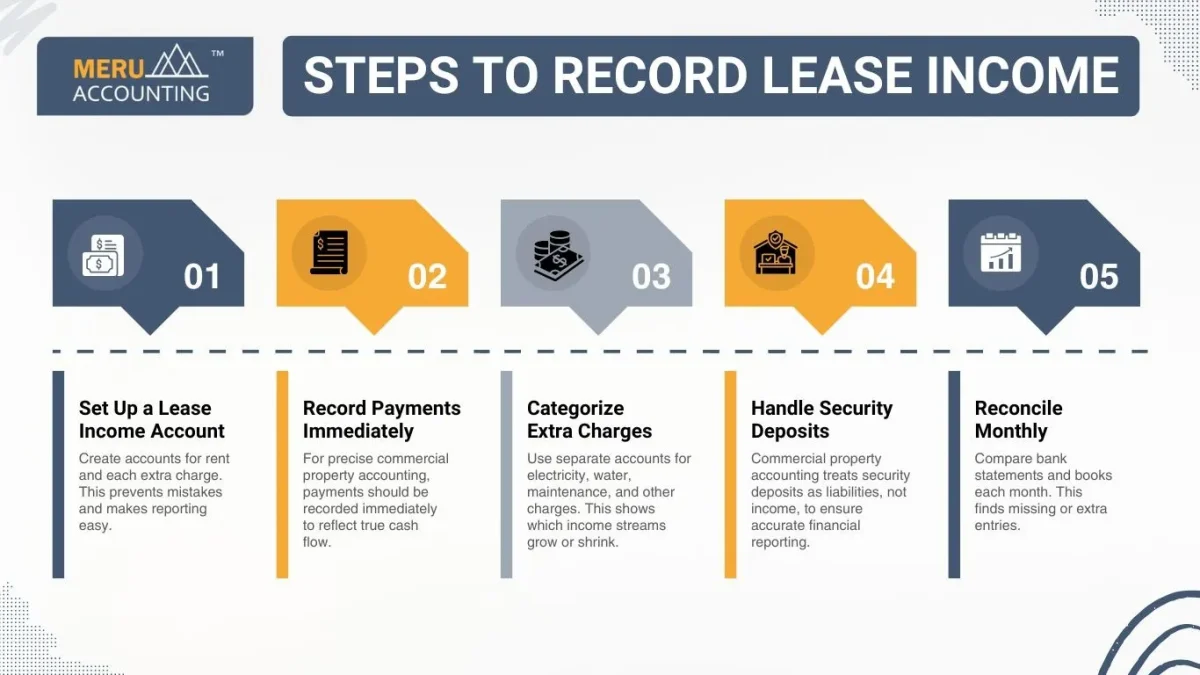
Handle Security Deposits
Commercial property accounting treats security deposits as liabilities, not income, to ensure accurate financial reporting.
Example:
Tenant F pays $1,000 deposit. Record as a liability until it is used for repairs.
Reconcile Monthly
Compare bank statements and books each month. This finds missing or extra entries.
Example:
The bank shows $20,000, but the books show $18,500. Check the difference to fix errors.
Understanding Lease Expenses
Maintenance and Repairs
Includes cleaning, repairs, and emergency work. Track all costs to avoid mistakes.
Example:
Tenant G has a $300 repair. Record it so monthly expenses are correct.
Property Taxes
Pay taxes on time and record each payment.
Example:
Quarterly tax is $800. Record in the right month to follow rules.
Insurance Premiums
Pay for property protection. Record on time for accurate costs.
Example:
Annual insurance is $400. Enter in the correct period.
Utilities
Electricity, water, and heating should be recorded separately.
Example:
Monthly electricity $150 goes to Utilities Expense.
Management Fees
Fees to managers or agencies. Record them to know the total costs.
Example:
The monthly management fee $500 goes to the Management Fee Expense.
Steps to Record Lease Expenses
Categorize Expenses
In commercial property accounting, categorizing expenses correctly ensures clear reports and smoother audits.
Record Costs Immediately
Enter expenses when they happen. Avoid delayed entries to keep books accurate.
Attach Documents
Save invoices and receipts. Proof helps audits and taxes.
Allocate Shared Costs
Split costs fairly across tenants based on lease or space.
Example:
$600 utilities for three tenants → $200 each.
Review Records Regularly
Check monthly or quarterly. Spot errors and fix quickly.
Using Accounting Software
- Track Multiple Properties: See income and costs for all sites. Track each property to know profits and losses clearly. Helps owners manage many properties without missing details.
- Organize Accounts: Keep rent, tax, repair, and utility costs separate. Clear records make it easy to check each account. Reduces errors and keeps money data simple and clear.
- Generate Reports Quickly: Get income, cost, and cash flow fast. Reports help plan budgets and check property performance. Owners can make choices with correct and current data.
- Remind for Payments: Set alerts for due or late rent automatically. Auto reminders cut missed or late payments quickly. Keeps tenants aware and helps cash flow stay smooth.
- Backup Data: Save all records for tax or audit needs. Keep backups safe to stop loss from mistakes or crashes. Easy recovery keeps all money data safe and clear.
Common Challenges in Commercial Property Accounting
- Late Payments: Track late rent to avoid future cash problems. Late payments can hurt cash flow and cause stress. Send reminders and call tenants fast to fix delays.
- Mixed Payments: Keep rent and extra fees separate in records. This stops confusion when checking accounts or reports. Always confirm payments match the lease terms exactly.
- Lease Incentives: Note any discounts or free rent clearly. Incentives must show true income for each lease. Clear records stop disputes and keep accounts honest.
- Shared Expenses: Divide all shared costs fairly among tenants. Record each tenant’s share in clear, simple terms. Clear bills build trust and reduce complaints quickly.
- Compliance: Follow all rules to avoid fines and issues. Check property and tax rules often for updates. Breaking rules can lead to penalties or court cases.
Tips for Effective Accounting
- Keep accounts separate by property and tenant.
- Save all receipts and bills.
- Reconcile accounts every month.
- Use professional accounting software.
- Hire professional help when needed.
Sample Journal Entries
Recording Rent Payment
Date | Account | Debit | Credit |
10-Oct | Bank | 5000 | |
10-Oct | Lease Income | 5000 | |
Rent received for October from Tenant A. |
Recording Maintenance Expense
Date | Account | Debit | Credit |
12-Oct | Maintenance Expense | 300 | |
12-Oct | Bank | 300 | |
Routine repair for October. |
Allocating Shared Utilities
Date | Account | Debit | Credit |
15-Oct | Utilities Expense | 200 | |
15-Oct | Bank | 200 | |
Split utilities for tenants. |
Recording Property Tax
Date | Account | Debit | Credit |
20-Oct | Property Tax Expense | 800 | |
20-Oct | Bank | 800 | |
Quarterly tax payment. |
Recording Insurance Premium
Date | Account | Debit | Credit |
25-Oct | Insurance Expense | 400 | |
25-Oct | Bank | 400 | |
Annual premium paid. |
Recording Management Fees
Date | Account | Debit | Credit |
28-Oct | Management Fee Expense | 500 | |
28-Oct | Bank | 500 | |
Monthly management fee recorded. |
Benefits of Accurate Recording
- Clear Statements: Shows real income and all costs clearly. Records make it easy to track money coming in. Owners can see profit and loss at a glance.
- Better Cash Flow: Track all money in and out clearly. Knowing cash helps cover bills and plan repairs. Prevent shortages and keep daily operations running smoothly.
- Easy Tax Filing: Clear records reduce mistakes when filing taxes. Good statements save time during tax preparation. Avoid fines and keep all documents ready for review.
- Better Decisions: Helps plan property spending and future growth. Clear data supports budget and strategy planning. Owners can spot chances and cut extra costs.
- Follow Rules: Builds trust with tenants and local offices. Proper records show compliance with all property rules. Helps stop disputes and avoid fines or legal trouble.
Recording lease income and expenses is key to good commercial property accounting. Clear books, prompt entries, and monthly checks keep data correct and easy to use. Owners can track cash flow, plan repairs, and follow tax rules.
Meru Accounting offers full services for property accounting. We have certified experts who record all income and costs, do reconciliations, make reports, and handle taxes. Partner with us for clear, reliable, and accurate accounting.
FAQs
- What is commercial property accounting?
It means keeping track of all the money in and out of a property. It helps manage cash flow, check profits, and meet tax rules. - Why is recording lease income important?
Tracking rent payments shows all the money from tenants. It keeps profit clear and avoids missed or late payments. - What is base rent in a lease?
Base rent is the main rent a tenant pays to use a property. It is usually fixed and is the main income source. - How should extra charges be recorded?
Extra costs like utilities, parking, or repairs should be tracked separately from base rent. This keeps records clear and avoids mistakes. - What are late fees, and how are they recorded?
Late fees are added when rent is late. They should be recorded as income as soon as they apply. - How do lease discounts affect accounting?
Free rent or discounts lower the total rent. They should be shown to reflect true income and correct reports. - What accounts should be set up for rent?
Use separate accounts for base rent, utilities, parking, and other fees. This keeps reporting clearly and avoids errors. - Why record payments immediately?
Recording right away shows real cash flow and matches bank records. - How are security deposits handled?
Security deposits are not income. They are liabilities until used for repairs or returned. - What is account reconciliation?
Reconciliation is checking bank statements against records to find missing or wrong entries. - How should maintenance costs be recorded?
Record all repair and upkeep costs in the right expense accounts to track spending. - How are property taxes recorded?
Record taxes when paid, usually quarterly or yearly, in a Property Tax Expense account. - How should insurance costs be recorded?
Record insurance in the period it covers to show true costs. - How should utility bills be handled?
Track water, gas, electricity, and other utilities in separate accounts for clarity. - What are management fees, and how are they recorded?
Management fees go to property managers. Record them in a Management Fee Expense account. - How should shared costs be allocated?
Divide shared costs among tenants based on lease terms or space used, and record each share. - Why use accounting software?
Software helps track many properties, organize accounts, make reports, send reminders, and keep records safe. - What challenges exist in property accounting?
Challenges include late or mixed payments, free rent, shared costs, and staying tax-compliant. - Sample journal entries for rent and costs
Record rent received, repairs, utility bills, taxes, insurance, and management fees.