Expanding a rental portfolio requires more than purchasing additional properties. As investors add more units, they also manage increased rental income, maintenance expenses, loan payments, tax records, and tenant-related transactions. Without an organized accounting process, tracking profitability and understanding the financial performance of each property can become challenging. Rental property management accounting helps owners maintain accurate financial records, monitor cash flow, control expenses, and evaluate individual property performance.
A structured accounting approach allows investors to make better decisions, reduce financial risks, and plan portfolio growth with greater confidence. Many investors start with a small number of properties and gradually expand their portfolios. As the portfolio grows, manual recordkeeping becomes harder to manage. Using proper accounting practices and reliable accounting software for rental properties helps simplify financial management while keeping records accurate and organized.
What You Will Learn From This Blog
- Understand the basics of rental property management accounting.
- Learn why organized accounting matters when growing a rental portfolio.
- Discover accounting practices for managing multiple rental properties.
- See how accounting software for rental properties simplifies financial management.
- Learn common accounting mistakes and ways to avoid them.
- Understand how accounting data supports investment planning.
- Discover important rental property KPIs.
- Learn methods for allocating shared expenses correctly.
- Find out how Meru Accounting can simplify rental property accounting.
Introduction to Rental Property Management Accounting
Rental property management accounting is the process of recording, organizing, and maintaining financial information related to rental properties. It includes tracking rental transactions, maintaining invoices and receipts, categorizing expenses, recording loan details, and keeping property-related financial documents organized.
A proper accounting system creates a reliable financial foundation for rental portfolios. It ensures that income records, expense details, and supporting documents are maintained accurately throughout the year. Organized books help property owners review financial information easily and prepare for reporting, compliance, and future planning.
As rental portfolios expand, maintaining consistent accounting records becomes increasingly important. A structured process helps investors manage multiple properties while keeping financial data complete, accurate, and accessible.
Why Rental Property Management Accounting Matters for Portfolio Growth
Tracking Property Profitability
Each rental property has different income levels, operating costs, and financial performance. Rental property management accounting helps investors organize financial data, review property-level profitability, and identify which assets are generating strong returns.
Supporting Financing Decisions
Lenders often require accurate financial statements when investors apply for new loans or refinancing. Well-maintained accounting records demonstrate stable property performance and improve financial credibility.
Improving Portfolio Management
Clear financial reports allow investors to compare properties, evaluate operating costs, and understand overall portfolio performance. This information supports better decisions when managing existing properties and planning expansion.
Simplifying Tax Preparation
Organized financial records make it easier to prepare tax documents and identify eligible rental property deductions. Proper documentation also reduces the risk of missing important financial details.
Reducing Financial Risks
Regular accounting reviews help investors identify unexpected expenses, rising costs, or declining property performance before they create larger challenges.
Essential Accounting Practices for Managing Multiple Rental Properties
Maintain Separate Property Records
Each property should have separate income, expenses, assets, and liabilities. Individual records make financial analysis much more accurate as the portfolio grows.
Reconcile Bank Accounts Regularly
Monthly bank reconciliation verifies that accounting records match actual bank transactions. This process quickly identifies missing payments or recording errors.
Track Capital Improvements
Major renovations should be recorded separately from regular maintenance expenses. Accurate classification through rental property management accounting supports reliable financial reporting and better tax compliance.
Monitor Accounts Receivable
Late rent payments should be tracked carefully. Regular monitoring improves rent collection and keeps cash flow predictable across all properties.
Create Monthly Financial Reports
Monthly reporting provides consistent updates on revenue, operating expenses, vacancy costs, and net income. These reports allow investors to respond quickly when financial trends change.
Use Reliable Accounting Technology
Managing several spreadsheets becomes difficult as portfolios expand. Rental property management accounting becomes more efficient with modern accounting software for rental properties, which organizes transactions, financial reports, invoices, and property records in one secure system.
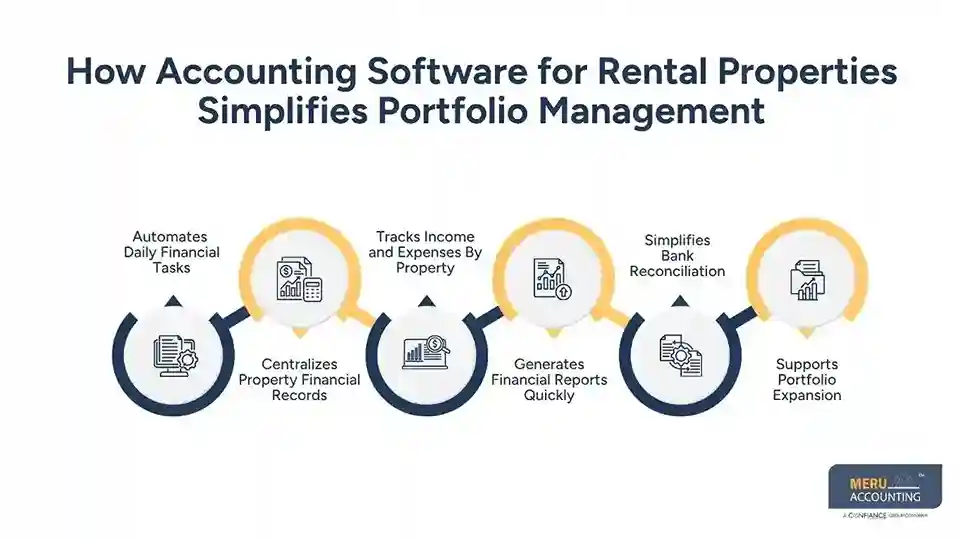
How Accounting Software for Rental Properties Simplifies Portfolio Management
Automates Daily Financial Tasks
As the number of rental units grows, manual bookkeeping becomes time-consuming. Accounting software for rental properties automates recurring entries, rent tracking, and expense recording while reducing repetitive work.
Automation also keeps financial records updated without relying on multiple spreadsheets.
Centralizes Property Financial Records
A growing portfolio creates large amounts of financial data. A centralized system stores lease details, invoices, vendor bills, receipts, and financial reports in one secure location. Keeping financial records together makes information easier to access during audits, financial reviews, and day-to-day property management.
Tracks Income and Expenses By Property
Every rental property performs differently. The software records income and expenses for each property separately, making financial comparisons much easier.
This approach gives rental property management accounting greater accuracy and makes decision-making more reliable.
Generates Financial Reports Quickly
Preparing financial reports manually can take significant time. A reliable system creates income statements, balance sheets, cash flow reports, and expense summaries within minutes.
Regular reporting provides investors with timely financial details to review property performance, monitor cash flow, and make informed decisions.
Simplifies Bank Reconciliation
Matching accounting records with bank transactions is an important accounting task. Software imports bank transactions and compares them with recorded entries.
This reduces manual work and lowers the chance of missing transactions.
Supports Portfolio Expansion
Reliable accounting software for rental properties can support portfolio growth by organizing financial data, automating routine tasks, and improving reporting efficiency.
However, software works best when combined with professional bookkeeping knowledge, regular account reconciliation, financial reviews, and tax support. A proper accounting process ensures that investors receive accurate financial information for better decision-making as their portfolios expand.
optional anymore
on running the business
Common Rental Property Management Accounting Mistakes to Avoid
Mixing Personal and Business Finances
Using one bank account for personal and rental expenses creates confusion. Rental property management accounting works best when rental finances remain completely separate from personal spending.
Missing Expense Records
Small repair costs, maintenance bills, and vendor payments should never be ignored. Missing expenses reduce reporting accuracy and may affect tax calculations.
Delaying Transaction Entries
Waiting several weeks before recording transactions increases the chance of forgotten expenses or incorrect balances. Regular updates keep accounting records reliable throughout the year.
Ignoring Bank Reconciliation
Some investors only review bank accounts during tax season. Monthly reconciliation allows rental property management accounting records to match actual bank balances and quickly identifies errors.
Not Reviewing Financial Reports
Financial reports provide useful information about cash flow, operating costs, and profitability. Ignoring these reports makes it harder to identify financial problems early.
Depending Only On Spreadsheets
Spreadsheets work for small portfolios but become difficult to manage as more properties are added. Using accounting software for rental properties creates better organization and reduces manual work.
How Rental Property Management Accounting Improves Investment Planning
Measures Property Performance
Investment decisions should be based on accurate financial information. Rental property management accounting measures rental income, expenses, operating profit, and cash flow for every property.
Creates Reliable Cash Flow Forecasts
Future investments require sufficient cash reserves. Historical accounting records make future income and expense estimates more realistic.
Supports Budget Planning
Annual budgets become more accurate when based on previous financial performance. Property owners can estimate maintenance costs, vacancy expenses, insurance, and operating costs with greater confidence.
Identifies High-Performing Properties
Some properties consistently generate stronger returns than others. Regular financial reporting allows investors to identify which properties deserve additional investment.
Evaluates Financing Capacity
Before purchasing another rental property, lenders often review financial statements. Well-maintained rental property management accounting records demonstrate stable financial performance and responsible management.
Reduces Investment Risk
Good accounting highlights rising expenses, declining rental income, or increasing vacancy rates before they become larger financial problems. Early action protects long-term investment goals.
Creating a Rental Property Chart of Accounts
A rental property chart of accounts helps investors organize financial transactions into clear categories. Proper categorization makes bookkeeping easier, improves financial reporting, and helps property owners understand where income is generated and where expenses are allocated across their portfolios.
Income Categories
Rental properties may generate income from multiple sources. Common income categories include:
- Rental income from tenant payments
- Late fees from delayed rent payments
- Parking income from assigned parking spaces
- Other tenant-related income such as service charges or additional fees
Expense Categories
Tracking rental expenses accurately helps investors measure property profitability and prepare financial reports. Common rental expense categories include:
- Repairs and maintenance costs
- Property insurance payments
- Property tax expenses
- Utility payments
- Property management fees
- Loan interest expenses
- Advertising and leasing costs
A well-organized chart of accounts allows investors to review property performance, compare expenses, and maintain accurate rental property management accounting records as their portfolios grow.
Using Rental Property KPIs to Measure Portfolio Performance
Occupancy Rate
Occupancy rate measures how often rental units remain occupied. Higher occupancy generally leads to more stable rental income and better financial performance.
Net Operating Income (NOI)
Net Operating Income shows property income after operating expenses but before financing costs. Many investors use NOI when comparing rental property performance.
Cash Flow
Cash flow measures the money remaining after paying operating expenses, loan payments, and other obligations. Positive cash flow supports long-term portfolio growth.
Operating Expense Ratio
This KPI compares operating expenses with rental income. Monitoring this ratio allows owners to identify rising costs, manage budgets effectively, and maintain better control over property finances.
Rent Collection Rate
A high collection rate shows that tenants pay rent on time. Regular monitoring identifies payment issues before they affect cash flow.
Return on Investment (ROI)
ROI measures how much profit a property generates compared to the money invested. Accurate rental property management accounting provides the financial data needed to calculate ROI and compare investment opportunities.
How to Allocate Shared Expenses Across Multiple Rental Properties
Identify Shared Costs Clearly
Some expenses apply to more than one rental property. These may include insurance, management fees, office expenses, software subscriptions, or advertising costs.
Clear identification keeps rental property management accounting accurate and avoids incorrect expense reporting.
Choose a Fair Allocation Method
Shared expenses should be divided using a reasonable and consistent method. Property owners often allocate costs based on the number of units, square footage, rental income, or occupancy.
Using the same method every month creates reliable financial records.
Record Every Allocation
Each allocated expense should be supported by invoices, receipts, or calculations. Proper documentation makes financial reporting easier and creates a clear audit trail.
Accurate records also simplify year-end accounting and tax preparation.
Review Allocations Regularly
As a rental portfolio grows, shared costs may change. Reviewing allocations every few months keeps expense reporting fair and reflects the current portfolio structure.
Regular reviews strengthen rental property management accounting and provide more reliable property-level reports.
Use Accounting Software for Consistency
Modern accounting software for rental properties can automate recurring allocations and reduce manual calculations. Automation keeps expense distribution consistent across all rental properties. It also saves time when managing larger portfolios.
Monitor Property Profitability
After allocating shared costs, review each property’s income statement. This provides a realistic picture of property performance and allows better investment decisions.
Accurate allocation is an important part of rental property management accounting because it reflects the true cost of operating every property.
Why Choose Meru Accounting For Rental Property Management Accounting
Managing multiple rental properties requires accurate records, timely reporting, and proper financial oversight. Meru Accounting helps rental property owners, investors, and property managers maintain organized books through outsourced accounting support, cloud-based financial management, and real estate bookkeeping expertise.
Specialized Rental Property Accounting
Our team provides accounting support for rental portfolios, helping clients track rental income, operating expenses, vendor payments, and property-level financial data. We understand the reporting needs of growing portfolios and maintain records that support better investment decisions.
Accurate Bookkeeping
We manage daily bookkeeping tasks, including transaction recording, expense categorization, bank reconciliation, and financial record maintenance. Accurate books give property owners a clearer view of cash flow, profitability, and overall portfolio performance.
Technology-Driven Accounting
Meru Accounting combines cloud accounting expertise with reliable accounting software for rental properties and other financial platforms. Our team uses technology to improve reporting accuracy, organize financial data, and provide clients with timely access to important financial information.
Timely Financial Reporting
We prepare regular financial reports that help rental property owners review income, expenses, cash flow, and property performance. These insights support budgeting, planning, and future portfolio expansion.
Tax-Ready Financial Records
Our outsourced accounting services help maintain complete and organized financial records throughout the year. Proper documentation simplifies tax preparation and supports accurate reporting for rental property investors, including clients managing properties in the US and other markets.
Our Expert Perspective
Growing a rental portfolio is not only about acquiring more properties. Long-term success depends on knowing how each property performs financially. Many investors focus on rent collection but pay less attention to detailed accounting until their portfolio becomes difficult to manage.
Our experience shows that owners who review financial reports every month are better prepared for expansion. They can identify rising costs, monitor cash flow, plan maintenance budgets, and make investment decisions using real financial data instead of estimates. Combining strong rental property management accounting practices with reliable accounting software for rental properties creates a structured financial process that supports sustainable portfolio growth.
Key Takeaways
- Rental property management accounting provides accurate financial records for every rental property.
- Organized accounting makes portfolio expansion easier and more controlled.
- Monthly financial reports give better visibility into income, expenses, and cash flow.
- Separate accounting records should be maintained for every property.
- Shared expenses should be allocated using a consistent method.
- Regular bank reconciliation reduces accounting errors.
- Accounting software for rental properties automates many daily bookkeeping tasks.
- Property KPIs help investors evaluate financial performance.
- Accurate accounting supports budgeting, financing, and tax preparation.
- Professional accounting services reduce administrative work and improve financial organization.
FAQs
Rental property management accounting is the process of recording and managing all financial transactions related to rental properties, including rent, expenses, maintenance costs, taxes, and financial reports.
Accurate accounting keeps financial records organized, tracks property performance, manages cash flow, prepares tax information, and provides reliable data for future investment decisions.
Accounting software for rental properties records income and expenses, automates bookkeeping tasks, prepares financial reports, reconciles bank transactions, and stores financial records in one secure location.
Most property owners should review financial reports every month. Monthly reviews make it easier to monitor cash flow, control expenses, and identify financial issues early.
A professional accounting firm maintains accurate books, prepares reliable financial reports, keeps records tax-ready, and gives property owners more time to focus on growing their rental business.
optional anymore
on running the business