
A residential real estate tax accountant looks at a security deposit based on what the payment is meant to cover, not just the name used in the lease. A deposit that must be paid back is not the same as rent paid in advance. The tax result can change when a landlord keeps part or all of the deposit for unpaid rent, lease damage, or other costs.
For U.S. federal tax purposes, the IRS says a security deposit is generally not rental income when the landlord plans to return it at the end of the lease. If the landlord keeps part or all of it because the tenant did not meet the lease terms, the amount kept is generally included in income for that year. A deposit used as the final rent payment is treated as advance rent and is included when received.
A residential real estate tax accountant can review the lease, payment records, repair bills, and deposit records to decide how each amount should be treated. Good real estate tax planning also makes it easier to keep rental income and property costs in the right tax year.
What You Will Learn From This Blog
- How the IRS treats refundable and nonrefundable security deposits for rental property.
- When a security deposit becomes taxable rental income.
- Why a deposit used as final rent has a different tax result.
- How damage claims and repair costs affect the tax record.
- How real estate tax planning can keep deposit records clear.
- When a residential real estate tax accountant may be useful for a rental owner.
How Security Deposits Are Treated For Residential Rental Properties
Refundable Deposits Are Not Usually Rent
A refundable deposit is held as security and is meant to go back to the tenant when the lease ends. If the landlord expects to return the full amount, the deposit is generally not counted as rental income when received.
Final-Rent Deposits Are Different
A payment called a deposit may still be advance rent if the lease says it will be used for the tenant’s last month of rent. The IRS treats that amount as rental income when the landlord receives it, rather than waiting until the last month.
The Lease Terms Matter
A residential real estate tax accountant starts with the lease because the written terms show what the payment is meant to cover. The tax result should match the real purpose of the payment, not just the label placed on a bank entry.
State Rules May Also Apply
Federal tax rules are only one part of the review. State and local rules may set limits on deposits, interest, refunds, notices, or how a landlord may use deposit funds.
Records Should Match The Lease
Deposit receipts, lease terms, bank records, refund details, and repair bills should tell the same story. Good real estate tax planning keeps these records apart from normal rent so the tax return can be prepared with less risk of error.
How A Residential Real Estate Tax Accountant Determines Whether A Security Deposit Is Taxable
Check The Purpose Of The Payment
A residential real estate tax accountant first asks why the tenant paid the money. If the amount is held for possible damage or another lease issue and is expected to be returned, it is generally not rental income at receipt.
Check Whether The Deposit Can Be Returned
The next step is to review the lease and the landlord’s actual practice. A deposit that remains refundable is generally treated differently from a payment that the tenant cannot get back.
Check If The Deposit Covers Rent
A deposit that is used as rent can be taxable when received. The IRS specifically treats a security deposit used as a final rent payment as advance rent.
Review What Happens At Move-Out
The tax result may change when the lease ends. If the landlord keeps part of the deposit because the tenant broke the lease or caused damage, the amount kept may become rental income in that year.
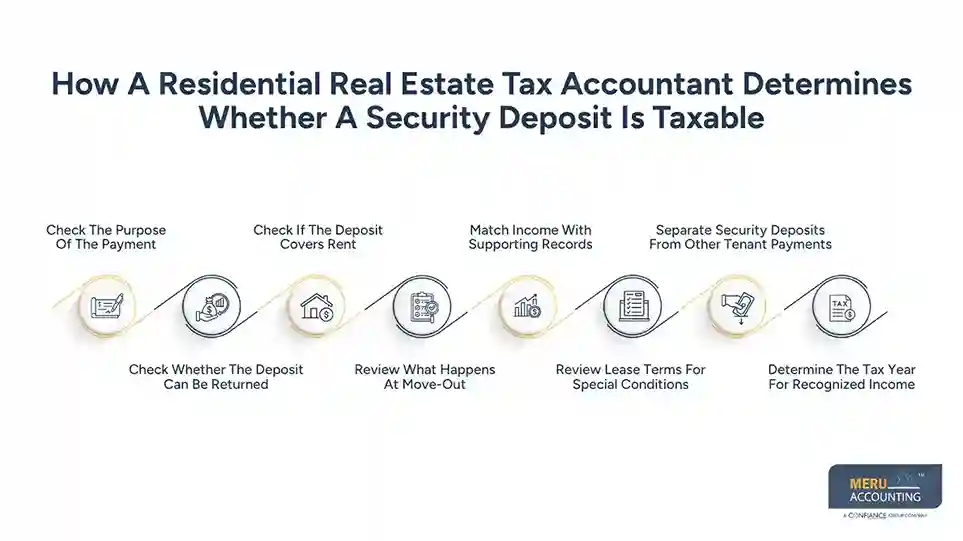
Match Income With Supporting Records
A residential real estate tax accountant can compare the deposit ledger with bank activity, lease terms, move-out statements, and invoices. The goal is to show why an amount was returned, kept, or applied to rent.
Review Lease Terms For Special Conditions
A tax professional reviews the lease for provisions covering nonrefundable deposits, cleaning fees, pet deposits, or other amounts that may have different tax treatment.
Separate Security Deposits From Other Tenant Payments
Tenant payments should be classified correctly in the accounting records. A residential real estate tax accountant can distinguish refundable security deposits from application fees, prepaid rent, and other charges that may represent taxable rental income.
Determine The Tax Year For Recognized Income
When a landlord keeps or applies a deposit, the timing of income recognition should be reviewed based on what the payment was used for and when the landlord became entitled to the amount.
Refundable Vs. Nonrefundable Security Deposits: Key Tax Differences
Security Deposit Type | Basic Treatment | Tax Treatment |
Refundable Deposit | The landlord plans to return the deposit when the lease ends. | Generally, it is not rental income when received. |
Nonrefundable Payment | The payment cannot be returned under the lease terms. | A residential real estate tax accountant reviews whether it is rent or other rental income. |
Deposit For Unpaid Rent | The landlord uses the deposit to cover unpaid rent. | The amount used is generally treated as rental income. |
Deposit For Property Damage | Part of the deposit is kept for tenant-caused damage. | The amount kept may be included in rental income when retained. |
Partial Deposit Refund | Part is returned while the rest is kept for a valid claim. | Real estate tax planning should track the refund and retained amount separately. |
optional anymore
on running the business
How Security Deposit Deductions And Property Damage Claims Affect Rental Income
Separate Rent From Deposit Claims
Rent and deposit claims should not be placed in one general income account. A residential real estate tax accountant can set up separate records for rent, deposits, refunds, and amounts retained for lease costs.
Keep Repair Bills
Repair bills give support for amounts claimed against a deposit. Invoices, receipts, photos, work orders, and tenant notices can show what work was done and why the landlord kept part of the deposit.
Know The Difference Between Repairs And Improvements
A repair may be treated differently from an improvement for tax purposes. A residential real estate tax accountant can review the cost and the work done to decide whether the amount is a current rental expense or a cost that must be capitalized.
Track The Amount Actually Kept
The landlord should record the exact amount retained rather than treating the full deposit as income. For example, if a $2,000 deposit is partly refunded and $600 is kept, the records should show the $1,400 refund and the $600 retained amount.
Review The Tax Year
Timing matters when a deposit becomes income. The IRS states that a landlord generally includes the amount kept in income in the year it is retained because the tenant did not meet the lease terms.
The Role Of Real Estate Tax Planning In Managing Security Deposits
Set A Clear Deposit Policy
Good real estate tax planning starts before a tenant moves in. The lease should state the deposit amount, its purpose, refund terms, and the cases in which the landlord may keep part or all of it.
Keep A Deposit Ledger
A deposit ledger can show the date received, tenant, property, amount, refund, amount retained, and reason for any deduction. A residential real estate tax accountant can use this ledger when reviewing rental records.
Reconcile Bank Records
Deposit money should be easy to trace from receipt to refund or final use. Regular review can reduce the chance that a refundable deposit is recorded as rent by mistake.
Review Each Move-Out
Each move-out should trigger a simple tax review. Real estate tax planning can include checking the lease, deposit balance, repair bills, rent due, refund, and final tenant statement.
Plan For Multiple Properties
Landlords with several homes may have many deposits at the same time. A residential real estate tax accountant can review records by property and tenant so one property’s deposit is not mixed with another property’s income.
When Should Landlords Consult A Residential Real Estate Tax Accountant?
Large Security Deposits
Large deposits can create more tax risk if a landlord later keeps part of the funds. A tax professional can review the payment and its final use before the records are closed.
Deposits Applied To Rent
Using a deposit for the final month or unpaid rent can change its tax treatment. A residential real estate tax accountant can check that the amount is reported in the correct tax year.
Property Damage Claims
Damage claims may involve repairs, improvements, insurance payments, and tenant charges. A tax professional can review the full transaction and related records to ensure the deposit is recorded and reported correctly.
Multiple Rental Properties
Landlords with several homes may handle many tenant payments and refunds. Real estate tax planning can set a clear process for tracking each deposit from receipt through final settlement.
Differences In Tax Records
Differences between the lease, bank account, property ledger, and tax return should be checked before filing. A residential real estate tax accountant can trace the transaction and correct records where needed.
How Meru Accounting Manages Security Deposit Tax Records
Property-Wise Deposit Tracking
Meru Accounting can track security deposits by property, tenant, and lease period, so each amount can be traced from receipt to refund or final use. Property-wise records also make tax review easier when an owner manages several rental homes.
Deposit And Rent Separation
Keeping security deposits separate from rental income is key to clean books. Meru Accounting can record refundable deposits apart from rent and flag cases where a deposit is later used for rent or another lease charge.
Move-Out Record Review
Move-out activity can affect the tax treatment of a deposit. Meru Accounting can review the final tenant statement, refund amount, retained amount, repair bills, and unpaid rent so the records show why the deposit was kept or returned.
Supporting Document Management
A clear record should show why money was kept from a tenant. Meru Accounting can organize leases, invoices, repair receipts, deposit records, and refund details so the tax file has the right support for each transaction.
Tax-Ready Rental Books
Well-kept rental books give tax professionals better data at filing time. Meru Accounting can keep deposit activity, rental income, repairs, and other property costs organized so owners have a clear record for tax work.
Our Expert Perspective
Security deposits need review based on their purpose, lease terms, and final use of the funds, not just the bank entry. A residential real estate tax accountant can check whether a deposit is refundable, used for rent, or kept for damage and other lease costs, while matching the lease, bank records, property ledger, refunds, and invoices. Real estate tax planning can set a clear process for tracking deposits and reviewing complex cases such as large claims, disputes, or early lease termination before filing.
Key Takeaways
- A refundable security deposit is generally not rental income when received if the landlord plans to return it.
- A deposit used as final rent is generally treated as advance rent and included in income when received.
- Money kept from a deposit because a tenant fails to meet lease terms may become rental income in the year it is kept.
- A residential real estate tax accountant should review the lease, payment purpose, deposit records, and final use of the money.
- Repair bills and other records should support amounts kept from a tenant’s deposit.
- Real estate tax planning should include a clear process for recording deposits, refunds, rent, and damage claims.
- State and local deposit rules may differ from federal tax rules, so landlords should check the rules that apply to their property.
- The IRS states that most individuals who rent property operate on a cash basis, but the correct tax treatment depends on the facts and the taxpayer’s accounting method.
FAQs
A refundable security deposit is generally not taxable when received, but money kept for rent or a lease breach may become rental income.
Yes, when a deposit is meant to be the tenant’s final rent payment, the IRS generally treats it as advance rent and includes it in income when received.
A residential real estate tax accountant reviews the lease, damage claim, amount kept, repair cost, and tax treatment before recording the transaction.
Real estate tax planning keeps deposits, rent, refunds, and repair claims separate so the landlord can report the right amount in the right tax year.
A landlord should consider professional help when there are many properties, large deposits, damage claims, rent offsets, or unclear records that may affect the tax return.
optional anymore
on running the business