Running a restaurant may feel exciting with good food, happy guests, and busy nights. But behind those doors, there’s tonnes of wasted ingredients and rising bills. It can look harmless at first. A few spoiled veggies, some extra bread, a tray of uneaten food. Yet slowly, those small things can eat into profits. Proper restaurant bookkeeping may not cook meals or serve guests, but it can save a restaurant from leaking money drop by drop. In this blog, we will look at how bookkeeping for restaurant management can turn food waste into savings.
The Hidden Cost of Food Waste
Many owners think waste is a part of running a restaurant. But behind that leftover soup and tossed bread lies a bigger story. Here are some hidden costs of food waste:
1. Every Bite Has a Price
Every spoon of food that leaves the kitchen unused has a cost tag. The ingredients, labor, energy, and time all add up. Bookkeeping can show how even a few daily leftovers may grow into thousands over a year.
2. Waste Creeps Silently
Waste may not come all at once. It grows over time slowly. An over-order here, a forgotten fridge item there. Without tracking, it stays unseen and may increase in the future. But bookkeeping records can reveal the pattern before it grows too large to handle.
3. The Emotional Side
Restaurant owners may not even realize how much it hurts to see food thrown away daily. When the books reveal the total, it often comes as a shock. Numbers make the unseen visible.
What Bookkeeping Can Reveal About Waste
With restaurant bookkeeping, you can trace the path of food — from the moment it enters the store to the time it leaves the plate. Here’s what it reveals about the waste:
1. Purchase Records Tell the Story
Every order made to a supplier leaves a paper trail. By checking these records, one can see where spending may be too high or irregular.
2. Inventory Becomes a Mirror
When inventory data connects with bookkeeping reports, the waste becomes clearer. A good bookkeeper can spot trends — maybe tomatoes are expiring too often or bread is ordered more than needed.
3. Expense Reports Link the Clues
When food costs rise faster than sales, the books can tell why. Perhaps the kitchen uses more oil, or the menu needs smaller portions.
How Restaurant Bookkeeping Cut Down Waste
It may sound strange that simple accounting entries can help reduce leftovers. But, when there’s a record of everything, you can easily determine the patterns. Here’s how restaurant bookkeeping can cut down waste:
1. Tracking Ingredient Costs
With detailed bookkeeping, each ingredient’s cost can be tracked. If certain items show rising costs but no increase in sales, it may hint at spoilage or overuse.
2. Comparing Menu Profitability
You can link sales data with ingredient costs to see which dishes give more value. Some dishes may look popular but waste more. Once known, changes may be made in portion sizes or menu design.
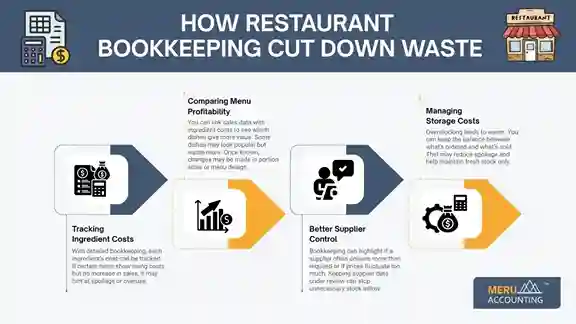
3. Better Supplier Control
Bookkeeping can highlight if a supplier often delivers more than required or if prices fluctuate too much. Keeping supplier data under review can stop unnecessary stock inflow.
4. Managing Storage Costs
Overstocking leads to waste. You can keep the balance between what’s ordered and what’s sold. That may reduce spoilage and help maintain fresh stock only.
How to do Bookkeeping for Restaurant
Here’s how you can easily do bookkeeping for restaurant:
Step 1: Record Daily Sales
Each day’s sales need to be entered. This gives a clear picture of revenue flow.
Step 2: Match Purchases with Usage
Purchases should align with sales. If a restaurant buys more ingredients than it sells food, there’s a problem brewing.
Step 3: Track Labor Costs
Labor ties into waste too. When too many people prep too much food, waste rises.
Step 4: Review Waste Entries
Some restaurants now keep waste logs. Linking those to bookkeeping records can show what’s being lost most often.
Step 5: Create Monthly Reports
At the end of each month, the bookkeeper may create reports to show food cost ratios, spoilage, and profit margins. These reports can guide future menu or purchasing decisions.
Turn Data into Daily Habits
Numbers alone can’t stop waste. But habits built on data can.
1. Pre-Shift Planning
Bookkeeping insights may help chefs plan prep quantities more wisely.
2. Smart Ordering
With clear cost tracking, orders can match real needs instead of guesses.
3. Portion Reviews
If bookkeeping shows low profit on some dishes, the kitchen may reduce portion size without hurting satisfaction.
4. Menu Adjustment
Seasonal ingredients that go to waste can be replaced with more stable options.
Common Mistakes Restaurants Make
Even with good intentions, you may make mistakes:
- Not recording daily waste
- Ignoring small discrepancies in invoices
- Mixing personal and business expenses
- Skipping monthly reviews
- Relying only on memory for purchases
Each small error can add up. Bookkeeping brings discipline and structure.
Real Benefits Seen Over Time
Bookkeeping may not work magic overnight. But over months, the impact grows as waste reduces. Here are some benefits you may see over time:
- Food waste drops steadily
- Costs stabilize
- Profit margins rise
- Inventory becomes lighter and fresher
- Staff coordination improves
When the kitchen, storage, and bookkeeping work together, savings appear naturally.
How to Start Implementing Bookkeeping for Restaurant Waste Reduction
Step 1: Hire or Train a Bookkeeper
Choose someone who understands both the food industry and finance.
Step 2: Set Clear Waste Metrics
Know what to measure — by weight, cost, or quantity.
Step 3: Use Popular Tools
Even beginner tools can help at first.
Step 4: Connect Kitchen Logs
Ask chefs to note what gets thrown away and why.
Step 5: Review Together
Once a week, review data as a team. Discuss what can improve.
When bookkeeping becomes part of the restaurant’s rhythm, it changes the culture.
- Chefs cook what sells
- Managers order what’s needed
- Owners see savings clearly
- Teams waste less with pride
A simple act of tracking food and money can lead to a mindful workplace.
A restaurant may have the best menu in town, but without control over waste, it can miss on profits. Restaurant bookkeeping acts like the unseen guardian of every dish you serve and dollar you earn. Bookkeeping for restaurant operations can lead to smarter choices, fresh food, and balanced costs. At Meru Accounting, we provide bookkeeping services for restaurants of all types. Whether you are a small cafe, a restaurant, or a multi-location chain, our services can help you reduce waste to the minimum. Contact us now and start saving huge by reducing waste in your restaurant business.
FAQs
- What is restaurant bookkeeping?
It is the process of recording all financial transactions in a restaurant to track income, costs, and performance. - How can bookkeeping reduce food waste?
By linking inventory and sales data, it helps identify waste sources and over-purchasing patterns. - Does every small restaurant need bookkeeping?
Yes, even small restaurants benefit from knowing where their money and food go. - Can bookkeeping show which dishes waste more food?
Yes, menu profitability reports can reveal which dishes cause more waste. - Can restaurant bookkeeping help with supplier control?
Yes, it shows purchase trends and helps manage supplier quantities. - What tools can help in bookkeeping for restaurant management?
Cloud-based software, POS systems, or simple spreadsheets can all help. - How can waste logs link to bookkeeping?
By recording what gets wasted and matching it with cost entries in the books. - What are the signs of poor bookkeeping?
Missing invoices, unclear expense patterns, and unbalanced cash flow. - Can good bookkeeping help menu planning?
Yes, it reveals which dishes are profitable and which waste ingredients. - Why do restaurants overstock ingredients?
Often due to poor tracking or lack of updated records. - How can bookkeeping improve kitchen habits?
It creates awareness of cost and waste among the staff. - What if waste still continues despite bookkeeping?
Then management may need to review kitchen practices and storage methods. - Is bookkeeping linked to food cost control?
Yes, it directly connects ingredient spending with sales. - What is the role of a restaurant accountant?
They analyze bookkeeping data to make strategic business decisions. - Can bookkeeping help in seasonal menu planning?
Yes, it shows which items perform best in different months. - Is restaurant bookkeeping only about numbers?
No, it’s about creating balance between money, food, and efficiency.