
Running a retail store involves more than selling products. Every sale, refund, supplier payment, and business expense affects your financial records. Without an organized system, it becomes difficult to track profits, manage cash flow, or prepare accurate tax returns. That is why bookkeeping for retail businesses is essential for keeping daily finances accurate and organized.
A reliable bookkeeping process records every financial transaction, tracks inventory, and monitors income and expenses. Modern retail bookkeeping software also automates many accounting tasks, reducing manual work and improving accuracy. This guide explains how bookkeeping for retail businesses helps retailers track revenue and expenses correctly, review important financial reports, and maintain better control over their business finances.
What You Will Learn From This Blog
- Understand the basics of bookkeeping for retail businesses.
- Learn why accurate revenue tracking matters.
- Identify every major revenue source in retail operations.
- Recognize common retail business expenses.
- Discover practical ways to record income and expenses correctly.
- Learn how retail bookkeeping software simplifies financial management.
- Understand the financial reports every retailer should review.
- See how Meru Accounting simplifies bookkeeping for growing retail businesses.
Understanding Bookkeeping for Retail Business
Bookkeeping for retail businesses is the process of recording, organizing, and monitoring every financial transaction, including sales, purchases, supplier payments, operating expenses, and customer refunds. It also tracks inventory movement so stock levels and inventory values remain accurate.
Recording transactions daily, maintaining organized invoices and receipts, and reconciling bank accounts with accounting records reduce errors and ensure financial information stays current.
A well-managed bookkeeping system also provides the information needed to prepare profit and loss statements, balance sheets, and cash flow reports. These reports help retail business owners understand profitability, control expenses, monitor cash flow, and make informed business decisions.
In addition, maintaining complete tax records throughout the year simplifies tax filing, supports compliance, and reduces the risk of reporting mistakes. Accurate bookkeeping for retail businesses creates a reliable financial foundation for both daily operations and long-term business growth.
Why Accurate Revenue and Expense Tracking Matters
Strong bookkeeping for retail businesses depends on recording income and expenses correctly. Small bookkeeping mistakes often create much larger financial problems later.
Shows Actual Business Profit
Revenue alone does not measure success. Profit becomes clear only after every operating expense has been recorded. Accurate bookkeeping reveals how much money the business actually earns.
Strengthens Cash Flow Management
Many profitable retailers still experience cash shortages because income and expenses are poorly tracked. Regular bookkeeping provides better visibility into available cash.
Simplifies Tax Preparation
Well-maintained bookkeeping records reduce the time needed to prepare tax returns. Organized financial information also lowers the risk of reporting incorrect income or deductible expenses.
Supports Better Business Decisions
Retail owners regularly decide whether to introduce new products, hire employees, or expand locations. Reliable financial information creates stronger business decisions based on actual performance instead of assumptions.
Reduces Accounting Errors
Missing invoices, duplicate expenses, and incorrect sales entries create inaccurate reports. Regular reviews identify mistakes before they affect financial statements.
Key Revenue Sources Every Retail Business Should Track
Accurate bookkeeping for retail businesses starts with recording every source of income. Missing even small amounts of revenue can create incorrect financial reports and affect tax calculations. Retail businesses often earn income from multiple channels, so every source should be tracked separately.
In-Store Sales
Sales made through physical stores usually form the largest share of retail revenue. Every cash, credit card, debit card, and digital wallet payment should be recorded automatically through the point-of-sale system.
Daily sales reports should match accounting records to keep revenue figures accurate.
Online Store Revenue
Many retailers now sell products through their websites or online marketplaces. Online orders, shipping charges, discounts, and refunds should all be recorded correctly.
Separating online revenue from store sales provides a better view of each sales channel.
Product Returns and Refund Adjustments
Returns are part of every retail business. Recording refunds properly keeps revenue figures accurate and prevents overstated income.
Every returned item should also update inventory records to maintain correct stock levels.
Gift Card Sales and Redemptions
Gift cards create income only when customers redeem them for products. Until redemption, the amount should be recorded as a liability instead of sales revenue.
Accurate bookkeeping prevents revenue from being recognized too early.
Membership and Loyalty Program Income
Some retailers offer paid memberships or loyalty plans with exclusive discounts and rewards. Tracking these payments separately makes recurring revenue easier to monitor and analyze through organized bookkeeping for retail business practices.
optional anymore
on running the business
Common Business Expenses in Retail Operations
Expense tracking is equally important in bookkeeping for retail businesses. Recording every business cost provides a true picture of profitability and makes budgeting easier.
Inventory Purchases
Inventory purchases usually represent the largest operating expense for retailers. Every supplier invoice should be entered promptly with the correct purchase value. Accurate inventory costs also improve the calculation of the cost of goods sold.
Employee Wages and Benefits
Payroll includes salaries, hourly wages, overtime, bonuses, payroll taxes, and employee benefits. Maintaining complete payroll records ensures accurate financial reporting and simplifies compliance requirements.
Store Rent and Utilities
Monthly rent, electricity, internet, water, heating, security, and maintenance costs should be recorded under operating expenses. Tracking these expenses over time helps identify seasonal cost changes.
Marketing and Advertising Costs
Retail businesses invest in online ads, social media campaigns, printed materials, and local promotions. Separating marketing expenses makes it easier to evaluate which campaigns generate the strongest return.
Payment Processing Fees
Credit card processors and online payment gateways charge transaction fees for customer payments. Recording these fees separately provides a more accurate view of net sales revenue.
How to Track Revenue and Expenses Accurately in Bookkeeping for a Retail Business
Strong bookkeeping for a retail business depends on consistent processes rather than occasional reviews. Following a structured approach reduces errors and keeps financial records current throughout the year.
Record Transactions Every Day
Daily bookkeeping prevents missing sales, forgotten expenses, and duplicate entries. Recording transactions while information is fresh creates more reliable financial records. A regular bookkeeping routine also reduces the workload at month-end.
Use Retail Bookkeeping Software
Modern retail bookkeeping software records sales, categorizes expenses, reconciles bank transactions, and generates financial reports automatically. Automation reduces manual work while creating more consistent financial records across every part of the business.
Separate Business and Personal Finances
Using dedicated business bank accounts and payment cards keeps financial records clean and organized. Mixing personal and business transactions makes bookkeeping more difficult and increases the risk of reporting errors.
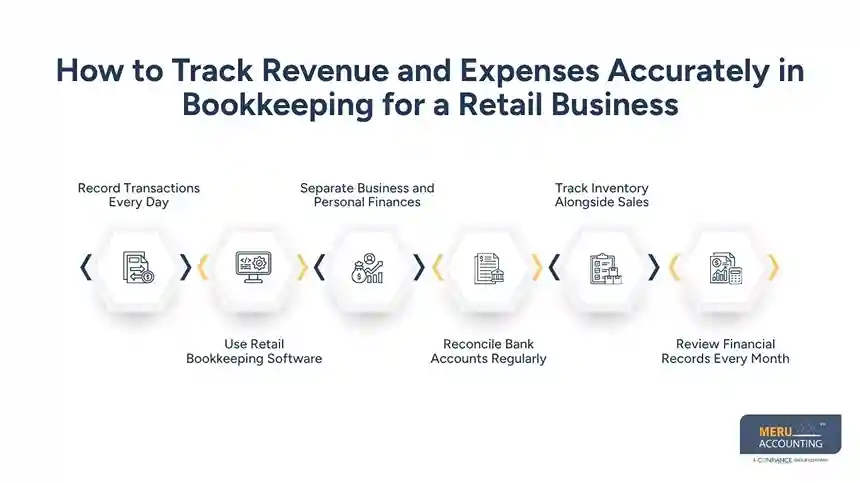
Reconcile Bank Accounts Regularly
Compare accounting records with bank statements every month to confirm that deposits, payments, and transfers match correctly. Regular reconciliation identifies missing transactions before they affect financial statements.
Track Inventory Alongside Sales
Inventory should update automatically whenever products are purchased, sold, returned, or written off. Connecting inventory records with accounting data keeps stock values and financial reports accurate.
Review Financial Records Every Month
Monthly reviews allow retail owners to compare revenue, expenses, inventory levels, and cash flow. Regular reviews help bookkeeping for retail businesses identify unusual spending patterns before they become larger financial issues.
How Retail Bookkeeping Software Simplifies Financial Tracking
Managing retail finances manually becomes more difficult as sales grow. Modern retail bookkeeping software automates routine accounting tasks, keeps financial records organized, and provides real-time business insights. Using retail bookkeeping software alongside bookkeeping for retail business creates a more reliable accounting process.
Automates Sales Recording
Every sale from the point-of-sale system can flow directly into the accounting records. This reduces manual data entry and lowers the chance of missing transactions. Automatic recording also keeps revenue reports current throughout the day.
Tracks Business Expenses
The software categorizes expenses such as rent, payroll, utilities, inventory purchases, and marketing costs into the correct accounting categories. Well-organized expense records make financial analysis and tax preparation much easier.
Connects With Inventory Management
Many retail bookkeeping software solutions connect inventory and accounting in one system. Product sales automatically update stock quantities and inventory values. This creates more accurate financial statements while reducing stock discrepancies.
Simplifies Bank Reconciliation
Bank feeds import transactions directly into the accounting system for faster reconciliation. Regular reconciliation confirms that accounting records match bank statements and identifies missing or duplicate entries quickly.
Generates Financial Reports
Financial statements such as profit and loss reports, balance sheets, and cash flow statements can be created within minutes. These reports allow retail owners to monitor business performance without waiting until year-end.
Essential Financial Reports Every Retail Business Should Review
Regular financial reporting is a key part of bookkeeping for retail businesses. Reviewing reports every month allows business owners to identify trends, monitor expenses, and make informed decisions.
Profit and Loss Statement
The profit and loss statement summarizes total revenue, operating expenses, and net profit for a selected period. Reviewing this report each month shows whether the business is earning enough to cover its costs.
Balance Sheet
A balance sheet shows business assets, liabilities, and owner’s equity at a specific date. It provides a clear picture of the company’s overall financial position.
Cash Flow Statement
Cash flow reports track money entering and leaving the business. Positive cash flow ensures enough funds are available for inventory purchases, payroll, rent, and other operating expenses.
Inventory Report
Inventory reports display stock quantities, inventory value, slow-moving products, and fast-selling items. Regular reviews reduce excess inventory while preventing stock shortages.
Sales Performance Report
As part of bookkeeping for retail businesses, sales reports compare product performance, customer demand, store locations, and seasonal trends. These reports help retailers identify their highest-performing products and improve purchasing decisions.
Expense Summary Report
Expense reports organize spending into categories such as payroll, rent, advertising, utilities, and inventory. Monthly reviews make it easier to identify unnecessary costs and maintain better financial control.
Why Choose Meru Accounting For Retail Bookkeeping
Retail businesses need accounting software that keeps pace with daily sales and changing inventory. At Meru Accounting, we provide an easy way to manage accounting tasks while keeping financial records accurate and organized.
Designed For Retail Businesses
At Meru Accounting, we record daily sales, track expenses, and organize financial information in one place, making bookkeeping for retail businesses more efficient and easier to manage. This reduces manual work while keeping business records current.
Smart Automation
Routine bookkeeping tasks are automated to reduce repetitive data entry. Automation saves time and creates more consistent accounting records.
Inventory and Sales Tracking
We connect inventory movement with accounting records, allowing retailers to monitor stock and revenue together. This creates better visibility into product performance.
Easy Financial Reporting
Generate profit and loss statements, balance sheets, cash flow reports, and other financial reports whenever needed. Real-time reporting allows faster business decisions.
Secure Cloud Access
Business owners can securely access financial information from any location with internet access. Cloud storage also protects important accounting records through regular backups.
Built To Grow With Your Business
Whether operating one retail store or several locations, Meru Accounting provides accounting tools that grow with your business while keeping bookkeeping for retail businesses simple and organized.
Our Expert Perspective
Our experience working with retail businesses has shown that consistent bookkeeping creates stronger financial control than year-end corrections. Businesses that review their records regularly often identify cash flow concerns, inventory issues, and unnecessary expenses much earlier than those that update their books only occasionally.
A structured approach to bookkeeping for retail businesses, combined with reliable retail bookkeeping software, allows retailers to spend less time correcting accounting records and more time serving customers and growing the business. Accurate financial information also creates greater confidence during tax preparation, budgeting, and business planning.
Key Takeaways
- Accurate bookkeeping for retail business records every sale and expense.
- Daily bookkeeping reduces errors and keeps financial records current.
- Revenue and expenses should always be categorized correctly.
- Inventory tracking should remain connected with accounting records.
- Monthly financial reviews reveal business performance and spending trends.
- Retail bookkeeping software reduces manual work through automation.
- Financial reports provide valuable information for planning and budgeting.
- Organized bookkeeping simplifies tax preparation and compliance.
FAQs
Bookkeeping for retail business is the process of recording sales, purchases, inventory, expenses, and other financial transactions. It keeps financial records accurate and prepares the business for reporting and tax filing.
Retail bookkeeping software records transactions automatically, tracks inventory, organizes expenses, and generates financial reports. It reduces manual work and improves accounting accuracy.
Retail businesses should record transactions every day and review financial reports at least once each month. Regular updates keep financial records accurate and current.
Retail businesses should review the profit and loss statement, balance sheet, cash flow statement, inventory report, sales report, and expense report every month.
Meru Accounting automates bookkeeping tasks, records daily sales, tracks expenses, connects inventory with accounting records, and generates financial reports, making retail accounting easier to manage.
optional anymore
on running the business