
Restaurant owners need to track sales, tips, payroll, income, and other tax items to stay compliant. The tax rules can vary by state, city, business type, and the type of sale. So, what is restaurant tax? The term does not refer to a single federal tax. It is a broad term for the different taxes and tax duties that may apply to a restaurant. These can include sales tax, income tax, payroll tax, and other state or local taxes.
Understanding restaurant tax helps owners know what they may need to collect, what they may need to pay, and what records they should keep. This guide explains the main tax duties restaurants may face and how maintaining records can help keep tax preparation on track.
What You Will Learn From This Blog
In this guide, you will learn:
- What is restaurant tax, and how does it work?
- Who may pay or collect restaurant tax
- How much is restaurant tax in general
- The main taxes that can affect a restaurant
- How restaurants can track and pay their tax duties
- How tax prep and good books can help reduce errors
Note: Tax rules vary by state and local area. This guide gives general U.S. tax information and is not a substitute for state or local tax advice.
What Is Restaurant Tax?
In simple terms, restaurant tax is a general term for taxes that may apply to a restaurant and its sales. There is no single federal “restaurant tax” that every restaurant pays at one fixed rate.
A restaurant may have to deal with several tax types. For example, it may collect sales tax from customers on taxable sales. It may also owe federal income tax based on its business structure. If it has workers, it has payroll tax duties as well.
State and local rules can also affect food and drink sales. Some areas tax restaurant meals, while other areas have different rules for certain food sales. The tax rate can also vary by location. This is why restaurant owners should not use one tax rate for every sale. They should first know which sales are taxable and which rate applies to each sale.
Tips also need careful handling. The IRS says tips are income to employees and are generally subject to federal income tax, Social Security tax, and Medicare tax. Mandatory service charges are treated differently from tips for federal tax purposes.
Who Has to Pay Restaurant Tax?
Restaurant tax duties can fall on both the restaurant and its workers. The exact duty depends on the tax involved.
For sales tax, the customer may pay the tax as part of the bill. The restaurant then collects the tax and sends it to the state or local tax agency when required. In this case, the restaurant is handling the tax rather than treating the collected amount as its own income.
Restaurant owners may also owe income tax based on the profit of the business. The way that tax is handled depends on the business structure. The IRS notes that the form of business affects which taxes apply and how they are paid.
Restaurants with employees also have payroll tax duties. These can include withholding federal income tax and the employee share of Social Security and Medicare taxes. Employers also pay their share of Social Security and Medicare taxes and may have federal unemployment tax duties.
Workers also have tax duties. Employees must report their tips to their employer when the federal reporting rules apply. For example, employees who receive $20 or more in cash tips in a month must report those tips to the employer by the 10th day of the next month.
How Much Is Restaurant Tax?
There is no one answer for every U.S. restaurant.
The amount can depend on the state, county, city, type of sale, and tax involved. A restaurant in one city may have a different sales tax rate from a restaurant in another city. Some food sales may also have different tax treatment from prepared meals.
For example, if a restaurant has a taxable sale of $100 and the combined sales tax rate is 8%, the customer would pay $8 in sales tax. The total bill before any other charges would be $108.
This example is only for showing how the math works. It does not mean that every restaurant has an 8% restaurant tax rate.
Restaurants should also keep sales tax separate from revenue in their books. Sales tax collected from customers is generally a tax liability that the business holds until it is due to the tax agency.
The same care is needed with tips and service charges. A voluntary tip is not the same as a mandatory service charge under federal tax rules. The IRS says a service charge paid to an employee is treated as wages, while a true voluntary tip is treated as a tip.
What Types of Taxes Do Restaurants Pay?
A restaurant can face several tax duties. The list below covers some of the main ones.
Sales Tax
Sales tax is one of the key tax items for many restaurants. If the state or local area taxes a restaurant sale, the business may need to charge the tax to the customer, record it, file a return, and send the tax to the right agency.
The exact rules vary by state and local area. Restaurants should check the rules where they operate instead of relying on a general rate.
Federal and State Income Tax
A restaurant may owe income tax on its taxable profit. The way the tax is reported depends on its business structure.
A sole proprietor may report business income on an individual return. A partnership has its own filing rules. Corporations and S corporations have different tax rules.
The IRS lists income tax as one of the main types of federal business tax.
Payroll Taxes
Restaurants with staff must handle payroll taxes with care. These can include federal income tax withholding, Social Security, Medicare, and federal unemployment tax.
Tips are also part of the payroll picture. Employers must keep tip records, withhold taxes as required, and report the right amounts on payroll forms.
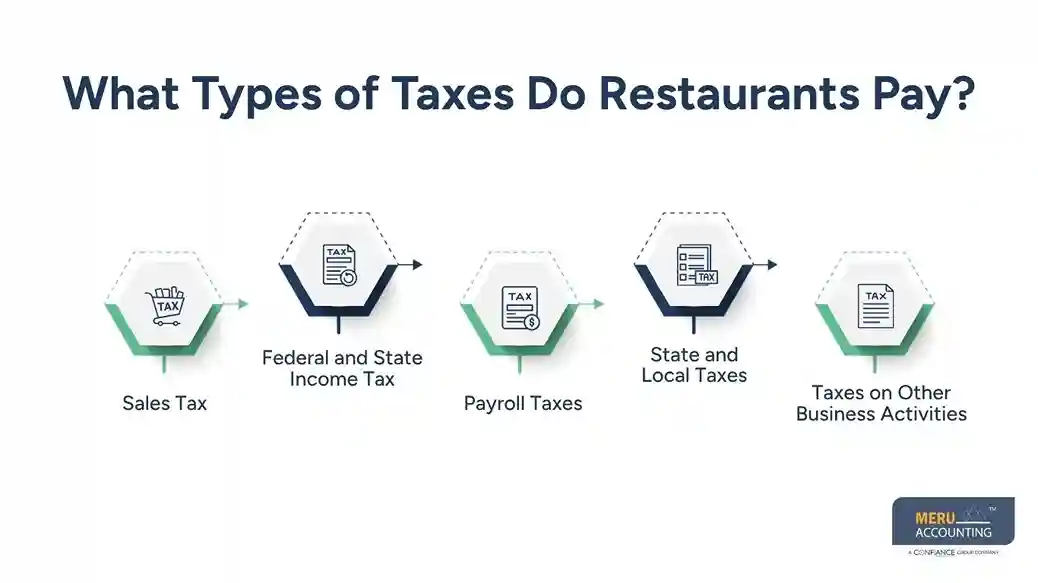
State and Local Taxes
A restaurant may also face state or local taxes based on where it operates. These can include state income taxes, local business taxes, gross receipts taxes, or other taxes that apply to the business.
Because these rules can differ by location, restaurant owners should review the rules for each location where they operate.
Taxes on Other Business Activities
A restaurant may also have tax duties tied to other activities. For example, a business may sell merchandise, provide catering, or operate more than one location.
Each revenue stream should be tracked in a way that lets the restaurant review the correct tax treatment.
optional anymore
on running the business
How Do Restaurants Calculate and Pay Their Taxes?
Good tax work starts with good daily records. A restaurant should not wait until tax time to sort out months of sales and expense data.
A simple process can help:
Track Daily Sales
Record sales from the POS system and match them with payment records. Cash, card, online, and delivery sales should be tracked in a clear way.
Separate Tax From Sales
Track sales tax as a liability rather than mixing it with sales income. This makes it easier to see how much tax has been collected and may be due.
Track Tips and Service Charges
Keep voluntary tips separate from mandatory service charges. The IRS treats these amounts in different ways for federal tax purposes.
Reconcile Bank and POS Records
Compare POS sales, bank deposits, card payments, and other payment records. This can help find missing sales, duplicate entries, or timing issues.
Track Payroll
Keep payroll, wages, tips, and tax withholding records up to date. Restaurants with tipped staff need extra care because tip data can affect payroll reports.
File and Pay on Time
Tax returns and payments must follow the deadlines set by the relevant tax agency. Late filing or payment can lead to penalties and interest.
Large food and beverage establishments may have extra federal tip reporting duties. For example, eligible establishments may need to file Form 8027 each year.
Restaurant Tax Preparation Services by Meru Accounting
Restaurant tax preparation can take time, especially when sales, payroll, tips, service charges, and expenses come from many sources. Meru Accounting can help restaurant owners keep their tax records in order and prepare for filing.
Our restaurant tax preparation services include:
- Organizing income and expense records
- Reviewing sales and tax records
- Reconciling POS and bank data
- Tracking restaurant expenses
- Reviewing payroll and tip records
- Preparing financial data for tax filing
- Helping keep books ready for tax work
With a clear process, restaurant owners can spend less time sorting records and more time running the business.
If your restaurant has more than one location, a high volume of sales, or a large team, clean records become even more important. A strong bookkeeping process can also make it easier for your tax professional to review the books before a return is filed.
Our Expert Insight
From a restaurant accounting view, the biggest tax risk is often not the tax rate itself. It is the gap between what the POS shows, what the bank receives, and what the books report. A restaurant can have many sales channels, such as dine-in, takeout, delivery apps, catering, gift cards, and online orders. Each channel may report sales and fees in a different way. If these records are not reviewed, the books may show numbers that do not match the restaurant’s actual activity.
We also recommend looking at tax liabilities before the filing date, not after it. A monthly review can help owners spot unusual sales tax balances, missing deposits, payroll issues, or large changes in taxable sales early. For growing restaurants, tax planning should also be part of the business plan. Opening another location, changing the business structure, adding catering, or using new delivery channels can change the tax work involved.
Our key advice: Do not treat restaurant tax as a year-end task. Build tax checks into your regular bookkeeping process. This gives restaurant owners a better view of what they owe and helps reduce last-minute tax issues.
Key Takeaways
- Restaurant tax is a broad term, not a single federal tax.
- Restaurants may collect sales tax on taxable sales.
- Restaurant owners may owe income tax based on their business structure and taxable income.
- Restaurants with employees have payroll tax duties.
- Tips and mandatory service charges are not treated the same for federal tax purposes.
- How much is restaurant tax depends on the tax type, location, and facts of the sale.
- Sales, tax, tips, payroll, and expenses should be tracked in clear records.
- POS, bank, and accounting records should be reconciled on a regular basis.
- Large food and beverage establishments may have extra tip reporting duties, including Form 8027 requirements.
- Working with a tax and bookkeeping professional can help a restaurant stay ready for its filing duties.
FAQs
Many restaurants must charge sales tax on taxable food and beverage sales, but the rules vary by state and local area. Restaurant owners should check the tax rules that apply to their location and the type of sale.
The customer typically pays sales tax as part of the bill, while the restaurant collects and remits it to the required tax agency. The restaurant is responsible for keeping accurate records and filing the required sales tax returns.
Yes. Restaurant tax is a broad term for the taxes that may affect a restaurant. Sales tax is only one type. Restaurants may also have income tax, payroll tax, and state or local tax obligations.
It depends on the state, local tax rules, and how the order is handled. Delivery, takeout, catering, and dine-in sales can have different tax rules in some locations. Restaurants should review the rules for each sales channel they use.
Depending on the facts and applicable tax rules, common business expenses may include food and supplies, wages, rent, utilities, equipment, insurance, advertising, and professional fees. Restaurants should keep records that support each business expense claimed.
optional anymore
on running the business