
Restaurants struggle with bookkeeping due to fast-paced operations and fluctuating revenue. Accounting in restaurant industry can also be complex due to the high volume of sales, expenses, payroll, and inventory transactions. Another reason can be due to the lack of dedicated accounting knowledge. Just because of the lack of accurate tracking of sales, expenses, and payroll, restaurants often face cash flow issues, tax errors, and poor financial decision-making. To avoid this, we can implement an organized approach with restaurant bookkeeping services.
Restaurant owners can regularly reconcile accounts, track expenses diligently, and hire or consult with a professional accountant to avoid the above from happening. They can also prioritize timely financial reviews to catch discrepancies early, which ensures their restaurant remains financially healthy and compliant. In this blog, we will see how effective restaurant bookkeeping services can help prevent costly mistakes and support long-term success.
What You Will Learn From This Blog
- Common bookkeeping struggles faced by restaurants
- How restaurant bookkeeping services help track sales, costs, and cash flow
- Ways to manage POS, payroll, and stock records
- Best ways to track food and labor costs
- How clean books can help with tax preparation and key business choices
What Are Restaurant Bookkeeping Services and Why Do They Matter?
Restaurant bookkeeping services usually track daily financial transactions. This includes sales, expenses, inventory, and payroll. These activities are important parts of accounting in restaurant industry because they help maintain accurate financial records for tax reporting, budgeting, and business decisions. Restaurants also face unique challenges such as fluctuating revenue, varying costs, and high employee turnover, making organized bookkeeping crucial.
With the help of proper restaurant bookkeeping services, it helps to identify cost-saving opportunities and monitor cash flow. This helps improve expense accuracy and gives owners better visibility into profitability. Here, practices must include using accounting software that ensures all records are correct and are periodically reconciled with the accounts.
10 Common Restaurant Bookkeeping Challenges That Hurt Profitability
These challenges can lead to bookkeeping mistakes when restaurants do not have consistent systems for recording, reconciling, and reviewing financial information.
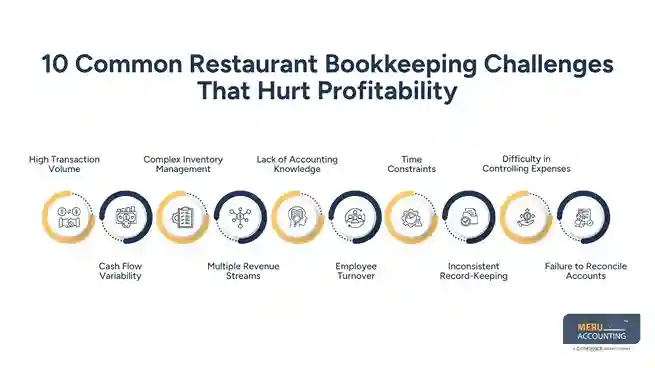
- High Transaction Volume: The restaurant industry handles a high volume of daily transactions, which include sales, tips, supplier payments, and employee wages. There is a requirement to keep track of all these efficiently, which can be overwhelming without proper systems in place.
- Cash Flow Variability: Sales in restaurants can fluctuate based on various factors. This includes seasons, weather, holidays, and customer preferences. This variability makes it difficult to predict and manage cash flow, leading to bookkeeping errors.
- Complex Inventory Management: The availability of food and beverage inventory is complicated. This is due to the variability in prices and quantities, which change frequently. The inaccurate records lead to financial errors, affecting profitability and decision-making.
- Multiple Revenue Streams: The restaurants often have a variety of revenue streams. The tracking and categorization of such streams can be cumbersome, further creating confusion and mistakes in financial records.
- Lack of Accounting Knowledge: Many restaurant owners and managers lack formal accounting training, which can make accounting in restaurant industry more challenging. This can result in improper classification of expenses and missed deductions, as well as tax filing mistakes that can lead to costly penalties.
- Employee Turnover: High employee turnover is common in the restaurant industry. This means frequent changes in payroll processing, which can lead to errors in tracking wages, taxes, and benefits.
- Time Constraints: Restaurant owners and managers often focus on customer service and daily operations, leaving less time for bookkeeping. This can result in messy records, missed deadlines, and less control over finances.
- Inconsistent Record-Keeping: Some restaurants still rely heavily on paper receipts or spreadsheets to track transactions. This can make it harder to record and review transactions quickly and accurately.
- Difficulty in Controlling Expenses: The restaurants incur significant costs for food and beverages, utilities, and labor expenses. Proper categorization and accounting for these expenses are crucial to avoid unnecessary overspending.
- Failure to Reconcile Accounts: The absence of regular reconciliation of bank statements, credit card charges, and cash deposits lapses go unnoticed. In big financial terms, these can be very problematic and demand immediate action.
How Restaurant Bookkeeping Services Help Avoid Common Financial Struggles
Restaurant bookkeeping services help keep sales, costs, payroll, and other key records in order. A clear process can help spot errors, track costs, and give owners a better view of cash flow and profit.
Daily Sales and POS Reconciliation
Bookkeepers match POS sales with bank deposits, card sales, and cash. This helps find missing deposits, wrong entries, and sales gaps.
Expense and Vendor Tracking
Bookkeepers track food, drinks, rent, power, supplies, and other costs. They also keep vendor bills and pay data in order. This helps owners track spend and spot cost spikes.
Payroll and Labor Cost Tracking
Payroll records show wages, hours, taxes, and other pay data. Good records help owners track labor costs and see how labor spend ties to sales.
Inventory and Food Cost Monitoring
Regular stock checks help track food use, waste, and cost. This can help spot waste, bad buys, and food cost hikes that can cut profit.
Monthly Financial Reporting
Monthly reports give owners a clear view of the books. Key reports can include the profit and loss sheet, balance sheet, and cash flow report. These reports help track sales, costs, profit, and cash.
Tax-Ready Financial Records
Clean books keep sales, costs, pay, and bills in order. This can make tax prep smoother and help cut the risk of missed or wrong data.
Best Practices to Improve Restaurant Bookkeeping Efficiency
- Implement Accounting Software: The use of restaurant-specific accounting software automates and streamlines transactions that help in tracking and invoicing. This reduces manual errors and saves time.
- Hire a Professional Accountant: By employing an accountant or bookkeeper with experience in the restaurant industry, restaurants can strengthen accounting in restaurant industry, improve financial management, and support tax compliance.
- Set a Regular Reconciliation Schedule: The reconciliation of accounts weekly or monthly can help identify discrepancies early. This ensures your financial records are always up-to-date.
- Organize Financial Documentation: There is a need to keep digital or physical records organized by categorizing receipts, invoices, and expenses. This helps simplify tax filing and audits.
- Track Inventory Regularly: Implementation of an inventory management system that tracks stock levels, usage, and waste. By regularly reviewing this data, one can optimize purchasing and reduce costs.
- Monitor Cash Flow Consistently: Owners need to maintain close oversight of cash flow by tracking sales, expenses, and payments. They can use forecasting to predict income and manage operational costs effectively.
- Train Staff on Payroll Systems: Owners should ensure payroll processes are standardized, with clear guidelines and training to reduce errors and delays in wage calculation.
- Schedule Financial Reviews: By regularly reviewing financial reports with management to identify trends and spot potential issues. This makes them take informed decisions.
In conclusion, effective bookkeeping is essential in running any restaurant successfully and profitably. Keeping track of all expenses, sales, payroll, and inventories will determine financial stability. Therefore, such risks associated with poor bookkeeping can be largely mitigated if an organized system, such as accounting software and regular reconciliations, has professional oversight.
Meru Accounting’s Restaurant Bookkeeping Services
Meru Accounting provides restaurant bookkeeping services designed around the financial needs of restaurants. Our team understands the specific requirements of accounting in restaurant industry and helps restaurants organize daily transactions, reconcile accounts, track operating costs, and maintain accurate financial records. Our restaurant bookkeeping services include:
- Sales reconciliation – Compare recorded restaurant sales with deposits and payment records.
- POS reconciliation – Match POS transactions with accounting records to identify discrepancies.
- Expense tracking – Categorize and monitor food, beverage, utilities, rent, supplies, and other operating expenses.
- Vendor payments – Keep vendor invoices and payments organized for better control over outstanding obligations.
- Payroll records – Maintain organized payroll records and track labor-related costs.
- Inventory tracking – Monitor inventory purchases, usage, and stock levels to support better cost control.
- Food cost monitoring – Track food-related costs to help restaurants understand changes in margins and profitability.
- Labor cost monitoring – Review labor expenses alongside sales to help identify changes in operating costs.
- Bank reconciliation – Match bank activity with accounting records and identify missing or incorrect transactions.
- Financial reporting – Prepare financial reports that help restaurant owners review revenue, expenses, profitability, and cash flow.
- Tax-ready records – Maintain organized financial records to make tax preparation and reporting more efficient.
Our Expert Insight
Restaurant bookkeeping is most effective when sales, expenses, payroll, inventory, and bank activity are reviewed as one connected financial system. Regular reconciliation and monthly reporting can help restaurant owners spot unusual costs, cash flow issues, and changes in profitability before they become larger problems.
From our experience, restaurants often face bookkeeping issues when financial records are not updated on time. A set process for daily sales, vendor bills, payroll, and bank activity can make it easier to keep the books clean as the business grows. Professional restaurant bookkeeping services can also give owners more time to focus on day-to-day operations.
Key Takeaways
- Keep daily sales and POS data in sync with bank and card records.
- Track food, labor, and other key costs on a set plan.
- Keep payroll, vendor, and stock data in order.
- Check key reports each month to track sales, costs, and cash.
- Use restaurant bookkeeping services when daily bookkeeping takes time away from core tasks.