Imagine a SaaS firm gets a $24,000 payment from a client on Jan 1 for a two-year plan. The cash is in the bank, but the firm has not yet earned all $24,000. This is where saas accounting software is more than a tool to log cash. It must show what was paid, what was made, what is due, and what is for a later time.
For a firm that sells plans, small gaps in these records can grow as the client base grows. A missed refund, wrong bill, or bad plan for sales can harm the books. The right saas accounting software brings these tasks into one workflow, so the books give a clear view.
What You Will Learn From This Blog
- How saas accounting software fits the way subscription businesses earn revenue.
- Why recurring plans create accounting issues that one-time sales may not.
- Which features matter when choosing saas accounting software.
- How accounting software for SaaS companies can handle recurring revenue.
- How deferred revenue and revenue recognition work in SaaS.
- Which SaaS metrics should sit beside the main financial reports.
- What a finance team should check before choosing its accounting system.
What is SaaS Accounting Software and Why Does it Matter for Subscription Businesses?
SaaS accounting software is made for firms that sell plans on a set cycle, such as monthly, yearly, usage-based, or mixed plans. It helps track bills, client payments, costs, sales, and key financial data. This is key as a SaaS firm grows, as it can be hard to track data by hand for many plans and keep the data right.
Bank cash alone does not show when a sale is earned. SaaS accounting software helps firms track when sales are earned.
For example, if a client pays $12,000 up front for a one-year plan, the full sum may go into the bank at once. But the sale is often booked over the time the plan is in use, based on the right rules.
The system can also track accounts due from clients, bills due to firms, deferred revenue, costs, and profit. This gives the finance team a clear view of the books at month-end.
SaaS firms also deal with plan upgrades, plan cuts, pauses, quits, refunds, and use-based fee changes. So, their books must show these events in the right way.
Accounting software for SaaS companies can link client payments with bills and, where used, the right plan data. This gives the firm a clear trail of each sale and payment event. It also makes it easy to check deals, match bank data, make reports, and keep clean books as the firm grows.
Key Accounting Challenges For Subscription-Based SaaS Businesses
Recurring Billing Changes
Subscription plans rarely stay still. A customer may move from a $50 plan to a $100 plan, add users, receive a discount, or cancel before the next renewal.
Each change can affect invoices, payments, revenue, and reports, so saas accounting software should capture the full story.
Deferred Revenue
A customer may pay before the company provides the full service. That money cannot always be treated as earned revenue at once.
This is one reason accounting software for SaaS companies needs proper deferred revenue tracking.
Failed Payments
A failed payment does not always mean the customer has left. The card may be retried, the customer may update payment details, or the bill may remain unpaid.
The finance team needs to know which invoices are open and how long they have been outstanding.
Tax Across States
A SaaS firm can sell to customers in many states without having a physical office in each one. Tax rules can vary based on the state, product, customer, and transaction.
The accounting setup should therefore keep tax data clear and make review easier.
Data From Many Tools
Billing data may sit in one system, bank activity in another, payroll in another, and expenses in yet another. If those systems do not connect well, finance teams may spend too much time matching records.
The goal is not to remove every manual check. It is to reduce avoidable work while keeping important checks in place.
Best SaaS Accounting Software Features To Look For
Subscription Revenue Recognition
One of the most important features of saas accounting software is revenue recognition. The system should let the business record revenue in the period in which it is earned under the accounting rules that apply.
For US businesses, ASC 606 provides the framework for revenue from contracts with customers. The exact treatment can depend on the contract and performance obligations.
Recurring Billing and Invoicing
Recurring billing should not mean creating the same invoice by hand every month. Saas accounting software can automate repeat invoices based on the plan, price, billing date, and customer terms.
It should also account for upgrades, downgrades, credits, discounts, and refunds when they occur.
Deferred Revenue Tracking
Consider a customer who pays $12,000 for a 12-month plan. The business has the cash, but the service still needs to be provided over the year.
A good system can keep the unearned amount as deferred revenue and release the related amount as revenue based on the firm’s accounting policy.
Accounts Receivable and Payment Tracking
The finance team should be able to see unpaid invoices without searching through separate files. The system should show due dates, payment status, failed payments, and past-due amounts.
For businesses with many customers, accounting software for SaaS companies can make it easier to match payments with the correct invoices.
Expense and Accounts Payable Management
SaaS costs can include cloud hosting, software tools, advertising, payroll, legal fees, contractors, and office costs.
Saas accounting software should record these costs in the right accounts and periods, while giving the team a clear view of bills that still need to be paid.
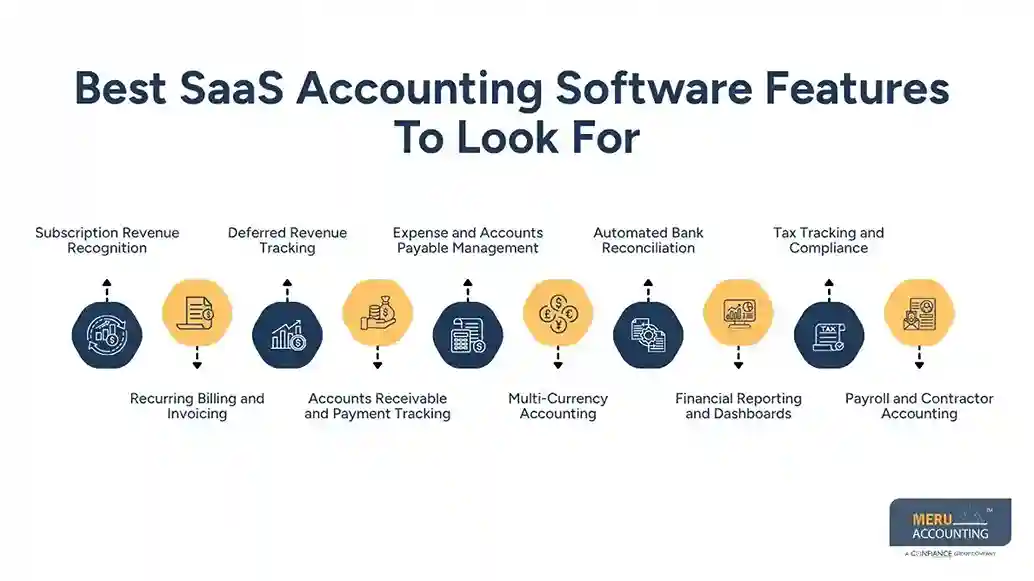
Multi-Currency Accounting
Selling outside the home market adds another layer to the books. A customer may pay in EUR while the company’s main books are kept in USD.
The system should record the transaction in the right currency and account for exchange-rate changes under the applicable accounting rules.
Automated Bank Reconciliation
Bank recs can seem easy, but they get hard when there are lots of bank transactions. Precise SaaS accounting software can match bank data with the deals in the books. Still, the finance team should check any odd or unmatched items before the books are closed.
Financial Reporting and Dashboards
A good dashboard should give clear facts: How much cash do we have? What do clients owe? What bills are due? How much did we earn this month? Accounting software for SaaS companies should give key reports such as the income statement, balance sheet, cash flow, accounts due from clients, and bills due to vendors.
Tax Tracking and Compliance
Tax data should link back to the deals that led to it. This is key when a SaaS firm sells in many states or lands. Tax laws can change, so firms should not use the software as a stand-in for tax review when a deal or tax filing is hard or has risk.
Payroll and Contractor Accounting
Staff costs are often one of the top costs for a SaaS firm. Payroll may cover pay, bonus pay, tax, perks, and other staff costs. Contractors may get paid through other tools.
SaaS accounting software should bring these costs into the books in the right time span and the right account.
How Accounting Software For SaaS Companies Handles Recurring Revenue
Links Plans to Bills
Accounting software for SaaS companies can connect customer plans with recurring invoices. This reduces the need to rebuild the same billing details each month.
The finance team can then focus more on exceptions instead of entering routine data.
Tracks Plan Changes
Suppose a customer starts at $500 per month and upgrades to $900 halfway through the billing period. The change may affect the invoice and the revenue schedule.
A good system should keep that change visible rather than leaving finance staff to work it out from separate records.
Records Payments
Once the customer pays, the payment should be matched to the correct invoice. This keeps accounts receivable from showing a bill that has already been settled.
It also gives the finance team a cleaner record during month-end reconciliation.
Tracks Refunds and Credits
Refunds can create confusion when billing and accounting systems do not agree. A customer may receive money back, but the related invoice and revenue records must also reflect the change.
Saas accounting software should keep these adjustments visible and traceable.
Separates Metrics From Revenue
MRR can tell a SaaS firm how much recurring income is tied to active subscriptions. It is not the same as GAAP revenue.
Keeping these figures separate prevents the common mistake of treating a business metric as an accounting figure.
optional anymore
on running the business
Revenue Recognition And Deferred Revenue In SaaS Accounting
When Cash Comes First
A customer can pay before the related service is provided. That creates a timing difference between cash and revenue.
For subscription businesses, this is common enough that the accounting process needs a clear way to track it.
When Service is Given
For a simple annual subscription, revenue may be recognized over the service period as the company satisfies its performance obligation.
The actual treatment depends on the contract and the accounting framework used by the business.
Why Timing Matters
Imagine a SaaS firm closes a $120,000 annual deal in January. If the whole amount appears as January revenue when the service runs through December, the monthly results may not reflect the actual service period.
Good saas accounting software keeps the cash and revenue timing distinct.
Contract Changes Matter
A customer may add seats, change plans, receive a credit, or extend a contract. These changes can affect the accounting treatment.
The finance team should review the contract terms and accounting policy rather than relying on an automatic entry alone.
Reports Need a Clear Audit Trail
When someone asks, “Why does this revenue number look like this?” the answer should be traceable.
Accounting software for SaaS companies should make it possible to follow the amount from the customer contract or invoice through the accounting entry and final report.
SaaS Metrics Your Accounting Software Should Help Track
Monthly Recurring Revenue
MRR shows the recurring income linked to active subscriptions for a month. It can show how recurring sales change as customers join, leave, or change plans.
It should still be kept separate from recognized accounting revenue.
Annual Recurring Revenue
ARR gives a yearly view of recurring subscription income. SaaS accounting software can help keep the financial data used alongside ARR organized for planning and management reports.
The calculation should be defined clearly so everyone on the finance and management teams uses the same method.
Customer Churn
Churn shows how much customer loss occurs over a given period. A rise in churn can affect future recurring sales even when current revenue still looks strong.
The accounting system may provide some of the needed data, while customer or billing tools may hold the rest.
Customer Acquisition Cost
CAC looks at the cost of gaining customers. It often needs sales and marketing data in addition to accounting records.
Using one source alone can give an incomplete picture of acquisition cost.
Lifetime Value
LTV estimates the value linked to a customer over the customer relationship. The formula can vary by business, so the method should be stated before the metric is used in reports or compared with data from saas accounting software.
How Meru Accounting Provides SaaS Accounting Services
A SaaS business can have strong sales and still face messy books if billing, payments, expenses, and revenue are not kept in sync. Meru Accounting provides accounting and bookkeeping services that bring these finance tasks into a structured process.
Our services can cover bank reconciliation, accounts payable, accounts receivable, payroll accounting, monthly bookkeeping, and financial reporting. For subscription businesses, the work can also include review of recurring billing data, deferred revenue, payment records, and the link between billing activity and the general ledger.
Saas accounting software is a tool, not a substitute for review. The system still needs the right rules, account setup, checks, and month-end process. Meru Accounting provides services with attention to these areas so SaaS businesses can maintain clearer financial records as their subscription base grows.
Our Expert Perspective
At Meru Accounting, we view SaaS accounting as a process that links billing, payments, deferred revenue, earned revenue, and financial reports. As plans change due to upgrades, cancellations, refunds, and credits, saas accounting software can help keep accounting records in line with the real data, while regular checks help maintain accuracy and follow key accounting rules.
A clear audit trail also makes it easy to find gaps and check monthly results. Keeping SaaS metrics such as MRR and ARR apart from recognized revenue helps keep financial reports clear and easy to review.
Key Takeaways
- SaaS accounting software should match how a firm bills and earns sales.
- Recurring bills alone are not enough; the time of each sale also matters.
- Deferred revenue should be tracked when a client pays before the sale is earned.
- Accounting software for SaaS companies should link bills, pay, costs, banks, and reports where it can.
- Refunds, credits, plan changes, and cuts need clear and correct book entries.
- MRR and ARR are useful SaaS metrics but should not be shown as GAAP revenue.
- Tax, pay, and multi-currency needs should be part of the software check.
- Auto entries still need a human check when data looks odd.
- A clear audit trail makes month-end checks and book reviews easier.
- The best setup is one that fits the firm’s plans, accounting rules, and report needs.
FAQs
SaaS accounting software should have recurring billing, revenue rules, deferred revenue tracking, payment tools, bank checks, tax tools, and clear reports.
Revenue recognition makes sure SaaS sales are put in the right time span based on when the service is given.
SaaS firms should track recurring bills, paid amounts, plan shifts, refunds, and revenue plans to keep sales data accurate.
Upfront subscription payments should, in most cases, be set as deferred revenue and then shown as revenue over the service term.
Firms should look at revenue rules, subscription billing, links to key tools, reports, scale, multi-currency use, tax tools, and the level of automation.
optional anymore
on running the business