Managing money with SaaS outsourced accounting can feel overwhelming. There are many things to keep track of: subscriptions, customer payments, payroll, taxes, and other transactions. If anything slips through the cracks, it can affect records and make financial reviews stressful.
That’s where outsourced accounting comes in. By letting experienced professionals handle the tricky parts, you can be sure your financial records are always up to date and organized. They’ll track every dollar, manage reports, and make sure nothing gets missed.
As your SaaS company grows, these financial tasks only get more complicated. Outsourced accounting helps lighten the load for the working teams. Instead of getting buried in paperwork and spreadsheets, you can spend more time helping clients with growth.
What You Will Learn From This Blog
- How SaaS outsourced accounting supports growing SaaS businesses.
- Why SaaS companies need accurate financial records.
- How accounting services for SaaS companies manage recurring transactions.
- Common accounting challenges faced by SaaS businesses.
- Ways to improve cash flow, reporting, and expense tracking.
- How outsourced accounting supports financial planning.
- When SaaS companies should consider accounting outsourcing.
How SaaS Outsourced Accounting Supports SaaS Companies
SaaS outsourced accounting helps businesses manage financial tasks. Subscription billing and recurring payments need accurate tracking. Customer refunds and deferred revenue also require proper records.
Consistent processes help organize these financial activities effectively. An outsourced team can manage daily bookkeeping tasks. It can also handle reconciliations, reporting, and transaction recording. This gives SaaS businesses organized financial information without expanding teams.
Managing Recurring Revenue And Subscriptions
SaaS companies often earn revenue from monthly subscriptions. Some customers may upgrade, downgrade, cancel, or change plans. These changes can affect revenue records and financial reporting. SaaS outsourced accounting helps record subscription income accurately.
Regular reviews can identify payment differences and customer refunds. They can also identify credits and outstanding balances. Accounting services support recurring revenue tracking across customer accounts. Clear records help businesses understand revenue and payment activity.
Tracking Business Expenses
SaaS businesses manage operating expenses across several areas. These may include software, cloud hosting, salaries, and marketing. They can also include office costs and professional services. Proper expense tracking shows where business money gets spent. SaaS outsourced accounting organizes expenses into suitable categories.
These categories support financial reporting and regular expense reviews. Accounting services for SaaS companies can maintain supporting records. Organized receipts and invoices simplify monthly accounting tasks. Payment records also make financial reviews easier to manage.
Maintaining Accurate Financial Records
Accurate financial records help businesses make better decisions. SaaS companies need reliable revenue and expense information. They also need accurate records for receivables, cash, and liabilities. SaaS outsourced accounting provides regular bookkeeping and reconciliation support.
These processes help identify missing or duplicate transactions. They can also reveal other recordkeeping issues. Accounting services for SaaS companies can prepare reports using updated records. This gives business owners clearer information for financial reviews.
Key Accounting Challenges For SaaS Businesses
SaaS businesses often handle large volumes of recurring transactions. Their accounting processes may become more complicated as customers, subscriptions, and operating costs increase.
Accounting services can help businesses manage these financial activities through organized workflows. Consistent accounting also helps reduce errors and improve financial visibility.
Revenue Recognition And Deferred Revenue
SaaS companies may receive payments before providing the full service period. Annual subscriptions are a common example of this arrangement. The timing of cash received may differ from the timing of revenue recognition.
SaaS outsourced accounting can help businesses maintain records that distinguish received payments from recognized revenue. This supports more accurate financial reporting.
Accounting teams can also review subscription records regularly. This helps businesses maintain clearer information about current revenue and future service obligations.
Accounts Receivable And Customer Payments
Customer payments are an important part of SaaS cash flow. Delayed payments can affect available funds and make financial planning more difficult.
SaaS outsourced accounting can help track unpaid invoices and customer balances. Regular accounts receivable reviews show which payments are pending or overdue.
Accounting services can also support payment matching and transaction records. This helps businesses maintain accurate customer balances and reduce confusion around outstanding amounts.
Managing Payroll And Operating Costs
SaaS companies often have significant employee and technology costs. Salaries, contractor payments, cloud services, software subscriptions, and marketing expenses can make up a large portion of monthly spending.
SaaS outsourced accounting helps businesses record these costs consistently. Regular expense reviews can show where operating funds are being used.
Accounting services can also organize payroll-related accounting records. Clear payroll and expense information supports monthly reporting and financial planning.
optional anymore
on running the business
How Accounting Services For SaaS Companies Improve Financial Control
Strong financial control requires more than recording transactions. SaaS companies also need regular reconciliation, reporting, budgeting, and cash flow monitoring.
SaaS outsourced accounting can connect these activities through a structured accounting process. This gives management better access to financial information and helps maintain consistent records.
Bank And Payment Reconciliation
Bank reconciliation compares accounting records with bank activity. Payment reconciliation also helps match recorded customer payments. Regular reconciliation can identify missing or duplicate transactions. It can also reveal incorrect amounts and timing differences. These checks help businesses maintain cleaner financial records.
SaaS outsourced accounting can include scheduled account reconciliations. These may cover bank accounts and payment platforms. Accounting services for SaaS companies can support these reviews. They can also help resolve unexplained account differences.
Financial Reporting And Performance Review
Accounting services for SaaS companies need regular reports to understand their financial position. Reports can include profit and loss statements, balance sheets, cash flow reports, and accounts receivable summaries.
SaaS outsourced accounting helps keep reporting information current and organized. Management can use these reports to review revenue, expenses, cash, and overall financial performance.
Accounting services for SaaS companies can also prepare reports based on the company’s reporting schedule. Monthly reporting may work for some businesses, while growing companies may need more frequent reviews.
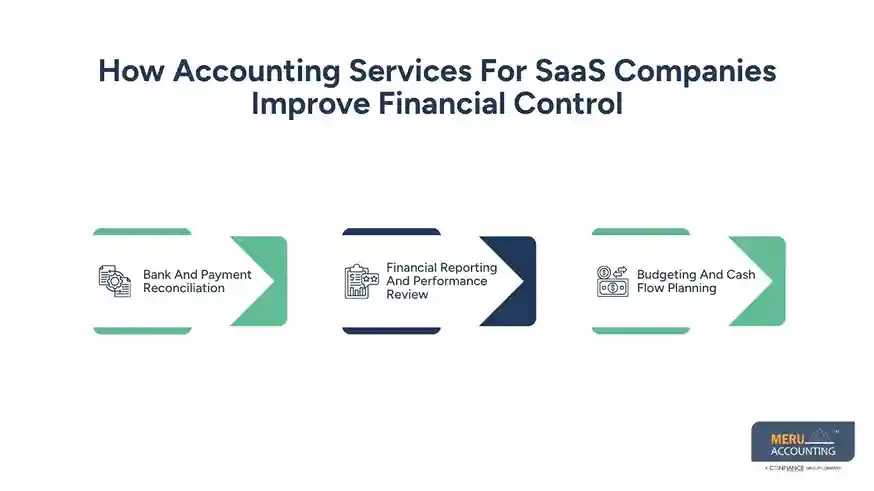
Budgeting And Cash Flow Planning
Cash flow planning helps SaaS companies prepare for future needs. Businesses must consider subscription collections, payroll, technology costs, and taxes. They also need to plan for upcoming business payments. Historical financial information can support budgeting and financial planning.
Reviewing past revenue and expenses helps create realistic plans. Accounting services for SaaS companies can monitor budget results. Regular comparisons show differences in spending and expected revenue.
Choosing The Right SaaS Accounting Support
Selecting accounting support requires careful review of financial needs. SaaS businesses need processes that handle recurring revenue properly. These processes should also manage subscriptions, expenses, and reporting.
SaaS outsourced accounting provides flexible support as volumes change. Businesses can choose services based on current accounting workloads. Their reporting needs should also guide service selection.
Access To Skilled Accounting Support
SaaS businesses may not need large internal accounting teams. Outsourcing provides access to skilled accounting professionals without adding staff. SaaS outsourced accounting supports bookkeeping, reconciliation, reporting, and transactions.
This can reduce accounting work for founders. It can also reduce tasks handled by operational teams. Accounting services for SaaS companies provide regular financial information. This supports better organization and easier management reviews. It also reduces accounting tasks for internal employees.
Better Accounting Processes
A clear accounting workflow helps businesses maintain consistent records. Tasks such as transaction recording, reconciliation, expense classification, and reporting should follow defined procedures.
SaaS outsourced accounting can organize these tasks into a regular schedule. Consistent processes make it easier to identify missing information and resolve accounting issues.
Accounting services for SaaS companies can also help maintain documentation for recurring financial activities. This makes accounting records easier to review and update.
Flexible Support As Businesses Grow
SaaS businesses can experience changes in customers, subscriptions, employees, and transaction volumes. Accounting needs may increase as the business expands.
SaaS outsourced accounting allows businesses to adjust accounting support based on changing requirements. This can help companies manage higher transaction volumes without immediately building a larger accounting department.
Accounting services for SaaS companies can also support changing reporting needs. As management requires more detailed financial information, accounting processes can be adjusted accordingly.
Why Choose Meru Accounting For SaaS Accounting?
Choosing an accounting provider requires careful review of business needs. SaaS businesses should consider expertise, reporting quality, and data security. They should also assess experience with recurring financial processes. Meru Accounting supports SaaS companies needing structured accounting processes. Its services can fit different SaaS financial workflows. Professional accounting teams can organize recurring tasks effectively. These include bookkeeping, reconciliations, receivables, expenses, and reporting.
Subscription revenue and customer payments need accurate records. Accountants should track recurring transactions and financial information carefully. Meru Accounting can support financial organization and reconciliation. SaaS companies should review requirements before choosing accounting processes. Accounting support can improve records for revenue and expenses. It can also reduce administrative work for internal teams. Meru Accounting assists SaaS companies needing structured accounting support. Businesses can review workflows and identify areas needing assistance.
Our Expert Perspective
SaaS businesses need consistent financial records for control. Subscription revenue can increase accounting work as businesses grow. Recurring transactions also need regular tracking and careful review. Businesses may focus on revenue while overlooking related records. Outstanding payments, expenses, refunds, and deferred revenue need attention. SaaS outsourced accounting helps establish consistent accounting routines.
Regular bookkeeping and reconciliation can reduce gaps in records. Reporting also helps maintain accurate financial information for reviews. Businesses should review accounting processes as transactions increase. Clear responsibilities and scheduled reviews support accurate financial records.
Key Takeaways
- SaaS outsourced accounting supports organized financial management.
- SaaS businesses need accurate records for recurring revenue.
- Accounting services for SaaS companies support daily bookkeeping.
- Regular reconciliation helps identify differences in accounting records.
- Expense tracking helps SaaS companies monitor operating costs.
- Accounts receivable reviews help manage payment delays.
- Financial reporting provides better business performance visibility.
- Cash flow planning supports better financial decisions.
- Outsourcing can reduce routine accounting work for teams.
FAQs
SaaS outsourced accounting is when external experts manage the finances of the company, which includes bookkeeping and expense tracking, so that one can focus on the growth of the business.
SaaS companies handle subscriptions and also recurring revenue. Accounting services help keep these finances well organized and accurate.
Services can include recording transactions, reconciling bank statements, and tracking accounts. The specific offerings depend on each company’s requirements.
SaaS outsourced accounting tracks revenue and payments, making it easier to plan cash flow and also with reviewing of finances that is suitable.
A SaaS company may consider outsourcing when accounting tasks become difficult for its internal team. Growing transaction volumes and recurring financial activities may also create a need for additional accounting support.
optional anymore
on running the business