Business growth needs accurate financial management and timely reporting. Many business owners find it hard to manage accounting while running daily operations. A virtual accountant handles bookkeeping, payroll, tax preparation, financial reporting, and reconciliations using secure cloud software.
These professionals also bring strong business skills that support better financial planning and decision-making. Hiring a virtual accountant reduces costs, keeps financial records accurate, and allows business owners to focus on growing their business.
What You Will Learn From This Blog
- What a virtual accountant does for modern businesses
- Which businesses benefit most from virtual accounting services
- The major advantages of hiring a virtual accountant
- The most important skills required for remote accountants
- Technology and Software Every Remote Accounting Professional Should Know
- Common challenges faced by remote accountants and how they solve them
- Future trends shaping virtual accounting services
- How Meru Accounting supports businesses with reliable virtual accounting solutions
Introduction: Rise of the Virtual Accountant
The rise of remote work has changed how accounting services operate. A remote accountant offers bookkeeping, tax filing, and financial advice from anywhere using cloud-based tools. This digital shift saves time, lowers costs, and helps businesses stay organized without the need for in-house staff.
As firms move online, the skills required for virtual accountants now include strong business skills alongside technical expertise. These professionals must keep up with new tools, guard key data, and give clear tips to help teams reach their goals.
Who Needs a Virtual Accountant?
Firms of all sizes gain from remote finance help. From small shops to large brands, many use a remote account service to lower costs and get real-time updates. The skills required for virtual accountants match the needs in each stage of growth.
Startups and Small Enterprises
New firms run lean and need smart use of funds. An accountant gives them solid advice without the cost of a full staff. They track spending, help plan taxes, and keep cash flow in shape.
Freelancers and Independent Professionals
Solo pros like coaches, coders, or artists need help to sort bills, file taxes, and claim costs. A remote accountant does all this fast, so the pro can focus on their main work.
E-commerce and Online Sellers
Web stores deal with lots of buys, fees, and tax rules. A remote accountant tracks all sales, sorts taxes by zone, and helps set the right price for strong gains.
Mid-Sized and Large Companies
Bigger firms also benefit. During busy seasons or while working globally, a virtual accountant can reduce the load on internal teams. Their skills for accountants include handling ERP data, tax updates, high-volume reporting, and practical business skills that support growth.
Benefits of Hiring a Virtual Accountant for Businesses
Lower Operational Costs
Hiring an online accountant removes the need for full-time salaries, office space, equipment, employee benefits, and utility expenses.
Businesses can reduce overhead costs while still receiving professional accounting support. The savings can be used to improve operations, strengthen business skills, expand services, or invest in business growth.
Improved Flexibility and Availability
Online accounting professionals can work across different time zones and often provide support beyond regular business hours.
This flexibility helps businesses manage urgent financial tasks, meet reporting deadlines, and support international operations without interruption.
Real-Time Access to Financial Reports
Cloud accounting software allows financial records to be updated in real time. Business owners can access reports, monitor cash flow, review expenses, and track revenue from any location. Real-time information supports faster and more informed business decisions.
Access to Specialized Expertise
Businesses can hire online accountants with experience in specific industries, accounting standards, tax regulations, or cloud accounting platforms.
This provides access to professional expertise without the long-term cost of hiring a full-time specialist.
Better Accuracy in Financial Records
Standardized accounting procedures and advanced accounting software help maintain accurate financial records. Regular reviews and reconciliations reduce errors, improve the reliability of financial reports, and support stronger financial business skills.
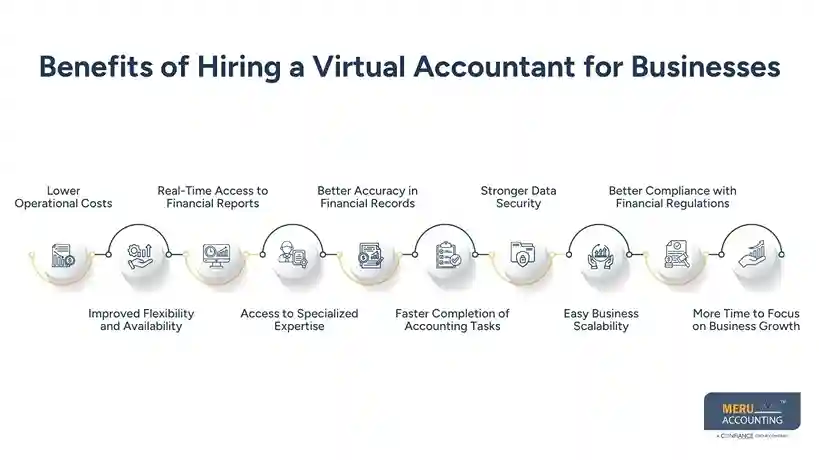
Faster Completion of Accounting Tasks
Cloud-based tools and automation help complete bookkeeping, payroll processing, bank reconciliations, invoice management, and financial reporting more efficiently. Faster processing keeps financial information current throughout the year.
Stronger Data Security
Professional virtual accountants work with secure cloud accounting systems that include data encryption, automatic backups, and controlled user access.
These security measures help protect sensitive financial information from data loss and unauthorized access.
Easy Business Scalability
As a business grows, accounting requirements become more complex. An online accountant can easily handle higher transaction volumes, additional reporting needs, and expanding financial operations without requiring businesses to hire extra in-house accounting staff.
Better Compliance with Financial Regulations
Virtual accountants stay updated with changes in tax laws, accounting standards, and filing requirements.
Their knowledge helps businesses prepare accurate financial records, meet compliance deadlines, and reduce the risk of penalties.
More Time to Focus on Business Growth
Outsourcing accounting responsibilities allows business owners to spend less time on bookkeeping and financial administration. They can focus more on serving customers, developing products, improving operations, and planning long-term business growth.
Core Skills Required for Virtual Accountants
To succeed in today’s remote world, the skills required for virtual accountants must include accounting expertise, technology knowledge, and essential business skills.
Knowledge of technology
With the advent of progress in technology, it has engulfed all spheres of work. The Virtual Accountant should be well-versed in technology and should implement it in the accounting work. They should use all the essential software while doing accounting activities.
There are many accounting software programs used, like Zoho Books, Tally ERP, and Marg ERP etc. Apart from this, the accountant can also use their more advanced software.
Ability to adapt to a change in technology
Many professionals find it challenging to improve their work patterns with the changing technology.
However, the working model of the organization can change, and also the accounting pattern does change over a passage of time. So, the online accountant assistant should be quick enough to change the technology as required.
Ability to adapt to the culture
Each client may work differently. The ability to understand different business cultures and adjust work style is a valuable skill for accountants working across countries.
Dedicate a set number of hours
Virtual Assistants are usually paid on an hourly basis or for the amount of work they do in an interval of time. So, there should be some set number of hours that the virtual assistant accountant should dedicate to their client.
It is handy to communicate essential things in the organization and implement efficiency in the work. It will also minimize the communication gap between both ends, and note all the small details.
Regular work review
To eliminate the minor issues and ensure proper work, there has to be an appropriate review of the work. Thus, the organization will get all the essential reports regularly.
Time Tracking Software
Virtual Assistants usually use time tracking software to keep track of the work done over time. This software gives the proper insight regarding the exact time required for completing a particular task in the accounts.
These are some qualities required for virtual accountants. These accountants excelling in all these qualities will give efficiency in the organization’s work.
Technology and Tools an Online Accountant Should Know
Modern online accountants rely heavily on digital tools, but they also need strong business skills to deliver better financial support.
Cloud Accounting Software
Tools like Xero, QuickBooks, and Zoho Books let you track money from anywhere. A virtual accountant should know how to send bills, match bank data, and build reports with ease.
Project Management Platforms
Apps like Asana, Trello, or Monday.com help plan work, track jobs, and meet goals on time. These tools make it easy to stay on task when working with remote teams or clients.
Secure File Sharing Tools
File tools like Dropbox, Google Drive, or OneDrive help store and send files safely. Use password locks and sharing rules to protect client data while working online.
Chat and Video Meeting Apps
Apps like Zoom, Slack, and Microsoft Teams help keep talks smooth and fast. Use them to share ideas, go over data, or build strong bonds with clients in real time.
Challenges Faced by Virtual Accountants
Even with strong skills for accountants, remote work has unique challenges. Here’s how they overcome them.
Maintaining Data Security
Handling client financial data online creates risks. Accountants must encrypt files, secure access with strong passwords, and follow data protection laws to prevent breaches.
Handling Multiple Time Zones
Serving clients in different time zones can lead to confusion. Remote accountants must schedule smartly using time zone apps and calendar integrations to avoid delays.
Tech Glitches and Software Downtime
Internet outages or tool failures can halt work. Accountants need backup plans, such as alternate Wi-Fi and access to offline tools to manage tasks during downtimes.
Building Trust Remotely
Since remote accountants don’t meet clients in person, strong communication and business skills become essential for building trust over time. Consistent communication, timely delivery, and data transparency help establish credibility.
Future Trends in Virtual Accounting
AI Tools Simplify Daily Accounting
AI now handles repeat jobs like data entry, sorting, and bank matchups. These tools save time and reduce errors. A virtual accountant can now focus more on planning and key reports.
ERP and Cloud Systems Join Forces
Firms now want one tool for HR, stock, and books. Remote accountants must learn ERP tools to guide clients in syncing tasks and keeping data clear and safe in the cloud.
Global Hiring and Outsourcing Rise
Businesses now hire accounting professionals from across the world to reduce costs and access specialized skills. Staying competitive requires continuous learning, strong communication, business skills, and the ability to adapt to changing business needs.
Real-Time Finance Tracking Becomes a Must
Businesses expect instant access to financial data for faster decision-making. Cloud dashboards and automated alerts help monitor cash flow, expenses, revenue, and financial trends, making timely reporting an essential part of modern accounting.
How Meru Accounting Helps Businesses with Virtual Accounting Services
Businesses need more than basic bookkeeping to stay financially organized. They need accurate records, timely reporting, tax compliance, and financial insights that support growth. Managing all these responsibilities internally can become expensive and time-consuming.
At Meru Accounting, we provide professional virtual accounting services that help businesses manage their finances from anywhere. Our experienced accountants use leading cloud accounting software to deliver bookkeeping, payroll processing, bank reconciliation, financial reporting, tax support, accounts payable, accounts receivable, and management reporting.
Our virtual accounting team works with businesses across multiple industries, including e-commerce, retail, healthcare, manufacturing, professional services, real estate, and startups. We help clients reduce accounting costs, improve financial accuracy, maintain compliance, and gain real-time access to financial information.
By combining accounting expertise with modern cloud technology, Meru Accounting allows business owners to spend less time managing financial records and more time growing their businesses.
Our Expert Perspective
At Meru Accounting, we have seen that businesses achieve better financial control when experienced accounting professionals combine cloud technology with practical business skills.
Accurate bookkeeping, real-time financial reporting, and regular compliance support help reduce errors, improve cash flow management, and simplify business decisions.
As accounting continues to become more digital, virtual accounting services provide businesses with the flexibility and financial visibility needed for sustainable growth.
Key Takeaways
- Virtual accountants provide bookkeeping, tax, payroll, reporting, and financial support remotely.
- Businesses of every size can reduce costs through virtual accounting services.
- Cloud accounting software improves financial visibility and collaboration.
- The skills required for virtual accountants now include technology, communication, adaptability, and financial expertise.
- Automation allows accountants to focus more on financial planning and business advice.
- Strong cybersecurity practices protect sensitive financial information.
- Businesses benefit from real-time financial reporting and faster decision-making.
FAQs
Strong tech use, time control, financial accuracy, and data safety are key. Communication and the ability to adapt fast are equally important.
The most important skills required for virtual accountants include accounting knowledge, cloud software expertise, communication skills, adaptability, time management, analytical thinking, and data security awareness.
Xero, Trello, QuickBooks, Dropbox, and Zoom are common. They handle finance, reporting, meetings, and task updates.
Definitely. They adjust to different zones and ensure prompt updates through smart scheduling tools.
Yes. Virtual accountants prepare tax records, maintain financial documentation, monitor filing deadlines, and help businesses comply with current tax regulations.
optional anymore
on running the business