Small business accounts receivable can affect cash flow, daily costs, and the ability to plan ahead. A sale is not fully useful to a business until the cash is received. Late payments can leave a firm with unpaid bills while money is still tied up in customer invoices.
A clear follow-up plan keeps payment talks calm and fair. The right time to contact a customer depends on the agreed due date, past payment habits, invoice size, and any open dispute. The accounts receivable process for small businesses should therefore include regular checks before and after each due date.
What You Will Learn From This Blog
- When to follow up on small business accounts receivable before and after an invoice due date.
- How to set a clear payment follow-up timeline.
- What signs show that an unpaid invoice needs quick action.
- How to write clear and polite payment reminders.
- Which common follow-up mistakes can delay payment.
- How records and accounting tools can keep payment work on track.
Understanding the Accounts Receivable Process for Small Business
The accounts receivable process for small businesses starts when a firm sells goods or services on credit. The firm sends an invoice, sets payment terms, records the amount due, tracks the due date, and checks when cash is received.
Issue Clear Invoices
A clear invoice is an important part of small business accounts receivable management because it shows the service or goods sold, amount due, invoice date, due date, and payment method. Clear terms give both sides a shared record of what must be paid.
Set Payment Terms
Payment terms should be agreed before work starts or goods are sent. Common terms include due on receipt, Net 15, Net 30, or other terms set by contract.
Track Due Dates
Each invoice needs a due date that staff can see with ease. A simple aging report can show current invoices and those that are 1–30, 31–60, or more days late.
Record Customer Replies
Keep notes on calls, emails, promises to pay, and payment disputes. The IRS also advises businesses to keep invoices and other records that support business transactions.
Review Aging Reports
An aging report gives a clear view of unpaid invoices. Regular review lets a business spot late accounts before the amount becomes hard to collect.
Small Business Accounts Receivable: Why Payment Follow-Ups Matter
Small business accounts receivable needs regular follow-up because unpaid invoices can put pressure on cash flow. A customer may not have ignored an invoice on purpose; the invoice may have been missed, sent to the wrong person, or held due to a simple error.
Protect Cash Flow
Cash is needed for payroll, rent, stock, tax, and other bills. Faster collection can give the firm more cash to meet these needs on time.
Find Invoice Errors
Invoice checks are an important part of keeping small business accounts receivable records accurate and up to date. Finding such issues early can prevent a longer delay.
Reduce Long Delays
Small late payments can turn into large aging balances when no one follows up. A set reminder plan keeps unpaid invoices visible and gives staff a clear next step.
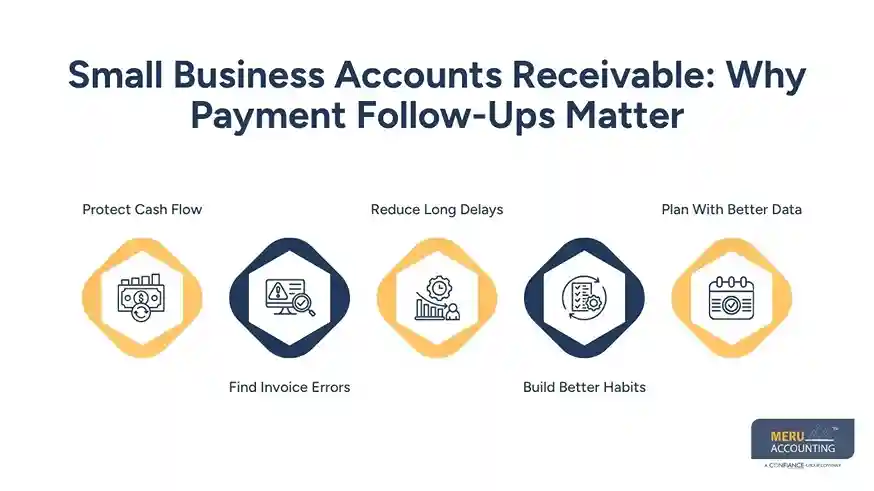
Build Better Habits
Customers learn payment habits from a firm’s process. Regular and polite reminders show that payment terms are taken seriously without damaging the business relationship.
Plan With Better Data
Good records give owners a clearer view of expected cash. The IRS notes that sound records can aid financial statements and business decisions.
optional anymore
on running the business
Payment Follow-Up Timeline for Small Business Accounts Receivable
A fixed timeline makes small business accounts receivable work easier to manage. The exact dates can vary by contract, but the following plan gives a useful starting point.
Before The Due Date
Send a reminder about 3–7 days before payment is due. Confirm the invoice number, amount, due date, and payment method.
On The Due Date
Send a short note on the due date if payment has not been received. Keep the message factual and ask for confirmation of the planned payment date.
1–7 Days Overdue
Contact the customer again within the first week. Ask whether the invoice is approved and whether any issue is stopping payment.
8–30 Days Overdue
Increase the level of follow-up when an invoice passes one week late. A phone call can help small business accounts receivable teams address larger balances or repeat late payments.
More Than 30 Days Overdue
Older debt needs prompt review. Check the contract, payment history, dispute status, and collection options before deciding on the next step.
How to Follow Up on Outstanding Accounts Receivable Payments
The accounts receivable process for small businesses should use a clear message path. Each contact should give the customer enough detail to act without searching through old emails.
Start With the Invoice
Mention the invoice number, amount, and due date in every key message. Such detail makes the request easier to check and reduces back-and-forth emails.
Ask For a Payment Date
Small business accounts receivable teams should avoid messages that only say payment is late. Ask when the customer expects to pay and request a clear date.
Keep the Tone Calm
A firm tone does not need to sound rude. Use plain words, state the facts, and focus on the unpaid amount.
Call For Larger Balances
A call can be more useful when the unpaid amount is large, or the customer has not replied to emails. Follow the call with a written note of what was agreed.
Keep a Follow-Up Log
Record each contact, reply, promise date, and dispute. A written log gives the team a clear history if the account needs senior review.
Signs That A Customer Payment Needs Immediate Follow-Up
Certain signs mean a payment should not wait for the next routine review. These signs can point to a cash issue, billing issue, or higher collection risk.
A Promise Date Was Missed
A missed promise to pay is a strong reason for quick contact when managing small business accounts receivable. Ask for a new date and confirm the reason for the delay.
The Customer Stops Replying
No reply after several clear reminders needs attention. Try another approved contact and check whether the invoice was sent to the right person.
The Balance Keeps Growing
Several unpaid invoices from one customer raise the risk. Review the full account rather than treating each invoice as a separate case.
A Dispute is Not Clear
An open dispute can stop payment for weeks. Ask for the exact issue, the person handling it, and the action needed to close it.
Payment Risk Has Increased
A sharp change in buying or payment habits can be a warning sign. Review credit terms before allowing more unpaid sales within small business accounts receivable.
Common Small Business Accounts Receivable Follow-Up Mistakes
Weak follow-up often comes from poor timing or poor records. A sound accounts receivable process for small businesses should avoid these common errors.
Waiting Too Long
Some owners wait many weeks because they do not want to upset customers. A calm reminder near the due date is usually easier than a late demand.
Sending Vague Messages
Messages such as “Please pay soon” do not give enough detail. State the invoice number, amount, due date, and requested payment date.
Using the Same Message
Not every account needs the same tone or method. A new customer with one late invoice may need a softer note than a repeat late payer.
Ignoring Small Balances
Small invoices can add up across many customers. Track them with the same care as larger invoices.
Losing Payment Records
Missing notes can lead to repeated calls or missed promises. Keep invoices, emails, payment proof, and customer notes in one system.
Tools And Practices For Managing Small Business Accounts Receivable
The accounts receivable process for small businesses becomes easier when records and follow-ups are kept in one place. The IRS says electronic systems can be used for business records when they provide complete and accurate records.
Use Accounting Software
Accounting software can help manage small business accounts receivable by tracking invoices, due dates, payments, and aging. Choose a tool that fits the size and needs of the firm.
Set Reminder Rules
Create standard reminders for before the due date, the due date, and overdue stages. A fixed rule reduces the risk of missed follow-ups.
Review Aging Weekly
A weekly aging review can show which accounts need action. Sort by age, amount, and customer risk to set the right order.
Match Payments Daily
Record received payments soon after they reach the bank. This keeps open balances current and prevents reminders from being sent after payment.
Keep Source Records
Store invoices, receipts, payment proof, and customer messages in an orderly way. Strong records can also make tax and financial reporting work easier.
Manage Small Business Accounts Receivable With Meru Accounting
Managing small business accounts receivable can take time when owners also handle sales, payroll, tax, and daily operations. Meru Accounting provides outsourced bookkeeping and accounting services for small and medium-sized businesses, including receivables management.
Review Open Invoices
Our team can review unpaid invoices and aging reports. Regular review can keep overdue balances visible and ready for action.
Track Payment Status
Payment status needs clear notes and current records. Our accounting work can keep invoice data, payments, and account records organized.
Reconcile Received Cash
A payment should be matched to the right invoice. Proper reconciliation reduces errors in open balances and keeps reports more useful.
Follow A Set Process
A clear accounts receivable process for small business gives each account a defined next step. Meru Accounting can handle recurring bookkeeping tasks while owners focus on core work.
Our Expert Perspective
From our experience, small business accounts receivable follow-up should begin before an invoice becomes seriously overdue. A timely reminder gives customers a chance to review the invoice and address any issue before the due date passes. Clear records, regular aging reviews, and a set follow-up schedule also give businesses better control over unpaid balances. A consistent approach can reduce payment delays and keep cash flow more predictable.
Key Takeaways
- Review all unpaid invoices every week to keep balances current.
- Send payment reminders before invoices reach their due dates.
- Follow up promptly when a payment becomes overdue.
- Ask customers to confirm a clear date for payment.
- Record every customer response and payment commitment.
- Review older outstanding balances with greater attention.
- Resolve invoice disputes as early as possible.
- Keep invoices, payment records, and follow-up notes together.
- Use aging reports to set clear follow-up priorities.
- Follow a fixed collection process across all customer accounts.
FAQs
A business can send a friendly reminder 3–7 days before the due date, then follow up on the due date and again after the invoice becomes overdue.
Review open invoices at least once a week. Larger firms or firms with many credit sales may need more frequent checks.
Yes. A reminder 3–7 days before the due date can confirm that the invoice was received and give the customer time to raise any issue.
Review the invoice, contract, payment history, and any dispute. Then consider a senior follow-up, payment plan, credit hold, or suitable collection action.
An accounts receivable process for small businesses gives the firm a set way to issue, track, and collect invoices. A clear process also makes late payments easier to spot and manage.
optional anymore
on running the business