
Small business bookkeeping solutions support owners in keeping financial records accurate, organized, and easy to track. They convert daily transactions into structured records that make financial review and planning more manageable. Over time, this brings more clarity into income patterns, expenses, and overall business performance.
Many small businesses struggle with scattered records, missing invoices, and unclear cash flow. Without a proper system, financial data becomes hard to trust and even harder to use for decisions. A structured bookkeeping approach brings consistency into how transactions are recorded, making financial information easier to follow and use for planning.
With continued use, financial data becomes more reliable, reporting becomes smoother, and decision-making becomes more grounded in actual numbers rather than assumptions.
What You Will Learn From This Blog
- How bookkeeping systems improve financial order over time
- Why cash flow tracking is important for small firms
- How structured records reduce financial errors
- The role of professional support in bookkeeping systems
- Common issues solved through proper financial tracking
- How to choose the right bookkeeping support for long-term stability
Introduction to Small Business Bookkeeping Solutions
Small business bookkeeping solutions are structured systems used to record, organize, and manage financial transactions in a clear and consistent way. These systems cover income tracking, expense recording, and basic report preparation, ensuring that financial data stays updated and easy to understand. For small firms, this creates a reliable view of daily financial activity without confusion or missing details.
In day-to-day operations, these systems capture every sale, purchase, and payment, forming a complete financial trail over time. This continuous recording builds a dependable record that supports analysis, planning, and better financial control. Since many small firms do not have dedicated finance teams, this structure brings stability and reduces reliance on manual or irregular tracking methods.
Strong financial control depends on accurate and consistent data entry. When every transaction is properly recorded, it becomes easier to manage taxes, prepare reports, and avoid errors during financial reviews. Over time, this structured approach builds financial history that highlights patterns, risks, and trends, supporting more informed decisions and steady business growth.
Why Financial Organization Matters for Long-Term Business Growth
Clear Financial Records
Financial order depends on clean and updated records that a bookkeeper firm helps maintain to reflect real business activity. Organized tracking ensures income and expenses remain easy to review and compare over time.
Better Decision Making
When financial data is clear, business decisions become more accurate and grounded in real numbers. Reports showing profit, cost, and cash position support better planning and controlled spending.
Reduced Financial Errors
Errors in accounting records can lead to financial loss and reporting issues. Structured systems reduce mistakes by ensuring each transaction is recorded in a consistent way.
Tax And Compliance Support
Accurate records make tax filing smoother and reduce pressure during reporting periods. Small business bookkeeping solutions ensure financial data stays organized for compliance requirements.
Business Stability Over Time
Consistent financial tracking provided by a bookkeeper firm builds long-term stability across business cycles. Clear records help maintain balance during audits, reviews, and planning decisions.
Key Benefits of Bookkeeping Solutions for Smooth Daily Business Operations
Daily Expense Tracking
Tracking daily expenses supports better financial control and prevents unnecessary spending. Every cost is recorded in a structured way, which improves visibility over day-to-day cash usage.
Revenue Monitoring
Small business bookkeeping solutions ensure all income is recorded and categorized correctly. Clear revenue tracking helps understand business performance and supports informed financial planning.
Invoice Management
Late or missed invoices can disrupt cash flow and create financial gaps. A proper system helps track pending payments and keeps billing records organized and updated.
Budget Control
Budget tracking becomes more accurate when all financial data is recorded in one place. Planned spending can be compared with actual expenses to maintain better financial discipline.
Error Reduction
Manual bookkeeping often leads to missed entries and calculation mistakes. Structured systems reduce these issues by keeping financial records consistent and well-organized.
How Small Business Bookkeeping Solutions Improve Cash Flow Management
Real-Time Cash Tracking
Cash flow is a key indicator of business health and daily financial strength. Real-time tracking of money in and out provides a clear view of available funds at any point.
Payment Scheduling
Timely payments reduce delays and avoid unnecessary financial pressure on operations. A structured system helps plan outgoing payments and maintain better control over due dates.
Expense Control
Uncontrolled spending can weaken financial stability and reduce available working capital. Monitoring expenses closely helps identify areas where cost reduction is possible.
Financial Forecasting
Small business bookkeeping solutions provided by a bookkeeping firm help predict future cash needs based on past financial patterns. Accurate forecasting supports better planning for expenses, investments, and short-term obligations.
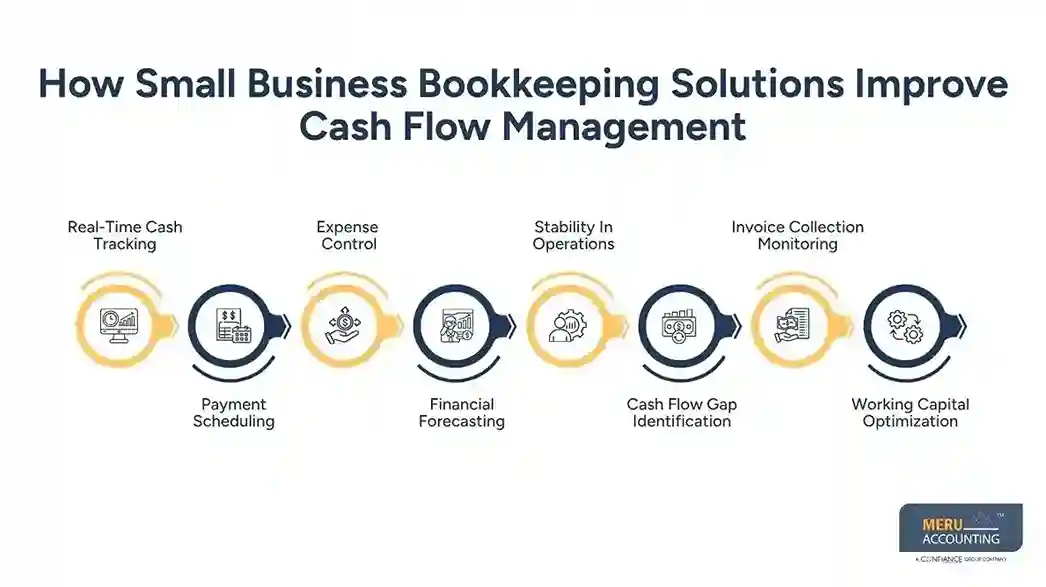
Stability In Operations
Consistent cash flow ensures smooth day-to-day operations without financial interruptions. Stable financial movement supports better planning and reduces stress during business cycles.
Cash Flow Gap Identification
Identifying gaps between income and expenses helps detect shortfalls before they affect operations. Early awareness of cash gaps supports timely corrective actions and reduces financial risk.
Invoice Collection Monitoring
Tracking unpaid and pending invoices ensures faster collection cycles. Regular monitoring improves liquidity and helps maintain steady cash availability for business needs.
Working Capital Optimization
Efficient cash flow tracking through a bookkeeping firm supports better use of available working capital. Proper allocation of funds ensures essential expenses are covered without financial strain.
Role of a Bookkeeper Firm in Strengthening Financial Systems
Professional Record Management
Accurate financial recording forms the base of a strong accounting system. A structured approach ensures every transaction is documented in a clear and organized manner.
Consistent Reporting
Regular financial reports make it easier to track business performance over time. Timely summaries support better monitoring of income, expenses, and overall financial health.
Error Checking
Mistakes in financial records can affect planning and decision-making. Careful review of entries helps maintain accuracy and reduces reporting issues.
Compliance Support
Small business bookkeeping solutions ensure financial records are ready for tax and legal requirements. Proper documentation reduces risk during audits and supports smoother compliance processes.
System Improvement
A Bookkeeper firm refines financial systems by improving structure and tracking methods over time. Stronger systems lead to better organization and more reliable financial outcomes.
Common Financial Challenges Solved By Bookkeeping Solutions
Missing Financial Data
Many small firms lose track of important financial records due to unorganized systems. Proper tracking ensures every entry is captured and stored for future reference.
Poor Expense Tracking
Untracked expenses often create confusion and reduce financial clarity. A structured system helps organize spending details in a consistent format.
Cash Flow Gaps
Irregular cash flow can slow down operations and affect business stability. Early identification of gaps supports better planning and timely financial action.
Tax Filing Issues
Incorrect or incomplete data often leads to errors during tax filing. Accurate recordkeeping reduces complications and supports smoother compliance work.
Lack Of Financial Insight
Small business bookkeeping solutions provide clear financial insights that support better planning and decision-making. Access to structured data helps businesses understand performance trends and future needs.
Choosing The Right Small Business Bookkeeping Solutions And Bookkeeper Firm
Business Needs Analysis
Every business operates with different financial patterns and reporting needs. Understanding transaction volume and complexity helps select a suitable system for long-term use.
Experience And Expertise
A skilled Bookkeeper firm improves accuracy in recording and reviewing financial data. Industry experience also supports better handling of compliance and reporting requirements.
Software And Tools Used
Small business bookkeeping solutions using cloud systems offer better tracking and real-time access to data. Modern tools also reduce manual work and improve speed in financial reporting and updates.
Reporting Quality
Clear financial reports support better decision-making and reduce confusion in daily operations. A reliable Bookkeeper firm ensures reports are simple, accurate, and easy to interpret.
Long-Term Support
Financial systems need continuous monitoring to stay accurate and useful over time. Ongoing support ensures records remain updated as the business grows and changes.
Meru Accounting – Trusted Financial Partner for Small Business Growth and Stability
Meru Accounting provides outsourced bookkeeping services for small businesses in the US and global markets, helping them maintain accurate financial records, improve reporting efficiency, and achieve long-term financial stability.
Our approach ensures clean records, reduced errors, and improved financial control, allowing businesses to manage their operations with confidence. Services include daily bookkeeping, financial reporting, and complete system setup based on each business’s requirements.
Small business bookkeeping solutions are customized to match operational needs, ensuring transactions are recorded correctly and financial data remains easy to track and review over time.
With experience across multiple industries, we help businesses build stable financial systems that improve with time. The focus remains on simple recordkeeping and reliable reporting that support better decisions and long-term financial stability.
Key Takeaways
- Small Business Bookkeeping Solutions improve financial clarity over time
- Structured records help reduce errors and improve control
- Cash flow management becomes more stable with proper tracking
- A Bookkeeper firm strengthens accuracy and reporting systems
- Consistent bookkeeping supports long-term business growth
- Financial organization improves decision-making and compliance readiness
FAQs
Small business bookkeeping solutions include structured systems for recording income, expenses, invoices, and payments in an organized manner, ensuring clear visibility of daily financial transactions.
Structured financial records build a consistent transaction history over time, helping identify patterns, reduce confusion, and support better long-term financial planning.
Regular tracking of incoming and outgoing funds helps identify cash gaps early and supports better planning for stable business operations.
Common problems include missing financial entries, untracked expenses, delayed invoices, tax errors, and a lack of clarity in overall financial performance.
A bookkeeping service manages financial records, prepares reports, checks accuracy, and maintains organized accounting systems for better financial control.