Payroll may look finished once employees are paid, but the accounting work continues. Payroll taxes, benefits, withholdings, and payroll liabilities still need to be recorded and tracked. That’s why small business payroll services need to work closely with the business’s bookkeeping and tax records.
For a small business, payroll errors can show up as unpaid tax balances, incorrect expense entries, or liability accounts that don’t match payroll reports. Good payroll processing for small businesses keeps these records in sync and makes it easier to spot issues before they turn into month-end cleanup.
In this blog, we’ll cover how payroll processing works, what bookkeeping and CPA support can include, how payroll liabilities are reconciled, and when outsourcing payroll may be worth considering.
What You Will Learn From This Blog
- What small business payroll services can include
- How payroll processing for small business works
- Why payroll needs to link with the books
- When outsourcing payroll may make sense
- Common payroll errors and ways to avoid them
- How Meru Accounting supports small business payroll work
What Are Small Business Payroll Services?
Small business payroll services cover the work needed to run payroll and keep payroll records in order. The work may include payroll setup, employee pay data, wage checks, tax withholdings, payroll reports, and payroll entries in the books.
The exact work can vary by business. Some firms only need payroll processing. Others need help with payroll bookkeeping, payroll tax records, benefit entries, and month-end checks.
A sound payroll process should track gross pay, taxes, benefits, deductions, and net pay. It should also keep a clear record of what the business owes and what it has paid.
Small business payroll services may also support year-end work. Payroll reports and records need to be kept in line so the business can give clean data to its tax team.
Good records also make it easier to trace a payroll entry back to the pay run. This matters when an owner, bookkeeper, CPA, or tax pro needs to check why a balance is still open.
optional anymore
on running the business
What Does Payroll Processing for Small Business Include?
Payroll processing for small business starts with clean worker data. This may include pay rates, work hours, pay type, tax forms, benefits, and other pay details.
A typical process can include:
Review payroll data
Hours, salary, bonuses, tips, paid time off, and other pay items are checked before payroll is run.
Calculate gross and net pay
The payroll system works out gross pay, tax withholdings, other deductions, and the net amount due to each worker.
Review payroll taxes
Federal, state, and local tax data may need review based on the business and where its staff work.
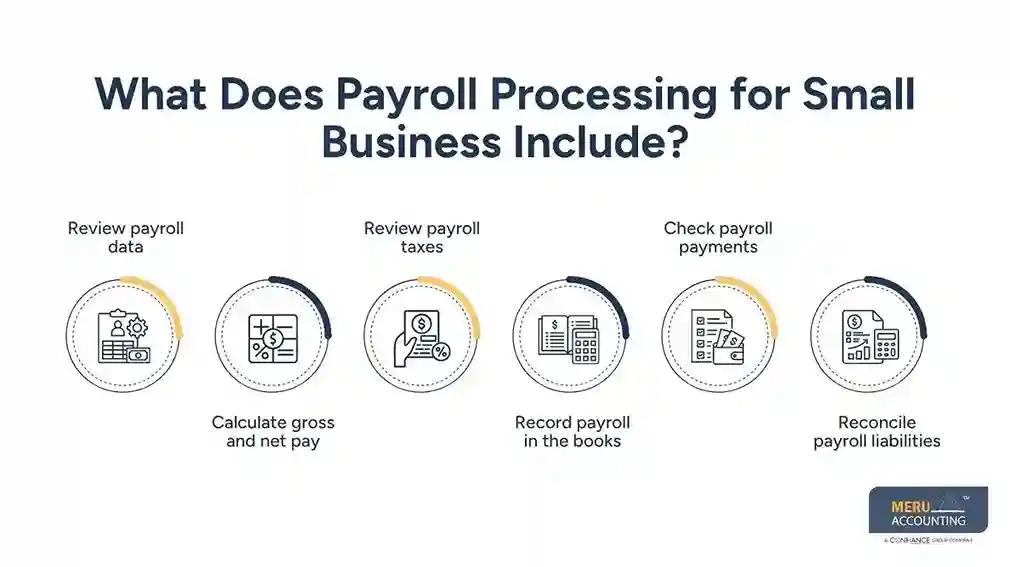
Record payroll in the books
Payroll costs and payroll liabilities should flow into the accounting records with the right accounts and dates.
Check payroll payments
The payroll run should be matched with the bank activity and tax payments when needed.
Reconcile payroll liabilities
Open tax, benefit, and other payroll balances should be checked against source records and payment data.
This link between payroll and accounting is key. Payroll processing for small businesses should not end when workers get paid. The related accounting entries still need review.
Why Payroll Processing Matters for Small Businesses
Payroll is often one of the highest costs in a small business. A small error can affect cash flow, payroll tax records, financial reports, and worker pay.
Payroll processing for small businesses also creates data that feeds the general ledger. If payroll entries are late or posted to the wrong account, the monthly profit and loss report may not show the right labor cost.
Another issue is payroll liability accounts. A business may owe payroll taxes or benefits after a pay run. Those amounts should stay as liabilities until they are paid. Once payment is made, the related balance should clear.
This is why small business payroll services can be useful beyond the pay run. A good process looks at both sides: what was paid to workers and what was recorded as an amount owed.
Payroll checks also help find issues early. For example, a payroll tax payment may have cleared the bank but still show as open in the books. A review can find the gap before it grows into a larger month-end issue.
The accounting side matters because payroll affects more than one account. Wages may affect labor expense, while taxes, benefits, and deductions can create separate liability balances. Each part needs to land in the right place.
When Should a Small Business Outsource Payroll?
There is no single point at which every business should outsource. The need often grows as payroll becomes harder to manage in-house.
A business may look at small business payroll services when:
- Payroll takes too much owner or staff time.
- The number of workers is growing.
- Pay includes many rates, bonuses, or deductions.
- Staff work in more than one state or local area.
- Payroll entries do not tie out to the books.
- Payroll tax balances stay open without a clear reason.
- Month-end close takes longer because payroll data is not ready.
- The business wants a set review process without adding a full-time hire.
Outsourcing does not remove the need for owner review. It can, however, give the business a clear workflow for payroll data, accounting entries, and checks.
For some firms, payroll processing for small businesses is handled by a payroll provider, while the accounting team handles payroll bookkeeping and month-end work. In other cases, one provider handles both parts.
Before outsourcing, a business should also define who will approve payroll, who will review reports, who will check liabilities, and who will handle questions. Clear roles can reduce gaps between payroll and accounting.
Common Small Business Payroll Mistakes to Avoid
Payroll mistakes often come from small gaps in process. A few common ones are worth watching.
Not reviewing payroll before submission
A quick check can catch wrong hours, pay rates, bonuses, or deductions before the run is sent.
Posting payroll as one bank payment
The bank may show one net payroll payment, but the books need the full payroll detail. Gross wages, taxes, benefits, and other items may need separate accounts.
Ignoring payroll liabilities
A payroll tax or benefit balance should not be left open just because the pay run was completed. The balance needs to match what is still owed.
Failing to match tax payments
Payroll tax payments should be checked against the related liability. If the amount or date is wrong, the account may not clear.
Using old worker data
Pay rates, tax forms, benefits, and deductions can change. Old data can lead to wrong pay or wrong payroll records.
Skipping month-end review
Payroll should be part of the close. A review of payroll costs and liability balances can help keep the books clean.
These checks are a key part of small business payroll services because running payroll is only one part of keeping payroll records right.
Meru Accounting’s Small Business Payroll Services
Payroll doesn’t stop at paying employees. The payroll run also has to flow correctly into the books, liability accounts, and bank records. At Meru Accounting, we support that full process while working with the payroll system, accounting software, and workflow a client already uses.
Our Payroll Support Includes
- Payroll data review and processing support
- Payroll journal entries and bookkeeping
- Wage, benefit, and deduction tracking
- Payroll tax and liability account checks
- Payroll payment and bank matching
- Month-end payroll account review
- Payroll cleanup and catch-up work
- Tax-ready payroll records and reports
- Support with existing payroll and accounting software
We also review how payroll entries move through the books. If a payroll tax payment clears the bank but leaves a liability balance open, or payroll costs post to the wrong account, we can trace the entries and make the needed corrections. This gives small businesses cleaner payroll records without requiring a large in-house accounting team.
Key Takeaways
- Small business payroll services can cover payroll processing, payroll bookkeeping, records, and liability checks.
- Payroll processing for small business should connect business data with the accounting records.
- Payroll liabilities need to be checked against tax, benefit, and payment records.
- Regular payroll review can catch errors before they affect month-end reports.
- Outsourcing may help when payroll takes too much time or becomes hard to manage.
- A clear payroll workflow can keep pay data, bank activity, and the books in sync.
FAQs
They may include payroll work, pay data checks, payroll bookkeeping, tax and benefit records, payroll reports, and liability checks. The exact scope will vary by the business.
It starts with pay data, then checks gross pay and deductions, tax amounts, payroll entries, and payments. The final step is a review of the payroll records.
Yes. A monthly check can show if payroll tax, benefit, and other liability balances match the records and payments made.
Yes. Some payroll services also handle payroll entries, liability checks, bank matching, and month-end review.
A business may look at outsourcing when payroll takes too much time or causes issues in the books. The right time will depend on its size, pay setup, and staff.
optional anymore
on running the business